Finding Strength in Loss
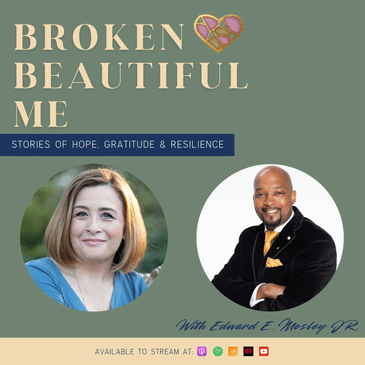
In this deeply emotional and inspiring episode, we sit down with Edward E. Mosley Jr., a transformational leadership coach, 2X author, speaker, and former combat veteran with the United States Marine Corps (USMC). Edward's journey is one of incredible resilience in the face of profound personal loss and life's most difficult challenges. Several years ago, Edward's world was turned upside down when he lost his beloved wife to cancer, followed shortly by the passing of his mother-in-law. Overwhelmed by grief, he believed that love had died with them, and for a time, he closed himself off from the possibility of love and happiness.
As a combat veteran, Edward had already faced the hardships of war and battled PTSD. However, his losses marked a new, pivotal moment in his life, forcing him to confront not just external challenges, but also deep emotional wounds. Through his journey of healing, Edward found the strength to embrace life once again and rediscovered love. Now, he shares his story of overcoming grief, finding resilience, and living with purpose.
In this episode, Edward discusses:
- The emotional impact of losing loved ones and how to navigate the grief journey while honoring your emotions.
- His path to healing and rediscovering love after believing it had been lost forever.
- How his experiences as a combat veteran helped shape his resilience and approach to overcoming PTSD.
- Practical strategies for those experiencing profound grief and how to rebuild life after loss.
- How to turn life's most challenging moments into opportunities for personal growth and transformation.
Edward's story is a powerful reminder that even in our darkest hours, we can find hope, strength, and love once again.
Connect with Edward E. Mosley Jr.:
- LinkedIn: Edward E. Mosley Jr.
- Website: edwardemosleyjr.com
This episode is a must-listen for anyone dealing with grief, navigating life transitions, or searching for resilience and hope. Whether you're a healthcare professional, veteran, or someone seeking personal transformation, Edward's insights will inspire you to find purpose and strength, even in the face of life's toughest challenges.
---------------
Follow the Host, Kelly Buckley:
Stay connected with Kelly Buckley and join her journey of healing, resilience, and gratitude. Follow her on social media for more inspiring content, updates on future episodes, and insights on living a life full of hope and purpose.
- Website: kellybuckley.com
- Facebook: Kelly Buckley on Facebook
- Instagram: @KellyBuckleyOfficial
- LinkedIn: Kelly Buckley on LinkedIn
- Twitter: @KellyBuckley
- YouTube: Kelly Buckley on YouTube
If you enjoyed this episode, don't forget to subscribe to the podcast, share it with your friends and family, and leave a review. Your support helps spread the message of hope, resilience, and gratitude to more listeners around the world.
⭐ ⭐ ⭐ ⭐ ⭐
If you enjoyed this episode, don't forget to subscribe to the podcast, share it with your friends and family, and leave a review. Your support helps spread the message of hope, resilience, and gratitude to more listeners around the world.
00:00:01
Hello, everyone,
00:00:02
and welcome to another
00:00:04
episode of Broken Beautiful Me,
00:00:06
Stories of Hope, Gratitude,
00:00:08
and Resilience.
00:00:10
Today,
00:00:10
we are so fortunate to have as our guest,
00:00:14
Edward Mosley, Jr.
00:00:16
He is a retired Marine
00:00:17
combat veteran with
00:00:18
twenty-two years of honorable service,
00:00:21
a consummate professional speaker,
00:00:23
and an internationally
00:00:24
recognized expert leadership coach.
00:00:28
Well known as Coach Mo,
00:00:29
he has earned his respect
00:00:31
and place as one of the most exciting,
00:00:32
transparent, authentic,
00:00:34
and charismatic speakers worldwide,
00:00:37
delivering
00:00:37
thought-provoking strategies
00:00:39
that have an immediate
00:00:40
life-changing impact.
00:00:43
Welcome, welcome, Edward.
00:00:44
It's so nice to have you here.
00:00:46
Thank you, Kelly, for inviting me,
00:00:49
and I'm just excited to be here as well.
00:00:53
So before we kind of jump in,
00:00:55
if you could just for our
00:00:56
listeners who may not know
00:00:59
about your work,
00:01:00
can you briefly share a
00:01:01
little bit about your
00:01:02
background and kind of the
00:01:03
path that led you to where you are today?
00:01:06
Yeah, thank you.
00:01:08
So where I am today is is
00:01:12
definitely has been a journey.
00:01:15
And as you know, you read in the bio,
00:01:17
retired Marine, twenty two years,
00:01:21
served in combat.
00:01:24
And how did I get here today?
00:01:28
So about fourteen years ago
00:01:31
in twenty ten was one of
00:01:34
the I guess one of the worst,
00:01:36
the heaviest,
00:01:37
hardest years that I had in my life.
00:01:41
And it kind of, it was in a,
00:01:43
probably about a two to
00:01:44
three year stretch,
00:01:44
but everything started around that time.
00:01:47
So, you know, here I am, this strong,
00:01:50
educated leader, you know,
00:01:54
career's going awesome and
00:01:55
things of that nature,
00:01:57
and certain tragedies happened.
00:02:01
And so first it started with
00:02:02
my previous mother-in-law
00:02:05
being diagnosed with lung cancer.
00:02:08
and she's sick and she's at
00:02:12
a point where she's on
00:02:13
hospice and she passes away in April of,
00:02:19
but at the same time there,
00:02:21
my previous wife,
00:02:23
she notices that she's not feeling well.
00:02:27
And she decides that once
00:02:29
everything's taken care of with the mom,
00:02:32
that she's gonna go to the
00:02:33
doctor to be checked out
00:02:34
and see what's going on with her.
00:02:36
And so she goes to the
00:02:37
doctor around that April,
00:02:38
May timeframe of twenty ten.
00:02:41
And she is diagnosed with appendix cancer.
00:02:45
Oh, my goodness.
00:02:47
Yeah.
00:02:47
Very, very rare.
00:02:48
And so she passes away in
00:02:51
October of twenty ten.
00:02:54
And so, you know, you,
00:02:56
we had three children, um, ten years old,
00:02:59
sixteen, nineteen year old.
00:03:01
And we go from, you know,
00:03:03
losing the mother-in-law to
00:03:05
losing the mom to now it's just me.
00:03:08
And so.
00:03:10
This all started in birth
00:03:13
out of all of that.
00:03:15
My first book,
00:03:16
The Journey of a Faith Walker,
00:03:17
A Broken Man,
00:03:19
it's from a man's
00:03:20
perspective on dealing with loss,
00:03:26
grieving, pain, my faith in God, peace,
00:03:31
love.
00:03:34
and then being a father, being a parent.
00:03:36
Now I'm a single parent and
00:03:38
I had to deal with the
00:03:40
girls' conversations and
00:03:42
those questions of, well,
00:03:43
why did mom leave me?
00:03:44
And where's my mom?
00:03:47
And how do you deal with that?
00:03:47
So I went through a lot of chaos myself.
00:03:50
So I called it leadership
00:03:52
and leadership and chaos.
00:03:54
And that's how this whole
00:03:56
journey of speaking and
00:03:59
coaching kind of started.
00:04:01
That's how it birthed.
00:04:02
And what I what I had to
00:04:04
realize was that I had to
00:04:07
be I wasn't strong anymore.
00:04:11
You know,
00:04:11
you talked about the I listened
00:04:13
to one of your clips where
00:04:14
you talked about, you know,
00:04:16
chaos and grieving and pain.
00:04:19
But from a man's perspective,
00:04:21
it's a little different.
00:04:23
And so I noticed that men,
00:04:25
we don't we don't openly
00:04:27
and outwardly express
00:04:28
things that we're going
00:04:29
through because we have to be strong.
00:04:32
And one of the things that I
00:04:33
had to realize was that I
00:04:34
wasn't Superman and I had
00:04:36
to take that cape off.
00:04:37
And I couldn't walk around
00:04:38
with this facade on any
00:04:39
longer because it was
00:04:41
hurting me on the inside,
00:04:42
but it was not doing any
00:04:43
good for anybody around me
00:04:45
on the outside.
00:04:46
And so I noticed that as I
00:04:49
was going to work,
00:04:50
I finally made it back to work.
00:04:52
And then my chief of staff,
00:04:54
he terminated me.
00:04:56
Uh, he, he, you know,
00:04:57
I lost my job and his
00:04:59
reasoning was I was not at
00:05:00
work doing my job,
00:05:01
but I was approved to be at
00:05:03
home taking care of my, you know, my,
00:05:05
my wife and my mother-in-law who was,
00:05:06
who had just passed away.
00:05:08
Right.
00:05:08
So that showed me that there
00:05:09
was no empathy in leadership.
00:05:11
There was no sympathy.
00:05:12
There was nothing.
00:05:14
And so I go from, you know,
00:05:15
we go from having two
00:05:16
incomes to one income to no income.
00:05:19
And everybody's looking at me like, dad,
00:05:20
how are we going?
00:05:21
You know, what are we doing?
00:05:22
You know?
00:05:23
And.
00:05:24
That's when everything just kind of,
00:05:27
just birthed in me to share
00:05:31
with other people things
00:05:32
that I have went through,
00:05:35
how I maneuver things and
00:05:37
how I made it through.
00:05:39
And so when you see me from
00:05:41
where I was to what you see now,
00:05:43
it's totally different.
00:05:44
And so my healing and my
00:05:46
strength comes through
00:05:49
sharing my story to people,
00:05:52
but also showing them where I am now.
00:05:55
And how I got there, you know,
00:05:56
and the steps I took to go
00:05:58
from broken to healed.
00:06:00
So, you know, that's kind of a long,
00:06:02
short story, but that's how we got here.
00:06:08
I mean,
00:06:09
I can't imagine what you and your
00:06:12
children experienced and as a father,
00:06:15
what that meant for you.
00:06:16
And I understand very much
00:06:20
what you're saying about
00:06:22
men and grief and emotion
00:06:24
and how it is expressed differently.
00:06:28
My husband and I grieved in
00:06:29
very different ways.
00:06:30
Yeah.
00:06:31
And, um, it can, it,
00:06:33
it can create a
00:06:34
miscommunication because you, you know,
00:06:37
it,
00:06:37
you really do have to make an effort
00:06:40
for people to understand where you are.
00:06:42
Um, first, before I go another step,
00:06:47
I have to say thank you for your service.
00:06:49
Um, cause that's very important and,
00:06:51
and very appreciate it.
00:06:53
So, um, I,
00:06:54
I can't go another second
00:06:55
without doing that.
00:06:57
Um, so.
00:07:00
When you were,
00:07:01
you said you birthed this
00:07:02
and that really resonates
00:07:04
with me because I do feel
00:07:05
like we're presented with
00:07:08
these moments and,
00:07:10
and these things that
00:07:11
happen in our lives and
00:07:13
that we have an opportunity
00:07:16
if we listen to, like you said, you know,
00:07:18
with your faith to take
00:07:21
pain and turn it into purpose.
00:07:25
So when, when you started,
00:07:28
so you were in this space
00:07:30
where everything was coming
00:07:32
at you at the same time.
00:07:34
So when did you decide, okay,
00:07:35
I'm going to take this,
00:07:37
I'm going to make something out of this.
00:07:38
And I am going to take this
00:07:40
out to the world so that we
00:07:41
can create more empathetic leadership,
00:07:45
more authenticity in our relationships.
00:07:48
What, how did that all start?
00:07:52
Yeah, that was, you know,
00:07:57
I wrote about this and I
00:07:59
talk about it a lot, you know.
00:08:04
It took me six years to finally kind of,
00:08:10
I guess, get out of my own way.
00:08:13
But within that six year period,
00:08:15
I got in trouble a lot.
00:08:18
I got in trouble with the police,
00:08:20
law enforcement.
00:08:23
I was just spiraling out of control.
00:08:26
My dad,
00:08:27
there's a phrase that he said years ago,
00:08:30
it has stuck with me,
00:08:33
but he said I was a sinking ship.
00:08:36
And, you know,
00:08:38
the more I thought about
00:08:39
that and the more, you know,
00:08:41
financial issues and, you know,
00:08:45
just life issues that kept coming up.
00:08:49
I think what really got me was, you know,
00:08:54
I called it a vacation.
00:08:56
I was putting a phrase on it
00:08:57
because I wanted to make it
00:08:59
sound better than it really was.
00:09:02
But I had got in trouble.
00:09:04
I got a DUI.
00:09:04
Okay.
00:09:08
It happened, so I had two, right?
00:09:12
And each of the DUIs that I
00:09:15
got was on significant days.
00:09:18
So like one was on an
00:09:19
anniversary and one was on a birthday.
00:09:23
And one of the things that I
00:09:25
did that I didn't know that
00:09:27
I was doing was I was isolating myself
00:09:30
Um, and I was, I, my, my, my, um,
00:09:34
my healing or my, um, medication was,
00:09:38
was alcohol.
00:09:40
And in the, the,
00:09:41
the one thing that got me was, um,
00:09:44
I got in the last time, you know, it was,
00:09:46
it was,
00:09:47
it was at the point to where I
00:09:48
could have been, you know,
00:09:49
locked up for some, for, for some time.
00:09:51
Right.
00:09:52
And, you know,
00:09:53
thank God that I didn't hurt
00:09:54
anybody or anything like that.
00:09:56
Um, but
00:09:57
When the police officer pulled me over,
00:10:01
I think I was so exhausted
00:10:03
and so tired of just chaos
00:10:08
and just trying to find a
00:10:11
good and a bad and that
00:10:12
type of thing to where when he asked me,
00:10:15
you know, had you been drinking?
00:10:17
My normal response was no,
00:10:19
or I had not only had one or whatever.
00:10:21
I think I was so tired of
00:10:22
just the way I was to where
00:10:23
I was just like, yes.
00:10:26
I just at that point,
00:10:27
I just became honest with
00:10:28
what was going on in my
00:10:29
life and I didn't like it.
00:10:32
And I was putting so many other people,
00:10:35
especially my children,
00:10:37
I was putting them in just
00:10:39
in a in a in a.
00:10:42
in a world of chaos, you know?
00:10:45
And so, you know,
00:10:46
I made it through those
00:10:47
things and I went to my,
00:10:49
my little weekend where I
00:10:51
had to go do some things and, and, and,
00:10:53
um,
00:10:54
kind of stay away for a couple of weeks.
00:10:57
And during that time I noticed, and I,
00:11:00
you know,
00:11:00
I was talking to different
00:11:01
people and I just knew that that,
00:11:03
that wasn't the life that I wanted.
00:11:06
You know, um,
00:11:06
there was so many other
00:11:07
things that I wanted to do in life.
00:11:10
And I,
00:11:13
So then that was kind of a turning point.
00:11:16
And then the one thing that
00:11:18
really got me was I thought
00:11:19
that I was more valuable
00:11:21
and worth more not being here.
00:11:24
So I contemplated suicide.
00:11:27
I went as far as I had everything set.
00:11:30
I was just a moment away from doing it.
00:11:36
And the thing that got me was
00:11:40
you know,
00:11:42
it was a selfish move in that if
00:11:45
I were to do that to myself,
00:11:46
then my kids would have nobody.
00:11:48
Right.
00:11:48
So they would have lost their mother,
00:11:50
their grandmother, and then, you know,
00:11:52
I go and, you know, take my own life.
00:11:56
And when I started to really
00:11:57
get those things in my head, it's like,
00:12:00
wait a minute,
00:12:00
this is not where I want to be, you know,
00:12:03
and I was forty at the time, you know,
00:12:05
so young, you know,
00:12:07
and it was those kind of
00:12:09
things that really made me, you know,
00:12:10
really sit down.
00:12:13
That's when I finally said I
00:12:14
need to get some counseling.
00:12:17
Finally, you know, at the six year mark,
00:12:19
when he got some counseling in the room,
00:12:23
let's say if there was ten people,
00:12:24
by the time it got to me,
00:12:27
that was now they say, yeah,
00:12:28
my husband was killed in combat or blah,
00:12:31
blah, blah, whatever, whatever.
00:12:33
And by the time it got to me
00:12:34
and I introduced myself,
00:12:36
that was the first time, Kelly,
00:12:37
that I said, hey,
00:12:38
my name is Edward and my wife died.
00:12:40
She's gone.
00:12:41
I would always say she was in heaven.
00:12:43
And that was the first time
00:12:45
I had ever said it.
00:12:46
And I noticed immediately when I said it,
00:12:49
I felt like this weight had
00:12:51
been lifted off of me.
00:12:53
And that was the first time
00:12:54
that I had actually
00:12:55
accepted what was happening.
00:12:57
And so I think that for me,
00:12:59
that was the first part of
00:13:00
the steps of accepting what had happened,
00:13:04
not sugarcoating it,
00:13:06
not putting some little flowers around it,
00:13:08
but actually accepting what had happened.
00:13:11
And at that point,
00:13:13
is when everything changed.
00:13:15
That was the point that I
00:13:16
noticed that things started to change.
00:13:20
You know,
00:13:23
I often use the word surrender
00:13:26
when I talk about my moment like that,
00:13:29
you know,
00:13:29
that kind of moment where I
00:13:33
spent a fair amount of time, you know,
00:13:36
skirting around what I needed to look at.
00:13:39
And then, but there, do you think,
00:13:41
because when I say the word surrender,
00:13:43
when I finally surrendered
00:13:44
to my circumstances, well,
00:13:46
then you're admitting that
00:13:50
I don't have any of this
00:13:51
figured out at all.
00:13:54
I don't know where to go from here,
00:13:57
but I'm surrendering to the truth.
00:13:59
There is something freeing about that,
00:14:01
right?
00:14:02
Yeah, it is.
00:14:03
For me, again,
00:14:07
when I use the word surrender, right,
00:14:10
it's like I see it almost
00:14:12
as a I am submitting it.
00:14:20
Yes.
00:14:20
To something that is that is
00:14:22
that I can't control.
00:14:23
I'm submitting.
00:14:25
Well, for me,
00:14:26
that same word that I the
00:14:28
synonym for me would be acceptance.
00:14:31
I accept that I can't control it.
00:14:33
And it gives it a little for me,
00:14:36
it gave it a little more.
00:14:39
Willingness in the ability to accept it.
00:14:43
Like, okay, I know I can't change that.
00:14:45
So rather than me saying I
00:14:47
surrender to something,
00:14:48
I phrase it as I accept
00:14:51
what has happened.
00:14:52
I accept that.
00:14:53
I take responsibility for
00:14:55
everything that I did.
00:14:57
So for me, it was more of the acceptance.
00:15:03
And I could allow other things, people,
00:15:07
feelings to come out.
00:15:09
in in you know that the
00:15:12
reality is so it was it's
00:15:14
the same word but for me I
00:15:15
like the word I like the word acceptance
00:15:18
I actually really like that
00:15:19
word as as well.
00:15:22
It takes on a whole new flavor,
00:15:24
doesn't it?
00:15:24
Yeah.
00:15:25
So when you when you made I mean,
00:15:27
that's a huge turning point
00:15:29
for anybody in their life
00:15:30
to to kind of come to that
00:15:33
point of acceptance.
00:15:34
How did your kids respond to
00:15:36
you when they I mean,
00:15:37
they must have seen a huge
00:15:38
change when you started to
00:15:40
turn this corner.
00:15:42
So I've got to tell you that
00:15:45
even to this day.
00:15:48
for some people,
00:15:50
and I would definitely say
00:15:51
for any kind of
00:15:52
relationship when it comes to family,
00:15:56
children, spouses,
00:16:01
each person sees it differently.
00:16:07
And you have to accept the
00:16:09
fact that your pace of healing
00:16:13
your type of healing, when you heal,
00:16:16
how you heal,
00:16:17
is totally different from
00:16:19
the next person.
00:16:22
I had to accept the fact
00:16:23
that my oldest daughter
00:16:26
healed and accepted
00:16:28
differently than I did.
00:16:31
And each of them came around
00:16:36
to accept my healing and
00:16:40
this new me differently.
00:16:43
You know, at one point,
00:16:46
the three of them and I,
00:16:47
we weren't on the same sheet of music.
00:16:50
You know,
00:16:51
and so it took time for for them
00:16:54
to realize, you know, who I was,
00:16:59
this new person, because some people,
00:17:02
you know, even our friends or, you know,
00:17:04
you name it.
00:17:06
Some people only can only see you.
00:17:11
They can only see you.
00:17:13
In the light that you were.
00:17:15
Yes.
00:17:17
You know, they can't they will rather say,
00:17:20
well, you know,
00:17:21
he used to be this way or
00:17:22
he did these things.
00:17:23
So he is he's that he is
00:17:24
this type of person.
00:17:27
Rather than seeing you for
00:17:28
who you are now.
00:17:31
I think that's huge.
00:17:32
And we have to understand
00:17:34
that people come in our lives for a day,
00:17:37
an hour, a year, a lifetime.
00:17:40
And everybody has a purpose.
00:17:42
Everybody has a moment in
00:17:44
time in our space to where...
00:17:49
That's just what they're for
00:17:50
for that particular season
00:17:51
or that moment.
00:17:52
And that's one of the things
00:17:54
that helped me was when I
00:17:56
realized that my previous wife,
00:18:00
she had a purpose in life
00:18:02
and her purpose was served.
00:18:05
And we both had a relationship with God.
00:18:07
And so when I looked at it
00:18:09
from a spiritual perspective,
00:18:11
we all have to, you know,
00:18:13
we have a certain time that
00:18:14
we're all going to expire.
00:18:16
Yes.
00:18:17
And so I didn't look at the tragedy as,
00:18:20
okay, God, why did you do this to me?
00:18:21
Why did you do this to me?
00:18:22
Because to me,
00:18:23
that means that I wish it
00:18:25
was somebody else and not me.
00:18:27
I asked God,
00:18:29
what is it in these tragedies?
00:18:31
What is it that you're going
00:18:33
to use me for where I can
00:18:35
help other people?
00:18:37
So out of everything that I went through,
00:18:40
what is my purpose of going
00:18:43
through this as a man, as a father,
00:18:46
as a friend, as a black male?
00:18:49
We don't talk about this.
00:18:51
Men in general don't talk
00:18:52
about depression or we
00:18:53
don't talk about suicide.
00:18:55
We don't talk about things of that nature.
00:18:57
But the statistics even show
00:18:59
even higher that
00:19:00
African-American men don't talk about it.
00:19:02
The percentages are like out of the roof.
00:19:05
Okay, I didn't know.
00:19:07
So for me to have...
00:19:09
the ability to share my
00:19:11
story and other Black men
00:19:13
see what I went through, what I did,
00:19:16
where I am now.
00:19:18
It's just a blessing that I
00:19:19
have this as a journey to
00:19:21
talk to other people.
00:19:23
Yeah.
00:19:23
And to help women that they
00:19:25
may be in relationships or
00:19:27
married to men that may be
00:19:30
struggling with how do they get this out?
00:19:33
You know,
00:19:33
they're living with something
00:19:34
that they may be holding on to.
00:19:35
How do they get it out, you know?
00:19:37
And if I can be that
00:19:39
gleam of hope or that light or whatever,
00:19:42
for they can see of me
00:19:44
going from broken to healed,
00:19:47
then I can help.
00:19:47
If that's my purpose,
00:19:48
then that's my purpose.
00:19:51
And that's a beautiful purpose.
00:19:53
Um, you know, I, I have, I have, uh,
00:19:57
worked with many couples
00:19:58
and that's a struggle for them.
00:20:00
It's, um, you know,
00:20:03
one path of grief is
00:20:04
completely different than the other.
00:20:06
Um, communication, uh,
00:20:09
breaks down because people
00:20:11
don't feel understood.
00:20:13
So, you know, I, I,
00:20:15
It's so needed because, you know,
00:20:18
men and women,
00:20:19
our minds are different and
00:20:20
that that works very well together in,
00:20:23
you know, most times.
00:20:25
But in times of grief, sometimes, you know,
00:20:28
you you need to connect with another man.
00:20:30
There's certain.
00:20:33
things about being a husband
00:20:35
or a father that, you know,
00:20:38
I wouldn't understand.
00:20:41
So for you,
00:20:42
when you started to go out and
00:20:44
speak to people and when you,
00:20:47
you had mentioned, you know,
00:20:49
the higher statistics with black men.
00:20:51
So when you started to spread your message,
00:20:55
what was the response like?
00:20:58
um at first you know so so
00:21:00
first of all I must admit
00:21:03
um you have to be all in
00:21:04
you have to be a hundred
00:21:05
percent in um and so my
00:21:08
core principles that I use
00:21:10
that I had to really um and
00:21:13
I'll use the word now
00:21:14
surrender to I had to surrender to
00:21:20
I could not go out and speak to people,
00:21:23
talk to people,
00:21:24
write or do any of this if
00:21:26
I was a ninety percent in.
00:21:28
Yeah,
00:21:28
I had to be completely the three
00:21:30
words of my these are my
00:21:31
three core principles, authenticity,
00:21:34
transparency and vulnerability.
00:21:36
Yes, I could not.
00:21:40
What I noticed was when I
00:21:42
was only ninety percent in.
00:21:45
and I wasn't making myself
00:21:46
vulnerable on that stage,
00:21:48
how could I expect my
00:21:50
audience or another man to
00:21:52
be vulnerable to me?
00:21:53
Right.
00:21:55
And so that is what I noticed.
00:21:58
And Kelly,
00:21:59
I went out on the stage one time
00:22:01
and I completely bombed.
00:22:03
I mean, I was on that stage.
00:22:06
I could not connect with the audience.
00:22:09
I didn't connect with them.
00:22:11
I was up there.
00:22:12
I think I had like thirty
00:22:13
minutes to speak.
00:22:15
And I was twenty five
00:22:17
minutes into the into the
00:22:19
into this this keynote in
00:22:21
the lady holds up the sign
00:22:22
that gives me the
00:22:23
notification that I have
00:22:24
five minutes to start wrapping it up.
00:22:26
And I had never talked to the audience.
00:22:30
I never connected to the audience.
00:22:32
and I I get off the stage
00:22:36
and then my my current wife
00:22:38
uh you know she's there
00:22:39
she's in the audience and
00:22:39
she's like you know we're
00:22:41
in the car we get through
00:22:43
everything we get you know
00:22:44
pack up everything we get
00:22:45
in the car and I'm just in
00:22:46
silence because I I knew
00:22:48
that I bombed and I asked
00:22:49
her say how did I do she
00:22:50
said you you did okay and
00:22:53
what I noticed was until I
00:22:56
became vulnerable
00:22:58
on a stage and just
00:23:00
completely transparent to
00:23:01
the audience and to the
00:23:04
people I'm talking to, it never worked.
00:23:08
It never worked.
00:23:10
And there's when I speak
00:23:12
that I look for three
00:23:14
different type of people,
00:23:15
three different type of
00:23:16
groups in the audience.
00:23:17
Right.
00:23:18
And it's pathos, lotos and ethos.
00:23:21
Those are the three people I look for.
00:23:23
And so you got the emotional
00:23:24
person and they're hearing the story.
00:23:27
And then you got that intellectual person.
00:23:28
You got the statistical person.
00:23:30
You got all those people.
00:23:32
And you may not get all three.
00:23:34
You know, you may not get all three.
00:23:36
But I was so wrapped up in
00:23:39
telling my story until I
00:23:42
missed the audience completely.
00:23:44
Yeah.
00:23:45
And I had to go back to the
00:23:46
drawing board and say, okay,
00:23:47
you got to do this better.
00:23:48
And when I revamped it, right, I was like,
00:23:51
okay, you got three minutes.
00:23:53
You got two to three minutes
00:23:55
to hit them so hard with
00:23:57
something about you that
00:23:59
you connect with them right off the bat.
00:24:02
And now you got them.
00:24:04
And when I changed that formula,
00:24:06
I started getting results.
00:24:09
When I changed and started
00:24:13
talking to them directly
00:24:16
right off the bat,
00:24:18
then I started getting more
00:24:20
engagement from men.
00:24:22
started getting more
00:24:23
engagement from from women
00:24:25
in the audience I started
00:24:27
getting more calls um it
00:24:29
just flowed better and so
00:24:31
that was one of the key
00:24:32
things that you have to you
00:24:34
have to know your audience
00:24:37
um you have to talk
00:24:38
directly to the to the pain
00:24:40
that they're struggling
00:24:41
with not your pain you can
00:24:44
talk to their pain
00:24:47
then now you have the
00:24:48
ability to bring them into your world.
00:24:52
But if you automatically go
00:24:53
out and you talk about your pain,
00:24:55
they may not understand your pain,
00:24:58
but they have pain.
00:25:00
Yes.
00:25:00
And so that's how I had to
00:25:02
flip it to talk about pain
00:25:04
in general and then started
00:25:07
to draw where we connect.
00:25:11
And once I was able to do that,
00:25:13
then I started to notice a
00:25:14
difference in the
00:25:15
engagement in the audience.
00:25:17
Mm hmm.
00:25:19
I mean, I think I will tell you,
00:25:21
I've had a moment like that, too,
00:25:23
where I was doing a keynote.
00:25:25
And at the end,
00:25:26
I just I just wanted to do
00:25:29
over because I just didn't
00:25:30
feel I was like, wait a second,
00:25:33
can we rewind back that and
00:25:34
let me try that again?
00:25:35
Because it just I didn't
00:25:36
feel like I resonated with
00:25:38
the audience I was speaking to at all.
00:25:41
And and you're right about
00:25:43
and and those three words, transparent,
00:25:46
authentic and vulnerable it those to me,
00:25:51
it's,
00:25:52
I read them on your website and I was
00:25:54
like,
00:25:54
that's so powerful because people
00:25:57
know when you are up in front of a group,
00:26:00
if you are not real with them, they know.
00:26:05
And they, because they,
00:26:07
they want to see themselves in you,
00:26:09
right?
00:26:10
They, in order for them to feel, um,
00:26:14
are courageous enough to
00:26:16
share their own stories or
00:26:17
to come up to you after a
00:26:18
keynote or to even share it
00:26:21
with a family member after
00:26:23
they've heard you with your
00:26:25
your story they have to see
00:26:28
themselves in you and the
00:26:30
only way you can do that is
00:26:31
if you are if you are
00:26:32
completely open and
00:26:34
transparent about the good
00:26:35
and the bad and I mean I'm
00:26:37
hearing that as we're
00:26:37
talking this morning you're
00:26:39
talking about it wasn't
00:26:40
always easy and we weren't
00:26:41
always on the same sheet of music and
00:26:43
Because that's reality.
00:26:45
That's life.
00:26:48
So what has been the most
00:26:50
surprising thing you've
00:26:52
learned about yourself from this work?
00:26:55
Oh, man.
00:27:00
If you could see my office,
00:27:01
you would see all these big
00:27:02
poster board pieces of
00:27:03
paper just wrote on with different.
00:27:06
I want to think the one thing that.
00:27:09
Yeah, this is what I want to say.
00:27:10
The one thing that I think.
00:27:12
has helped me tremendously
00:27:16
is there's two things.
00:27:18
But the one thing,
00:27:19
the first thing is I wanted
00:27:21
to have a relationship with the world.
00:27:24
And that's how I had to kind
00:27:25
of phrase it to get out of my own way of,
00:27:28
okay,
00:27:29
this is what I want to tell people
00:27:32
rather than just have a
00:27:33
relationship with the world.
00:27:35
Just talk to people.
00:27:37
Just be transparent.
00:27:38
Just talk to them about,
00:27:40
because they're having real issues.
00:27:41
And I can't always show up
00:27:44
on some social media in
00:27:46
this perfect world.
00:27:48
You know,
00:27:49
every tie is tied up and
00:27:51
everything is all, you know,
00:27:52
this and that.
00:27:53
I'm like, no,
00:27:55
that's superficial because
00:27:57
people are secretly crying at home.
00:28:01
And for men, they're secretly crying,
00:28:04
but they don't show tears.
00:28:06
You know,
00:28:07
so I can't always show up in this
00:28:09
suit and tie and all spiffy
00:28:11
and everything.
00:28:13
Now it's like,
00:28:13
how can I relate to that
00:28:17
nineteen or twenty year old, you know,
00:28:19
high school college student
00:28:21
that is contemplating
00:28:22
suicide in his college dorm
00:28:24
room if I'm always in a tie?
00:28:27
But I contemplated suicide.
00:28:29
So we have that in common.
00:28:31
So instead of talking about me,
00:28:33
talk about what got me to
00:28:35
the point of thinking about suicide.
00:28:37
So now I can relate to that
00:28:39
nineteen year old and I'm fifty four.
00:28:41
There's a huge there's a huge age gap.
00:28:45
But we struggled with the same things.
00:28:48
So that was my thing is have
00:28:50
a relationship with the world.
00:28:51
Right.
00:28:52
the other thing that I did
00:28:53
was um and it took some
00:28:55
time for me to get here was
00:28:57
I told my wife I said hey
00:29:00
um you know I realized at a
00:29:03
point to where I was in a
00:29:07
situation to where it's me
00:29:10
so now I'm remarried and
00:29:12
with amongst the the two of
00:29:14
us we have five kids so you
00:29:16
take those five people
00:29:18
You take her.
00:29:20
And so now you have six
00:29:22
people and then there's me
00:29:24
and I'm trying to deal with it all,
00:29:26
right?
00:29:26
So I'm like, I just can't do this.
00:29:28
I can't do it.
00:29:30
And so I got to the point where I was like,
00:29:32
you know what?
00:29:34
I'm going to talk to a
00:29:37
counselor myself because I
00:29:38
need to figure out for me, right?
00:29:41
And I did that.
00:29:42
And I said,
00:29:42
the next step of this was now...
00:29:46
Let's do couples therapy.
00:29:48
Let's go.
00:29:48
Let's do couples therapy.
00:29:50
It was kind of funny because
00:29:51
I'm a coach in my therapy.
00:29:52
My therapist, she was like,
00:29:53
I don't know how this is going to work.
00:29:55
You've been a coach and I'm
00:29:55
a therapy therapist.
00:29:59
We'll see how this is going to work.
00:30:00
And I said, what I would do,
00:30:02
I would take off the
00:30:03
coach's hat and I would
00:30:04
just be in the session.
00:30:05
Right.
00:30:06
And so one of the things
00:30:08
that I finally did was in a session,
00:30:13
I told my wife and I told the therapist,
00:30:16
I said, hey, I need to find my voice.
00:30:20
I'm in a house.
00:30:21
I'm in a relationship.
00:30:23
I'm married.
00:30:23
I'm with a family.
00:30:25
I'm around friends.
00:30:26
But I don't even know my own voice.
00:30:30
And that was a huge point.
00:30:34
because it made my wife say, wait a minute,
00:30:37
what do you mean you don't have a voice?
00:30:40
And then the therapist was like, okay,
00:30:41
what does that mean?
00:30:42
And when I realized who I
00:30:44
was and where I had my
00:30:47
voice could be heard and I
00:30:49
knew how to project, that was huge.
00:30:52
That was huge.
00:30:56
And those two things right there really,
00:31:01
kind of catapult to me even
00:31:02
to the next level as as as
00:31:05
as a man or even just just
00:31:07
being in existence um in
00:31:10
the moment you know yeah
00:31:12
it's so wrapped up in in
00:31:15
you know like how many
00:31:17
times you know how many
00:31:18
people do you know that
00:31:19
that always say they don't
00:31:20
have time for a vacation
00:31:22
yes lots we're always
00:31:24
working but life is so
00:31:26
short and I learned that at
00:31:28
the age of forty so it's
00:31:29
like you know we have to
00:31:33
you know we have to prepare
00:31:34
for tomorrow but if there's
00:31:37
something that you want to
00:31:38
do today and it's not going
00:31:39
to hurt anybody and it's
00:31:41
just something that may be
00:31:42
stupid but it may make you
00:31:44
that just may be your
00:31:45
moment you just want to do
00:31:46
something stupid and just crazy then
00:31:49
Who cares about what other people think?
00:31:51
And we're so wrapped about
00:31:53
what the perception and
00:31:54
what other people may think about us.
00:31:56
Yeah, yeah.
00:31:58
I mean,
00:31:58
I think social media plays a part
00:32:00
in that too, right?
00:32:01
Like you said,
00:32:01
it's this false version of self.
00:32:05
And so then when we want to
00:32:07
be true and silly or goofy
00:32:09
or do something, like you said, you know,
00:32:11
crazy that you've thought
00:32:12
about doing and not to hurt anybody else,
00:32:14
but just, you know, live your life.
00:32:16
I mean, how many...
00:32:18
How many movie stars or
00:32:20
actors or artists or these
00:32:24
people with all this money,
00:32:27
how many people have we
00:32:28
heard over the last, let's say, five,
00:32:29
ten years that have killed
00:32:30
their self because they weren't happy?
00:32:32
They were struggling.
00:32:33
You can't say it's about if
00:32:38
I have this amount of money,
00:32:39
I'm going to be happy.
00:32:40
You can't say that.
00:32:42
One of the things I learned about my wife,
00:32:46
it's like,
00:32:49
So the first thing she did
00:32:50
to me was she gave me this book,
00:32:52
The Five Languages of Love.
00:32:54
And I just,
00:32:56
I hesitated for like so many
00:32:58
months or whatever to read it.
00:32:59
And I would read like page
00:33:01
and page and page, you know?
00:33:02
And,
00:33:02
but what I realized was I learned some
00:33:06
things about her, right?
00:33:08
Where it's like,
00:33:09
she likes the little small things.
00:33:11
Like,
00:33:12
let's say she gets up and she goes to
00:33:14
work.
00:33:15
She may write me a note in
00:33:17
front of the coffee pot
00:33:18
that just may just with a
00:33:19
little heart to say, hey,
00:33:21
have a wonderful day, you know, whatever.
00:33:24
And I may get up an hour or so later.
00:33:26
And when I go to make my tea or whatever,
00:33:28
I see this note.
00:33:29
Just little stuff.
00:33:29
That's free.
00:33:31
Yeah.
00:33:32
That doesn't cost anything.
00:33:35
And so I noticed it's little
00:33:36
things like that that make life great.
00:33:41
And those are the things
00:33:42
that helped me heal as well.
00:33:44
Because at one point, Kelly,
00:33:47
I said love died.
00:33:50
Love died.
00:33:51
When my previous wife, when she died,
00:33:54
I was not going to love
00:33:55
anybody because I didn't want anybody.
00:33:56
I didn't want to get close
00:33:57
to people because if that
00:34:00
person were to leave me,
00:34:01
then I'll be hurt again.
00:34:04
And I'm going to give you
00:34:04
another story when I knew I
00:34:07
was just gone.
00:34:08
So we would go to family and
00:34:11
friends Christmas parties, right?
00:34:13
And so there's one particular Christmas.
00:34:15
There's two Christmases.
00:34:17
So there's one particular Christmas.
00:34:20
I like cigars, right?
00:34:21
And there's this one cigar that I like.
00:34:23
And they're very hard to get.
00:34:24
And I can't even find them anymore, right?
00:34:27
And so...
00:34:28
My wife and my kids,
00:34:30
they were able to find,
00:34:30
they got me a box of them.
00:34:32
When I opened that box,
00:34:35
I was just so happy.
00:34:38
And the statement was, wow,
00:34:40
that's the first time we've
00:34:41
seen you that happy in years.
00:34:42
I'm like, hmm, okay.
00:34:45
So I kept it moving.
00:34:46
And then we went to,
00:34:47
I think it was the next year,
00:34:48
we went to a friend's Christmas party.
00:34:51
And she had this game to where...
00:34:55
you had to pull out,
00:34:57
like you couldn't see what
00:34:58
was wrote on the paper.
00:35:01
So there were characters, right?
00:35:03
And then you would tape the
00:35:05
character to your back, right?
00:35:06
So you don't know the
00:35:07
character that you are or who you are.
00:35:09
You could only ask yes or no
00:35:11
questions to everybody else there.
00:35:15
And so as I'm going around
00:35:17
asking questions,
00:35:20
people would look and see
00:35:21
who the character was on my back.
00:35:23
And
00:35:25
I would hear comments, people like,
00:35:26
oh yeah, that's him.
00:35:27
Oh yeah, that is definitely, oh yeah,
00:35:29
that's him.
00:35:30
And I said, and I said, you know what?
00:35:32
I already know who it is.
00:35:33
I already know who the person,
00:35:34
I already know who the character is.
00:35:36
And they was like, no, you don't.
00:35:37
I said, yes, I do.
00:35:39
You know who I guessed?
00:35:41
Who?
00:35:42
Scrooge.
00:35:44
No.
00:35:45
And I guessed it right off the bat.
00:35:47
That's who it was.
00:35:48
That's who it was.
00:35:50
And at that point, I was like, wow,
00:35:52
have I become that person?
00:35:56
and I knew from that point I
00:35:58
had to change my whole
00:35:59
outlook I could not walk
00:36:01
around not smiling being a
00:36:03
scrooge person um and from
00:36:05
that point on I just
00:36:06
started just just doing
00:36:09
stupid stuff and having fun that's good
00:36:15
And your message, so you then translated,
00:36:18
this message translated
00:36:20
into a book and then it's, and then you,
00:36:23
you are also, you know,
00:36:29
a world renowned speaker.
00:36:30
So tell me, tell me how,
00:36:33
when you wrote the book,
00:36:34
what was that like for you
00:36:35
to be so open and raw?
00:36:40
You know, it even took time.
00:36:43
So I didn't start out just
00:36:45
to write a book.
00:36:46
That was not the purpose, all right?
00:36:49
What helped me get through everything,
00:36:53
my outlet was journaling.
00:36:56
I would just write.
00:36:57
And every day I wrote about something.
00:37:01
When I was on the train to get to work,
00:37:04
if I was carpooling or if I
00:37:08
was on the bus or something,
00:37:10
If I'm at lunch, but when I was at lunch,
00:37:12
I would just, you know,
00:37:13
take my little book and I
00:37:14
would just write.
00:37:15
If I saw somebody weird
00:37:17
walking down the street,
00:37:18
I would write about the person.
00:37:19
I'm like, we look at the person as weird,
00:37:22
but are we the one that's weird?
00:37:24
You know,
00:37:24
why do we have that type of perception?
00:37:26
You know,
00:37:26
I would just write about everything.
00:37:28
And over time,
00:37:29
I think I had probably wrote like
00:37:31
Three hundred pages of just
00:37:34
just this these this inspirational,
00:37:37
you know, in somebody said to me,
00:37:39
why don't you write a book?
00:37:40
I was like, I don't write no book.
00:37:42
You know, I'm not a you know, it's not me.
00:37:44
And so they connected me.
00:37:46
They sent me this
00:37:47
information to a person and
00:37:49
I reached out to the person.
00:37:50
I said, hey, you know,
00:37:51
somebody told me to reach out to you.
00:37:53
And so what she said, she said,
00:37:54
send me ten pages.
00:37:56
Just send me ten pages of what you wrote.
00:37:58
So I took a picture of the ten pages,
00:38:01
because it was in a book,
00:38:01
it was in a journal.
00:38:04
And I sent it to her,
00:38:06
and she immediately picked
00:38:07
up the phone and called me.
00:38:07
She said, this is amazing.
00:38:10
you have to put this in some
00:38:12
type of format so others
00:38:14
can read it and you know it
00:38:17
was stuff in there like
00:38:18
when I'm sitting in the
00:38:19
hospital room you know just
00:38:21
looking at my my previous
00:38:22
wife when she was just you
00:38:24
know when she's taking
00:38:25
medications and she's not
00:38:26
in you know not there I'm
00:38:28
writing about how I feel
00:38:29
and what I'm seeing and how
00:38:30
do I get through this and
00:38:31
my what I'm doing today and
00:38:33
And that turned into the first book,
00:38:35
you know,
00:38:36
it turned into the journey of a
00:38:38
faith walker because the
00:38:40
only way I got through any
00:38:41
of that was my faith in God.
00:38:43
That was the only way.
00:38:45
And so that turned into the first book.
00:38:48
Right.
00:38:49
And it did pretty well.
00:38:51
You know,
00:38:52
it wasn't this huge bestseller and,
00:38:54
you know, but it did well.
00:38:57
And when people read the book,
00:39:01
when I would see them or
00:39:02
they would make comments, I would be like,
00:39:06
wow, let me go back and read that.
00:39:08
Because sometimes for like
00:39:10
five or six years, Kelly, it was like,
00:39:12
I lived outside of myself.
00:39:15
It was like,
00:39:15
I'm over here and I'm looking
00:39:16
at myself and, and I am, I mean,
00:39:19
it took some time to remember things that,
00:39:22
that I, that I did or said, or, you know,
00:39:25
during that time, it was just so unreal.
00:39:27
It was so surreal to where it's like, wow.
00:39:30
And,
00:39:33
I literally had somebody
00:39:34
contact me on Instagram and this guy,
00:39:38
I had never met him in my entire life.
00:39:41
He was literally telling me
00:39:42
that he was about to end his life.
00:39:44
He was driving up in the
00:39:46
mountains in Denver or somewhere,
00:39:48
I think it was in New Jersey somewhere.
00:39:50
And he was literally telling
00:39:51
me what he was doing.
00:39:53
And he said he saw something
00:39:54
that I posted that changed his life.
00:39:58
And it's things like that
00:39:59
that you don't know
00:40:01
the impact that you may make
00:40:02
on other people's lives.
00:40:04
And so that was the first book.
00:40:05
And so then as kind of some time went on,
00:40:08
I was approached by someone
00:40:10
else to be a part of a book anthology.
00:40:13
And so me and seven other people,
00:40:15
I think it was ten other people,
00:40:16
we wrote this other book together.
00:40:19
And so that kind of
00:40:21
catapulted me into talking
00:40:24
to various groups,
00:40:25
talking to various people.
00:40:27
It really got me into
00:40:28
coaching and mentoring.
00:40:31
that's kind of just taken on
00:40:32
a different level.
00:40:34
And so now being a leader
00:40:37
and being in an organization and working,
00:40:41
now it's like, okay,
00:40:43
how do I take what I've
00:40:44
been through and I can help
00:40:47
leaders and I can help
00:40:49
people in organizations in the workforce.
00:40:52
And what I noticed was,
00:40:55
You know,
00:40:55
there was so many people struggling with,
00:40:58
you know,
00:40:59
anxiety and depression and
00:41:00
things of that nature.
00:41:02
But we have leaders that are supervising,
00:41:06
managing them,
00:41:07
and they don't know how to
00:41:08
deal with that.
00:41:10
so that gave me the
00:41:11
opportunity to to bring my
00:41:14
talents and my gifts into
00:41:17
you know leadership
00:41:17
development programs you
00:41:19
know now I'm able to talk
00:41:22
to you know leaders and say
00:41:24
hey you know um how can you
00:41:26
lead people if you don't
00:41:27
know yourself so for me the
00:41:29
first step of leadership is
00:41:31
self-discovery you have to
00:41:32
know yourself you have to
00:41:33
know that's the baseline of
00:41:35
my pyramid is knowing yourself
00:41:38
And then the middle piece of
00:41:39
the pyramid is all about
00:41:41
change management.
00:41:42
Once you know yourself,
00:41:44
now you can make a change
00:41:46
in your life and help other
00:41:47
people that you may lead or supervise.
00:41:53
And now as you get to the
00:41:54
top of the pyramid,
00:41:55
now you're talking more
00:41:56
about the strategic level,
00:41:58
that big overarching level,
00:42:00
the executive level, the CEO level.
00:42:04
But again,
00:42:05
if you are a CEO or senior
00:42:08
executive and you're
00:42:09
sitting in this isolated bubble,
00:42:12
then you're detached from
00:42:14
your organization.
00:42:16
That's a problem in itself.
00:42:17
It is.
00:42:19
And so our organizations are hurting.
00:42:21
I mean, there's low self-esteem.
00:42:23
There's toxic work environments.
00:42:26
Organizations are not being flexible.
00:42:30
Low employee engagement.
00:42:32
you know, employee, you know,
00:42:33
dissatisfaction.
00:42:35
And so that's how I have,
00:42:37
I have been able to, to kind of, um,
00:42:42
insight or,
00:42:43
or get into organizations and
00:42:45
talk to leaders, um,
00:42:47
about the organizations
00:42:48
because you have employees
00:42:49
that are struggling at work, you know,
00:42:52
you know, how do you,
00:42:54
how do you deal with that?
00:42:56
And you see, um, I mean, honestly,
00:43:01
Everybody that walks in
00:43:02
through the door of any
00:43:03
organization has something going on.
00:43:07
Yep.
00:43:07
They're dealing with something.
00:43:10
And every leader who sits in
00:43:12
that corner office is also
00:43:14
dealing with something.
00:43:16
Yep.
00:43:17
And then they walk in
00:43:18
through the doors to their
00:43:19
company and then the
00:43:21
responsibilities of their
00:43:23
job is just put on top of
00:43:25
whatever they're dealing with.
00:43:27
And I remember when I
00:43:28
started my career as a
00:43:30
nurse and one of the things
00:43:33
one of the professors said
00:43:34
when I was in university was, you know,
00:43:36
you need to leave your
00:43:38
problems at the door
00:43:40
because you're here to care
00:43:41
for other people.
00:43:42
How do you do that?
00:43:43
And I took that to heart, right?
00:43:45
I did.
00:43:45
I was like, okay,
00:43:46
leave it right here at the door.
00:43:48
But as time went on, I was like,
00:43:51
how is that even possible?
00:43:53
How do you leave stuff at
00:43:55
the door when you're taking
00:43:57
care of a child that
00:43:59
reminds you of your own
00:44:01
child or a parent that
00:44:03
reminds you of your parent
00:44:05
who passed away a few years before?
00:44:07
You can't leave that stuff at the door.
00:44:09
You can't.
00:44:11
And you shouldn't because that in itself,
00:44:14
like I remember when I
00:44:16
would take care of people who had cancer,
00:44:19
my mother passed away from cancer.
00:44:20
Sorry to hear.
00:44:23
Thank you.
00:44:24
And, and when I would go in,
00:44:27
it was that experience,
00:44:30
my personal experience that
00:44:31
I was supposedly supposed
00:44:32
to leave at the door that
00:44:34
made me a better nurse,
00:44:36
not only for that patient,
00:44:37
but for that patient's family.
00:44:38
Yeah.
00:44:39
And so I think just in general,
00:44:42
in in the way that companies run,
00:44:45
whether it be a privately held company,
00:44:47
a public one, health care,
00:44:49
it doesn't matter.
00:44:51
We have to get away from that.
00:44:53
Oh, we're professionals and we're not.
00:44:56
No, we're we're people first, right?
00:44:58
And we have to take care of
00:45:00
the people part of it first.
00:45:01
And that's what makes a great company.
00:45:04
If your people feel like you
00:45:05
see them and you hear them
00:45:08
and you're taking care of them,
00:45:10
that's when you have success.
00:45:12
Is that kind of that's kind
00:45:13
of your that's what I was gathering.
00:45:15
Oh, yeah, that's that's huge.
00:45:17
That's that's where organizations, a major,
00:45:20
major number.
00:45:21
There's so many
00:45:22
organizations right now
00:45:23
that are that are missing that mark.
00:45:25
And they really missed it post-COVID.
00:45:27
If they did not.
00:45:30
make a pivot during COVID,
00:45:33
they're hurting.
00:45:35
That is so big right now because, you know,
00:45:38
to your point,
00:45:38
how do you leave that at the door, right?
00:45:41
You know, but what I have seen is we have,
00:45:46
so leadership is my thing, right?
00:45:49
That's my baby, that's my orbit,
00:45:52
that's my world.
00:45:53
And when I study leadership,
00:45:55
I studied it and you look
00:45:56
at it from the nineteen hundreds.
00:45:58
Right.
00:45:59
We have this authoritative style.
00:46:02
It's it's it's it's transactional.
00:46:04
You know, it's it's I'm the leader.
00:46:06
You're the follower and go, go, go.
00:46:07
Right.
00:46:08
That has has moved.
00:46:10
That has morphed and evolved
00:46:12
to now we're into this servant leadership,
00:46:15
this transformational leadership,
00:46:17
this authentic leadership.
00:46:21
Now, just think.
00:46:24
We weren't there years ago, right?
00:46:27
No.
00:46:27
And that's this traditional
00:46:30
style structure where it's
00:46:32
leave it at the door,
00:46:33
check it at the door.
00:46:34
When I was in the Marine Corps,
00:46:35
one of the biggest things
00:46:36
that they used to tell us, hey,
00:46:37
if we wanted you to have a wife or a life,
00:46:39
we would have issued you one.
00:46:41
Oh, my gosh.
00:46:42
But how can I effectively be
00:46:45
on the battlefield over in
00:46:47
some other country not
00:46:49
thinking about my family back at home?
00:46:53
You can't do that.
00:46:54
And I was on a podcast.
00:46:56
I had somebody on my podcast.
00:46:58
Her name is Dr. Shabir.
00:47:01
And she's a physician.
00:47:03
And she made this statement that is like,
00:47:06
how can physicians,
00:47:09
who's taking care of the physicians?
00:47:12
You know, you all are nurses.
00:47:14
You're in this world where
00:47:15
everybody comes to you in
00:47:16
pain and they're hurting you.
00:47:19
and you're hurting and you
00:47:20
have pain who's helping you
00:47:23
you know and so that is so
00:47:26
all you know to the point
00:47:27
to where it's like we have
00:47:30
to learn how to um what
00:47:34
word am I looking for we
00:47:38
have to be flexible
00:47:41
And understand this,
00:47:42
see this whole work-life
00:47:44
balance thing is so hard
00:47:46
and difficult for some
00:47:47
leaders and organizations to understand.
00:47:50
If I have to take care of my sick mother,
00:47:52
then I have to take care of
00:47:53
my sick mother.
00:47:54
I cannot be a hundred
00:47:56
percent focused at work if
00:47:57
I know my mother or my
00:47:58
family member is hurting.
00:47:59
Right.
00:48:01
No, but the structure that we have,
00:48:03
that we're still set, you know,
00:48:06
most organizations want you to work nine,
00:48:08
eight, nine, ten, ten hours a day.
00:48:12
who says that's the right formula?
00:48:15
If I could do my work in
00:48:18
four hours and I can go home or, oh,
00:48:22
this remote work thing is
00:48:23
killing organizations.
00:48:26
They want people back into the office,
00:48:28
but why though?
00:48:30
Why do they need you in the office?
00:48:32
Now, some situations you have to be,
00:48:35
like healthcare workers,
00:48:36
you have to be a certain time of day.
00:48:40
If I'm at home and I work
00:48:41
four hours and I go and
00:48:43
walk my dog and I come back,
00:48:46
I don't care you just walk your dog.
00:48:48
If that's a stress reliever
00:48:49
for you and then you come
00:48:51
back and you give me two
00:48:52
more awesome hours or your
00:48:53
work productivity has increased,
00:48:55
you're engaged, you're a healthier person,
00:48:59
that's the person I want.
00:49:01
And you said it to the...
00:49:05
if organizations are not valuing, you know,
00:49:09
if they don't value their employees,
00:49:11
then they're losing, they're at a loss.
00:49:14
Yeah.
00:49:16
I remember being part of a
00:49:17
merger of two companies and
00:49:23
there was a comment made and it was,
00:49:26
you know, if we don't do this right,
00:49:28
you know that the strongest
00:49:30
swimmers jump ship first, right?
00:49:32
And it was talking about
00:49:33
that valuable piece of the
00:49:36
team that was looking to
00:49:39
the leaders and saying, you know,
00:49:42
you handling this okay?
00:49:44
Cause I'm not going to stick
00:49:45
around if this is,
00:49:47
if this chaos is what it's
00:49:48
going to be all about.
00:49:50
And it's, you know, this model.
00:49:52
And like you said, post COVID,
00:49:53
why do we need everybody
00:49:55
back in the office if they
00:49:56
are performing right?
00:49:58
And it's not applicable for
00:49:59
every situation, but,
00:50:01
but deal with those people as,
00:50:03
as individuals because you
00:50:06
don't know what else they're juggling.
00:50:08
And yeah,
00:50:10
when I think about those
00:50:12
strong people leaving first, that,
00:50:14
that just tells me we have to,
00:50:17
we have to turn this upside down.
00:50:19
And you said something about
00:50:20
being a servant leader,
00:50:22
and that is such a strong,
00:50:24
strong way to approach it because,
00:50:28
you know,
00:50:29
how else is the company staying
00:50:30
open without the employees?
00:50:33
It's not just the guy,
00:50:34
the guy in the corner
00:50:35
office can't do it all on his own, right?
00:50:37
Yeah.
00:50:38
And it's not just that it's,
00:50:39
it's what is the average?
00:50:42
So when you look at this
00:50:43
modern organization now, right,
00:50:45
let's call it that.
00:50:46
Cause that's what it's, it's, it's modern,
00:50:47
right?
00:50:49
What is the average time you
00:50:50
think an employee stays in
00:50:51
an organization these days?
00:50:52
Hmm.
00:50:56
Three years?
00:50:57
Yeah.
00:50:58
About three to five years at the most.
00:51:00
Yeah.
00:51:01
Back, you know,
00:51:02
early when you had more
00:51:03
factories and that structure of, you know,
00:51:05
punching the clock,
00:51:06
people would stay there for thirty years.
00:51:08
Yeah.
00:51:08
They would lure you for thirty years,
00:51:10
you know, twenty, thirty, forty years,
00:51:11
get the pension, you know, whatever.
00:51:13
But as people have,
00:51:15
as we became more modern
00:51:17
and more technologically advanced,
00:51:23
we do so much quicker.
00:51:26
And if an employee stays in
00:51:30
an organization past three to five years,
00:51:34
it's because they see
00:51:35
something there that they want.
00:51:38
But most people,
00:51:41
three to five years, and if they,
00:51:43
like you say,
00:51:44
if they sense chaos and confusion,
00:51:48
and if they don't see
00:51:50
something in it for them
00:51:51
there in that organization,
00:51:53
then they're gone.
00:51:55
They are.
00:51:56
It's not the same as, you know,
00:51:58
I remember my father went
00:52:00
to work after he finished
00:52:02
high school in a paper mill.
00:52:04
And that's where he worked
00:52:05
until his retirement.
00:52:07
It's just not that way anymore.
00:52:08
And I do notice I have a son
00:52:11
who's twenty seven.
00:52:12
I do notice that they are
00:52:15
far more aware of work-life
00:52:17
balance and what they,
00:52:18
what they want to see than I ever was.
00:52:21
I had no awareness of that
00:52:23
until I was totally burnt out.
00:52:24
And then I was like, Oh,
00:52:26
I need to balance this.
00:52:27
Right.
00:52:29
So hopefully that,
00:52:30
that generation coming behind us,
00:52:32
that this will be kind of, you know, more,
00:52:35
more of a normal approach for them.
00:52:37
What would you say to a
00:52:41
person like that who's in
00:52:43
their early twenties?
00:52:46
They are just starting out
00:52:47
in the workforce.
00:52:50
What would you say,
00:52:51
how should they approach
00:52:53
that work-life balance and
00:52:55
navigating that work
00:52:57
situation that focuses on
00:52:59
their wellbeing and mental health?
00:53:01
Yeah, so that's huge.
00:53:07
I think,
00:53:07
so what I do understand now is
00:53:10
when you're in your, I think,
00:53:11
I can't remember how he actually said it,
00:53:13
but how the gentleman said it, he said,
00:53:16
in your twenties and thirties,
00:53:17
you're kind of just,
00:53:18
you're kind of just out there.
00:53:19
You're kind of all over the place.
00:53:20
And in your thirties and your thirties,
00:53:23
you kind of start to get it
00:53:24
in your forties.
00:53:25
You get it in your fifths.
00:53:27
So it's so, so you, there's phases in life,
00:53:29
right?
00:53:30
Yeah.
00:53:30
I would say,
00:53:33
And I tell my son, he's twenty five now.
00:53:36
Yeah,
00:53:36
all three of them under one's
00:53:38
birthday today.
00:53:39
But I tell them all when
00:53:41
you're in your twenties and your thirties,
00:53:44
enjoy life.
00:53:45
Travel the world.
00:53:47
Don't be scared to take a
00:53:49
job that may be in another country.
00:53:52
Just just try everything.
00:53:54
I still have family members
00:53:56
and friends that are in the
00:53:57
same area they grew up in.
00:53:58
They have never some of them
00:54:00
have never even flown on an airplane.
00:54:02
That to me is not life.
00:54:03
So I would tell them to if
00:54:05
you don't want to join the military, then,
00:54:09
you know,
00:54:10
get an organization and see if
00:54:12
they have international opportunities,
00:54:15
even if it's just for six months.
00:54:18
Learn the.
00:54:21
Learn what other countries, you know,
00:54:23
go and work in their
00:54:24
workforce for a minute.
00:54:26
Because there's so many
00:54:27
liberties and things that
00:54:28
we have in the United
00:54:29
States that other countries don't have.
00:54:30
And I think you'll get a
00:54:31
better understanding.
00:54:34
I think everybody should
00:54:34
join the military for two years, you know,
00:54:38
to get a true understanding
00:54:39
of what it means to be an
00:54:43
American citizen, you know.
00:54:45
So I would say travel.
00:54:46
I would say explore.
00:54:49
I would say try various industries.
00:54:55
Be flexible and open.
00:54:57
If you have a degree in business,
00:55:01
you don't have to just
00:55:02
always work in a corporate office.
00:55:07
You could take that degree
00:55:08
or some portion of your degree,
00:55:10
and you can work in the
00:55:12
medical field or in car sales.
00:55:17
Just try it all.
00:55:19
That's what I would tell the twenty seven,
00:55:22
twenty eight, thirty year old, you know,
00:55:24
try as much as you can
00:55:26
before you make because the
00:55:27
average person is going to
00:55:28
go through probably about
00:55:29
five or seven jobs before
00:55:31
they find that one job they like anyway.
00:55:33
You know, that's what I would say,
00:55:36
you know.
00:55:37
Be flexible.
00:55:38
Yeah.
00:55:40
Be like a sponge and soak up
00:55:42
as much knowledge as you can.
00:55:46
Yes.
00:55:47
From older folks, you know,
00:55:49
from just people that are.
00:55:54
People that are in the
00:55:56
places where you want to be.
00:55:59
just soak up that information.
00:56:01
It could be somebody your same age,
00:56:02
but they may have the job
00:56:03
that you wanna have.
00:56:05
Just ask questions,
00:56:07
be like a sponge and soak
00:56:08
up information from them.
00:56:09
Everything is about information.
00:56:11
It is.
00:56:12
And I mean,
00:56:13
learning even how to navigate
00:56:16
certain conversations when
00:56:17
you first start in a work situation,
00:56:20
it's difficult when stuff
00:56:21
is wrong and you have to, you know,
00:56:24
confront a situation that's
00:56:25
uncomfortable.
00:56:27
I remember paying attention
00:56:28
to some really smart people.
00:56:31
I always like to kind of sit
00:56:32
next to the smarter people
00:56:33
in the room and pay
00:56:34
attention to how they navigated things,
00:56:36
you know, how...
00:56:38
How did they approach this situation?
00:56:40
How did they research for a
00:56:42
certain project?
00:56:43
You're right.
00:56:43
Be open to everything.
00:56:45
Being that sponge,
00:56:48
I think that was one of the
00:56:49
best things that I could
00:56:50
have ever done in my career.
00:56:52
I can just speak for myself in that.
00:56:54
And I one hundred and ten percent agree.
00:56:58
So what about and I know
00:57:00
that you've you've worked with with them.
00:57:03
So what about the the VP or
00:57:06
the CEO or the CEO who is
00:57:09
in a company and they are
00:57:11
looking around at the
00:57:12
landscape of their company?
00:57:14
And they see things they
00:57:16
want to improve upon.
00:57:17
They see that they want to
00:57:19
be more transparent and authentic.
00:57:23
What do you say to them?
00:57:24
Like,
00:57:24
what is your approach for them when
00:57:26
they come to you and say, help me?
00:57:29
Yeah.
00:57:29
So I think my approach is
00:57:33
first asking them,
00:57:34
why do they want this change?
00:57:36
Yep.
00:57:37
They have to understand, you know,
00:57:39
why they want the change.
00:57:42
Because when you can get to the why,
00:57:45
The real why,
00:57:46
when you can peel back the
00:57:47
layers and get to the real why,
00:57:50
that's when you can
00:57:51
effectively help them
00:57:53
implement the change you're looking for.
00:57:55
So if they were to say, well,
00:57:58
I see a lot of my employee
00:58:04
engagements are down or I
00:58:07
have a high turnover rate.
00:58:11
Is the real root of the problem
00:58:15
that you have employees leaving?
00:58:18
Or could it be that your
00:58:22
layers of hierarchy,
00:58:24
your layers of leaders and your managers,
00:58:27
maybe they're actually the
00:58:28
real issue that's making,
00:58:30
that's forcing your employees to leave.
00:58:31
So you have to get to the
00:58:33
real root of the problem.
00:58:37
What is it you're really trying to get to?
00:58:40
Now, the issue is,
00:58:45
Is it performance-based?
00:58:50
So I would go and say, okay,
00:58:52
so if you're saying that
00:58:53
you have a lot of employees
00:58:54
that are leaving,
00:58:55
there's a couple of things
00:58:55
I would look at, okay?
00:58:58
Do you have a lot of EEO complaints?
00:59:01
Do you have a lot of grievances?
00:59:05
Then the next question would be, well,
00:59:08
what are the reasonings,
00:59:10
the reasons behind people
00:59:12
that are filing the grievances?
00:59:14
And then if you see a consistency,
00:59:17
if your themes are, well,
00:59:18
me and the supervisor, me and the manager,
00:59:20
me and this,
00:59:21
now your problem may not be
00:59:23
the problem that the reason
00:59:25
that they're leaving is
00:59:26
because you have a leadership problem.
00:59:29
And so now you may need to
00:59:30
get leadership development
00:59:32
to your leaders.
00:59:34
So that could be the real issue.
00:59:38
Another example would be...
00:59:43
What if your organization
00:59:45
has been around for twenty years, right?
00:59:48
It's a solid organization
00:59:50
and your mission and vision
00:59:51
statement was developed thirty years ago,
00:59:54
forty years ago.
00:59:55
Right.
00:59:56
And your mission and vision
00:59:57
statement is not reflective
00:59:59
of the demographics of your organization.
01:00:03
You know,
01:00:04
your mission and vision statement
01:00:06
may be outdated,
01:00:08
so you're not attracting
01:00:10
the right customer.
01:00:13
You know,
01:00:13
or or you can't recruit the right
01:00:17
employees because your
01:00:19
vision and your mission
01:00:20
statement is outdated and
01:00:21
may be offensive in some way.
01:00:24
Yeah.
01:00:25
You know,
01:00:25
so it could be as simple as your
01:00:26
mission and vision statement.
01:00:28
Right.
01:00:29
Another thing I always look
01:00:31
at is does your C-suite
01:00:34
reflect the demographics of
01:00:36
your workforce?
01:00:39
Oh, I love that one.
01:00:41
if your c-suite is
01:00:42
conservative white males
01:00:45
and everywhere that on the
01:00:47
wall all you see is a
01:00:48
conservative white male
01:00:50
then if your demographic of
01:00:52
your employees is not
01:00:54
reflective of that now your
01:00:56
employees doesn't feel as
01:00:57
though the c-suite even understands where
01:01:02
the workforce is even coming from,
01:01:04
you're disconnected.
01:01:06
If you have more men on your
01:01:10
higher levels of staff than women,
01:01:16
then you may be perceived
01:01:20
as a sexist organization.
01:01:27
Do you have any women at the
01:01:29
higher levels of leadership?
01:01:32
You know, do you have any any what,
01:01:35
you know,
01:01:36
is are they are there any black females?
01:01:39
Are there any Asian?
01:01:40
Are there any you know,
01:01:41
so how does that diversity
01:01:43
inclusion look across your
01:01:44
entire organization?
01:01:45
So there you got to really
01:01:47
get to the to the root of the problem.
01:01:49
And that's that's where I
01:01:50
spend a lot of time with
01:01:52
them individually is, OK,
01:01:55
let's let's bring in your
01:01:56
staff and let's see what
01:01:57
your C-suite looks like.
01:01:59
Yeah.
01:02:00
You know, let me observe a staff meeting.
01:02:04
You know,
01:02:05
let me talk to various groups to
01:02:10
see what their opinion is
01:02:12
of you as a leader, the CEO, the company,
01:02:14
the organization.
01:02:16
And when you can get all of
01:02:17
that information and all
01:02:18
that data and you present it to them,
01:02:22
if they accept the data and
01:02:25
they really want to implement change,
01:02:29
that's when you get the real change.
01:02:32
Yeah.
01:02:32
If they're not willing to
01:02:33
accept the findings of the data and say,
01:02:37
OK, I got it, and push it down,
01:02:41
you know, that's, that's, that's, that's,
01:02:44
that's, that's the meat of, of change.
01:02:46
The other thing that I have noticed in,
01:02:49
and the data shows is that
01:02:50
a lot of organizations are
01:02:52
going back to this top down
01:02:54
leadership approach where
01:02:56
everything is being forced
01:02:58
from the top C-suite down
01:03:00
rather than kind of a bottom up or,
01:03:03
you know,
01:03:03
middle out or something like that.
01:03:05
So there's a lot of things
01:03:06
going on in these,
01:03:07
in organizations right now that, um,
01:03:10
They got to pivot.
01:03:11
They have to make the change.
01:03:14
They have to.
01:03:15
That is so true.
01:03:17
And I mean, when you think about, you know,
01:03:20
you were talking about the
01:03:21
data points that you
01:03:22
present them back with.
01:03:24
Employees notice if you,
01:03:28
not only if you accept the data points,
01:03:30
but if you're going to
01:03:32
change right along with them.
01:03:34
You know,
01:03:34
if you are a leader in an
01:03:36
organization and you're like, oh, well,
01:03:38
we have to lower absentee
01:03:40
rates and overturn and whatever.
01:03:42
We want to improve upon this,
01:03:43
this and this.
01:03:44
But employees can then look and say, well,
01:03:48
the guys in the big offices, well,
01:03:51
they didn't seem to change
01:03:52
too much with what they're doing.
01:03:54
Yeah.
01:03:55
That doesn't work.
01:03:56
Right.
01:03:56
That's not authentic.
01:03:58
And so I think and I mean,
01:03:59
I'm not picking on the guys
01:04:01
in the offices by any stretch,
01:04:03
but I think what where we
01:04:05
are right now and this
01:04:07
comes from being post-COVID
01:04:09
where I think we were all
01:04:10
faced with our mortality in
01:04:12
a very real and scary way.
01:04:17
we, we don't have to,
01:04:19
we don't have to live in that kind of,
01:04:21
or work in that kind of
01:04:22
environment that we can
01:04:23
have something that works for everybody,
01:04:25
kind of that win-win agreement that you,
01:04:27
you know, I know Stephen,
01:04:28
Stephen Covey always used
01:04:29
to talk about a win-win
01:04:30
agreement for people so that, you know,
01:04:34
you could see how
01:04:36
I can succeed, but so can you.
01:04:38
And I think if an employee
01:04:40
can leave at the end of the day and say,
01:04:43
my boss wants me to succeed too,
01:04:45
that that employee is not going anywhere.
01:04:48
You're absolutely right.
01:04:49
And, and, and that's, that's,
01:04:50
that's the golden nugget right there.
01:04:53
You know, but it takes it back to,
01:04:55
you know, grief and, and, and, you know,
01:04:59
and, and hurting and pain and, and,
01:05:02
when employees feel as
01:05:05
though they're valued, they're heard, um,
01:05:10
you know, something that's small.
01:05:11
I remember,
01:05:11
I remember a supervisor bought
01:05:13
these little plastic looking gold coins.
01:05:17
And anytime an employee did
01:05:18
something great,
01:05:19
she just gave them a coin, you know,
01:05:21
and it was just this, it was not money.
01:05:24
It was a non-monetary gift, but it,
01:05:27
but she just made that
01:05:29
person feel valued and
01:05:31
emotional and just attached.
01:05:33
And when we can get back
01:05:36
into just really seeing people for,
01:05:40
for people and who they are and understand,
01:05:44
you know,
01:05:45
Elwood may be having an off day today,
01:05:48
you know, have the flexibility to say,
01:05:53
hey, you know, I'm not on it today,
01:05:57
but when we can lead,
01:06:01
from that perspective of
01:06:02
being empathetic in, you know,
01:06:06
this whole emotional intelligence,
01:06:08
this whole piece of, Kelly, there's like,
01:06:13
fifteen styles of leadership out there.
01:06:17
But we only talk about about three,
01:06:19
you know?
01:06:20
And these new forms of,
01:06:22
in this modern environment is so,
01:06:24
it's so new and it's,
01:06:28
it's scary to certain
01:06:30
organizations and leaders, you know, Hey,
01:06:33
we have to understand that
01:06:34
our employees are going through a lot.
01:06:37
Yeah.
01:06:38
You know,
01:06:38
and if we're not looking at it
01:06:40
from that lens and we're
01:06:42
only focused on the result,
01:06:45
then we're losing it.
01:06:47
We gotta be, we have to be, um,
01:06:52
knowledgeable that, you know, I may,
01:06:55
I may supervise, you know, ten employees,
01:06:58
but not all ten of them are
01:06:59
going to be a hundred percent every day.
01:07:02
Yeah.
01:07:02
You know,
01:07:03
we gotta be in a relationship
01:07:06
with them to understand who
01:07:08
they are as people.
01:07:10
And I think if, and I mean,
01:07:13
if someone is not having a great day,
01:07:17
And I mean, I've been there.
01:07:19
I'm sure we all have that at
01:07:20
a certain point in our careers.
01:07:22
And you have someone who's
01:07:24
managing you and saying, you know what?
01:07:27
I see that you're not having a good day,
01:07:29
but there's so many good
01:07:30
days you have had.
01:07:32
So take a breath if you need
01:07:34
to take a moment,
01:07:35
if you need to take the
01:07:35
afternoon and sort through
01:07:38
some things or just that
01:07:40
little bit of humanity shared.
01:07:42
Right.
01:07:43
Yeah.
01:07:43
Yeah.
01:07:44
It goes miles and miles.
01:07:47
Think about this, Kelly.
01:07:48
Now, this is another driver for me.
01:07:50
This just pushes me.
01:07:53
I got fired.
01:07:54
I got terminated from my job.
01:07:58
Not even three months,
01:08:01
two months after my
01:08:03
previous wife passed away.
01:08:04
And he looked at me with a straight face.
01:08:08
No sympathy, no emotional nothing.
01:08:13
And he said, well, Edward,
01:08:14
I'm going to have to let you go.
01:08:16
And I thought it was a joke.
01:08:20
And he said, well, you know, unfortunately,
01:08:22
the projects and the tasks
01:08:23
that you are responsible
01:08:24
for fell through the cracks
01:08:26
and we lost some of those
01:08:27
contracts and blah, blah, blah, blah,
01:08:28
blah.
01:08:31
Just that right there told
01:08:35
me that there are people in
01:08:38
positions of authority that
01:08:40
do not care about their workforce.
01:08:43
Yeah.
01:08:44
So why are they in those positions?
01:08:47
That's a very good question.
01:08:49
Yeah, you know?
01:08:50
That's a very good question
01:08:51
because obviously, you know,
01:08:54
there was so much going on
01:08:56
in your life at that moment.
01:08:58
I mean,
01:08:59
the grief is one complicating thing
01:09:02
that you deal with,
01:09:04
but you also had children
01:09:06
to figure this out with.
01:09:08
You had a lot on your plate.
01:09:10
You're right.
01:09:10
Yeah.
01:09:11
And if employers,
01:09:13
if we can't take the time
01:09:15
to see that that person is
01:09:17
a human just like we are
01:09:20
and deserves patience and
01:09:22
love and respect, then eventually,
01:09:28
and it's kind of a,
01:09:29
you see it in a longer term kind of view,
01:09:31
but what they don't realize
01:09:33
is their company is going to fail.
01:09:34
Oh, yeah.
01:09:36
Eventually.
01:09:36
Yeah.
01:09:36
Something is going to crack
01:09:38
sooner or later.
01:09:39
Yeah.
01:09:40
It may not happen tomorrow,
01:09:42
but it's going to happen
01:09:43
because people will go
01:09:46
where they are valued.
01:09:47
Yes.
01:09:47
That's it.
01:09:49
They will.
01:09:50
And we talked about them
01:09:51
only staying three to five years.
01:09:53
So you have a finite amount
01:09:55
of time to show them that
01:09:57
your organization is the place to be.
01:09:59
Exactly.
01:10:00
So we need to train better leaders.
01:10:02
And that's why we are very
01:10:05
lucky to have you.
01:10:06
because you can go into a
01:10:07
company and you can help them.
01:10:10
You can help them see that, right?
01:10:12
So before we finish up,
01:10:14
and I know I've kept you
01:10:15
longer than I should,
01:10:17
but this has been such a great chat.
01:10:21
Tell people where they can
01:10:22
find your books and if they
01:10:26
want to talk to you about
01:10:28
their needs for their company,
01:10:29
how they find you.
01:10:31
Kelly, I've made it simple for myself.
01:10:36
So it is simple as can be.
01:10:39
Any social media you think of, Instagram,
01:10:44
LinkedIn, my web page, Twitter,
01:10:49
it's edwardemosleyjr.com.
01:10:52
That's it.
01:10:52
Perfect.
01:10:53
So if you Google or type in
01:10:57
www.edwardemosleyjr.com,
01:11:00
that's the web page.
01:11:02
you know all of my contact
01:11:03
information is on there you
01:11:05
can book a discovery
01:11:06
session you can book you
01:11:08
know me to speak um
01:11:09
everything is is there um
01:11:11
so any any social media
01:11:13
platform is edward e mosley jr
01:11:17
I love your Instagram feed, too,
01:11:19
by the way.
01:11:20
I love the little nuggets of
01:11:21
wisdom that you share.
01:11:23
It's really good.
01:11:24
And your website with some
01:11:26
of the articles and blogs and stuff.
01:11:29
I like that, too.
01:11:30
I was going through.
01:11:32
I may go back to that now
01:11:33
this weekend and read a little bit more.
01:11:35
Cool.
01:11:37
So just to close out,
01:11:39
with every guest that I've had,
01:11:40
I like to ask what they're grateful for.
01:11:43
And I have a global
01:11:45
gratitude group called Just
01:11:46
One Little Thing.
01:11:47
And so I started it in my grief.
01:11:50
And the reason I called it
01:11:52
Just One Little Thing was
01:11:54
because some days just one
01:11:56
little thing was all I
01:11:57
could find to be thankful for.
01:11:59
And so we used it as a tool because my son,
01:12:02
who's
01:12:05
And that's the way we got through.
01:12:06
We were going to look for
01:12:07
little things to be grateful for,
01:12:09
even though we were hurting,
01:12:11
we weren't denying what was
01:12:12
going on because we were a mess,
01:12:15
but we said,
01:12:15
we're going to find one little thing.
01:12:17
So one little thing, you know,
01:12:19
the changing fall leaves
01:12:20
the very thankful in,
01:12:23
in my own house today that, um,
01:12:26
that the hurricane that
01:12:27
turned into a tropical
01:12:28
storm that we didn't lose anything.
01:12:32
too many trees or because a
01:12:34
lot of people had a lot of
01:12:35
damage in our neighborhood.
01:12:38
And so I'm very thankful for that.
01:12:40
So what are you thankful for today?
01:12:43
Wow.
01:12:45
You know, Kelly, I am thankful for life.
01:12:50
Yeah.
01:12:51
I'm thankful for life.
01:12:54
I try not to take anything for granted.
01:12:58
And I'm really thankful for
01:13:01
love and just happiness.
01:13:09
I am truly in a place of
01:13:11
just enjoying life.
01:13:15
You know, now I had to learn patience,
01:13:17
man.
01:13:17
My wife,
01:13:17
she jumps on me all the time at one word.
01:13:20
Well, my goodness,
01:13:21
I'm not a patient person.
01:13:22
I wasn't a patient person.
01:13:25
But I had to I had to learn that.
01:13:27
And so I'm just thankful for
01:13:30
just the ability just to
01:13:33
just to just to live.
01:13:35
yeah the gift of another day
01:13:37
I mean not everybody else
01:13:38
is guaranteed that are they
01:13:40
none of us are and so when
01:13:42
you wake up you got to give
01:13:43
thanks yeah yeah and you
01:13:46
know the other thing I will
01:13:48
add to that if I may is you
01:13:51
know when you look back for
01:13:53
me when I look back over
01:13:55
everything that has
01:13:56
happened in my life I can
01:13:58
get through anything yeah
01:14:01
Because I've already been down so,
01:14:03
so low to where it's like, hey, you know,
01:14:06
you can only go up.
01:14:08
And now I'm familiar with
01:14:11
what chaos looks like,
01:14:12
what it smells like, what it feels like.
01:14:14
So when I see myself kind of
01:14:16
turning back into something, nope,
01:14:19
you've been there before.
01:14:21
Yeah.
01:14:21
Yeah.
01:14:22
It is a lesson that you don't forget,
01:14:24
is it?
01:14:25
I know that, you know,
01:14:29
I feel quite humble about,
01:14:31
I never forget the
01:14:32
perspective that was given
01:14:34
to me by tragedy.
01:14:36
Yep.
01:14:38
And, you know,
01:14:39
not to say that you're
01:14:40
thankful for anything bad
01:14:43
that ever happens in your life,
01:14:45
but I do give thanks for
01:14:48
the wisdom that I gained from it.
01:14:51
Yeah.
01:14:52
It made me a better human.
01:14:55
I hope I'm trying.
01:14:56
I keep trying every day.
01:14:57
We're a work in progress.
01:14:59
It is.
01:15:00
And that's the beauty of it.
01:15:01
You know,
01:15:01
you one day may be so-so and the
01:15:04
next day you're just awesome.
01:15:05
So, yeah.
01:15:06
Yeah.
01:15:08
And it's giving yourself the
01:15:09
space to learn every day.
01:15:12
Yep.
01:15:12
Edward,
01:15:12
this has been an absolute pleasure.
01:15:15
Thank you so much for taking
01:15:16
the time to talk to me.
01:15:18
This was great.
01:15:19
Everybody go get Edward's books,
01:15:22
look at his website.
01:15:24
And if you are a leader in a
01:15:25
company that needs help,
01:15:27
I want you to reach out to
01:15:28
him because I think he
01:15:29
could make all the difference.
01:15:31
Thank you so much, everybody.
01:15:32
And we will see you on the next episode.
01:15:36
All right.
01:15:36
Bye-bye.