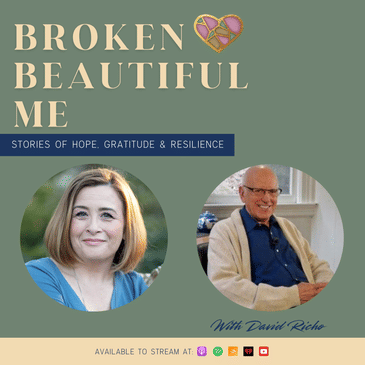
In this enlightening episode, we talk with David Richo, a celebrated psychotherapist and author, who explores the profound influence of allies—both visible and unseen—in our life journeys. David draws from spiritual and psychological traditions, particularly Jungian psychology and Buddhism, to reveal how these guiding forces help us navigate life's challenges and fulfill our purpose.
As we uncover the intricate roles allies play, David shares insights on:
- Recognizing and welcoming the support of both visible and invisible allies.
- Understanding the interplay between spiritual traditions and psychological growth.
- Practical ways to tap into these forces for personal and emotional healing.
- How to integrate the lessons of our allies into daily life for a more connected and purposeful existence.
- Website: davericho.com
David's unique perspective sheds light on the mysterious forces that guide us, reminding us of the unseen support available to us on our journey. Whether you're seeking personal growth or simply curious about the role of unseen allies, this episode offers a fresh and inspiring take on navigating life with purpose.
------------------
Follow the Host, Kelly Buckley:
Stay connected with Kelly Buckley and join her journey of healing, resilience, and gratitude. Follow her on social media for more inspiring content, updates on future episodes, and insights on living a life full of hope and purpose.
- Website: kellybuckley.com
- Facebook: Kelly Buckley on Facebook
- Instagram: @KellyBuckleyOfficial
- LinkedIn: Kelly Buckley on LinkedIn
- Twitter: @KellyBuckley
- YouTube: Kelly Buckley on YouTube
If you enjoyed this episode, don't forget to subscribe to the podcast, share it with your friends and family, and leave a review. Your support helps spread the message of hope, resilience, and gratitude to more listeners around the world.
00:00:01
Hello, everyone,
00:00:02
and welcome to another
00:00:03
episode of Broken Beautiful Me,
00:00:05
Stories of Hope, Gratitude,
00:00:07
and Resilience.
00:00:09
I feel so fortunate today to
00:00:11
have as our guest Dr. David Rico.
00:00:14
He is a renowned psychotherapist, teacher,
00:00:17
and author who has
00:00:18
dedicated his life to
00:00:19
exploring the intersection
00:00:21
of psychology and spirituality.
00:00:24
He received his BA in psychology from St.
00:00:26
John's Seminary in Brighton,
00:00:28
Massachusetts.
00:00:29
In nineteen sixty two, his M.A.
00:00:32
in counseling psychology
00:00:33
from Fairfield University
00:00:34
in nineteen sixty nine and his Ph.D.
00:00:37
in clinical psychology from
00:00:38
Sierra University in
00:00:39
nineteen eighty four.
00:00:42
Since nineteen seventy six,
00:00:43
he's been a licensed marriage,
00:00:44
family and child counselor in California.
00:00:47
And in addition to
00:00:49
practicing psychotherapy,
00:00:50
teaches courses at Santa
00:00:51
Barbara City College and
00:00:53
the University of California, Berkeley,
00:00:55
and has taught at the Salen
00:00:58
Institute in Big Sur,
00:00:59
Pacifica Graduate Institute
00:01:02
and Santa Barbara Graduate Institute.
00:01:06
He is a clinical supervisor
00:01:07
for the Community
00:01:08
Counseling Center in Santa Barbara.
00:01:10
Um, he has authored numerous books,
00:01:13
including how to be an
00:01:14
adult in relationships, triggers, uh,
00:01:17
the five things we cannot
00:01:18
change and his most recent
00:01:20
release by your side.
00:01:22
And he leads popular
00:01:24
workshops on emotional wellbeing.
00:01:27
He splits his time between
00:01:28
Santa Barbara and San Francisco,
00:01:30
California,
00:01:31
where he continues to inspire
00:01:32
and guide others on their
00:01:34
journey to self discovery and healing.
00:01:37
Welcome.
00:01:37
Welcome, David.
00:01:38
It's so nice to have you on the show.
00:01:41
Thank you, Kelly,
00:01:42
and I appreciate your inviting me.
00:01:45
So if we could just start
00:01:47
for some of our listeners
00:01:49
who may not be familiar with your work,
00:01:51
could you just kind of give
00:01:52
us an overview of your
00:01:55
journey and what inspired
00:01:56
you to become a
00:01:57
psychotherapist and then an author?
00:01:59
I'm sorry to say what
00:02:02
inspired me to become a
00:02:04
psychotherapist is I was so messed up.
00:02:06
I thought if I learned all about
00:02:10
psychology I'd get better so
00:02:15
I soon found out that it
00:02:17
doesn't work that way so I
00:02:21
went into therapy to get
00:02:23
help and I feel like I
00:02:28
don't see being a therapist
00:02:31
of course now I'm close to
00:02:33
retirement so I don't take
00:02:35
any new clients only ones
00:02:36
that I've already seen
00:02:39
But I could say that over
00:02:41
these fifty three years of
00:02:44
being a therapist,
00:02:46
I never felt it was a job.
00:02:47
I always felt it was more of a calling.
00:02:51
And the calling goes all the
00:02:52
way back to just this
00:02:59
feeling that I know what I know.
00:03:05
and I'm appreciative of what
00:03:07
I know and what I can share
00:03:09
and that there's some,
00:03:12
the universe has made some
00:03:16
summons to me to share that
00:03:19
with others and that's what
00:03:21
I've been doing through my
00:03:22
writing and teaching and therapy.
00:03:28
So truly a calling to this
00:03:33
profession and to share your wisdom.
00:03:37
So your work,
00:03:39
I believe I read with Carl
00:03:41
Jung and kind of a mythic perspective.
00:03:45
So tell me about how you've
00:03:47
kind of combined, you know,
00:03:50
that kind of theory with
00:03:53
kind of Western practices
00:03:55
of psychology and therapy.
00:03:58
It just seems as if neither
00:04:00
Western nor Eastern were enough.
00:04:03
Yes.
00:04:03
It felt like it would be
00:04:06
good to combine them in
00:04:10
whatever way I could.
00:04:11
And also I noticed that
00:04:13
there are many similarities
00:04:14
between the two and that
00:04:16
further kind of interconfirms them.
00:04:21
They each confirm the other.
00:04:23
So I've learned a lot and am
00:04:25
a Buddhist practitioner.
00:04:27
that I also have my Catholic
00:04:31
background and I still
00:04:33
appreciate how so many of
00:04:37
the Catholic teachings
00:04:39
refer to the archetypes
00:04:43
that all of us humans participate in.
00:04:47
And so I appreciate both the
00:04:52
religious and the Buddhist perspectives.
00:04:56
and I try to pull them
00:04:57
together in what I write.
00:05:00
So that's trying to push
00:05:03
either one on people.
00:05:05
No,
00:05:06
but I feel like because I was raised
00:05:10
Roman Catholic as well and
00:05:11
went to Catholic school and
00:05:14
but found myself later in
00:05:16
life wanting to explore
00:05:18
other belief systems just
00:05:22
out of curiosity and to see
00:05:24
the commonalities in each message.
00:05:28
And I think for in just
00:05:31
reading about your work
00:05:32
that I feel like that
00:05:34
it's kind of like an open
00:05:36
welcome so that it's not
00:05:37
restricted to just one
00:05:39
particular message where
00:05:41
people feel like they have
00:05:42
to fit into that silo.
00:05:44
Everybody is welcome.
00:05:46
And, and I,
00:05:47
that's what I love about your message.
00:05:51
Thank you.
00:05:51
Yeah.
00:05:51
It's kind of reading hospitality.
00:05:54
Yeah.
00:05:55
For all the resources.
00:05:58
Yeah, and it's so refreshing.
00:06:02
You know, today's world is very noisy.
00:06:05
And, you know, people,
00:06:09
we've gotten into a bad
00:06:10
habit of wanting to
00:06:12
segregate ourselves away
00:06:13
from each other so that we
00:06:14
can't have productive dialogue.
00:06:17
And I hope that we get back
00:06:19
to a place where we can
00:06:21
have conversations and not
00:06:22
necessarily agree a hundred percent,
00:06:24
but not be disagreeable.
00:06:27
Um, and yeah, so, so let's jump in.
00:06:32
I just want to ask about
00:06:33
your latest book because, um,
00:06:36
I'm really interested in
00:06:37
hearing about the concept
00:06:39
of soulful allies.
00:06:41
I just love that.
00:06:42
So could you explain what a
00:06:44
soulful ally is and why
00:06:47
they're essential in our lives?
00:06:51
Well, first of all,
00:06:52
it was a big thrill for me to, um,
00:06:56
feel moved to say something
00:07:00
about the archetype of the
00:07:03
assisting force.
00:07:06
So an archetype is a common
00:07:09
theme that in stories the
00:07:12
world over and all
00:07:13
throughout the ages that
00:07:17
also reflects inner
00:07:19
energies that all of us are endowed with.
00:07:24
So for instance,
00:07:25
the central and main archetypal story,
00:07:29
thanks to Joseph Campbell
00:07:31
explaining it to us,
00:07:33
is of course the heroic journey.
00:07:35
And the main character
00:07:38
leaves where he or she is
00:07:42
and then moves through
00:07:44
various struggles in search
00:07:47
of something that seems
00:07:48
important and ultimately
00:07:51
finds out that what you're seeking
00:07:54
that you thought was outside
00:07:55
of yourself is actually inside.
00:07:59
And that is wonderful news
00:08:02
because it shows that you have wholeness.
00:08:06
And then you bring that
00:08:08
message back to where you came from.
00:08:12
So let's use a simple example.
00:08:15
Dorothy in Oz thinks
00:08:24
Actually,
00:08:25
the purpose of the journey was
00:08:27
not to get back to Kansas.
00:08:30
It was to recognize what the
00:08:33
good witch said to her.
00:08:35
You've had the power all along.
00:08:38
In other words,
00:08:39
you have power in you that
00:08:40
you didn't know you had.
00:08:42
And you no longer have to be
00:08:44
afraid about the welfare of
00:08:46
the little dog or yourself
00:08:49
because you have vast inner resources.
00:08:53
So that's the heroine of the
00:08:55
story and what she finds
00:08:58
out as the purpose of her journey.
00:09:04
And as part of the journey
00:09:09
for Dorothy and for all
00:09:11
characters and all stories,
00:09:15
we notice that they don't operate alone.
00:09:20
They have...
00:09:23
friendly,
00:09:25
assisting comrades who help them
00:09:30
fulfill their purpose,
00:09:32
who help them find their destiny.
00:09:35
These characters are both tangible,
00:09:39
we can see, touch, feel them,
00:09:42
and intangible, spiritual.
00:09:46
So in the Wizard of Oz, her tangible,
00:09:52
assisting forces are the
00:09:54
three friends that she meets.
00:09:57
And her spiritual assisting
00:09:59
force is the Glinda, the good witch.
00:10:03
Then in addition,
00:10:04
the hero or heroine has
00:10:07
afflicting forces.
00:10:09
These are the ones who are
00:10:10
trying to stop you from
00:10:12
fulfilling yourself.
00:10:14
That would be the evil witch
00:10:16
and her army in the story.
00:10:20
But ultimately,
00:10:22
The afflicting forces show
00:10:24
you your own strength.
00:10:28
So when she finally threw
00:10:30
water on the witch and
00:10:33
thereby destroyed the evil power,
00:10:44
she found out she had more
00:10:45
strength than she thought she had.
00:10:49
So the allies...
00:10:52
To get back to your question,
00:10:54
the allies are the
00:10:55
assisting forces in our life,
00:10:59
the people living and dead,
00:11:03
and the spiritual figures
00:11:07
that we might believe in,
00:11:09
such as guardian angels, patron saints,
00:11:11
bodhisattvas, buddhas,
00:11:15
great heroes like Martin Luther King,
00:11:17
Gandhi, Mother Teresa.
00:11:23
they're all helping us in some way.
00:11:27
And they are the friends of our soul.
00:11:31
Soul meaning the wonderful
00:11:37
wholeness that we're really about,
00:11:40
even though our daily life
00:11:42
doesn't really manifest it.
00:11:45
So we look like messed up, wounded people,
00:11:48
and we are.
00:11:50
but somewhere inside of us is a wholeness,
00:11:55
a completion,
00:11:57
a completeness that has not
00:12:00
been messed up by whatever
00:12:02
our parents did to us or
00:12:04
whatever horrible traumas
00:12:06
we've been through.
00:12:08
And the allies are the friends of that.
00:12:17
And finally,
00:12:20
An important feature of the
00:12:22
allies is that they don't
00:12:24
necessarily have to make
00:12:26
something happen.
00:12:29
So in the story of Robin Hood,
00:12:32
his assisting forces are male and female.
00:12:37
He has made Marion.
00:12:39
She's going to help him get out of prison.
00:12:43
And he has his merry men of Sherwood.
00:12:46
They're going to help him
00:12:47
get out of prison.
00:12:49
and fulfill his goal,
00:12:52
which is fidelity to the king.
00:12:56
All of them are offering
00:13:01
tangible ways of being of help.
00:13:06
But there are also ways that
00:13:09
we're getting help that you
00:13:12
can't put your finger on, you can't name,
00:13:16
and you certainly don't
00:13:17
know where it came from.
00:13:19
sudden intuitions, realizations, visions,
00:13:24
dreams that reveal
00:13:27
something important about
00:13:28
yourself to yourself.
00:13:34
So it's always a combination
00:13:38
of what you can name and
00:13:43
what you can't quite name.
00:13:46
And I'm a believer that
00:13:48
We have many more assisting
00:13:50
forces than we could ever imagine.
00:13:53
Sometimes these, as I said,
00:13:56
sometimes these assisting
00:13:57
forces help you in tangible ways,
00:14:01
like getting Robin Hood out
00:14:02
of prison and helping
00:14:04
Dorothy go back home.
00:14:07
But at other times,
00:14:09
the only thing that they
00:14:10
offer is presents.
00:14:15
And I'll give a very simple example.
00:14:18
we're all familiar with the
00:14:19
Twenty-Third Psalm, especially the words,
00:14:24
Yea,
00:14:24
though I walk through the valley of
00:14:26
the shadow of death, I will fear no evil,
00:14:28
for thou art with me.
00:14:30
Yes.
00:14:30
So, in that statement,
00:14:33
King David is saying,
00:14:38
it's a dark time for me.
00:14:41
I can't really see my way clearly.
00:14:46
And
00:14:47
There's a presence beside me
00:14:50
that is simply accompanying me,
00:14:54
and that's how I'm getting through this.
00:14:57
So sometimes the assisting
00:15:00
force only offers presence.
00:15:03
Hold your hand as you go
00:15:05
through something.
00:15:06
Give you a hug when you need it.
00:15:09
Rather than fix it for you,
00:15:11
make it all come out right,
00:15:13
change this whole thing so that
00:15:17
so that you'll get what you really want.
00:15:20
The assisting force is
00:15:21
sometimes not like that.
00:15:23
It's sometimes just the
00:15:25
sense of accompaniment,
00:15:29
which is one of the most
00:15:30
beautiful things people can
00:15:31
do for each other.
00:15:34
The present.
00:15:36
Pardon me?
00:15:38
Does this make sense to you?
00:15:39
It absolutely does.
00:15:41
And it's,
00:15:42
it's quite beautiful to think about.
00:15:44
Now, do you, you mentioned when we were,
00:15:46
we were talking a little
00:15:47
bit about the Wizard of Oz and, you know,
00:15:49
kind of the good witch and the,
00:15:50
and the bad witch.
00:15:52
Do you feel that, you know, we,
00:15:55
that it's part of the
00:15:56
journey that we encounter
00:15:58
people who push back and, and, and
00:16:01
and kind of force us to confront and to,
00:16:05
to make friends with the
00:16:06
struggle and then rise above it.
00:16:09
So that is definitely, that's part of it.
00:16:12
I mean, they are in, in,
00:16:14
in a way they're just as
00:16:16
important as the allies who
00:16:18
are walking with Dorothy, you know,
00:16:20
the lion and the tin man, because without,
00:16:23
without that struggle,
00:16:25
Dorothy would not come to
00:16:26
the conclusion that she did at the end,
00:16:29
right.
00:16:29
That it was in her all the time.
00:16:33
Yeah.
00:16:33
Yeah.
00:16:34
That is just beautiful.
00:16:36
And I'm thinking about the
00:16:39
soulful allies in my life,
00:16:40
both seen and unseen.
00:16:42
And I am a big believer that
00:16:46
I am surrounded by supportive,
00:16:49
beautiful forces every
00:16:52
single day that help me with this work.
00:16:57
And then having a community of people
00:17:02
Certainly,
00:17:03
I work a fair bit with the
00:17:04
bereaved and community is,
00:17:09
it's important and it's a
00:17:11
struggle at times,
00:17:12
especially early in your
00:17:14
grief when you feel like
00:17:15
you need to retreat and
00:17:16
kind of protect yourself.
00:17:19
But can you talk about the
00:17:22
role of allies in terms of
00:17:24
grief and loss?
00:17:25
Yes.
00:17:28
And first of all,
00:17:30
it's wonderful to realize,
00:17:33
and I don't know if this
00:17:34
has happened to you,
00:17:35
but it has happened to me,
00:17:38
that in a time of grief,
00:17:40
you will draw the allies to
00:17:43
you without even having to ask.
00:17:46
You know,
00:17:47
people show up from out of
00:17:48
nowhere and realizations
00:17:50
come to you from out of
00:17:51
nowhere that console you.
00:17:55
And people...
00:17:56
become available to sit with
00:17:58
you in your grief or even to comfort you.
00:18:04
There's something about the
00:18:07
utter honesty of grief.
00:18:11
Something important has been
00:18:13
lost and I'm sitting here
00:18:15
in my sadness and I'm holding it.
00:18:19
And of course the archetype
00:18:21
of holding the grief is the pieta.
00:18:25
the statue, you know,
00:18:26
by Michelangelo is an example of it,
00:18:30
where you have the Virgin
00:18:31
Mary at the foot of the
00:18:33
cross holding the dead body of her son.
00:18:38
And that's all she's doing.
00:18:41
She's just holding it for all eternity.
00:18:45
I hope the statue lasts that long.
00:18:47
Yes, me too.
00:18:49
That's the picture of grief and
00:18:55
that you don't throw away what you've lost,
00:19:00
that you hold it in a soulful place.
00:19:04
And in that sense,
00:19:07
it's always somehow present
00:19:09
what you've lost.
00:19:14
And you're beaming out a
00:19:15
certain kind of energy to
00:19:18
the world around you,
00:19:20
and you notice that it
00:19:21
draws in some helpers.
00:19:25
This is an important part of
00:19:29
the archetype of the assisting force.
00:19:35
So, and I feel, you know,
00:19:38
you talked about in terms of grief,
00:19:44
I have always described the
00:19:45
first year after my son passed away,
00:19:48
the first year after,
00:19:51
I describe it as the most
00:19:52
awake year of my life.
00:19:57
because I felt that support all around me,
00:20:01
that unseen support for sure,
00:20:03
without a doubt.
00:20:04
And it's funny.
00:20:06
I had that picture of Mary.
00:20:10
I had it in my planner.
00:20:11
I used to look at it several
00:20:13
times a week and kind of, kind of pray to,
00:20:17
to find the strength, you know,
00:20:19
because it, it is, it,
00:20:22
when you look at it, it, it just,
00:20:24
it encompassed every
00:20:25
emotion that I was feeling.
00:20:27
You know, when you look at that picture,
00:20:29
it really, it truly does.
00:20:31
Um, so
00:20:34
we have those soulful allies
00:20:36
and I'm thinking about
00:20:38
actual individuals now who
00:20:39
are in in our lives so what
00:20:43
what role can they play
00:20:45
like some people have an
00:20:46
active role or a passive
00:20:47
role but what role can they
00:20:48
play in the healing process
00:20:50
because it's a struggle um
00:20:54
a lot of people don't know
00:20:55
how to approach grief right
00:20:58
and so some people are
00:20:59
afraid of it and some people
00:21:02
that you thought you could
00:21:03
trust will turn away from
00:21:05
you in your grief because
00:21:08
they're afraid of the
00:21:09
feelings that you're showing.
00:21:13
And, of course, you're showing them very,
00:21:17
as I say, honestly, you're really crying.
00:21:23
And some people just can't handle that.
00:21:25
So we don't judge them for that.
00:21:28
We just recognize, okay,
00:21:30
that's his or her or their limit.
00:21:32
Yeah.
00:21:34
And we also notice that
00:21:38
there are other people who
00:21:39
are strong enough to handle our feelings,
00:21:41
and they will hold our hand
00:21:44
as we go through it.
00:21:45
The best contribution the
00:21:48
ally can make is right there in the psalm,
00:21:51
for thou art with me.
00:21:53
Just the feeling that there
00:21:55
really is somebody willing
00:21:57
to sit here and be with me
00:21:58
as I go through this.
00:22:01
That's the true helper,
00:22:04
not the one who made it all
00:22:05
go away because such a one
00:22:07
does not even exist or can exist.
00:22:10
No.
00:22:12
We have to go through our sufferings,
00:22:19
but we don't have to go
00:22:20
through them on our own.
00:22:22
That's the whole point of
00:22:23
there being allies, assisting forces.
00:22:28
And I'm trying to think of
00:22:30
the word when we talk about
00:22:32
suffering and in terms of Buddhism there,
00:22:35
they talk about an
00:22:36
unchangeable peace within, right?
00:22:39
Is it the bodhicitta heart or something?
00:22:40
I believe that was a message
00:22:46
a friend gave me early on.
00:22:48
And it was something that I
00:22:49
held on to that there was
00:22:50
an unchangeable peace within me.
00:22:54
And then translate that.
00:22:56
Yeah.
00:22:57
And that no matter what happened,
00:23:00
that that was available to me,
00:23:02
that that was there.
00:23:05
And even with a profound
00:23:06
loss where you feel absolutely shattered,
00:23:11
that you know that there's
00:23:13
a place that you will
00:23:13
return eventually when you do the work.
00:23:18
That's a beautiful way to put it,
00:23:20
and I totally agree.
00:23:21
I mean, you're finding the larger...
00:23:26
Identity of yourself.
00:23:29
It's something about you
00:23:32
that can't be put on a
00:23:33
driver's license or birth
00:23:34
certificate Something that
00:23:38
has More than what meets
00:23:44
the eye and who you are and
00:23:49
you could some people would
00:23:51
call that God and
00:23:53
or saints, or Buddhas, and so forth,
00:23:56
but we can also say that
00:24:02
it's the God within, the Buddha within,
00:24:07
the community of saints
00:24:09
that we're participating in,
00:24:14
that gives you a feeling
00:24:18
that you're not alone, and that
00:24:22
What you're turning to for support,
00:24:25
thou art with me,
00:24:27
that thou is also ultimately you.
00:24:30
Yeah.
00:24:35
The part of you that's
00:24:37
bigger than the story.
00:24:40
And it can't really be named
00:24:41
or described very well.
00:24:43
But the best way to locate it
00:24:51
is to look at what you turn
00:24:54
to and honor most and
00:24:57
admire most and even adore
00:25:00
that's how you see uh that
00:25:04
bigger piece of yourself
00:25:07
yeah that's that's
00:25:09
beautiful um and I think
00:25:12
when when people um
00:25:16
allow themselves to sit with
00:25:18
that grief and to really
00:25:21
discover who they are and
00:25:24
return to that place,
00:25:27
your perspective on life
00:25:29
completely changes.
00:25:34
I approach my grief by using gratitude,
00:25:40
not for what had been lost,
00:25:43
but for what still remained.
00:25:45
And so, and I actually,
00:25:47
we started this practice as
00:25:48
a family because I was
00:25:49
really worried about my
00:25:50
twelve year old son being
00:25:53
able to bounce back from this.
00:25:56
family tragedy.
00:25:58
And so every day we would
00:26:00
look for one little thing.
00:26:01
And, and one,
00:26:02
we said one little thing
00:26:03
because some days we could
00:26:04
only find one little thing, you know,
00:26:06
on those tough days,
00:26:07
but we gave ourselves
00:26:08
permission for those tough days.
00:26:10
So if the, if that day,
00:26:12
my one little thing was
00:26:13
walking to the mailbox and
00:26:15
I was brave enough to do it
00:26:16
after a month or so of crying in my room,
00:26:20
then,
00:26:20
then that was something to be
00:26:21
grateful for so that we,
00:26:23
we kind of redefined, uh,
00:26:25
on a deeper level that there
00:26:28
was still goodness all around us,
00:26:30
even though we were in pain.
00:26:32
And that somehow alleviated
00:26:36
part of the suffering of the journey.
00:26:42
You see, you were sticking with grief,
00:26:46
what Freud called the grief work.
00:26:52
You were saying,
00:26:53
we're going through a process.
00:26:55
We need to stay with it.
00:26:57
And it's going to involve
00:27:01
being in touch with all the
00:27:03
family members that have
00:27:05
been affected by what happened.
00:27:09
And your son,
00:27:10
your twelve-year-old was an
00:27:11
example of that person.
00:27:15
And you stayed with it.
00:27:18
That's how you get through it.
00:27:21
Can you go away with drugs or alcohol or,
00:27:26
you know, denial?
00:27:28
No.
00:27:29
And I mean, it's I know, you know,
00:27:33
people there's so much
00:27:34
suffering in the world and
00:27:35
there's there's a lot of inclination,
00:27:38
I guess, for some people to to numb it.
00:27:42
But it's always there when
00:27:44
you it always waits for you.
00:27:46
It always when you when you
00:27:48
finish numbing that pain
00:27:50
and you come back to that,
00:27:51
it's still sitting there
00:27:52
waiting for you to look at it.
00:27:56
That's the healthy side of you.
00:27:59
See, when you say it's always waiting,
00:28:01
it wants to come back and
00:28:03
make its claim upon you
00:28:06
that you stay with it,
00:28:08
that you work through things.
00:28:10
The kind of grief you have,
00:28:12
which I can't even imagine,
00:28:16
is the kind of grief you
00:28:17
have for a lifetime.
00:28:19
It never goes away.
00:28:21
It's not like the grief of, you know,
00:28:23
I lost money once.
00:28:27
That grief ends.
00:28:30
in a matter of months or a year.
00:28:32
But the grief of loss of a
00:28:35
child is a lifetime of mourning.
00:28:41
And you can still have a life of happiness,
00:28:48
but you're carrying around
00:28:53
something that was never meant to happen.
00:28:58
Correct.
00:28:59
Yeah.
00:29:01
So, um, it has mystery.
00:29:05
There's,
00:29:06
there's so many different layers to it.
00:29:08
And I find out,
00:29:09
I rediscover another layer
00:29:12
as each year passes, to be honest.
00:29:14
Yes.
00:29:15
And it truly is.
00:29:19
And I find, um,
00:29:21
and I've talked to many
00:29:22
other bereaved parents.
00:29:23
We've had conversations about this and,
00:29:26
that at different life stages.
00:29:29
So when my son's friends
00:29:34
were starting to get married,
00:29:35
that was a layer of grief that I,
00:29:37
for whatever reason, I didn't anticipate,
00:29:39
but it hit me and it was
00:29:41
very difficult because,
00:29:43
and then when they started to have kids,
00:29:45
because we've stayed close
00:29:47
with all of his friends and
00:29:48
they're beautiful, beautiful humans,
00:29:51
so incredibly happy for
00:29:53
them and their happy lives.
00:29:56
But it struck me and I actually,
00:29:58
I struggled because I was like,
00:30:00
I'm so happy for them,
00:30:01
but I can't deal with this.
00:30:03
I can't look at it right now.
00:30:04
It's just too much.
00:30:06
So it is, it's those layers.
00:30:08
And I think what's important
00:30:10
for people who have that kind of grief,
00:30:13
that kind of walk side by
00:30:15
side with you for a lifetime is,
00:30:18
is at some point I had to sit down and say,
00:30:22
okay, I'm going to make peace with this.
00:30:25
And when it bubbles up, I'm going to,
00:30:28
I'm going to sit down and
00:30:29
I'm going to think about
00:30:30
why it's bubbling up.
00:30:31
I'm going to write about it.
00:30:32
Cause I write a lot.
00:30:33
Um, and I'm not going to be afraid of it.
00:30:39
I'm not going to be afraid of it.
00:30:40
Good for you.
00:30:42
That's really the way it works.
00:30:45
You know, when you said,
00:30:47
I can't look at it right now,
00:30:49
that's an important part of
00:30:51
the grief process.
00:30:52
You have to honor your timing.
00:30:54
Yeah.
00:30:56
I'll know when the time is right.
00:30:58
That's when I'll be able to
00:30:59
look at this part.
00:31:02
But right now I can't.
00:31:04
There's nothing wrong with
00:31:06
you for being like that.
00:31:07
That's the healthy part of
00:31:09
you that is letting it in piecemeal.
00:31:14
which is the only way it can be let in.
00:31:18
And I, you know, I think, um, you know, I,
00:31:21
I went for therapy and our
00:31:23
whole family did,
00:31:24
and it was the best thing we ever did.
00:31:27
Um,
00:31:27
I was so thankful that we made that
00:31:29
choice cause we just didn't
00:31:30
have the toolbox, right?
00:31:31
We didn't know how to navigate it.
00:31:34
Um,
00:31:35
And that was one of the
00:31:37
lessons that I really took
00:31:39
from that whole experience
00:31:40
was it's okay to set some
00:31:43
emotional boundaries for
00:31:44
yourself until you're ready,
00:31:47
that that's perfectly fine.
00:31:49
And that was very freeing.
00:31:52
And I remember...
00:31:54
My son came out of his first
00:31:56
one-on-one session and he said, you know,
00:31:58
I don't really have to talk
00:31:59
to you about this because I
00:32:03
wanted him to have autonomy
00:32:04
in his discussion.
00:32:06
He was going through something,
00:32:07
a completely different
00:32:08
experience than me.
00:32:12
But, you know,
00:32:13
it was learning that it's
00:32:16
okay to have boundaries.
00:32:17
It's okay to give yourself time.
00:32:19
And it's okay to be kind to
00:32:22
yourself because sometimes
00:32:22
we beat ourselves up when
00:32:24
we feel like we should be
00:32:25
stronger than we are.
00:32:28
I want to jump for a second
00:32:29
because this is a big topic,
00:32:31
especially with bereaved parents.
00:32:33
And you have written
00:32:34
extensively about relationships.
00:32:37
and bereaved parents, um,
00:32:40
oftentimes that you will
00:32:41
see that relationships suffer, uh,
00:32:45
in particular partnerships and marriages.
00:32:48
Um, can you speak to that a little bit?
00:32:50
And, um, you know, what, what could you,
00:32:55
what could we do that would, um,
00:32:59
would help us in that regard?
00:33:00
Oh, uh, first of all, um,
00:33:05
It's true, psychologically,
00:33:07
that a relationship between
00:33:12
partners is in danger, threatened,
00:33:21
when a child of theirs dies.
00:33:26
Because you go off each into
00:33:31
your own grief.
00:33:35
you start to drift apart.
00:33:41
And at the same time,
00:33:44
you can no longer handle
00:33:47
the grief of your partner
00:33:49
because your partner
00:33:52
continually reminds you of
00:33:53
your own grief that you're
00:33:57
trying to work through or get away from.
00:34:00
So the only way to
00:34:02
be sure that the
00:34:03
relationship survives is to
00:34:07
go through the grieving
00:34:08
process together and let it
00:34:11
be okay that each of you
00:34:13
has breakdowns from time to
00:34:14
time and that the other
00:34:16
person is going to be with
00:34:18
you in the dark valley and
00:34:21
doesn't have to fix it for you.
00:34:27
That would help a lot with
00:34:29
keeping the relationship alive.
00:34:34
See,
00:34:34
everything wants to die when someone
00:34:40
dies at an unexpected time
00:34:45
or in a tragic way.
00:34:50
Everything wants to shut down,
00:34:55
pull down the shades, hide.
00:34:58
And in a relationship,
00:35:00
if you're trying to hide from each other,
00:35:03
that would make it well nigh
00:35:05
impossible to stay together as a couple.
00:35:11
Anyway, that is something to keep in mind.
00:35:19
And I think in terms of like
00:35:23
a male-female partnership,
00:35:25
men and women grieve very differently.
00:35:29
And so,
00:35:32
there has to be an acceptance of that,
00:35:35
right?
00:35:36
I mean,
00:35:36
it's difficult because sometimes
00:35:42
you just don't feel like
00:35:43
you're connecting with your
00:35:44
partner if that person is
00:35:46
struggling with something
00:35:47
that's completely different than you.
00:35:49
And that's where kind of
00:35:51
therapy really plays a part.
00:35:55
And it's important.
00:35:56
I mean, I've always, I always felt like
00:36:01
Communication, obviously,
00:36:03
between partners is important,
00:36:04
but I always felt when I
00:36:06
was in therapy that this
00:36:08
was someone who didn't really,
00:36:12
who was interested in our healing.
00:36:15
but recognize the
00:36:17
differences and the
00:36:18
autonomy of our own grief.
00:36:21
So we were able to have kind
00:36:24
of that individual time
00:36:25
where we could process very
00:36:29
different emotions that we
00:36:30
had that weren't matched.
00:36:33
Um, and so, you know,
00:36:35
and I say that just to
00:36:37
encourage anybody who's listening that,
00:36:40
um, it is a,
00:36:42
it is a good idea to find
00:36:43
someone to talk to if you're,
00:36:46
if you're struggling.
00:36:47
Absolutely.
00:36:48
Yeah.
00:36:49
That is just the right thing.
00:36:51
And it really helps, I presume.
00:36:54
Yeah.
00:36:56
Absolutely.
00:36:57
So just moving on again on
00:37:00
the topic of relationships,
00:37:01
but going to another one of your books,
00:37:03
could you discuss the five A's?
00:37:07
Attention, acceptance, appreciation,
00:37:10
affection, and allowing.
00:37:12
So that's from your book,
00:37:13
How to Be an Adult in Relationships.
00:37:15
So can you speak a little
00:37:17
bit to them and
00:37:20
relationships and how that works?
00:37:21
Sure.
00:37:22
Sure.
00:37:24
First of all, the five A's,
00:37:27
I usually phrase five A's
00:37:30
because they all start with
00:37:31
the letter A. They refer to
00:37:37
specific needs that we have
00:37:40
all through life.
00:37:41
So when we're born, we have many needs,
00:37:45
but five specific ones stand out.
00:37:52
The first one is you have a
00:37:57
need for attention as an
00:38:00
infant who has no words.
00:38:03
You only have various kinds of cries.
00:38:06
Right.
00:38:07
And you need to be with caretakers who,
00:38:11
twenty-four seven,
00:38:14
are available to hear those
00:38:16
cries and to interpret them.
00:38:20
Basically,
00:38:21
you're crying for one or more of
00:38:24
three things.
00:38:25
One, I need to be fed.
00:38:28
Two, I need to be held.
00:38:30
Third, I need to be changed.
00:38:33
And somehow you have to get
00:38:34
it across to your parents
00:38:38
that you have one of those needs,
00:38:41
and they consistently and
00:38:45
happily fulfill them.
00:38:47
Yeah.
00:38:48
Yeah.
00:38:49
So that's the need for attention.
00:38:54
And you also have a need to
00:38:57
be cherished and valued.
00:39:00
That's what I call appreciation.
00:39:04
Since appreciation is based
00:39:07
on the Latin word for price.
00:39:10
That you're a pearl of great
00:39:12
price here in the house.
00:39:14
That people value you.
00:39:17
They don't think
00:39:19
less of you because you're a
00:39:21
girl rather than when they wanted a boy,
00:39:23
or a boy when they wanted a girl.
00:39:26
You're just valued as yourself.
00:39:30
And soon you start to show
00:39:31
personality characteristics
00:39:33
that are uniquely yours,
00:39:36
maybe not the ones your
00:39:37
parents have hoped for.
00:39:38
Maybe you have one of your own.
00:39:42
And that's where you need acceptance.
00:39:49
That's the third A. And in
00:39:51
all of this they need to be
00:39:54
holding you affectionately
00:39:57
and showing their love
00:40:01
physically and that's the affection.
00:40:05
And then at some point you
00:40:09
crawl across the floor and
00:40:11
you no longer need them to
00:40:12
carry you across.
00:40:15
Now you are
00:40:16
becoming more independent,
00:40:19
and it'll happen again on
00:40:20
the first day of school.
00:40:23
It'll happen again when you
00:40:26
leave high school to go to college.
00:40:28
It'll happen again when you get married,
00:40:32
if that's your next step, and so forth.
00:40:34
So we're continually weaning
00:40:37
ourselves away from our
00:40:38
parents while still loving them.
00:40:44
And a parent has to be ready
00:40:47
to let that happen.
00:40:49
Now these same five A's are
00:40:51
the ones that you carry
00:40:53
with you all through your life.
00:40:55
And so when you look for a partner,
00:40:58
you want someone who can
00:41:00
pay attention to you rather
00:41:02
than think only of himself.
00:41:04
In other words, not be a narcissist.
00:41:07
You want somebody who values
00:41:09
you and appreciates you for what you do,
00:41:11
not take you for granted.
00:41:13
You want someone who accepts
00:41:15
you just as you are,
00:41:16
rather than try to make you
00:41:18
over into what he or she or
00:41:21
they want you to be.
00:41:23
You need somebody who shows
00:41:24
affection fully appropriate
00:41:29
to the nature of the relationship,
00:41:30
so it can include sex.
00:41:34
And finally,
00:41:35
you need somebody who honors
00:41:37
the fact that you're an individual,
00:41:39
you have your own unique
00:41:42
wishes and needs,
00:41:44
And it's okay for you to pursue them.
00:41:48
And he's not trying to
00:41:49
control you or stop you from doing that.
00:41:53
So it's the five A's in childhood,
00:41:55
the five A's in adulthood.
00:41:58
And in the first one,
00:42:00
you're given the parents
00:42:03
that you were given.
00:42:04
And in the second one,
00:42:04
you make the choice of a partner.
00:42:10
But I'm suggesting that you
00:42:11
make the choice on the basis
00:42:15
those five needs and you can
00:42:19
offer to fulfill them for
00:42:21
your partner so that's how
00:42:25
it all comes together okay
00:42:28
and and so if you find
00:42:30
yourself in a relationship
00:42:33
as an adult and those those
00:42:35
five a's there's some
00:42:38
there's some gaps there um
00:42:40
what what do you recommend
00:42:42
to couples to kind of
00:42:45
Well first of all,
00:42:48
in the first part of your story,
00:42:51
the infancy, then and only then,
00:42:59
can you expect twenty-four
00:43:02
seven need fulfillment.
00:43:06
Excuse me, one hundred percent.
00:43:10
But when you're an adult,
00:43:11
You only really want about
00:43:13
twenty-five percent from a partner.
00:43:15
The other seventy-five
00:43:17
percent you're supposed to
00:43:18
be getting from yourself, your friends,
00:43:23
your people at work,
00:43:25
your assisting forces wherever they are,
00:43:29
living and dead, seen and unseen,
00:43:32
your spirituality, nature,
00:43:38
and whatever your
00:43:41
personal calling is and how
00:43:44
it's taken you into a
00:43:48
community of people who
00:43:52
have the same calling as you do, like,
00:43:54
you know,
00:43:55
making a contribution to society,
00:43:57
for instance.
00:43:59
So you're supposed to have
00:44:00
all those resources to draw from,
00:44:03
not try to get for those five A's,
00:44:06
not try to get them all
00:44:08
fulfilled by one person all the time.
00:44:12
That's the fast track to divorce.
00:44:15
Yeah.
00:44:16
And I mean, I think it's kind of, you know,
00:44:20
especially in your younger years,
00:44:22
I think that you think that
00:44:23
when you find your partner
00:44:24
or your soulmate or
00:44:25
whatever you're calling each other,
00:44:28
sometimes that expectation
00:44:30
is that they're going to be,
00:44:31
that's going to be your
00:44:32
source of fulfillment.
00:44:34
And a hundred percent.
00:44:36
And that's so much pressure
00:44:38
on a relationship that it's
00:44:41
just not realistic to think that way,
00:44:43
right?
00:44:43
That we fill our cup from
00:44:45
many different locations.
00:44:49
Yes.
00:44:50
Yeah.
00:44:52
Looking back at your career,
00:44:54
what would you say has been
00:44:55
the most rewarding aspect of your work?
00:45:00
The most rewarding aspect is
00:45:02
how I've been given the gifts I thank.
00:45:06
of being able to teach in a
00:45:07
way that really comes
00:45:09
across clearly and write in
00:45:12
a way that makes difficult
00:45:15
concepts simpler to understand.
00:45:20
Yes, that's very true.
00:45:21
I think it goes back to,
00:45:22
I'm trying to figure out
00:45:23
where it all came from.
00:45:26
And I,
00:45:28
part of my upbringing was to be with
00:45:31
my grandmother a lot who was, you know,
00:45:34
kind of taking care of me when my,
00:45:36
parents were at work,
00:45:38
and she was from Italy,
00:45:43
and she couldn't really
00:45:46
speak English very well.
00:45:49
And as I continued to learn
00:45:55
English myself and
00:45:59
understand the world around me,
00:46:01
I would be continually
00:46:02
explaining it to her.
00:46:05
And I would have to put
00:46:06
everything in the simplest
00:46:08
terms so she could understand.
00:46:10
She didn't have the same
00:46:12
education that you or I have had.
00:46:16
And I think that's where I originally,
00:46:18
that's where I began to
00:46:22
have the skill of
00:46:24
explaining things simply.
00:46:27
That's the best I can figure
00:46:29
out as to where it came from.
00:46:32
But it certainly is a gift.
00:46:34
All my work
00:46:35
I consider a gift from the
00:46:38
Holy Spirit and I'm
00:46:40
continually thankful for it.
00:46:43
I don't really think of what
00:46:46
I know as coming from me.
00:46:49
Feels more like it comes through me.
00:46:52
And I'm not letting myself
00:46:53
off the hook because of
00:46:54
course I also make a lot of
00:46:55
mistakes and don't know a lot of things.
00:46:59
But it's wonderful to feel
00:47:04
the power of grace in your life.
00:47:08
That is the name of one of my books,
00:47:10
Power of Grace.
00:47:12
That's how much I've cherished it.
00:47:14
I wrote a whole book about
00:47:16
it because I thought it was so important.
00:47:19
And of course the assisting
00:47:21
forces and grace are in the
00:47:23
same archetype.
00:47:25
Grace is the special
00:47:28
assistance that you gain without merit.
00:47:32
And you don't know where it came from.
00:47:33
It's the gift dimension of life.
00:47:36
Yeah.
00:47:38
Amazing grace,
00:47:39
how sweet the sound that
00:47:40
saved a wretch like me.
00:47:42
Like something,
00:47:46
even though I was not a very nice person,
00:47:52
a grace came to me that changed me,
00:47:55
that transformed me.
00:47:57
That's what the song says.
00:47:59
And that's what I mean by grace.
00:48:02
You know,
00:48:02
you don't have to work for it or
00:48:04
merit it.
00:48:07
Just every once in a while you notice that,
00:48:09
hey, look at this.
00:48:13
I found something wonderful
00:48:15
or I had a wonderful
00:48:18
realization that's so important.
00:48:20
I made a decision that's
00:48:22
really good for me and for others.
00:48:26
Yeah.
00:48:28
That's grace.
00:48:30
I mean,
00:48:31
I feel when you say that you felt
00:48:33
that it comes through you,
00:48:35
that resonates with me in my own writing.
00:48:42
I've never felt like I was in charge.
00:48:46
And I'm okay with that.
00:48:47
That's fine.
00:48:49
That's absolutely fine.
00:48:51
But that period of grace,
00:48:57
I think the first time that I felt it,
00:49:01
It's just such a freeing.
00:49:06
I don't know.
00:49:06
It's like somehow it's not
00:49:11
all on your shoulders, I guess.
00:49:14
That's kind of how I felt
00:49:15
the first time that I
00:49:16
really felt the power of
00:49:18
grace through me.
00:49:19
Yeah, it shows you that you're not alone.
00:49:22
Exactly.
00:49:24
Exactly.
00:49:25
And I didn't feel alone.
00:49:27
I felt surrounded by love,
00:49:29
which is what I hope everybody can feel.
00:49:35
Can you tell me?
00:49:37
Even now, between the two of us,
00:49:41
there are many angels and
00:49:43
bodhisattvas who are drawn
00:49:47
to us because we're trying
00:49:49
to help people in some way.
00:49:52
And they're helping us.
00:49:53
And I'm not airy-fairy on New Age.
00:49:59
I'm saying it in an archetypal way.
00:50:03
I know it's not literally that way.
00:50:06
Yeah, it's not literal,
00:50:08
but it's metaphorical.
00:50:13
Yes, that's beautiful.
00:50:19
Just before we clue up,
00:50:21
can you tell us a bit of
00:50:22
time when a soulful ally
00:50:24
made a significant
00:50:26
difference in your own life?
00:50:29
Yes, there have been many.
00:50:32
The people who led me to Buddhism,
00:50:37
the people who showed me a
00:50:38
more mature way of being a
00:50:40
Catholic rather than
00:50:43
Catholic meaning superstition and magic.
00:50:49
Yeah.
00:50:50
You know,
00:50:50
people have helped me have a
00:50:51
mature view of the people
00:50:54
like Father Dan Berrigan,
00:50:56
who helped me find the
00:50:58
peace movement and become
00:51:01
an anti-war protester in my
00:51:06
twenties and today.
00:51:12
It's the people who showed
00:51:14
me there's a different way and that
00:51:18
there's something in you
00:51:19
that can have the courage
00:51:21
to join into it.
00:51:23
Yeah.
00:51:24
That's beautiful.
00:51:27
Um, I actually, and I'm,
00:51:29
I'm thinking about your
00:51:30
grandmother and without
00:51:33
really saying anything directly to you,
00:51:36
she molded the way that you
00:51:38
communicate with the world.
00:51:40
Yes.
00:51:41
And, and how beautiful,
00:51:42
what a beautiful legacy
00:51:43
that she left you with.
00:51:45
That's.
00:51:45
Yes.
00:51:46
In fact,
00:51:47
I dedicated my first book to what
00:51:49
I call the three graces of my childhood.
00:51:55
My grandmother.
00:51:57
and her two sisters,
00:51:59
Aunt Laura and Aunt Margaret, who are,
00:52:03
of course, my great-aunts.
00:52:05
You know, they're my mother's aunts.
00:52:09
And I cherish them more than anybody ever.
00:52:15
And they were, you know,
00:52:16
I call them the three graces.
00:52:18
And, you know,
00:52:19
they never would know that
00:52:22
about themselves.
00:52:24
But I could tell they genuinely loved me.
00:52:27
And I certainly love them and still do.
00:52:32
So that's how assisting
00:52:35
forces sometimes live in your life.
00:52:38
I have a whole section in
00:52:39
the book about the people
00:52:41
who have died and how they
00:52:43
go on to become your
00:52:45
assisting force and how
00:52:48
even to keep them in your
00:52:50
life in a healthy way.
00:52:54
Do you find connecting with
00:52:58
nature kind of opens yourself up?
00:53:00
Like I find there's so many
00:53:02
lessons for life when you are outside.
00:53:06
When you look around, like I could,
00:53:08
like a tree,
00:53:09
I love mowing the lawn for
00:53:10
this reason because I, and I stopped,
00:53:12
my husband laughs at me
00:53:13
because I stopped so many
00:53:14
times to look at something
00:53:16
or take a picture or, because I,
00:53:19
I learn every time I step outside and,
00:53:22
you know,
00:53:23
do you feel like that plays a big part in,
00:53:27
in finding that special
00:53:30
grace that you need for yourself?
00:53:31
Sometimes it,
00:53:32
does it allow you to connect
00:53:33
to that higher power?
00:53:36
Oh, totally.
00:53:39
Um,
00:53:39
it is the higher power in so many ways.
00:53:42
Uh,
00:53:42
and I do have a whole section on the
00:53:44
book on how nature can be
00:53:47
our assisting force.
00:53:49
Um, I'm thinking of, um,
00:53:52
when ralph walter emerson
00:53:54
came here to california
00:53:56
from massachusetts to visit
00:54:00
and part of it was visiting
00:54:02
with john muir and seeing
00:54:04
the redwoods later he said
00:54:07
I felt like the trees were
00:54:09
looking at me
00:54:10
affectionately oh that's so
00:54:15
beautiful that's how you
00:54:16
know you really appreciate
00:54:17
nature yeah you really feel them
00:54:21
Embracing you, holding you, you know,
00:54:23
the trees, the mountains, so forth.
00:54:28
And the other part of nature
00:54:29
that strikes me so
00:54:32
powerfully is that it renews itself.
00:54:36
Yeah.
00:54:36
There is no ultimate death.
00:54:39
It keeps renewing.
00:54:41
And that, to me, is the basis of hope.
00:54:46
It truly is.
00:54:49
Yeah,
00:54:50
I remember in the depths of my own
00:54:52
grief watching those tulips
00:54:54
pop up in the spring.
00:54:56
And I remember looking at
00:54:58
them and thinking, okay,
00:54:59
they came back and I will.
00:55:02
I mean,
00:55:03
it's life affirming really because
00:55:05
you're seeing God's
00:55:07
creation and you're
00:55:08
realizing that you're part
00:55:09
of it too so that you can
00:55:10
do the same thing as that tulip.
00:55:11
Yeah.
00:55:14
Yeah.
00:55:15
Is there a final message or
00:55:17
piece of wisdom you would
00:55:18
like to leave our listeners
00:55:20
with before we close out the interview?
00:55:25
Well,
00:55:25
I just would like to say how much
00:55:29
I've appreciated your sharing.
00:55:32
And I can really tell that
00:55:35
you've been through
00:55:36
something and you've come
00:55:38
through something.
00:55:40
And now you're doing these
00:55:42
podcasts to help others.
00:55:45
make that same journey.
00:55:47
And I really admire you and
00:55:52
appreciate that you had me on your show.
00:55:57
Well, thank you very much.
00:55:59
I mean, coming from you,
00:56:00
that means so much because
00:56:04
your work is so important.
00:56:06
And I truly appreciate that.
00:56:10
Um, so before we close, um,
00:56:13
could you tell our
00:56:14
listeners how they can
00:56:15
connect with you and your message?
00:56:17
So you have your website, correct?
00:56:20
David Rico.com.
00:56:22
No, it's Dave Rico.
00:56:24
Dave.
00:56:25
Okay.
00:56:25
Sorry.
00:56:31
And there you will see my
00:56:33
various books and talks.
00:56:37
And, um,
00:56:38
A lot of what's on there is free.
00:56:40
Most of it's free.
00:56:42
And my books are sold on
00:56:48
Amazon or directly from
00:56:52
publishers Shambhala or Paulus.
00:56:55
And they're also available
00:56:57
through bookstores.
00:56:59
Perfect.
00:57:00
They're not self-published.
00:57:01
They're published by publishing companies.
00:57:06
Right.
00:57:07
So I really encourage
00:57:11
everyone to not only look at By Your Side,
00:57:16
the book we've been talking
00:57:17
about with regards to Soulful Allies,
00:57:19
but also all of your other
00:57:21
writings as well.
00:57:23
So this has been an amazing episode,
00:57:26
and I am so, so grateful to you.
00:57:29
Thank you so much for this conversation.
00:57:31
Oh, thank you.
00:57:34
And until next time, our listeners,
00:57:37
we will be back next time
00:57:38
with another interview and
00:57:40
sharing more stories of hope, gratitude,
00:57:42
and resilience.
00:57:43
So until then,
00:57:44
keep looking for your little
00:57:45
things to be grateful for.
00:57:47
Thank you.