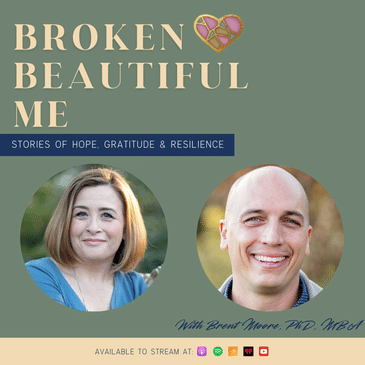
Finding Light in Loss: Brent Moore, PhD on Positivity and Connection
In this heartwarming episode, we speak with Dr. Brent Moore, a Chair and Professor in Behavioral & Health Sciences at Indiana Wesleyan University and a faculty member at California Baptist University. Brent, also a Licensed Clinical Professional Counselor and owner of Neural Pathways Learning Center, has turned personal tragedy into a powerful testament to the resilience of the human spirit. Following the loss of his young daughter Marley, Brent continues to inspire others by embodying a positive mindset and dedicating his life to fostering human connection and support during difficult times.
Join us as Brent shares his journey and explores:
- How to find light in the darkest moments and turn pain into a source of hope.
- The role of positivity and community in navigating grief and emotional challenges.
- Insights from his work as a counselor and educator in behavioral and health sciences.
- Practical ways to connect with others and contribute to healing, both personally and collectively.
Connect with Dr. Brent Moore: LinkedIn: Brent Moore, PhD Website: Neural Pathways Learning Center
Dr. Moore's story is a powerful reminder that even in loss, we can find ways to uplift ourselves and those around us. If you're looking to cultivate resilience, positivity, and deeper connections, this episode will leave you feeling inspired and encouraged.
------------------
Follow the Host, Kelly Buckley:
Stay connected with Kelly Buckley and join her journey of healing, resilience, and gratitude. Follow her on social media for more inspiring content, updates on future episodes, and insights on living a life full of hope and purpose.
- Website: kellybuckley.com
- Facebook: Kelly Buckley on Facebook
- Instagram: @KellyBuckleyOfficial
- LinkedIn: Kelly Buckley on LinkedIn
- Twitter: @KellyBuckley
- YouTube: Kelly Buckley on YouTube
If you enjoyed this episode, don't forget to subscribe to the podcast, share it with your friends and family, and leave a review. Your support helps spread the message of hope, resilience, and gratitude to more listeners around the world.
00:00:01
Good morning, everyone,
00:00:03
and welcome to another
00:00:04
episode of Broken Beautiful Me,
00:00:06
Stories of Hope, Gratitude,
00:00:08
and Resilience.
00:00:10
Today, I have a special guest,
00:00:12
Professor Brent Moore,
00:00:13
and I'm so happy that he's
00:00:14
here because we're going to
00:00:15
have a wonderful chat.
00:00:17
He's an accomplished
00:00:19
educator and mental health
00:00:20
professional with over
00:00:21
fifteen years of experience
00:00:23
in higher education and counseling.
00:00:25
He currently serves as Chair
00:00:27
and Professor of Behavioral
00:00:30
and Health Sciences at
00:00:31
Indiana Wesleyan University
00:00:34
with expertise in curriculum development,
00:00:36
online and hybrid course delivery,
00:00:39
and program leadership.
00:00:41
He's a licensed professional
00:00:42
counselor with a strong
00:00:43
background in research,
00:00:45
publication and clinical practice,
00:00:48
skilled in integrating
00:00:49
theory and practice across
00:00:51
diverse learning
00:00:51
environments with a focus on leadership,
00:00:54
ethics and multicultural counseling.
00:00:57
He's committed to fostering
00:00:58
student success and
00:00:59
advancing the field through
00:01:01
innovative teaching methods
00:01:02
and ongoing professional development.
00:01:06
Brent, welcome to the show.
00:01:07
It's so nice to have you here.
00:01:09
Well, thank you so much for having me.
00:01:10
I really appreciate it.
00:01:11
It's good to be here this morning.
00:01:14
So just to begin with, if you could,
00:01:17
for our listeners who maybe
00:01:18
don't know about your work,
00:01:19
can you share a little bit
00:01:20
about your background and
00:01:21
the work that you are currently doing?
00:01:24
sure I think a lot of people
00:01:25
when they hear the word
00:01:26
work they go straight into
00:01:28
their work accomplishments
00:01:29
but I would be nothing
00:01:30
without my family so I I
00:01:32
tend to start there and
00:01:33
work the other direction so
00:01:36
my I do have two kids that
00:01:39
are living one has passed
00:01:42
away we have an eighteen
00:01:44
year old her name's mia and
00:01:46
she is off to college right
00:01:49
now so we're going through
00:01:50
the the pains of of
00:01:52
of losing her and then
00:01:54
moving to just a
00:01:56
three-person household from
00:01:59
day-to-day activities.
00:02:00
And our son is twelve years old,
00:02:03
so there's a large gap there.
00:02:05
And then Marlee, who passed away,
00:02:08
would be sixteen.
00:02:10
So they've built a little
00:02:11
bit of that gap that's
00:02:12
there between the two kiddos.
00:02:15
but that's a huge part of my
00:02:17
life my wife and I have
00:02:18
been married for over
00:02:19
twenty years and uh it
00:02:21
seems like it's gone by so
00:02:24
fast so um it's it's it's
00:02:27
all good times though I I
00:02:29
really have a lot of varied
00:02:30
interests and um
00:02:32
academically I started off
00:02:34
looking at the realms of
00:02:37
spirituality and psychology
00:02:38
and how to integrate the two um there's
00:02:43
I think things have changed
00:02:44
a lot just in the time that
00:02:46
I've been working in terms
00:02:47
of the latitude people are
00:02:49
willing to give to that
00:02:52
integration between
00:02:53
spirituality and clinical work.
00:02:56
So I think it's a very
00:02:58
important aspect to do holistic care,
00:03:02
to look at one's spiritual
00:03:05
and religious background in
00:03:08
the counseling process.
00:03:10
Others may disagree with that.
00:03:12
So it's kind of an
00:03:13
interesting time within the
00:03:15
field of counseling in that regard.
00:03:18
But I was a visiting scholar
00:03:21
at the University of London
00:03:23
over the summer,
00:03:23
and I took the family along for that.
00:03:25
And that was a whole bunch of fun.
00:03:29
I do have a background in
00:03:31
educational diagnostician.
00:03:33
I have an MBA,
00:03:36
but I've also done more
00:03:37
graduate work in psychology
00:03:39
and biblical and theological studies.
00:03:42
So kind of a strange background, I think,
00:03:46
but at the same time,
00:03:47
it makes for good
00:03:48
conversations like this.
00:03:50
So, yeah.
00:03:52
I think that's great.
00:03:53
I think when,
00:03:54
because I have a very varied
00:03:56
background as well,
00:03:56
I've done a little bit of
00:03:57
everything over the years.
00:03:58
And I just think it gives you a wonderful,
00:04:01
wonderful perspective, right?
00:04:03
You can kind of see things
00:04:04
from different angles.
00:04:06
And I love that you are
00:04:08
looking at the intersection
00:04:09
between kind of that
00:04:11
clinical approach and then
00:04:13
the intersection with spirituality.
00:04:15
Yeah.
00:04:15
um because so many people um
00:04:19
you know their faith when
00:04:20
they are struggling is a
00:04:21
huge is a huge part of how
00:04:23
they deal with things and
00:04:25
it's that faith is not um
00:04:28
you know some people have
00:04:30
beliefs of a like an
00:04:32
organized church religion
00:04:34
other people their faith is in nature
00:04:36
And so understanding all, you know,
00:04:39
all different approaches to
00:04:40
that and culturally how
00:04:44
people deal with difficulty,
00:04:45
that's it's it truly is a
00:04:47
holistic approach.
00:04:48
I love it.
00:04:49
Yeah.
00:04:50
Yeah.
00:04:51
And when one is, to your words,
00:04:54
when we were talking before
00:04:56
the recording started,
00:04:57
the word broken really is highlighted,
00:05:00
I think.
00:05:00
And in that brokenness,
00:05:01
what do you do with your brokenness?
00:05:04
When you maybe have
00:05:06
exhausted all of the
00:05:08
resources that you usually call upon,
00:05:11
what do you do at that
00:05:12
point when you're totally,
00:05:14
completely exhausted and
00:05:17
have depleted all of those things that
00:05:20
And I think a really nails
00:05:22
it on the head with
00:05:25
starting off with a higher power.
00:05:26
Like there's,
00:05:27
there's something that is in
00:05:29
the ethos that, um, you know,
00:05:31
we need to be able to call
00:05:33
upon in order to say,
00:05:35
I can't do this on my own.
00:05:37
Um,
00:05:37
I can't make it through this on my own.
00:05:39
Um, for me, that's Jesus Christ for,
00:05:42
for somebody else that may
00:05:44
be something different,
00:05:45
but I think having that framework, uh,
00:05:48
is a good, good start, um,
00:05:50
to help give people hope, uh,
00:05:53
Hope and another thing that
00:05:55
we'll probably touch on
00:05:56
this morning is meaning as well.
00:05:59
Yeah, that is so true.
00:06:03
It's like a grounding force, really.
00:06:07
Because when you are going
00:06:08
through really dark days,
00:06:11
it is a normal feeling to
00:06:13
feel alone in that.
00:06:15
And faith kind of makes that
00:06:16
bridge for you back to your community.
00:06:20
Just to jump back into your
00:06:23
academic work for a second
00:06:25
before we continue on that line,
00:06:27
but I do want to circle back to it.
00:06:29
Tell me about the Neural
00:06:31
Pathways Learning Center,
00:06:33
because I'm very curious to
00:06:35
understand the work.
00:06:37
Sure.
00:06:38
I did clinical work of
00:06:40
counseling and therapy for
00:06:42
about ten years just as a
00:06:46
licensed professional at
00:06:49
the school I was working for at the time.
00:06:51
They offered postgraduate certificates,
00:06:54
and I thought, why not do those?
00:06:56
That would be helpful to either one,
00:06:59
help me find a niche within
00:07:00
the work I was doing,
00:07:02
and also help my students
00:07:04
who I was supervising at
00:07:05
the time because I
00:07:08
students would often come to
00:07:09
me needing help with their
00:07:12
clients who are children
00:07:14
and children scared me to
00:07:15
death so it's like what
00:07:18
what am I going to do to
00:07:19
help a child so I did the
00:07:21
play therapy certificate
00:07:22
which really gave me a good
00:07:24
grounding and understanding
00:07:25
of techniques to use with
00:07:26
kids to help them work
00:07:28
through you know it could
00:07:29
be grief it could be loss
00:07:31
it could be anxiety it
00:07:33
could be coping with
00:07:35
ADHD or a diagnosis.
00:07:37
And so that was very helpful.
00:07:40
And then there was another
00:07:41
certificate program,
00:07:42
which is completely
00:07:43
different from play therapy
00:07:45
and sexual addiction work.
00:07:47
And so I got a deeper
00:07:49
understanding in that.
00:07:51
Well, after I did that certificate,
00:07:54
I kind of
00:07:55
became known as the guy
00:07:56
around town that helps with
00:07:59
people who were going
00:08:00
through infidelity or if
00:08:03
there were pornography
00:08:04
addictions or any other
00:08:05
kinds of substance use or
00:08:08
vices that people had.
00:08:10
And those cases became really popular.
00:08:12
And my hat goes off to all
00:08:15
of the counselors and therapists,
00:08:19
social workers, psychologists,
00:08:21
you name it,
00:08:22
that help people through
00:08:23
these issues because their
00:08:25
stories can be very, very heavy.
00:08:27
And you take... I think a
00:08:30
lot of times I was taking
00:08:32
the work home personally
00:08:33
with me and thinking about
00:08:35
people and having a hard
00:08:36
time focusing and being
00:08:38
present in the moment.
00:08:39
And so...
00:08:41
In talking with my wife,
00:08:43
and COVID happened at the same time,
00:08:45
I was like,
00:08:46
why don't I take this time to
00:08:48
sort of reinvent the work that I do?
00:08:52
We had had our son tested
00:08:54
for dyslexia and specific
00:08:56
learning disorders when he
00:08:59
was in the fifth grade, or I'm sorry,
00:09:01
in kindergarten, about five.
00:09:05
And he...
00:09:09
was in a really bad spot in
00:09:10
terms of where he was at
00:09:13
and his growth and
00:09:14
development and reading.
00:09:16
And so that was a very
00:09:17
challenging appointment for us,
00:09:19
but it was very helpful at the same time.
00:09:21
And it was also very expensive too,
00:09:25
to do private testing.
00:09:26
So I thought,
00:09:28
why not start a service for people
00:09:31
who live in my community
00:09:34
charge a third of the price
00:09:37
and offer this service that
00:09:40
also gives me a sense of
00:09:42
accomplishment at the same time.
00:09:45
So I went through another
00:09:46
program and got an EDS,
00:09:49
an educational diagnostician.
00:09:51
And so Neural Pathways
00:09:52
really serves as a force to help,
00:09:56
a resource to help people who need help
00:10:00
diagnostics for their kiddos,
00:10:02
either in psychoeducational
00:10:04
testing or just educational testing.
00:10:07
And we've been able to help
00:10:08
a lot of families with
00:10:10
dyslexia where that's shown up,
00:10:12
or if there's not,
00:10:13
be able to give people
00:10:15
another batch of strategies
00:10:19
to pursue that will help them.
00:10:23
That is absolutely beautiful
00:10:25
that you see that this is
00:10:29
cost prohibitive and you've
00:10:31
created something so that
00:10:33
these children still have a
00:10:34
chance to find out and find
00:10:37
tools that will help them in school.
00:10:40
I'm sure the parents must be
00:10:43
just so grateful to you for
00:10:44
that because...
00:10:46
Because it is,
00:10:48
cost does prevent us from
00:10:49
getting the help that we need sometimes.
00:10:52
So thank you for doing that.
00:10:54
That's such important work.
00:10:56
It's a wonderful,
00:10:57
I call it a side gig
00:10:59
because I work full time as
00:11:02
a chair of a department in
00:11:04
a school in Indiana.
00:11:06
And I live in Kansas City,
00:11:07
so I do that remotely.
00:11:09
So I'm in this space a lot,
00:11:11
which is in my basement at home.
00:11:14
So it gives me the
00:11:15
opportunities to get out of the house and,
00:11:18
you know,
00:11:20
experience life with other
00:11:21
people and interact in
00:11:22
person with people.
00:11:23
And so it's a lot of fun.
00:11:25
And then the takeaways that
00:11:27
I get from that time,
00:11:28
I can use those as examples
00:11:30
for the students that I teach too.
00:11:32
Absolutely.
00:11:34
So what have you observed
00:11:36
about learning and children since COVID?
00:11:39
Hmm.
00:11:41
Yeah,
00:11:41
I think that COVID is kind of a
00:11:44
hallmark of isolation and being alone.
00:11:48
And I think we can see some
00:11:49
of the consequences of that.
00:11:52
For some people,
00:11:53
being at home isn't a safe place.
00:11:56
And so, you know,
00:11:58
it maybe offered a chance
00:12:00
of respite for some.
00:12:02
For others that maybe were
00:12:04
already inclined to be in isolation,
00:12:07
it just furthered that.
00:12:12
that direction.
00:12:14
I think that we're all
00:12:16
created to connect and like
00:12:18
we are relational beings.
00:12:20
And so, you know, keeping people,
00:12:23
I understand why they were in place.
00:12:26
So I'm not arguing the rules
00:12:28
or what was put in place or
00:12:29
the protocols or the structures,
00:12:31
but from a design standpoint,
00:12:34
I don't know that humans
00:12:35
were designed to be X
00:12:37
amount of feet apart with
00:12:38
masks covering their faces
00:12:40
and not being able to see
00:12:42
the full range of emotion.
00:12:44
It just seemed like it was,
00:12:47
especially if that was a
00:12:48
formative age for growing
00:12:50
up and understanding social cues,
00:12:54
that is a really...
00:12:56
tough place to be.
00:12:58
And I think we're seeing the
00:12:59
outcome of that even now.
00:13:03
And a lot of people lately
00:13:05
have been talking about the
00:13:06
Anxious Generation book by
00:13:08
Jonathan Haidt.
00:13:09
And I think that some of his data on
00:13:14
the spike of anxiety in two
00:13:18
thousand and ten when the
00:13:19
smartphone was released was was telling.
00:13:24
And I also think that when
00:13:26
the social media apps were
00:13:27
introduced on those
00:13:29
smartphones is telling.
00:13:31
But I think now we're
00:13:32
starting to get data that, you know,
00:13:35
having to do with the
00:13:39
impacts of COVID and how
00:13:40
they've affected us socially.
00:13:42
And so I want to say, like, I think that
00:13:49
being able to interact with
00:13:51
people without any kind of
00:13:54
coverings or spaces between
00:13:57
really helps us in the
00:13:59
navigate like the social
00:14:00
engagement system if we're
00:14:02
using the polyvagal theory
00:14:03
for example right that that
00:14:06
we can interact with each
00:14:08
other and know if this is a
00:14:09
safe relationship or if
00:14:11
it's a threat to be able to
00:14:13
move away all those cues
00:14:16
are just a lot more
00:14:18
obvious and clean and,
00:14:20
and it just is more helpful that way.
00:14:23
But I think you see a lot
00:14:24
more people swiping on phones.
00:14:25
I was at an airport
00:14:26
yesterday and just looked
00:14:28
around and everybody had a
00:14:29
phone in front of them and
00:14:30
they were swiping.
00:14:31
I don't,
00:14:32
I think there was maybe one person
00:14:33
that didn't out of like a
00:14:34
hundred people that I scanned the room.
00:14:36
So.
00:14:37
Wow.
00:14:39
It's, you know,
00:14:40
one of the things my younger son, I will,
00:14:43
both my sons were hockey players,
00:14:44
but my younger son,
00:14:47
I remember him being on a,
00:14:48
he traveled a lot.
00:14:49
So we drove all over the
00:14:50
country for these hockey games.
00:14:52
And I,
00:14:54
one of the,
00:14:54
one of the coaches that he had.
00:14:56
So we would go out for
00:14:57
dinner as a team dinner.
00:14:58
And he always asked for the
00:15:00
bread basket and that's
00:15:01
where everybody's cell
00:15:02
phones went because he
00:15:03
wanted them to look each
00:15:04
other in the eye and know
00:15:06
each other and trust each other.
00:15:09
And, and I, that was,
00:15:13
that was one of the best
00:15:13
teams that Brendan played on because,
00:15:16
and he actually went to the
00:15:17
national championships because he,
00:15:21
they gelled together as kids.
00:15:23
They trusted each other.
00:15:25
They weren't, you know,
00:15:26
looking at their phone at
00:15:27
all the distractions.
00:15:30
So what could you say to
00:15:32
parents then so that we were, you know,
00:15:34
kind of,
00:15:35
COVID is still very much here,
00:15:38
but we've kind of gone back
00:15:40
to our normal routines for the most part.
00:15:44
What would you say to
00:15:45
parents who still see their
00:15:46
kids struggling?
00:15:48
What's a tip that you can
00:15:50
give them to maybe help
00:15:51
them move forward?
00:15:53
Yeah, it's funny too,
00:15:55
just hearing you ask the question,
00:15:58
the perspective of the
00:15:59
therapist often for
00:16:02
receiving a child in therapy,
00:16:06
oftentimes therapists are
00:16:08
looking at the parental
00:16:09
system to get cues on
00:16:12
what's happening in the
00:16:13
system and going on.
00:16:15
It's almost as if the parents will say,
00:16:18
here's my child, fix him or her.
00:16:21
And then the session moves forward.
00:16:25
But really,
00:16:26
I think when you take a step back,
00:16:28
there's systemically issues
00:16:30
going on that also involve the parents,
00:16:33
which the parents end up
00:16:35
becoming a really important
00:16:36
part of the clinical puzzle
00:16:38
of putting things together.
00:16:40
And I think that as parents,
00:16:42
we do a lot of modeling with our kids,
00:16:46
even especially with cell phones.
00:16:48
in the way that we scroll or
00:16:50
pay attention or don't pay attention.
00:16:53
I think for those listening,
00:16:55
it's knowing yourself in
00:16:58
order to impact the person
00:17:00
that you're thinking about
00:17:01
or in your family that needs help.
00:17:04
Maybe they're the scapegoat, for example,
00:17:06
but it might be actually a
00:17:08
personal problem.
00:17:11
Paying attention to the
00:17:12
subsystem even of the couple.
00:17:17
is going to be important too.
00:17:19
So making sure that they're
00:17:21
spending time together
00:17:22
where they're both
00:17:24
experiencing physical intimacy,
00:17:27
emotional intimacy, spiritual intimacy.
00:17:30
There's all of these
00:17:31
different types of
00:17:32
intimacies that if I had to guess,
00:17:35
they're probably, nobody's perfect.
00:17:38
They're probably needing
00:17:39
help in one or more issues
00:17:41
of those relationships.
00:17:43
categories,
00:17:45
but that ends up having a huge
00:17:47
ripple effect to the child,
00:17:50
him or herself.
00:17:50
So I think taking a look at
00:17:54
the larger picture is
00:17:56
paramount in those types of situations.
00:17:59
Absolutely.
00:18:00
I recently interviewed Dr. David Rico,
00:18:05
and he just released, well,
00:18:08
he's released a number of books,
00:18:09
but he's released a book
00:18:10
called By Your Side.
00:18:13
And in that book,
00:18:13
he talks about soul allies
00:18:16
and those people who surround you.
00:18:20
And it sounds like that
00:18:22
you're basically saying
00:18:23
kind of this similar thing,
00:18:24
the people that surround us
00:18:26
and support us in our life.
00:18:28
and seeing that full picture
00:18:30
so that we can then move
00:18:32
towards healing or health.
00:18:35
But it's pretty much
00:18:36
impossible if you can't see
00:18:38
that full picture, right?
00:18:39
You know, you need to know the backstory.
00:18:42
Yeah, absolutely.
00:18:44
An example of that is last
00:18:46
night I was talking to a
00:18:47
supervisee who's doing like
00:18:51
post-grad work and she was
00:18:52
talking about a mom who was
00:18:54
bringing her daughter to counseling
00:18:57
with diagnosed with ADHD.
00:19:00
And we were talking about
00:19:01
the relationship between
00:19:02
mom and daughter.
00:19:03
Dad's not in the picture,
00:19:05
but he's still around.
00:19:08
But she spent some time with
00:19:10
him on some weekends and
00:19:12
that sort of thing.
00:19:13
It's really, really hard to help someone.
00:19:16
You can't really talk your
00:19:17
way out of ADHD.
00:19:18
The symptoms just don't go away.
00:19:20
So as therapists,
00:19:21
we're talking about coping
00:19:22
skills or strategies to
00:19:25
help with the symptoms and
00:19:26
that sort of thing.
00:19:28
But if we can't have a
00:19:29
conversation with her dad,
00:19:33
it is really difficult.
00:19:36
limits what can be done
00:19:37
therapeutically because
00:19:39
there is so much strong
00:19:41
interplay that happens
00:19:42
between session to session.
00:19:44
When you're only spending an
00:19:45
hour with someone once a week,
00:19:47
we've got to be able to
00:19:48
carry through some of the structure and,
00:19:51
and things that we've contracted on with,
00:19:53
with the kiddo with parents, you know,
00:19:56
to make sure that those are
00:19:57
getting followed through.
00:19:58
So I think that that's an example of, of,
00:20:02
this being able to include
00:20:04
the whole system but not
00:20:06
always being able to follow
00:20:08
it through from a realistic
00:20:11
standpoint given the
00:20:13
circumstances right right
00:20:16
um okay so I want to jump
00:20:18
back a little bit about um
00:20:20
and talk a little bit about
00:20:21
healing and grief um I
00:20:25
recently talked with
00:20:26
someone about uh the gifts of desperation
00:20:30
And the wisdom that can only
00:20:33
really come from pain.
00:20:35
And I know that you and your
00:20:37
wife lost your second daughter, Marley,
00:20:40
to cancer.
00:20:42
And that was about thirteen years ago,
00:20:44
I believe.
00:20:46
Yes.
00:20:47
Yeah.
00:20:47
Yeah.
00:20:47
We're coming up on it this Friday,
00:20:49
actually.
00:20:50
Today's Tuesday.
00:20:51
And so this Friday will be thirteen years.
00:20:54
OK.
00:20:54
And I'm so sorry for your loss.
00:20:59
Can you speak to the lessons
00:21:01
learned during this time?
00:21:04
I myself am a bereaved parent as well.
00:21:06
And I just want you to tell
00:21:08
us about Marley and tell us about,
00:21:11
you know,
00:21:11
some of the wisdom that you have
00:21:12
from from your journey.
00:21:14
Sure.
00:21:15
So our firstborn, Mia,
00:21:19
is like a unique kid.
00:21:22
She is like every parent's
00:21:26
dream child I think we were
00:21:27
ready to write a book on
00:21:29
being a good parent because
00:21:31
we thought we attributed
00:21:33
all the things that she was
00:21:34
to our parenting skills but
00:21:37
um come to find out number
00:21:38
two was a big shocker and
00:21:40
with marley she's a stinker
00:21:42
and and there was a lot of of active pain
00:21:45
parenting that needed to happen with her.
00:21:48
And they don't even look alike.
00:21:51
And our third born looks just like Marley.
00:21:55
So the two of them are like
00:21:58
spitting images of each other.
00:22:01
And then you've got Mia over here who's
00:22:04
falling into line,
00:22:05
doing everything she's supposed to do.
00:22:06
And it's just a funny dynamic.
00:22:08
But I think lessons learned.
00:22:11
It was really fascinating
00:22:12
for me to be studying
00:22:14
behavioral and social sciences,
00:22:16
especially psychology and
00:22:19
getting degrees in
00:22:20
psychology and thinking
00:22:22
that I have it all together.
00:22:24
But having never really
00:22:25
experienced depression
00:22:27
before or even anxiety to a degree that's
00:22:33
that's unmanageable.
00:22:36
Those kinds of things I had
00:22:37
never truly experienced before.
00:22:39
And then hearing of Marley's
00:22:42
cancer diagnosis when she
00:22:44
was eighteen months old
00:22:46
just shook my world.
00:22:47
And I ended up, you know,
00:22:50
everything psychological is
00:22:52
simultaneously biological.
00:22:53
So taking medication was
00:22:55
important for me to help
00:22:57
deal with the depression.
00:23:00
It was a really challenging time.
00:23:03
I don't want to make it
00:23:04
about me personally.
00:23:07
At the same time,
00:23:08
I would be remiss if I
00:23:10
didn't say I was going
00:23:11
through a doctoral program
00:23:12
at that time and working on
00:23:13
my dissertation.
00:23:14
And I couldn't focus.
00:23:17
And there's just...
00:23:19
For clear reasons.
00:23:21
And one of the things that I would say,
00:23:23
too, as a parent,
00:23:24
it's really hard to watch
00:23:25
your child suffer.
00:23:27
And so we know that amazing
00:23:30
things can come from suffering,
00:23:32
like you said.
00:23:34
But if Marley...
00:23:36
Skins her knee on on her
00:23:38
bike like it's really hard
00:23:40
as a dad because my mirror
00:23:42
neurons are firing.
00:23:43
I'm empathetic I'm Trying to
00:23:45
feel what she's feeling
00:23:47
something similar like that
00:23:49
happens in the cancer
00:23:51
diagnosis and You start to
00:23:54
feel what she's feeling
00:23:56
wanting to feel what she's
00:23:57
feeling you want to
00:23:58
validate what she's feeling
00:24:00
and try to understand what
00:24:01
she's feeling and you sort
00:24:03
of take on that pain and
00:24:05
And you can only do that so long.
00:24:08
I mean,
00:24:08
the person enduring the pain themselves,
00:24:11
it's tied to them.
00:24:13
It's theirs.
00:24:14
They can't get rid of it.
00:24:16
But I think as a caregiver,
00:24:17
it also becomes bound to you.
00:24:21
And
00:24:22
you could let go of it somehow, some way,
00:24:25
but it doesn't feel right.
00:24:27
I think it gets replaced by
00:24:28
another feeling like guilt.
00:24:30
For example,
00:24:31
if I am going to leave her side to go
00:24:36
eat a meal at Chipotle, for example,
00:24:40
just some random restaurant,
00:24:42
like I would feel guilty
00:24:44
because I wasn't with her
00:24:45
and I wasn't in the pain with her.
00:24:47
But as a parent,
00:24:47
I felt like I needed to be
00:24:49
in the pain with her.
00:24:50
So it's like trying to take
00:24:51
care of yourself so that
00:24:53
you can take care of another person.
00:24:55
It's a really tough catch-twenty-two,
00:24:58
I think,
00:24:59
for many people who are
00:25:00
caregivers of others who are suffering.
00:25:03
So having taken on her suffering by proxy,
00:25:08
I think I've learned a lot
00:25:10
of things about myself that...
00:25:14
are glaring deficiencies in my own part.
00:25:18
For example,
00:25:19
I was working at three
00:25:20
different universities at the time,
00:25:23
just because if you want to
00:25:25
get a full-time gig in academia,
00:25:27
you have to have experience.
00:25:28
And it's impossible to get
00:25:30
experience unless you just
00:25:31
start off at the bottom of
00:25:32
the totem pole.
00:25:33
So I was teaching at three
00:25:35
different universities as an adjunct.
00:25:38
And after she died, everybody was saying,
00:25:42
take your time, take your time,
00:25:43
take your time.
00:25:44
And me being this person
00:25:45
that wants to feel like
00:25:46
I've got it all together, like, no,
00:25:48
I got this.
00:25:49
And I was back at it, you know,
00:25:51
two weeks later,
00:25:53
back teaching my classes.
00:25:56
And so I think looking back in retrospect,
00:25:58
there are a number of
00:25:59
things that I got wrong.
00:26:01
But there are a number of
00:26:02
things that I learned,
00:26:03
even though I got them wrong,
00:26:05
I still use those as learning tools.
00:26:07
tools to shape how I do
00:26:10
things in the future.
00:26:11
But it's profoundly impacted
00:26:13
the way that I understand
00:26:14
pain and suffering and
00:26:17
bring that into the room
00:26:19
when I'm working with other people.
00:26:21
Because I think all people
00:26:22
are working with this
00:26:25
crisis of identity most of the time.
00:26:27
They're trying to figure out who they are.
00:26:30
I have several advisees,
00:26:33
supervisees that do therapy,
00:26:37
and it seems like that
00:26:38
comes up week after week as
00:26:40
a theme that people want to
00:26:42
know who they are within
00:26:44
the context of their current situation.
00:26:47
So whether it's a
00:26:48
seventeen-year-old trying
00:26:49
to figure out her identity,
00:26:51
or a forty four year old
00:26:52
woman trying to figure out
00:26:53
her identity it's it's it's
00:26:55
always being shaped and
00:26:57
refined and people that's
00:26:59
just a fundamental piece of
00:27:00
understanding yourself
00:27:01
before you can quote
00:27:03
unquote improve yourself so
00:27:07
when when someone presents
00:27:08
you with that and they say
00:27:09
you know I want to find out
00:27:10
who I am like how do you
00:27:12
how do you guide them to to
00:27:14
that discovery
00:27:16
I think there are a number of strategies,
00:27:19
interventions,
00:27:20
techniques that can be implemented.
00:27:23
What I try to do with my
00:27:24
supervisees is give them
00:27:26
tools for their tool belt.
00:27:27
I don't necessarily know
00:27:29
that one tool is going to
00:27:31
work in a given situation
00:27:33
well until you're actually in it.
00:27:36
I think timelines are great
00:27:40
as a as a tool to help
00:27:41
people understand where they've been.
00:27:43
Sometimes people hold on to
00:27:44
these stories and it's
00:27:46
incredible who they haven't told.
00:27:50
Like,
00:27:50
you're the first person I've told this to,
00:27:52
but this happened to me at
00:27:53
age thirteen or and there's something.
00:27:57
really valuable about
00:27:58
letting that information
00:28:00
out to another person.
00:28:01
It's one thing to say it to yourself,
00:28:03
but it's something else because again,
00:28:06
this goes back to being
00:28:07
created to connect.
00:28:09
There's something about
00:28:10
being able to take that from
00:28:13
you're you know where your
00:28:14
memories are stored into
00:28:16
the verbal side of your
00:28:17
brain let it out let
00:28:18
somebody else experience it
00:28:20
let them be broken with you
00:28:23
that's where it's
00:28:23
transformation and healing
00:28:26
really starts to happen and
00:28:27
I think when people hide
00:28:29
these things or whether it's it's
00:28:33
latent or you know
00:28:35
purposeful or not whenever
00:28:37
people hide things Brene
00:28:39
Brown says that's that's
00:28:40
where secrecy silence and
00:28:42
shame they are it's just a
00:28:45
breeding ground for those
00:28:46
things uh so shame can grow
00:28:49
secrecy silence and
00:28:50
judgment that's what she
00:28:51
says secrecy silence and judgment grow in
00:28:57
secrets and so being able to
00:28:59
have a place to let that
00:29:01
junk out helps shame from
00:29:03
taking over you know um I
00:29:08
started writing um like
00:29:11
immediately after my son
00:29:13
passed away and um I
00:29:15
actually had him when I was
00:29:17
a teenager I was very young mother
00:29:20
And one of the chapters that
00:29:23
I wrote about was the story of his birth.
00:29:27
He was an identical twin and
00:29:28
his brother passed away at birth.
00:29:31
And it was the first time I
00:29:34
ever told that story.
00:29:37
And I think part of it was
00:29:39
because of my young age at
00:29:41
the time when I became a mother.
00:29:43
And part of it was because
00:29:45
of the grief of what
00:29:46
happened during that time.
00:29:49
But what you're saying about that,
00:29:51
about the silence and the
00:29:53
secrecy and the judgment, it's intense.
00:29:57
it's inside, right?
00:29:59
I felt like for whatever reason,
00:30:01
and now that I, I've, I put that on paper,
00:30:04
I realized that that was,
00:30:06
that ended up being the
00:30:07
foundation for who I am today.
00:30:11
Um,
00:30:11
but for whatever reason I had
00:30:13
difficulty at that time.
00:30:14
And I mean,
00:30:16
we're all so judgmental of ourselves.
00:30:18
We all,
00:30:19
we're all very good with beating
00:30:20
ourselves up, right?
00:30:23
No problem.
00:30:25
Um,
00:30:27
What are some of the most
00:30:28
common roadblocks you see
00:30:30
that people put up?
00:30:33
So, you know,
00:30:34
someone comes and they want
00:30:36
to move forward,
00:30:37
but they still haven't
00:30:40
figured out how to move
00:30:42
those roadblocks for themselves.
00:30:44
So how do you guide them through that?
00:30:47
Yeah,
00:30:47
I think first those roadblocks have
00:30:49
to be identified.
00:30:50
I mean,
00:30:50
I think there's an assumption that
00:30:53
those roadblocks are fully
00:30:56
known and well aware of them.
00:30:58
It's just a matter of getting around them.
00:31:00
But I think some people have
00:31:02
blocks that they are not aware of.
00:31:04
And so you have to be ready to change.
00:31:08
So that's another going back
00:31:09
to intervention piece of thinking.
00:31:13
Knowing where a person's at
00:31:15
with their buy-in and if
00:31:17
they are ready for change
00:31:18
and to what degree are they
00:31:19
ready for change?
00:31:20
Are they pre-contemplation mode?
00:31:22
Are they ready to go at it
00:31:24
and make the change?
00:31:26
If they are, let's get to work.
00:31:28
Let's identify the barriers together.
00:31:30
I think that's often the
00:31:31
collaborative process.
00:31:32
But what's more universal
00:31:35
probably between people is
00:31:37
the fact that those obstacles,
00:31:40
sometimes they're self-indulgent.
00:31:42
um inflicted they're put
00:31:44
they've been put there by
00:31:46
other people and maybe
00:31:48
social scripts have written
00:31:50
those obstacles and it's worth saying
00:31:53
no,
00:31:54
these were created by my teacher or my
00:31:57
dad or whomever and say,
00:32:03
to what degree are these true?
00:32:05
And what degree do these
00:32:06
serve me well at this stage in my life?
00:32:09
Are they workable?
00:32:10
Are they things that I even
00:32:12
need to acknowledge?
00:32:14
Can we just break that one down?
00:32:16
I think the tricky part there is that,
00:32:21
breaking them down a little bit at a time,
00:32:23
because I think sometimes
00:32:24
those obstacles that people
00:32:26
put up for themselves serve as a buffer,
00:32:30
and that buffer serves as a
00:32:32
defense mechanism that
00:32:34
helps people feel safe.
00:32:36
So if you go breaking down a
00:32:37
bunch of barriers so that
00:32:38
people can run the race and
00:32:39
get to their goal and you
00:32:41
do it too quickly, that feels vulnerable.
00:32:45
So being aware of the barriers,
00:32:49
the purpose of the barriers
00:32:50
that they serve,
00:32:51
and then working to
00:32:56
navigate a plan to move
00:32:58
around those barriers, I think is ideal.
00:33:03
And I mean, I guess some barriers,
00:33:04
like with past hurt or trauma,
00:33:13
it's about recognizing them
00:33:14
and facing them and kind of
00:33:16
talking through them before
00:33:20
you can go around them,
00:33:21
like being able to let go
00:33:23
of some of the internal judgment.
00:33:28
And that really drives that
00:33:29
that drives like
00:33:30
theoretical orientation
00:33:32
even so that the therapist
00:33:35
maybe is trained in or is
00:33:36
comfortable with.
00:33:37
So I've been around emotion
00:33:39
focused therapists who, you know,
00:33:42
their whole goal is to help
00:33:45
you process your feelings
00:33:47
around situations in order
00:33:49
to move forward.
00:33:51
Whereas a CBT still looking at feelings,
00:33:55
but maybe puts a higher
00:33:57
premium on cognition and
00:33:59
behavioral strategies for
00:34:02
getting around those barriers.
00:34:03
So I think that is an
00:34:05
important thing that you're saying, Kelly,
00:34:07
for individuals to choose a
00:34:08
therapist that seems like a
00:34:10
good fit for them,
00:34:12
even when it goes to
00:34:14
theoretical orientation and
00:34:16
who's comfortable with what.
00:34:18
Absolutely.
00:34:21
Just back to the grief for a moment.
00:34:25
Four families who have lost a child.
00:34:32
what are, and you know, we, I've,
00:34:34
I've read the stats about
00:34:35
marriages and relationships.
00:34:40
What can you say both as a
00:34:43
practitioner and as a
00:34:46
bereaved parent about how
00:34:49
families can approach this?
00:34:52
I mean, it's,
00:34:55
it's a shattering experience for your life,
00:34:58
right?
00:34:59
And so how, as a family,
00:35:02
can you stay connected and
00:35:06
take care of each other
00:35:08
through this difficult time?
00:35:10
Yeah, that's a great question.
00:35:11
I think acknowledging the
00:35:13
fact that those stats are
00:35:15
real and they're real for a
00:35:16
reason is step number one.
00:35:19
And I think that our...
00:35:22
Within the hospital system
00:35:24
that we were using for Marley's care,
00:35:27
a psychologist came in to
00:35:28
check on the family,
00:35:30
and the psychologist worked
00:35:31
with our older daughter,
00:35:33
but she also worked with us minimally,
00:35:36
not a lot, but I can still recall,
00:35:40
like it was yesterday, her telling us,
00:35:43
most families aren't going
00:35:45
to make it through this together.
00:35:47
Like that most families
00:35:49
there's going to be divorce.
00:35:51
And so you all need to get
00:35:54
your heads on straight that
00:35:56
you're going to work
00:35:57
together through this and
00:35:58
you're going to be partners through this.
00:36:00
And so I very vividly remember that.
00:36:03
And even though it sounds very,
00:36:06
relatively elementary or
00:36:07
basic it it really um shook
00:36:11
in me like this need to
00:36:15
make sure that I'm
00:36:15
understanding of nikki and
00:36:17
her feelings my wife and
00:36:21
and that there are times
00:36:23
which is very unique and
00:36:25
I've noticed this a lot
00:36:26
through our experience and
00:36:28
and just to be clear marley fought
00:36:31
cancer for two years before
00:36:32
she passed away at three and a half.
00:36:34
So this wasn't like a short term,
00:36:38
like we were in this battle
00:36:39
with cancer for two years
00:36:41
and multiple surgeries and multiple,
00:36:44
she had a stroke early on
00:36:46
after one of her brain surgeries.
00:36:48
There were a lot of health
00:36:49
complications that Marley
00:36:51
was working through that
00:36:54
also made it challenging
00:36:55
for my wife and me, but we
00:36:57
We had to recognize that
00:36:59
oftentimes when Nikki was doing okay,
00:37:01
I was down in the ground somewhere,
00:37:04
just extreme pain.
00:37:07
And then when I wasn't,
00:37:09
it's like we would flip.
00:37:10
And it's really like the
00:37:12
other person that was feeling down.
00:37:14
relatively okay,
00:37:16
at the time would help the
00:37:17
other person that was down.
00:37:19
And so in that those cycles,
00:37:22
we really leaned on each other.
00:37:25
And I think that it's important to just,
00:37:27
I think, to answer your question,
00:37:29
poignantly is to respect
00:37:32
those statistics and be
00:37:33
aware of them and understand,
00:37:36
we have to work at this, otherwise,
00:37:38
it's not going to survive.
00:37:41
Yeah.
00:37:43
And, you know,
00:37:44
because men and women grieve
00:37:46
very differently, don't they?
00:37:47
Oh, yeah.
00:37:48
Yeah, absolutely.
00:37:51
Yeah.
00:37:51
So and it's important that
00:37:55
that we understand that
00:37:57
different is not wrong.
00:38:00
It's just different.
00:38:02
And that was something in
00:38:05
terms of our family
00:38:06
experience that therapy
00:38:08
really helped us with that.
00:38:10
Recognizing that because my
00:38:13
husband was not expressing
00:38:15
emotion in the same way that I was,
00:38:18
that didn't mean that his
00:38:19
pain was any less than mine.
00:38:23
His expression and how he
00:38:25
worked through grief
00:38:27
might be him out digging in
00:38:29
the dirt in our yard, right?
00:38:31
That's maybe how he was
00:38:32
working through his emotions.
00:38:36
But therapy for us, I believe, saved us,
00:38:39
really.
00:38:40
It allowed us to have
00:38:42
autonomy in our experience.
00:38:45
So not only my own personal
00:38:47
experience where I could
00:38:48
talk to somebody openly and
00:38:52
honestly and things that I
00:38:54
was frustrated with or anxious about,
00:38:57
but my son could also have his own
00:39:00
individual experience with a
00:39:02
therapist that was focused
00:39:04
on where he was developmentally.
00:39:06
So he was about twelve years
00:39:07
old at the time.
00:39:09
And I always used to laugh
00:39:10
because he would come out
00:39:11
in the car because he had
00:39:12
this experience by himself
00:39:14
and he would get in the car
00:39:15
with me after and say, and he said,
00:39:16
you know,
00:39:17
I don't have to tell you
00:39:18
anything about what happened in there.
00:39:21
And I was like, you're right.
00:39:22
You don't because that is your space.
00:39:24
And I,
00:39:25
we had such great trust with the
00:39:26
therapist.
00:39:28
Can you speak to that,
00:39:29
the value of therapy in,
00:39:31
in a situation like this?
00:39:32
Yeah, absolutely.
00:39:34
I think just the,
00:39:37
Like when I go out to coffee with friends,
00:39:40
like we are talking about
00:39:42
content usually.
00:39:44
And then oftentimes the
00:39:46
process gets ignored or
00:39:48
just getting deeper into things.
00:39:50
And I think some of that's
00:39:51
just socialized into us, you know,
00:39:53
like there's,
00:39:54
There's sort of a healthy
00:39:57
boundary of where I let you operate.
00:40:01
And if you don't want to go deeper,
00:40:02
that's fine.
00:40:03
But you also don't get
00:40:04
pushed a whole lot either.
00:40:06
I have some friends that will push me,
00:40:07
but above and beyond, most people don't.
00:40:12
And I think that's where
00:40:14
therapy really picks up
00:40:16
where those friendship
00:40:17
coffee chats let off is
00:40:19
that there's a goal or a
00:40:22
number of goals that you're
00:40:23
working toward.
00:40:24
And the therapist can help
00:40:26
nudge you back in because I think, again,
00:40:29
subconsciously,
00:40:30
sometimes we get
00:40:31
uncomfortable and we want
00:40:32
to move away and start
00:40:33
talking about something
00:40:34
different or change the
00:40:36
theme of what's being said.
00:40:39
But staying in the pocket
00:40:41
and talking about what you
00:40:42
came to work through.
00:40:45
And processing and thinking
00:40:47
through the process is something,
00:40:50
especially in the silence,
00:40:52
that we don't do well in
00:40:55
engaging in regular conversation.
00:40:57
So it's very goal directed.
00:41:00
And I think that
00:41:02
even just not paying
00:41:04
attention to the data on CBT, for example,
00:41:07
because a lot of study
00:41:09
designs are oriented well
00:41:10
for cognitive behavioral therapy.
00:41:14
I think that anecdotally,
00:41:16
people say like therapy is
00:41:18
really what helped me get through.
00:41:20
And it's because I was able
00:41:21
to process my feelings, my emotions,
00:41:24
have insight about things that I didn't
00:41:28
realize were there before,
00:41:29
but also do it in the
00:41:31
context of a healthy relationship.
00:41:35
Going back to polyvagal theory,
00:41:39
there's this piece about like,
00:41:41
you can't necessarily think
00:41:42
your way through problems and situations.
00:41:46
Sometimes you can,
00:41:47
sometimes you can develop strategies,
00:41:48
you can develop,
00:41:49
put a T chart together and
00:41:51
go through those thoughts.
00:41:52
But really there's something
00:41:54
profound that happens with being able to
00:41:59
share with the other what's
00:42:01
happening inside and make
00:42:02
sense and organize that
00:42:03
information in a way that
00:42:04
has to be verbalized.
00:42:06
There's so much information
00:42:08
that I process that doesn't
00:42:10
get verbalized.
00:42:11
And in that it gets lost and,
00:42:15
and therapy just helps with
00:42:19
that process of, of allowing memories,
00:42:23
emotions, sensations, images,
00:42:24
thoughts to come out.
00:42:27
That's the beautiful part of it.
00:42:30
So this podcast is really about stories.
00:42:34
It's about people telling
00:42:35
their stories with the hope that,
00:42:37
you know,
00:42:38
a listener who's out there who
00:42:40
needs a little boost or an
00:42:42
idea might receive a bit of wisdom.
00:42:48
What's your feeling about
00:42:49
storytelling and how that
00:42:51
can heal our communities?
00:42:54
I think we're, again,
00:42:56
wired to hear other people's stories,
00:42:58
too.
00:42:58
I think that's why there's
00:42:59
such a general interest in scrolling,
00:43:03
even.
00:43:03
I mean,
00:43:04
you look at this phenomenon of
00:43:05
people just using their
00:43:06
thumbs to move from story
00:43:08
to story to story,
00:43:09
and they're absorbing so
00:43:11
many stories in a way that
00:43:13
that really our brains
00:43:14
aren't handled or capable
00:43:17
of holding those kinds of
00:43:18
stories they're one-way
00:43:19
stories for one they're not
00:43:21
they're not bi-directional
00:43:23
um and and they're loaded
00:43:26
um to be a dopamine hit so
00:43:28
it's almost like a taking
00:43:30
advantage of storytelling
00:43:32
when social media
00:43:35
can take a really nuanced
00:43:38
story and put it into a
00:43:41
five to fifteen second clip
00:43:43
with music behind it and
00:43:45
the whole nine yards it
00:43:47
makes me worry about my
00:43:50
twelve-year-old son who I
00:43:54
don't let him do social
00:43:55
media he doesn't have a cell phone but
00:43:59
What is he consuming?
00:44:01
And is he going to have the
00:44:02
tolerance or the threshold
00:44:05
to hold other people's
00:44:06
stories in a way that we're
00:44:09
meant to sit here and talk?
00:44:10
Like to be able to sit down
00:44:12
and talk to somebody for
00:44:13
twenty minutes and keep eye
00:44:14
contact and and do that
00:44:16
successfully in ways that
00:44:19
move us as people forward or not.
00:44:23
you chase after the dopamine
00:44:25
hit and scroll and lose
00:44:29
those skills and abilities to do that.
00:44:31
And that's, I think,
00:44:32
a scary place for us to be.
00:44:34
But I think that's where we are.
00:44:37
I was forced to go into this
00:44:41
technology fast for work.
00:44:43
This was only a week ago.
00:44:45
But my boss took us all out
00:44:47
to this retreat center.
00:44:48
There was about five of us.
00:44:51
And said,
00:44:51
we're going to leave our cell
00:44:52
phones and our computers in
00:44:54
the car and you can't mess
00:44:56
with any of them for twenty four hours.
00:44:58
And I thought, that's such a good idea.
00:45:00
You know,
00:45:01
this is a good thing for other
00:45:03
people to do.
00:45:04
And I'll just participate.
00:45:06
And I was about to hit my
00:45:07
head against the wall after a few hours.
00:45:10
Like, I am one of those people,
00:45:12
but I didn't realize it.
00:45:14
Um, until sitting,
00:45:16
sitting there and sitting through it.
00:45:18
And my mind would
00:45:19
catastrophize about things
00:45:21
happening while I was away.
00:45:23
And, um,
00:45:24
these things that never would have
00:45:26
happened,
00:45:26
years ago when cell phones weren't around,
00:45:28
like I didn't even,
00:45:29
we didn't have a phone.
00:45:31
I didn't have maps.
00:45:32
I didn't have music.
00:45:33
I, all of these things were.
00:45:37
really ingrained into my
00:45:39
brain within the last twenty years.
00:45:41
And so that part of it, it scares me.
00:45:46
But I think I've strayed
00:45:47
from your original question a little bit.
00:45:50
No, no, all good.
00:45:51
Because I kind of equate social media.
00:45:55
And I mean,
00:45:57
I have a social media presence online.
00:45:59
I have a large gratitude group.
00:46:02
You know, I teach growth through gratitude,
00:46:07
building resilience through
00:46:08
the use of gratitude.
00:46:09
And
00:46:11
But sometimes when I get
00:46:12
into the habit of scrolling
00:46:13
and I'm guilty of it,
00:46:15
it almost feels like
00:46:16
drinking through a fire hose.
00:46:17
There's so much information
00:46:19
coming at you at the same time,
00:46:22
like all within the span of a minute,
00:46:23
you can see globally, you know,
00:46:27
twenty different stories.
00:46:29
And you're right about that
00:46:31
growing mind of a child and
00:46:34
and how they take
00:46:38
that in and process it that
00:46:40
it is that is concerning
00:46:42
and we as parents you know
00:46:43
we have to you have to
00:46:45
speak up a little bit I
00:46:46
mean I grew up in a time
00:46:47
where not only did we not
00:46:49
have cell phones we didn't
00:46:49
have computers so I
00:46:52
remember the first
00:46:53
computers that came into
00:46:54
our school and we were I
00:46:56
think we could print
00:46:57
something on that data
00:46:58
processor and you know no
00:47:00
internet that's I'm dating
00:47:01
myself but but we grew up
00:47:04
in a time where I
00:47:05
remembered everybody's phone number
00:47:07
I retained information, directions.
00:47:14
We've lost that ability to
00:47:15
really have that complete focus.
00:47:18
And I think that that's
00:47:21
something that we...
00:47:24
if we want to have true
00:47:25
community and unity and be
00:47:26
able to help people, we,
00:47:28
we have to look up.
00:47:30
We just have to look up.
00:47:31
Absolutely.
00:47:32
Yeah.
00:47:34
So if you could recommend
00:47:37
one book for listeners who
00:47:40
want to build their own
00:47:41
resilience and grow hope, what,
00:47:45
what would it be?
00:47:48
Yeah, well,
00:47:49
I think we've already mentioned
00:47:50
the anxious generation,
00:47:51
how that's been helpful.
00:47:52
But as far as growth, I mean,
00:47:54
Carol Dweck has probably
00:47:56
the most prominent forward
00:48:00
facing storefront kind of
00:48:02
presence in terms of growth mindset.
00:48:06
And that would probably be
00:48:07
like her seminal work in
00:48:10
growth mindset would probably be it.
00:48:14
So I do think there's a lot of that on,
00:48:19
I'm not in social media either,
00:48:21
so I get what you're saying.
00:48:25
With LinkedIn, I am,
00:48:27
and I see a lot about
00:48:28
positive and negative growth mindset.
00:48:30
But I think putting it into
00:48:33
practice is something different.
00:48:35
And one of the things that
00:48:36
we were talking about in a
00:48:38
meeting yesterday, I think I get this,
00:48:41
like,
00:48:43
like a clear example is a
00:48:45
student emailed me the
00:48:47
other day wanting to know
00:48:48
when their paper is going to be graded,
00:48:50
but the grammar was not
00:48:54
right and the punctuation
00:48:56
wasn't there and like
00:48:57
things that drive professors crazy,
00:48:59
right?
00:49:00
And so your mind switches
00:49:03
from this question of,
00:49:06
what's the matter with this
00:49:07
person to what happens to this person,
00:49:11
I think is a fundamental
00:49:12
shift for me as an educator.
00:49:15
It's not necessarily that
00:49:17
that person doesn't know how to write.
00:49:19
This person could be at the
00:49:21
bedside with technology of
00:49:23
her mom or dad at the
00:49:26
hospital and is just trying
00:49:27
to shoot a message off to
00:49:29
me real fast and could be
00:49:31
in a whole host of
00:49:32
troubling circumstances.
00:49:35
And I think giving grace to
00:49:36
that is helpful for me as an educator.
00:49:40
It really moves me from a
00:49:42
place of how am I going to
00:49:45
pass this person who can't
00:49:46
even write a coherent email
00:49:48
to what happened to this person?
00:49:50
I think that that's true for
00:49:51
people with traumas and a
00:49:53
whole bunch of other things.
00:49:56
They're coming from a
00:49:56
context that I'm not
00:49:58
necessarily focused in or
00:50:00
paying attention to.
00:50:03
I love that.
00:50:04
What happened to this person?
00:50:06
It completely changes your perspective.
00:50:09
And it kind of reminds us that, you know,
00:50:11
we all walk into situations
00:50:13
and stuff's happened to us as well.
00:50:15
And we hope that we get that grace.
00:50:18
Um, before we close out,
00:50:20
I just want to talk a
00:50:22
little bit about gratitude.
00:50:23
So I have this global
00:50:26
gratitude group called just
00:50:27
one little thing.
00:50:28
And I started this practice, as I said,
00:50:31
shortly after, uh,
00:50:32
Stephen passed finding one
00:50:34
little thing each day to be grateful for.
00:50:37
We did it as a family, um,
00:50:39
did not change the pain of the loss.
00:50:42
I just want to say that right now.
00:50:43
I did not,
00:50:44
but it did alleviate some of the
00:50:45
suffering, um,
00:50:47
So each day we would look
00:50:48
for one little thing
00:50:49
because one little thing
00:50:50
would keep us in the present moment.
00:50:52
When you're actively
00:50:53
searching for things to be grateful for,
00:50:56
you're in the present moment.
00:50:57
So we weren't thinking about
00:50:59
the regrets of the past and
00:51:00
we weren't worried about the future.
00:51:02
And we were right here right
00:51:03
now and we were okay.
00:51:07
But our one little things
00:51:09
were not typical gratitude
00:51:11
journal content.
00:51:13
Like one little thing for me
00:51:16
one day would be that I was
00:51:19
able to walk to the mailbox
00:51:20
without bursting into tears.
00:51:22
Yes.
00:51:24
One little thing for my
00:51:26
husband was a butterfly
00:51:29
that landed in the garage.
00:51:31
And we always look at
00:51:32
butterflies and dragonflies
00:51:34
and all those symbols of hope after loss.
00:51:38
For my son,
00:51:41
we did role playing with him
00:51:42
before he went back to
00:51:43
school after Stephen died
00:51:46
so that he would be able to
00:51:47
navigate situations.
00:51:51
And so if he came home and
00:51:52
had a great day at school and felt normal,
00:51:55
that was a big thing.
00:51:57
So we did that every day.
00:51:58
And every day, those things,
00:52:00
we tethered them together
00:52:02
and they brought us back to
00:52:03
a place of light.
00:52:07
So each day I continue this.
00:52:09
This is still my practice.
00:52:10
And it's also my celebration
00:52:12
of Stephen and Matthew.
00:52:16
So my one little things for today.
00:52:19
My sister is visiting from Newfoundland,
00:52:22
Canada.
00:52:22
So I get to hang out with
00:52:23
her after I leave this interview.
00:52:26
Um, and this conversation with you,
00:52:29
it's just, um,
00:52:30
I've learned so much and I
00:52:32
think you've left our
00:52:33
audience with so much wisdom.
00:52:35
So what's your one little thing today?
00:52:38
Yeah.
00:52:38
You know,
00:52:38
one of the things that struck me
00:52:40
when I was, um,
00:52:42
going to visit Marley at the hospital, um,
00:52:46
I,
00:52:47
I was driving down the street and
00:52:50
someone was, um,
00:52:52
was working really hard to
00:52:54
get down the sidewalk.
00:52:55
I mean,
00:52:55
it's like you could tell that they
00:52:57
had pain,
00:52:58
that they had some things that
00:53:00
were keeping them from
00:53:01
walking upright and moving fluidly,
00:53:05
but they were still getting
00:53:06
out there and trying.
00:53:08
And I think that that is one
00:53:10
of those things that it
00:53:11
still sticks in my mind today of like,
00:53:14
if I just keep moving forward,
00:53:16
like that's progress and not every day,
00:53:20
am I going to feel like
00:53:21
conquering the world?
00:53:22
But I think every day I'm
00:53:24
reminded how time is short and there, um,
00:53:28
uh, it seems like we go through waves of,
00:53:31
of losing people in our lives, um, of,
00:53:34
of that happening.
00:53:35
And, um,
00:53:36
I just have to be grateful for the
00:53:38
time that I have here and now.
00:53:40
And, um,
00:53:43
and try to be productive too.
00:53:45
I think that there's a big
00:53:48
pushback or this culture of like, of
00:53:53
of like a toxic workplace
00:53:55
and working too much.
00:53:56
And, and I totally get that.
00:53:58
I want to help fight the fight on that.
00:54:01
I also want to make sure
00:54:02
that I'm giving my best to,
00:54:04
I want to make sure that
00:54:05
while I have time on earth,
00:54:07
that I'm making an impact.
00:54:09
And so that's part of, you know,
00:54:11
what agreeing to be on here
00:54:13
and just wanting to share my story.
00:54:14
You know, even if it reaches a few people,
00:54:19
I think that's,
00:54:20
helpful.
00:54:21
I'm doing the work and
00:54:22
you're doing the work.
00:54:23
And I think that this is all
00:54:24
an example and testament to that.
00:54:26
So my one little thing is
00:54:29
just getting out there and
00:54:30
I'll be taking the dogs for a walk today.
00:54:32
And I think that'll be just a little thing,
00:54:35
but it will boost my mood.
00:54:36
It'll help the little furry
00:54:40
friends upstairs and make it a good day.
00:54:43
It's a beautiful day.
00:54:45
We're here where I live and
00:54:46
I hope it is where you do too.
00:54:48
Oh, it's gorgeous.
00:54:49
Yeah.
00:54:50
Getting outside is awesome for me.
00:54:54
And dogs are such great
00:54:55
teachers of unconditional love,
00:54:57
aren't they?
00:54:57
I mean, they love you no matter what,
00:55:00
no matter what kind of day
00:55:01
you're having or your
00:55:02
behavior or they just, you know,
00:55:05
I love going out for about
00:55:06
a half an hour.
00:55:07
When you come back home and the dogs,
00:55:08
it's like they haven't seen
00:55:09
you in ten years.
00:55:10
It's just a great feeling, right?
00:55:11
That's right.
00:55:13
That's right.
00:55:14
So before we close out this
00:55:17
fantastic discussion,
00:55:19
I just want you to tell our
00:55:20
listeners how they can
00:55:22
connect with you and learn
00:55:24
more about the work that you're doing.
00:55:26
Yeah,
00:55:27
so LinkedIn is probably the best way
00:55:29
to catch me.
00:55:31
I do have a presence through my work,
00:55:35
the school I work at,
00:55:36
but I'll leave the name of
00:55:38
that out of here.
00:55:39
Neural Pathways Learning
00:55:41
Center is another way to be
00:55:43
able to look me up.
00:55:44
But yeah, LinkedIn,
00:55:46
I think it's Brent Moore PhD.
00:55:48
And you can always just put
00:55:50
a message into me and be
00:55:53
happy to connect with folks.
00:55:56
That is great.
00:55:58
Brent,
00:55:58
thank you so much for such an honest
00:56:01
and beautiful conversation.
00:56:03
I'm just so grateful to you.
00:56:06
I hope you'll come back
00:56:06
again and maybe talk a
00:56:08
little more with us.
00:56:09
Yeah, you bet.
00:56:10
Thanks a lot, Kelly.
00:56:11
I really appreciate your time.
00:56:19
Okay.
00:56:20
All right.
00:56:20
And keep looking for those
00:56:22
one little things.