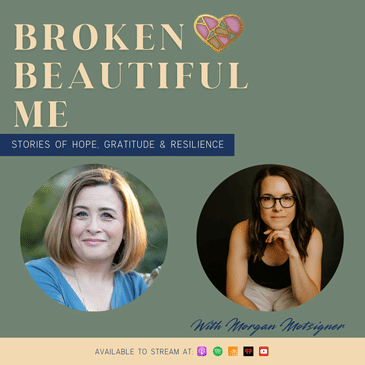
Resilience After Loss: Morgan Motsinger's Journey of Healing Through Child Loss
In this heartfelt episode, we sit down with Morgan Motsinger, a keynote speaker, entrepreneur, and host of the podcast PS We All Expire. Morgan experienced the unimaginable loss of her daughter two years ago due to a genetic illness, an event that profoundly shaped her path and deepened her commitment to resilience and healing.
Morgan shares her deeply personal journey of navigating life after child loss, emphasizing how she found strength amidst grief and discovered a renewed sense of purpose. Her story is a testament to the power of resilience, growth, and finding hope even in the darkest moments.
Join us as Morgan Motsinger explores:
- Her personal story of loss and the initial challenges of navigating grief.
- Practical steps for building resilience after experiencing profound loss.
- How she uses her platform and podcast to inspire others facing similar hardships.
- Insights on the role of vulnerability, community, and personal growth in the healing process.
Connect with Morgan Motsinger:
- LinkedIn: Morgan Motsinger
- Website: MorganMotsinger.com
Morgan's story offers powerful lessons on healing, resilience, and embracing life after profound loss. Tune in to learn how to transform adversity into growth, whether you're facing grief or seeking ways to build resilience in challenging times. This episode is filled with hope, inspiration, and real strategies to support your healing journey.
------------------
Follow the Host, Kelly Buckley:
Stay connected with Kelly Buckley and join her journey of healing, resilience, and gratitude. Follow her on social media for more inspiring content, updates on future episodes, and insights on living a life full of hope and purpose.
- Website: kellybuckley.com
- Facebook: Kelly Buckley on Facebook
- Instagram: @KellyBuckleyOfficial
- LinkedIn: Kelly Buckley on LinkedIn
- Twitter: @KellyBuckley
- YouTube: Kelly Buckley on YouTube
If you enjoyed this episode, don't forget to subscribe to the podcast, share it with your friends and family, and leave a review. Your support helps spread the message of hope, resilience, and gratitude to more listeners around the world.
00:00:01
Hello, everyone,
00:00:02
and welcome to another
00:00:03
episode of Broken Beautiful Me.
00:00:06
I am so happy to have as a guest today,
00:00:09
Morgan Motzinger.
00:00:10
Am I saying your last name correctly?
00:00:11
You are.
00:00:12
Yes.
00:00:13
OK, perfect.
00:00:15
She is a multi-passionate entrepreneur.
00:00:17
She started and scaled a
00:00:19
successful interior design
00:00:20
company and boutique retail
00:00:23
home goods store, experiencing the good,
00:00:25
bad and beautiful of business ownership.
00:00:27
And as a business owner, I know that.
00:00:30
She was simultaneously a
00:00:32
full-time caregiver to her daughter,
00:00:35
Annie,
00:00:35
with special needs and two other
00:00:36
children.
00:00:38
She maintained her
00:00:38
availability to her family
00:00:40
and ferociously protected
00:00:42
work-life harmony.
00:00:44
After six years,
00:00:45
she closed her businesses
00:00:46
to become a student in
00:00:55
And she hosts the beautiful
00:00:57
podcast PS We Expire.
00:00:59
And you guys,
00:01:00
you have to subscribe to this
00:01:01
because it's fantastic.
00:01:03
She leads workshops and retreats.
00:01:05
She speaks about tools for
00:01:07
improving mental health, excuse me,
00:01:10
like meditation and
00:01:11
developing healthy habits
00:01:12
and disseminates practical
00:01:14
spirituality and scientific insight.
00:01:17
Welcome.
00:01:18
Welcome, Morgan.
00:01:19
It is so nice to have you here.
00:01:21
Thank you, Kelly.
00:01:22
I'm so glad to be here with you.
00:01:25
And I'm so glad to have you.
00:01:27
And one of the things that I
00:01:28
didn't say in your short
00:01:30
bio is that you are a
00:01:32
bereaved mother as I am.
00:01:35
And your beloved Annie,
00:01:38
she passed in twenty twenty two.
00:01:41
And I'm so sorry for your loss.
00:01:44
I listened to some of your
00:01:46
video online and she sounds
00:01:49
like such a beautiful,
00:01:50
bright light and continues
00:01:53
to shine brightly.
00:01:54
And I'm just wondering if we
00:01:56
can start off.
00:01:57
Tell me about Annie.
00:01:58
Oh my gosh.
00:01:59
It's like my favorite thing
00:02:00
ever to talk about.
00:02:03
Annie,
00:02:04
it's really interesting because the
00:02:06
disease that she had has
00:02:08
been aptly nicknamed a
00:02:10
childhood Alzheimer's.
00:02:11
So if you can imagine what
00:02:13
it's like to be around
00:02:15
someone that has some type
00:02:16
of neurodegenerative disease as an adult,
00:02:19
an Alzheimer's or dementia patient,
00:02:21
is they slowly lose their touch with
00:02:24
they slowly lose a lot of
00:02:26
physical abilities.
00:02:27
They,
00:02:28
you just kind of slowly lose them is
00:02:30
what it feels like.
00:02:31
And so as,
00:02:32
as we were watching Annie get to
00:02:36
this spot where she was
00:02:37
talking and running around
00:02:39
and eating and memorizing
00:02:40
things and doing the colors
00:02:42
and potty training, all of that,
00:02:44
knowing that,
00:02:45
that she would slowly lose those skills.
00:02:49
But one thing that, you know,
00:02:50
I could talk about that a
00:02:51
lot and the realities of
00:02:53
living with this type of
00:02:55
diagnosis for your child.
00:02:57
But the thing that I love
00:02:58
more to talk about is that
00:03:00
Annie never went anywhere.
00:03:02
So even though it felt like
00:03:06
the connection sometimes
00:03:07
was severed by her cognitive decline,
00:03:10
it was like Annie was always there.
00:03:13
Annie was always there.
00:03:14
And that was...
00:03:16
That is what drew people to her.
00:03:18
She was just this little
00:03:19
magnet for beautiful people.
00:03:21
She was this magnet for life
00:03:24
and love and connection with people.
00:03:26
And, you know, she had this superpower.
00:03:30
When she was still going to school,
00:03:31
she was probably in second grade or so.
00:03:35
And there was a little boy
00:03:36
in the kindergarten class
00:03:37
that was just having a
00:03:39
really hard time adjusting
00:03:41
to the day and crying.
00:03:44
And they said, we need Annie.
00:03:47
So they went down to her
00:03:48
classroom and her and her
00:03:50
aide went down to the
00:03:51
kindergarten classroom and
00:03:52
he just immediately stopped crying,
00:03:55
started to engage with her.
00:03:57
And she just was like that.
00:03:59
She just...
00:04:00
had this such an open uh
00:04:04
energy about her that
00:04:05
enabled people to just fall
00:04:08
in love with her so fast so
00:04:10
that's annie that is that
00:04:11
that's the through the
00:04:12
through line through her
00:04:13
entire life is she lost all
00:04:15
of her skills was she still
00:04:17
was just this magnetic
00:04:19
little ball of sunshine
00:04:21
Oh, she sounds so beautiful.
00:04:24
And with your work,
00:04:28
it just seems like that
00:04:29
sunshine continues.
00:04:30
You're doing a service to
00:04:32
her in how you're helping others.
00:04:36
It's beautiful.
00:04:39
Talk to me about...
00:04:42
being a bereaved parent and
00:04:44
what that feels like to you.
00:04:47
Let's talk about it together
00:04:48
because I have my own thoughts on that,
00:04:50
as you probably know.
00:04:53
I want to talk to you about
00:04:54
what it means and how it
00:04:56
feels to be out in the
00:04:57
world as a bereaved parent.
00:05:01
I still am...
00:05:04
you know, in the early days of it.
00:05:06
So we're coming up on the
00:05:07
two-year anniversary.
00:05:09
The thing that is perhaps a
00:05:11
bit unique about the
00:05:13
circumstance with Annie is
00:05:14
that we knew for over a
00:05:15
decade that that day was coming.
00:05:17
So, you know,
00:05:18
we were told when she was
00:05:20
three and a half that her
00:05:21
life expectancy was mid-teens.
00:05:23
So we were kind of living
00:05:24
life with this anticipatory grief.
00:05:30
And so when she passed away,
00:05:33
It was a very complicated
00:05:38
relationship with her death
00:05:40
because part of it,
00:05:42
which I would have been
00:05:43
very hesitant to admit
00:05:45
before she passed away,
00:05:47
but part of what came with
00:05:48
her death was relief
00:05:50
because we weren't waiting
00:05:53
anymore for this terrible day to happen.
00:05:56
There was so much anticipatory grief.
00:05:59
as we waited for her death,
00:06:01
that it was like suddenly
00:06:02
this weight of worry was
00:06:04
lifted and it was replaced
00:06:06
by something else,
00:06:07
which was an intense
00:06:08
longing and yearning for
00:06:10
her physical presence.
00:06:11
I would say that that is, you know,
00:06:13
the top thing that I feel
00:06:15
the most is just, oh,
00:06:16
like just wanting her
00:06:19
physical body with me.
00:06:20
I want the weight of her in my lap.
00:06:23
I want all of the diaper
00:06:24
changes and I want the
00:06:26
feedings and the
00:06:26
medications and the
00:06:27
doctor's appointments and
00:06:28
the transferring her from
00:06:30
her bed into her, her chair, you know,
00:06:34
all of those things,
00:06:34
just the physical presence.
00:06:37
So it's been, it's just been weird.
00:06:40
You know, I, I had a,
00:06:42
someone asked me or say
00:06:43
something about like how, how was,
00:06:45
I don't think it was like
00:06:46
the first holiday without her.
00:06:48
And the only word that kept
00:06:49
coming to mind was weird.
00:06:51
It just feels weird.
00:06:52
It feels like it feels like
00:06:53
I'm missing an arm here.
00:06:55
It's like I have all these phantom pains,
00:06:57
you know,
00:06:57
all of these sounds that I'm
00:06:59
hearing that my brain is saying, oh,
00:07:01
that's probably Annie.
00:07:02
And then it's like it's
00:07:03
almost like the when you're
00:07:05
going up a staircase and
00:07:06
you don't realize there's
00:07:07
no next step there and you
00:07:09
kind of stumble.
00:07:09
It's like it was that
00:07:10
feeling a lot where it's like, oh, yeah,
00:07:13
it's like it took some time
00:07:14
to catch up to Annie.
00:07:16
what the reality was that
00:07:18
she wasn't here anymore so
00:07:19
like weird it's just the
00:07:21
big label that I can think
00:07:22
of to slap on this whole
00:07:24
experience is just it just feels odd
00:07:27
It does.
00:07:28
It's a weird time where you
00:07:30
are trying to find your footing, right?
00:07:37
And grief can slap you up
00:07:40
the side of the head when
00:07:41
you least expect it.
00:07:43
And I listened to,
00:07:45
I think it was the one video of yours,
00:07:48
and you talk about Target.
00:07:49
And I want to tell you,
00:07:51
I myself had a breakdown in
00:07:54
the automotive section of
00:07:55
Target and used one of the
00:07:57
washcloths for washing your
00:07:59
car to kind of...
00:08:00
pull myself together.
00:08:04
And it was at Christmas.
00:08:06
I was in there and I was
00:08:07
shopping around and I was
00:08:09
trying to be festive.
00:08:11
And I was like, this is not happening.
00:08:16
And I felt it building and building.
00:08:18
And I walked by Jolly Ranchers.
00:08:24
Because my son, Steven,
00:08:25
loved Jolly Ranchers.
00:08:27
And that did me in.
00:08:29
That was it.
00:08:30
And then I, so I quickly, I said,
00:08:32
what section can I go to
00:08:33
that has no one in it at Christmas?
00:08:41
I made my way and I stayed
00:08:43
there for about twenty
00:08:44
minutes until I could get
00:08:45
myself back together.
00:08:47
And it's just,
00:08:48
I think that that's one of
00:08:51
the things that nobody really tells you,
00:08:52
that it's going to hit you
00:08:54
in the weirdest ways.
00:08:56
It's going to hit you when
00:08:57
you least expect it.
00:09:00
And you just have to learn
00:09:01
to ride the wave.
00:09:04
Because there's no denying it.
00:09:06
And I think if, you know,
00:09:10
if we were talking to other
00:09:12
bereaved parents right now,
00:09:15
It would be just to hold on, you know,
00:09:17
just hold on.
00:09:20
Because you really feel like
00:09:21
you are groundless in this moment.
00:09:24
And I'm a little further
00:09:25
down the road than you with grief.
00:09:29
But when you lose a child,
00:09:31
it unfolds like a book.
00:09:37
And so it's important that
00:09:39
we share our stories to
00:09:40
give other people hope.
00:09:45
So I want to ask you about
00:09:48
living your purpose because you,
00:09:51
you did a video where you
00:09:53
talked about living your
00:09:54
purpose and why are we so
00:09:57
like gung ho about finding
00:09:58
what our purpose is?
00:10:01
And I was thinking about it and I was like,
00:10:03
you know, that's so true.
00:10:06
Because Stephen wasn't
00:10:08
searching for his purpose
00:10:10
up to his death.
00:10:12
But I look at his life now
00:10:15
and I feel like he fulfilled his purpose.
00:10:18
How do you feel about that with Annie?
00:10:25
It's helpful for me to understand that.
00:10:28
kind of how our brains work
00:10:30
from like a psychological
00:10:31
and neuroscience perspective,
00:10:34
because our brains are
00:10:36
always looking for what is
00:10:37
predictable and familiar.
00:10:40
It's a pattern seeking organ, right?
00:10:44
It directs us towards what is familiar,
00:10:47
what is knowable,
00:10:48
And it makes predictions
00:10:49
about our future based on our past.
00:10:52
So understanding that this
00:10:55
kind of fixation that we
00:10:56
have with finding our
00:10:57
purpose is just another way
00:10:59
to manage the
00:11:03
unpredictability of this
00:11:04
human experience.
00:11:06
And when we have something
00:11:09
so life-altering,
00:11:12
like a diagnosis or losing a child,
00:11:17
Everything that we thought
00:11:18
we knew we could predict
00:11:20
life to be is completely upended.
00:11:23
And so it makes perfect
00:11:24
sense that the metaphor of
00:11:27
these big emotions coming
00:11:29
like waves is exactly how it feels.
00:11:32
It feels like I wasn't even
00:11:35
looking in that direction
00:11:37
and here this wave comes
00:11:38
and completely capsizes me.
00:11:42
And that is one of the
00:11:43
things that is like most
00:11:44
destabilizing about going
00:11:45
through this experience,
00:11:46
being a bereaved parent,
00:11:48
is being unable to anticipate
00:11:51
what's going to happen when?
00:11:53
When am I going to feel better?
00:11:55
When am I going to be able
00:11:56
to get back to my quote
00:11:57
unquote normal life?
00:11:58
When am I going to stop feeling this way?
00:12:00
When am I going to stop
00:12:01
being surprised by this
00:12:03
flood of tears or anger or
00:12:06
bitterness or whatever?
00:12:08
When am I going to stop feeling like that?
00:12:10
And it's very exhausting to
00:12:13
live in this space of
00:12:16
not really being able to
00:12:17
kind of grasp onto any sort
00:12:19
of like plan for this.
00:12:21
And so when we talk about,
00:12:23
when we talk about, um, purpose, the,
00:12:27
the point that I try to make is that,
00:12:29
well, a couple of things.
00:12:30
One is that usually it's
00:12:31
only in hindsight that we can say, Oh yes,
00:12:34
I see how this all worked together.
00:12:36
Yeah.
00:12:37
So that's the first bit of it.
00:12:39
And the, and the second part is, um,
00:12:41
that again,
00:12:42
like it's a grasping on how can
00:12:44
I anticipate what's coming in the future?
00:12:46
But really the big shift for
00:12:47
me happened when I attached
00:12:49
an S to that word purpose.
00:12:51
And I started to view all
00:12:52
the things that happened in
00:12:53
my life and the things that
00:12:55
I wanna pursue as my purposes.
00:12:58
It's not a singular focus.
00:13:00
It's not I better get this
00:13:01
right or I've blown it.
00:13:03
It's more like can I adopt
00:13:06
an attitude of trusting
00:13:07
that whatever comes into my
00:13:08
path is coming into my path for a reason,
00:13:12
that the person that I am
00:13:13
now today is not the person
00:13:15
that I was two years ago when Annie died.
00:13:17
I'm not the person that I
00:13:18
was over a decade ago when
00:13:20
we got our diagnosis.
00:13:21
But everything has contributed to this –
00:13:25
purpose of me being who I am right now,
00:13:29
who is the person that I'm becoming and,
00:13:31
and having it,
00:13:32
having the focus shifted away from this,
00:13:36
like,
00:13:36
what should I be doing into who do I
00:13:40
want to become is a great
00:13:42
relief and that it helps me.
00:13:45
Annie has helped me so much
00:13:46
with this because I
00:13:48
Annie wasn't able to quote
00:13:51
unquote contribute to
00:13:54
helping build out a
00:13:55
successful society or like
00:13:57
to making money or
00:13:59
contributing in any way
00:14:02
that we expect ourselves to do as adults.
00:14:05
Annie was valuable just
00:14:07
because she was Annie.
00:14:09
And if it's true for Annie,
00:14:11
it's true for me.
00:14:12
It's true for everybody.
00:14:14
It's true for people who...
00:14:17
are on the opposite side of
00:14:19
belief system or political
00:14:21
beliefs or anything it's
00:14:23
it's the person who is
00:14:24
sitting in prison it's it's
00:14:26
all of us it's this thread
00:14:28
of value just because we
00:14:30
are all humans bumbling
00:14:32
around in this human
00:14:32
experience together that's
00:14:35
it and so yes of course
00:14:37
annie fulfilled her purpose
00:14:38
because she was herself
00:14:41
And what a beautiful,
00:14:42
beautiful way to unburden
00:14:45
ourselves from this
00:14:46
pressure to be a particular
00:14:48
thing or a particular way
00:14:49
or contribute in a particular way.
00:14:51
You just get to be yourself
00:14:53
and that's enough.
00:14:55
It is enough.
00:14:56
It is enough.
00:14:57
And I love adding the S purposes.
00:15:00
And as you said that, like I was thinking,
00:15:03
you know,
00:15:05
when I was very early in my grief and,
00:15:08
I used to say, well,
00:15:09
I think my purpose is
00:15:10
writing to other mothers
00:15:12
who write me about my blog.
00:15:14
That's my purpose.
00:15:15
I write to them in my pajamas, right?
00:15:17
That's, that was my, and,
00:15:20
and I thought that that was
00:15:21
going to be it.
00:15:22
And,
00:15:23
but it evolves and it grows and it
00:15:26
matures.
00:15:27
And then you weed out some
00:15:28
things that aren't working
00:15:30
and you just allow things to happen.
00:15:33
And just as Annie said,
00:15:35
fulfilled her purpose.
00:15:36
And I, I look at Steven, you know, um,
00:15:40
because at first when Steven passed,
00:15:42
I was like, oh,
00:15:43
he was a senior at NC state university.
00:15:45
I was like, oh, he didn't graduate.
00:15:47
And he didn't, you know, I,
00:15:50
it's just a normal kind of
00:15:51
progression where you look
00:15:52
at those things that didn't happen,
00:15:55
but look at the things that did happen.
00:15:57
Look at the people that he did touch.
00:16:00
Um, look at how he taught me.
00:16:02
I had him when I was a teenager and
00:16:05
And so I was a very young mom and.
00:16:08
You know, I really grew up with him.
00:16:11
And so what I do,
00:16:15
it truly reflects on him.
00:16:16
And so you're so right in
00:16:19
saying like our purposes,
00:16:21
there's many of them.
00:16:23
And we don't have to be limited to one.
00:16:26
And that's beautiful.
00:16:31
With grief,
00:16:33
I don't know if you've had the experience,
00:16:36
but I know I have with anxiety.
00:16:40
Um,
00:16:42
very interesting because I used to be
00:16:45
this person who, who was like, ah,
00:16:47
I got it all figured out.
00:16:48
Plan A, B, and C, no worries.
00:16:51
Very strategic thinker.
00:16:53
And then all of a sudden I
00:16:55
was anxious and I,
00:16:58
over some things that were
00:17:00
kind of inexplicable to me.
00:17:03
Um,
00:17:04
did you have any experience with anxiety?
00:17:07
Oh my gosh, so much.
00:17:08
Yeah.
00:17:11
So much.
00:17:13
This is probably one of the
00:17:14
things that I talk about
00:17:15
the most when it comes to
00:17:17
mental wellness.
00:17:19
I don't know how many years ago this was,
00:17:24
but I was watching a movie
00:17:27
with my husband.
00:17:28
Kids were already in bed.
00:17:30
I would say it was probably
00:17:32
at least six or seven years ago.
00:17:35
And I all of a sudden was...
00:17:41
had this sensation from head
00:17:43
to toe that felt like my I
00:17:46
don't know how else to
00:17:47
describe describe it but it
00:17:48
was like it felt like a
00:17:49
draining and then I had
00:17:52
swirly thoughts like I'm
00:17:54
gonna die um my heart was
00:17:57
racing my hands were tingly
00:18:00
I didn't feel like I could
00:18:01
get a good breath and it
00:18:02
wasn't until later that I
00:18:03
realized I was having a panic attack
00:18:06
And that was completely
00:18:08
foreign to me because I
00:18:10
thought I was doing okay.
00:18:12
I thought I was doing pretty
00:18:13
well and was managing all
00:18:16
the sadness and the stress
00:18:18
and the realities of being
00:18:19
a caregiver just fine.
00:18:22
And then my body was like, hey,
00:18:26
You know,
00:18:26
like we're actually not doing okay.
00:18:28
And it was at that point
00:18:29
where I realized like, oh,
00:18:31
the things that I have been
00:18:32
doing to just manage like
00:18:35
regular stress in my life
00:18:36
are not going to cut it
00:18:37
when it comes to the
00:18:40
realities of dealing with
00:18:41
this diagnosis and the
00:18:43
day-to-day situation.
00:18:44
the stresses of keeping this
00:18:47
little person alive, you know, I mean,
00:18:48
parents can,
00:18:49
can recognize how that feels
00:18:51
like when you,
00:18:51
when you have a new baby
00:18:53
and you come home from the
00:18:54
hospital and you're like,
00:18:55
why did they let us leave?
00:18:56
Like, I don't know what I'm doing,
00:18:57
you know?
00:18:59
And, uh,
00:18:59
and you're standing over your
00:19:01
newborn and like watching
00:19:02
their stomach to make sure
00:19:04
they're still breathing
00:19:04
because you're so afraid of, you know,
00:19:06
all the things that you can
00:19:07
happen to such a tiny little person.
00:19:09
Um,
00:19:10
And that was that really was
00:19:11
like a huge wake up call
00:19:12
for me to be like, OK,
00:19:13
I need to pay attention to
00:19:16
my mental health in a much more.
00:19:20
effortful and attentive way
00:19:22
than I have been up to this point.
00:19:24
So yes, anxiety has been a big,
00:19:26
a big piece of the puzzle for me.
00:19:28
And as I have found, you know,
00:19:31
just tools and tactics and
00:19:32
strategies that have helped me,
00:19:34
I think it really boils down to, again,
00:19:36
like how our brains are
00:19:37
wired for predictability and anxiety,
00:19:40
I think stems from
00:19:43
this other part of ourselves
00:19:45
that knows that we cannot
00:19:46
control everything.
00:19:48
And so anxiety rears its
00:19:50
head when we're feeling out
00:19:52
of control the most and the
00:19:54
most afraid of the unknown.
00:19:58
I mean, that's been my experience anyway.
00:19:59
And a lot of times it'll happen when
00:20:03
falling asleep at night and
00:20:04
it's like my body starts to
00:20:06
relax enough to let all of
00:20:08
that kind of subconscious
00:20:10
stuff bubble to the surface
00:20:11
and like hey we're still
00:20:14
here we're still worried
00:20:15
about the unknowns in the
00:20:16
future you know that's
00:20:17
usually when it happens for me or when um
00:20:20
even when I'm driving,
00:20:21
you know how when you're
00:20:22
driving and you're kind of
00:20:23
on autopilot and you're like, oh,
00:20:24
I didn't even realize I
00:20:25
made that last couple of miles.
00:20:29
It's kind of when our brains
00:20:30
get into that space where
00:20:31
it's relaxed a bit.
00:20:33
And on the creativity side,
00:20:35
that's a great space to be
00:20:37
because that's what flow is
00:20:39
when you're really in the
00:20:40
zone and you're really
00:20:41
feeling engaged with what you're doing.
00:20:43
And the flip side of that
00:20:44
is that's also when some of
00:20:47
these perhaps unaddressed fears,
00:20:49
anxieties,
00:20:50
or stressors can bubble to the surface.
00:20:52
So yes, in a nutshell, long way to say,
00:20:57
yes,
00:20:57
anxiety is a huge part of also what I
00:20:59
deal with on the regular.
00:21:02
And I saw you had mentioned a book,
00:21:05
and I didn't catch who wrote it,
00:21:07
but How Emotions Are Made.
00:21:09
And it sounded so interesting.
00:21:13
Could you speak a little bit about that?
00:21:15
Do they talk about anxiety in that book?
00:21:17
I'd love to read it.
00:21:20
She doesn't address anxiety specifically,
00:21:23
if I'm remembering correctly.
00:21:27
Lisa Feldman Barrett,
00:21:28
who is a psychologist,
00:21:30
talks extensively about how
00:21:33
our brains are wired for prediction.
00:21:36
And that the really
00:21:38
fascinating thing for me
00:21:40
about that book is she said
00:21:41
that our emotions don't
00:21:43
come as a result of what's
00:21:45
actually happening in the world,
00:21:46
but is actually a response
00:21:48
to what we're predicting is
00:21:49
going to happen in the world.
00:21:51
So, you know,
00:21:53
there's a lot of interesting
00:21:54
work around how our
00:21:57
perceptions are formed that, for example,
00:22:05
there's actually like a gap
00:22:07
in our vision between what
00:22:09
we're seeing with our left
00:22:10
eye and what we're seeing
00:22:10
with our right eye.
00:22:11
And that gap is filled in by
00:22:14
predictions that our brain
00:22:15
makes about what it
00:22:17
anticipates should be there
00:22:18
in that blind spot.
00:22:21
so if we think about how
00:22:23
that works just with vision
00:22:24
that's why we sometimes
00:22:25
will like see something
00:22:27
moving on the floor and we
00:22:28
look and oh it actually was
00:22:29
just a fuzzy it wasn't
00:22:30
moving at all but we
00:22:31
thought it was a spider and
00:22:33
so we have a physical
00:22:34
response to a spider that
00:22:36
isn't actually there but
00:22:37
for all intents and
00:22:38
purposes it's real in our
00:22:40
brains so what else is
00:22:41
happening in our worlds
00:22:43
that we're responding to
00:22:44
that isn't actually happening
00:22:46
So the light bulb switch for
00:22:48
me came when I started to
00:22:50
think about anxiety in a different way.
00:22:52
So if we're responding not
00:22:55
to what we're seeing in reality,
00:22:56
but the stories that our
00:22:59
brain is generating in
00:23:00
response to what we're seeing,
00:23:02
that's also happening on a
00:23:03
physiological level.
00:23:05
So when I have a racing
00:23:07
heart or I start to get
00:23:09
sweaty or my stomach is
00:23:11
turning or I get a
00:23:15
will slap on, oh, this is anxiety.
00:23:19
So the light bulb for me was to say, oh,
00:23:21
actually,
00:23:23
I don't immediately have to tack
00:23:24
on this story or the label
00:23:26
of anxiety to these
00:23:28
physiological symptoms.
00:23:30
It might actually just be in
00:23:32
response to the caffeine that I consumed,
00:23:35
you know?
00:23:35
And so I think all it did
00:23:37
really was just help me not feel...
00:23:43
so out of control when it
00:23:45
came to like my mental
00:23:46
health and it made me not
00:23:49
feel like I was just
00:23:50
completely swirling anxiety
00:23:51
all the time it was like it
00:23:52
just it just gave me enough
00:23:54
space to say like oh I can
00:23:55
actually label this
00:23:56
differently and do some
00:23:58
investigation before I just
00:24:01
start to freak out that I'm
00:24:03
like having so much anxiety
00:24:05
when it may not be anxiety at all
00:24:08
That makes so much sense
00:24:10
because I know that I kind
00:24:13
of had to befriend my
00:24:14
anxiety at some point
00:24:16
because I felt like I was
00:24:20
kind of being limiting to my younger son,
00:24:23
you know,
00:24:23
because I was afraid something
00:24:24
was going to happen to him.
00:24:25
That was a big source of my,
00:24:27
that was a big source of my anxiety.
00:24:30
And I, I mean, I actually,
00:24:33
we sat down and we talked
00:24:34
about it as a family.
00:24:35
I was like, it's not you, it's me.
00:24:38
And I need you to understand
00:24:39
that because I don't want
00:24:40
you to feel like you're
00:24:41
doing anything wrong, but this is me.
00:24:43
And so when this happens,
00:24:45
we're just going to talk
00:24:46
through this as a family.
00:24:47
And even now,
00:24:48
and my son is now twenty seven.
00:24:51
He's living in the UK,
00:24:52
living his best life.
00:24:53
Right.
00:24:54
Wonderful.
00:24:55
I'm so proud of him.
00:24:57
But every now and again,
00:24:58
when we don't connect or we
00:25:02
have this family text going or whatever,
00:25:04
sometimes I'll just have
00:25:05
this little thought and I'll say,
00:25:07
he's good, right?
00:25:08
To my husband.
00:25:10
I'll look at him and I'll say, he's okay.
00:25:11
And Brady's like, ah, he's great.
00:25:13
He's out.
00:25:13
He's at the pub.
00:25:14
He's doing whatever.
00:25:16
And I'm like, yeah, you're right.
00:25:18
But it's still to this day,
00:25:21
I still have that little.
00:25:22
And that's one of the tools
00:25:23
I use is I look to my husband and say,
00:25:25
tell me the truth.
00:25:27
The world is still OK
00:25:30
because he knows that it is
00:25:32
something that I have struggled with.
00:25:34
Um, I use tools like, uh, affirmations,
00:25:38
although there's good and bad with that.
00:25:41
I,
00:25:42
I also meditate every morning and that
00:25:44
has been a great source of relief for me.
00:25:48
Um,
00:25:49
just taking that time to just become
00:25:51
still, um,
00:25:53
what do you use day to day in
00:25:55
terms of your anxiety?
00:25:56
Hmm.
00:25:59
Well,
00:26:00
what you said about your tactic of
00:26:02
asking your husband, is this reality?
00:26:05
Is what I'm feeling right now true?
00:26:08
It's so helpful to have
00:26:11
someone that you can say, like,
00:26:13
this is the way that I'm looking at it.
00:26:14
Can you remind me that
00:26:15
that's not the only way of looking at it?
00:26:18
That that might be a true
00:26:20
experience that I'm having,
00:26:21
but it doesn't mean that it's how it is.
00:26:24
And there's a...
00:26:27
the way that I like to think
00:26:28
about it is that sometimes
00:26:29
we need other people to
00:26:30
help us break the spell.
00:26:32
You know,
00:26:32
it's like when you're in those
00:26:33
swirly thoughts, it's from,
00:26:36
from experience,
00:26:37
I know that it's impossible
00:26:38
to logic your way out of them.
00:26:40
You can't talk yourself out
00:26:41
of this like deep swirl
00:26:44
that you're going into,
00:26:45
especially when it,
00:26:46
when it hits on those
00:26:48
really deep nerves of like
00:26:49
worrying about your kids, you know?
00:26:52
And so having someone else
00:26:54
who can say like okay I'm
00:26:56
looking at the same thing
00:26:57
that you are and that's
00:26:58
that's not how I see it or here,
00:27:00
let me offer like a
00:27:01
different way to see it.
00:27:02
And to,
00:27:04
to recognize and affirm how scary
00:27:06
it is to be in that place
00:27:08
of worry about people that
00:27:10
you really care about.
00:27:11
So that's definitely a huge one is having,
00:27:14
you know, a spouse, a friend,
00:27:16
a therapist who you can
00:27:17
speak with regularly to
00:27:20
just help break the spell.
00:27:23
Some like just really practical,
00:27:25
tangible ones are,
00:27:26
is that I really limit my
00:27:27
caffeine consumption.
00:27:29
because of the fact that it
00:27:31
mimics a lot of those
00:27:32
anxiety symptoms in my body.
00:27:35
And I don't like how that feels.
00:27:36
So I just kind of avoid
00:27:38
things that make me feel like that.
00:27:39
I make sure that I'm well hydrated.
00:27:41
That sounds like such a simple one,
00:27:44
but it is really profoundly
00:27:46
impacted me just because
00:27:49
our brains don't work as
00:27:50
well when we're not hydrated.
00:27:51
And it makes it more
00:27:53
difficult to get out of the
00:27:55
swirly anxiety thoughts
00:27:56
when you're not well hydrated.
00:27:58
hydrated, um, doing the,
00:28:00
doing the best that you can
00:28:01
to make sure that you're
00:28:01
well rested to prioritizing
00:28:03
good sleep is huge.
00:28:06
Um, I remember listening to someone,
00:28:09
actually,
00:28:09
it probably was Lisa Feldman
00:28:11
Barrett in that book,
00:28:12
how emotions are made,
00:28:12
where she said she was
00:28:13
talking with her therapist
00:28:15
and her therapist said something like, um,
00:28:18
you know, maybe it's not your mother.
00:28:19
Maybe you actually just need a nap.
00:28:26
And it's this beautiful
00:28:27
recognition that like our bodies...
00:28:31
function within the
00:28:33
boundaries of what a human
00:28:34
organism needs to function well.
00:28:37
And so sometimes it may not be that it's,
00:28:40
you know,
00:28:41
actually like this huge fight
00:28:44
that you're having with so-and-so.
00:28:45
Like maybe you really just
00:28:46
need a good night's sleep
00:28:47
and you need to stop
00:28:48
scrolling on your phone until midnight,
00:28:49
you know.
00:28:51
So those are some really practical things.
00:28:53
Other things that I employ
00:28:55
are daily meditation
00:28:56
practice for sure has been
00:28:58
one of the best tools for me.
00:29:00
And the way that I like to
00:29:02
talk about meditation is
00:29:03
that the meditation time,
00:29:06
the benefits from that are
00:29:08
not limited to the fifteen, twenty,
00:29:11
thirty minutes that you're meditating.
00:29:13
It's for the rest of the
00:29:14
moments of the day,
00:29:15
because what meditation has
00:29:17
done for me is that it has
00:29:18
widened the gap between
00:29:19
stimulus and response.
00:29:21
So when I have even a
00:29:24
thought that comes up,
00:29:26
I,
00:29:26
there's a big enough gap right there
00:29:28
where I can do some of that
00:29:29
work where I can say, is this true?
00:29:33
Is this a thought that I
00:29:34
want to continue to think like,
00:29:35
do I want to go down that road?
00:29:37
Do I want to entertain these thoughts?
00:29:38
Do I want to indulge in these thoughts?
00:29:41
Um, it,
00:29:42
it creates a little bit more of a
00:29:43
gap between, you know,
00:29:44
like when my kids who are
00:29:51
I've just like had it to
00:29:52
hear with them and I'm
00:29:54
about to overflow onto them
00:29:57
and lose my temper or say
00:29:58
something I'll regret.
00:30:00
Just meditation has helped
00:30:01
create that gap there where I can say,
00:30:03
okay, Morgan,
00:30:04
like I can just observe
00:30:05
myself for a minute and
00:30:08
choose differently.
00:30:09
So that has been a
00:30:10
tremendous tool for me when
00:30:12
not just for anxiety,
00:30:13
but for a lot of other things too.
00:30:15
But those,
00:30:15
those are the big ones for me for sure.
00:30:19
Um, I, uh, I also used to, uh,
00:30:22
when I had early on, when I was very,
00:30:24
very anxious about everything,
00:30:26
I used to put ice cubes in
00:30:27
my hands and I just hold
00:30:29
them in my hands just to
00:30:30
kind of break up the stimulus that would,
00:30:33
that I felt like was happening.
00:30:35
It would just,
00:30:35
it would just interrupt it
00:30:37
enough so that I can calm myself.
00:30:39
Um, and therapy guys, like don't hesitate,
00:30:43
go and like work through
00:30:45
your feelings and
00:30:47
It's a healthy thing.
00:30:48
And I know it's difficult.
00:30:50
And sometimes, especially for men,
00:30:52
it's difficult to do that,
00:30:54
to step up and step into a
00:30:56
therapy session.
00:30:57
But it can really help you
00:31:00
when you're sitting with
00:31:02
someone who doesn't really
00:31:02
have skin in the game.
00:31:03
So they're not part of your
00:31:04
family and they're not...
00:31:06
You know,
00:31:06
you can have that kind of
00:31:07
conversation where you can
00:31:08
be completely honest about
00:31:10
your feelings and not have
00:31:11
to worry about tiptoeing
00:31:12
around someone else's.
00:31:14
It's good to get that stuff out.
00:31:16
It's important to get it out
00:31:18
because better out than in.
00:31:20
Right.
00:31:20
Like and it doesn't go away
00:31:22
unless you get it out.
00:31:24
That's exactly right.
00:31:25
That's exactly right.
00:31:29
Let's talk about family for a minute,
00:31:31
because when you grieve.
00:31:35
Um, it's not just you.
00:31:38
And when you are a bereaved
00:31:40
parent and you have other
00:31:41
children and you have a marriage, um,
00:31:46
it's a lot of different
00:31:47
moving pieces with grief with that.
00:31:50
And, um,
00:31:52
I know that my husband and I
00:31:54
grieved very differently.
00:31:56
And I know that, um,
00:32:01
Sending Brendan to counseling.
00:32:03
He was twelve.
00:32:04
He just turned twelve.
00:32:06
And so we said he went to
00:32:08
counseling and he I was I
00:32:10
remember having an argument
00:32:11
with him in the parking lot
00:32:13
of the counselor's clinic.
00:32:15
And he was like, I'm not going in there.
00:32:17
I said, you are going in there.
00:32:19
So it's like this huge thing.
00:32:21
And then when he came out
00:32:23
after the first session, he said,
00:32:25
I don't have to tell you anything.
00:32:28
between me and the counselor.
00:32:29
And I said, you know, you're right.
00:32:31
This is between you and the counselor.
00:32:33
It's important that you have that space.
00:32:37
But we had,
00:32:38
it was like we had to really
00:32:40
figure out our own places
00:32:41
in the house and we had to
00:32:44
really figure out how to
00:32:45
respect each other's very
00:32:48
different journeys.
00:32:50
Talk to me a little bit
00:32:51
about that process for you
00:32:53
with the family grieving
00:32:55
and kind of navigating
00:32:57
everyone's emotions because
00:32:58
everyone's emotions are
00:33:00
valid and important.
00:33:01
Yeah.
00:33:03
Yeah.
00:33:14
it's really difficult to
00:33:20
care for other people when
00:33:24
you're drowning yourself.
00:33:25
Yeah.
00:33:29
And it's,
00:33:30
I chose the word care for not
00:33:32
care about intentionally
00:33:34
because I think especially for mothers,
00:33:40
We are used to being the
00:33:41
person who's going to fix
00:33:44
all the things and make
00:33:45
sure everybody gets
00:33:45
everything that they need.
00:33:48
And I had to negotiate with
00:33:52
myself what being a good
00:33:56
mom was when there were
00:33:59
certain things that I just
00:34:00
couldn't show up for,
00:34:02
especially in those early days.
00:34:03
Yep.
00:34:05
And that's a really,
00:34:06
really difficult thing to
00:34:07
come to terms with your own
00:34:09
limitations when it, you know,
00:34:10
your own emotional and
00:34:11
mental and physical
00:34:12
limitations when there
00:34:14
isn't an obvious sign of it
00:34:19
to other people that you're
00:34:20
not doing okay.
00:34:21
You know,
00:34:21
it's like when you have a busted
00:34:23
arm or a busted leg and
00:34:24
you've got a big cast on it
00:34:25
in physical therapy appointments,
00:34:27
it's like everybody can see
00:34:28
that and be like, oh,
00:34:29
I know I can't ask her to
00:34:30
do this thing because she
00:34:31
physically can't do it.
00:34:34
With grief,
00:34:38
there's no physical
00:34:39
manifestation of your limitations.
00:34:43
And it's really difficult to
00:34:44
advocate for yourself when
00:34:48
you know that it might
00:34:50
actually be very damaging
00:34:51
to yourself if you said yes
00:34:53
to things that normally you
00:34:54
would say yes to.
00:34:56
but you just can't right now.
00:34:57
And so we push ourselves, push ourselves,
00:34:59
push ourselves to be
00:35:00
everything to everybody.
00:35:02
And that's when we really
00:35:04
face things like a serious
00:35:06
mental health crisis or
00:35:08
developing a chronic
00:35:09
illness or a serious illness ourselves.
00:35:12
And so when it comes to
00:35:14
navigating how everyone is
00:35:18
dealing with this big hard
00:35:20
thing that your family's going through,
00:35:24
I would say,
00:35:26
take care of yourself.
00:35:28
And out of that is how
00:35:31
you're able to show up for
00:35:32
other people in the way
00:35:33
that you really want to,
00:35:34
in a way that you can.
00:35:36
So really practically when
00:35:37
it comes to my two other children,
00:35:39
my husband, and then also, you know, my,
00:35:42
my mother lives right next door.
00:35:45
My husband's parents live a
00:35:47
couple of miles away from us, you know,
00:35:48
so everybody's very
00:35:49
interconnected with Annie's life.
00:35:52
And those people were there
00:35:54
when she passed away and,
00:35:56
And it's being attentive to
00:36:00
the cues that other people
00:36:01
are giving when they want
00:36:02
to talk about it.
00:36:03
I think I've been maybe kind
00:36:07
of surprised at how little
00:36:10
people do talk about Annie
00:36:12
or about that experience.
00:36:13
And that might just be because...
00:36:16
I like talking about it.
00:36:18
I don't like talking about
00:36:20
the fact that she died,
00:36:21
but I like talking about Annie.
00:36:24
And so that's been
00:36:25
interesting to try and navigate.
00:36:27
But I would say because I'm
00:36:29
around my kids the most,
00:36:32
The,
00:36:33
what I committed to was just showing
00:36:35
them what it's like to grieve,
00:36:37
whatever that looks like.
00:36:38
So they've seen me,
00:36:40
they've seen me crying and
00:36:42
not a lot of people in my
00:36:43
life see me cry.
00:36:47
And they,
00:36:48
I've just been available to talk
00:36:49
with them whenever they
00:36:51
feel like bringing it up.
00:36:54
My,
00:36:54
my little guy is much more open about
00:36:56
how he's feeling and he'll
00:36:57
tell me on the regular that
00:36:58
he misses Annie.
00:36:59
Yeah.
00:37:00
ask me like big existential
00:37:02
questions that I don't have
00:37:03
the answers to my daughter
00:37:05
keeps things much more
00:37:07
tucked in um and that's
00:37:09
okay too you know it's just
00:37:11
I've I've tried to model to
00:37:13
them that it's okay to feel
00:37:18
whatever you're feeling and
00:37:20
that I can because I know
00:37:23
how to sit with however I'm feeling
00:37:26
and be present for however
00:37:27
I'm feeling that means that
00:37:29
I also have the skill to be
00:37:30
present for whatever
00:37:31
they're feeling yeah then
00:37:33
that's a that's a huge gift
00:37:35
to model to model to other
00:37:37
people like you're none of
00:37:38
your emotions are too big
00:37:40
to have none of none
00:37:41
nothing that you can say or
00:37:43
feel is going to scare me
00:37:44
away like I'm in it with
00:37:46
you little buddies and my
00:37:48
and my husband my husband too
00:37:51
And it's okay for life to be
00:37:54
messy sometimes because
00:37:56
that's just reality.
00:37:59
I used to say to Brendan,
00:38:01
because I wrote a lot after Stephen died,
00:38:05
and there was one
00:38:07
particular thing I was
00:38:08
writing in my first book.
00:38:09
It was really emotional.
00:38:10
And so I was like howling at the moon.
00:38:12
I was bawling my eyes out as I was typing.
00:38:14
And
00:38:16
He just stuck his little
00:38:17
head in my office and said, you good?
00:38:20
And I was like, yeah, I'm good.
00:38:22
And he was so comfortable
00:38:23
with the fact that I was
00:38:24
bawling my eyes out because I said,
00:38:27
I used to describe it.
00:38:28
I said,
00:38:28
I'm just letting steam off my grief
00:38:31
kettle.
00:38:31
It's good.
00:38:32
I'm fine.
00:38:33
I'm fine.
00:38:33
I just need to get this out.
00:38:35
And so we kind of created
00:38:38
this permission structure
00:38:39
that it was okay for us to fall apart.
00:38:41
It was no problem.
00:38:42
It was part of it.
00:38:43
It was all good.
00:38:44
It didn't make us weak.
00:38:46
It made us strong.
00:38:49
it's,
00:38:50
it is good to show our kids that emotions,
00:38:54
that one emotion is not the
00:38:56
entire bag of tricks in our life.
00:38:59
It's just,
00:38:59
it's an emotion and we can work
00:39:01
through it and we can work past it.
00:39:05
But it is a struggle with families and you,
00:39:08
you raise such good points
00:39:10
about just being present
00:39:12
for their own journey and
00:39:13
And letting them experience it.
00:39:15
Because kids grieve
00:39:17
according to their
00:39:19
developmental age as well.
00:39:21
So sometimes we, as parents,
00:39:24
can have an expectation
00:39:25
that they're going to
00:39:26
struggle through a certain
00:39:27
part of that person's passing.
00:39:30
And that just...
00:39:32
they don't,
00:39:33
that's not on their radar
00:39:34
because of where they are
00:39:35
developmentally.
00:39:36
And, and that's, so that's another, uh,
00:39:40
pro of going to therapy is that, you know,
00:39:43
you have a licensed counselor, um,
00:39:46
or a psychologist who can
00:39:47
kind of explain that to you.
00:39:49
That's important.
00:39:49
It's important knowledge to,
00:39:51
to take for anybody
00:39:52
listening out there and
00:39:53
kind of struggling with it.
00:39:55
Um,
00:39:58
Where do you see this going with you?
00:40:01
You know,
00:40:02
you've created this beautiful
00:40:04
platform for yourself.
00:40:07
You are helping other people.
00:40:08
Where do you see this
00:40:11
heading over the years?
00:40:13
Oh, gosh, I wish I knew.
00:40:15
I...
00:40:17
I'm still trying to figure mine out too.
00:40:19
Don't worry about it.
00:40:21
I think more people actually
00:40:23
feel like this than we let on.
00:40:27
The line I've been saying a
00:40:28
lot over the past couple of years is,
00:40:31
I don't know what I want to
00:40:31
be when I grow up.
00:40:35
What feels different on this
00:40:37
side of Annie's death,
00:40:40
and I would say even before,
00:40:41
is that I really...
00:40:43
have kind of dismantled the, the,
00:40:48
what I thought people wanted me to be.
00:40:51
You know, I don't, I don't know.
00:40:52
I don't think at some point
00:40:53
someone told me you should be that, that,
00:40:55
that.
00:40:57
As far as like a career or
00:40:57
profession or anything, I certainly,
00:41:00
as all of us have,
00:41:01
have had plenty of messages
00:41:02
about what it means to be a good woman,
00:41:05
a good wife, a good mother,
00:41:07
a good friend.
00:41:08
And I have intentionally
00:41:12
investigated those
00:41:14
narratives quite a bit and said, okay,
00:41:17
which ones actually fit me best?
00:41:20
which ones feel good to me
00:41:22
which ones feel like they
00:41:25
light me up which ones do I
00:41:27
get excited about and it
00:41:29
feels a bit like being in
00:41:31
school now feels a bit like
00:41:34
I have I've stopped
00:41:35
swimming upstream and I'm
00:41:37
actually like going with
00:41:38
the current now and and the
00:41:40
current that I have found myself in
00:41:45
is what is bringing me such
00:41:47
a sense of joy and such a sense of like,
00:41:51
Oh yes, like this is it.
00:41:53
And so I don't know where
00:41:55
the next bend in the stream
00:41:56
is going to be,
00:41:58
but I think the trick for
00:41:59
all of us is to not be so
00:42:01
fixated on the place that we're going,
00:42:04
but just the ride, you know,
00:42:05
what does it feel like in my, in my,
00:42:09
on the road to get there?
00:42:10
What does it feel like?
00:42:11
Because so often we'll get
00:42:12
to the destination and be like, oh,
00:42:14
I see.
00:42:15
This was actually just chapter two.
00:42:17
This isn't like the end, you know?
00:42:21
And that feels like, what a relief.
00:42:23
What a relief to not be
00:42:27
so worried about getting to
00:42:28
a particular goal.
00:42:30
And it's not that I don't
00:42:31
set little micro goals for myself,
00:42:33
but it really is on the path of like,
00:42:35
who's the person that I
00:42:36
want to become more so than
00:42:39
in service to any particular destination.
00:42:43
Yeah.
00:42:44
I think, um,
00:42:46
I found that I was able to let
00:42:47
go of kind of the,
00:42:49
the destination part of purpose because,
00:42:53
um,
00:42:54
I thought that I had this
00:42:56
beautiful manufactured,
00:42:59
wonderfully designed life
00:43:01
plan and it didn't go
00:43:03
according to plan at all.
00:43:06
It was really screwed up.
00:43:08
And so I was like, well, you know,
00:43:10
I'm going to have to,
00:43:12
I'm going to have to either, uh,
00:43:14
Double down with this which
00:43:16
it wouldn't work where I'm
00:43:17
just gonna have to
00:43:18
surrender to the reality of
00:43:19
it and and like you said Be
00:43:23
present and enjoy the ride
00:43:25
of it and it it is easier
00:43:27
when you stop swimming
00:43:28
against the stream It is
00:43:30
easier What about
00:43:37
What about people in the
00:43:38
community and grief?
00:43:39
I know I'm all over the place.
00:43:41
I apologize.
00:43:42
I had these questions and
00:43:43
then I listened to your videos.
00:43:44
I told Morgan this before
00:43:46
the episode started.
00:43:47
And now I just want to talk
00:43:49
about everything with Morgan.
00:43:50
So I'm sorry if I'm all over the place.
00:43:53
I agree with this.
00:43:54
But what about for people,
00:43:58
friends and family who are
00:44:01
in the community?
00:44:02
So I'm going to,
00:44:03
I'll tell you a little
00:44:03
story and I wrote about it as well.
00:44:06
When I first went back to
00:44:09
what we would call regular life, right?
00:44:14
My son was a hockey player.
00:44:15
And so I was at my younger son's,
00:44:18
we were at a tournament and
00:44:19
I was standing with a group
00:44:20
of parents and,
00:44:21
And people were talking about, you know,
00:44:26
my son didn't get enough
00:44:27
ice time and this didn't happen.
00:44:29
And the coach is this and
00:44:31
why the penalties.
00:44:32
And I called it the rub
00:44:35
because it felt like
00:44:37
somebody was putting
00:44:38
sandpaper on my face and
00:44:40
just kind of rubbing.
00:44:41
I just could not take like
00:44:43
this conversation.
00:44:44
I can't talk to you about
00:44:45
ice time for your kid
00:44:46
because I really don't care.
00:44:49
because I got stuff going on in my life.
00:44:51
And it was, it,
00:44:51
that was a hard part of
00:44:53
stepping back into life was
00:44:56
I didn't feel like I
00:44:57
actually fit in a lot of places anymore.
00:45:00
And that, that mellowed with time.
00:45:03
Um, I also felt like I couldn't, I was,
00:45:07
I was the person who said
00:45:08
no when I was invited to
00:45:10
places and events and things like that.
00:45:12
Cause I, I didn't think I could handle it.
00:45:16
And, um,
00:45:18
That's a reality of grief.
00:45:22
So what can you say to moms
00:45:25
like me who are trying to
00:45:28
step back in and feel that rub?
00:45:31
And what can you say to your
00:45:33
friends and family in the community who,
00:45:37
with no fault of their own,
00:45:39
I have no malice towards
00:45:41
anybody about anything,
00:45:43
how they handle grief.
00:45:45
But some people just don't
00:45:46
know how to approach it.
00:45:48
And so how can we help them?
00:45:50
Because that's the point.
00:45:52
It's not how can we help them.
00:45:55
So what would you say to the
00:45:56
moms and what would you say
00:45:57
to the friends and family
00:45:58
and the community who are
00:45:59
struggling with what to say to people?
00:46:05
Well,
00:46:06
I would say to the moms that the
00:46:10
people who love you will
00:46:11
still be there when you're
00:46:12
ready to say yes again.
00:46:13
Yeah.
00:46:16
That it is just, you know,
00:46:19
we know this about life anyway,
00:46:21
that our friendships change over time.
00:46:23
Our relationships with
00:46:24
family members change over time.
00:46:27
But to go through such a
00:46:28
jarring experience of losing a child,
00:46:31
all of that is escalated
00:46:33
and made quicker.
00:46:35
So, you know,
00:46:36
some things that perhaps
00:46:38
would take place over five
00:46:39
or ten years happen in months later.
00:46:42
Where you really start to ask yourself,
00:46:47
do I want to spend time
00:46:48
with people who our
00:46:50
relationship is around wine and gossip?
00:46:55
You start to ask yourself these questions,
00:46:57
these bigger questions
00:46:58
about what do I want to do
00:47:00
with the short time that I have?
00:47:02
Because you're so intimately
00:47:04
acquainted with the fragility of life.
00:47:07
You're so intimately
00:47:08
acquainted with your own mortality.
00:47:10
Yeah.
00:47:11
You're so intimately
00:47:12
acquainted with how
00:47:15
unpredictable everything is.
00:47:17
And so you just become so
00:47:18
much more tender to how
00:47:20
you're spending your time
00:47:21
because you don't want to
00:47:22
waste any of it.
00:47:24
And that's not to say –
00:47:25
that's not to say that –
00:47:28
your kid playing hockey and
00:47:30
being so like pissed at the
00:47:32
coach because they're not
00:47:33
getting enough nice time.
00:47:33
It does.
00:47:34
It's not to say that those
00:47:35
things don't matter, but it's like,
00:47:37
it's almost like you, you,
00:47:39
your blinders are taken off
00:47:41
and you're so aware of the
00:47:42
hierarchy of importance on things.
00:47:45
And so it's,
00:47:47
it's not that we can't relate
00:47:48
to people anymore because,
00:47:50
it's, it's really just that we're,
00:47:52
we're so sensitive,
00:47:53
especially in the early
00:47:54
days to that wound.
00:47:55
It's like,
00:47:56
if you had a big cut on your arm
00:47:59
and someone, you know,
00:48:01
every time they saw you,
00:48:02
they came and they like
00:48:03
tapped on that cut, like, ow, ow, ow.
00:48:05
In those early days,
00:48:06
like it's going to be so painful.
00:48:09
And then as time goes on and
00:48:10
it heals a bit,
00:48:11
like you're able to
00:48:12
withstand more touches, you know?
00:48:14
And so I would just say back
00:48:16
to like what I said with, um,
00:48:19
How do you manage how
00:48:20
everybody in your close
00:48:22
group manages their grief?
00:48:24
How do you navigate that?
00:48:26
I would say even as the
00:48:27
context expands to more
00:48:29
people in your community
00:48:30
and your family and your friends group,
00:48:32
the same advice applies.
00:48:34
Take care of yourself first.
00:48:36
Get in touch with that part
00:48:38
of you that knows when
00:48:39
you've had enough and it's
00:48:41
time to go home or it's
00:48:42
time to say no or it's time
00:48:45
to exit a conversation.
00:48:48
It's okay for you to even
00:48:50
stand up for yourself and say, like,
00:48:51
I don't actually –
00:48:54
I'm not going to answer that
00:48:55
question right now or thanks.
00:48:57
Thank you for wanting to
00:48:59
share your advice with me,
00:49:00
but I'm not open to any
00:49:02
advice right now about how to grieve,
00:49:05
you know?
00:49:06
So it really is advocating
00:49:08
for yourself and,
00:49:10
and knowing where your
00:49:11
limits are not in relation
00:49:13
to how anybody else is
00:49:14
managing their grief.
00:49:16
And you might be like,
00:49:16
I don't understand how that
00:49:17
mom is back to work already because
00:49:20
And I'm still, you know,
00:49:21
three years later can
00:49:22
barely get out of bed.
00:49:23
Like just no, no, no.
00:49:24
Like don't compare yourself
00:49:25
to anybody else.
00:49:25
There's so many factors at play.
00:49:28
So just know where your own
00:49:29
limits are and advocate for those limits.
00:49:33
For people who are
00:49:35
interested in being there
00:49:37
for the people they care about,
00:49:38
but they don't know how.
00:49:43
Learning to
00:49:47
Manage your own discomfort
00:49:49
at not knowing how to fix
00:49:51
it for the other person is
00:49:52
the biggest and hardest job
00:49:53
that you will do.
00:49:55
Because it's easy to bring someone a meal.
00:49:58
It's easy to sign up for a meal train.
00:50:00
It's easy to do the things for someone.
00:50:05
It's harder to be with them.
00:50:08
Yeah.
00:50:08
And the tricky part is how
00:50:11
do you be with yourself
00:50:13
when you know you can't
00:50:14
resolve what's happening
00:50:16
for the person that you love?
00:50:18
And you can only just be in it with them.
00:50:20
There's this – I feel like
00:50:21
maybe it was Brene Brown –
00:50:24
that talked about, you know, when,
00:50:26
when someone's in a deep, dark pit,
00:50:28
it's so unhelpful to just
00:50:30
go to the edge and be like,
00:50:33
you'll be out of there soon.
00:50:34
Or sorry that you're in there, you know,
00:50:37
and you're just standing up on the ledge,
00:50:38
like shouting down to them, like,
00:50:40
hope to see you again soon.
00:50:42
Or like you lower, you lower a sandwich,
00:50:44
you know, like,
00:50:47
Okay.
00:50:48
But the real connection and
00:50:51
the real beauty that
00:50:52
happens when you put a
00:50:53
ladder down and you climb
00:50:55
down there in the hole with
00:50:56
them and you don't try and
00:50:57
yank them up out of the hole,
00:50:58
you just stay in the hole with them.
00:51:00
And that's a really,
00:51:01
really hard thing to do.
00:51:02
It's so hard to do.
00:51:03
So really practically what
00:51:05
that looks like is
00:51:06
sometimes just showing up
00:51:08
And being like, hey, you know what?
00:51:09
We don't actually have to talk at all.
00:51:12
Can I just fold laundry with you?
00:51:15
Can I help you prep meals for the week?
00:51:17
Just to be side by side with someone,
00:51:19
perhaps doing an activity,
00:51:21
maybe not talking at all.
00:51:22
Maybe you're just watching a
00:51:24
junk Netflix show together,
00:51:26
but you're just there.
00:51:27
You're just there with them.
00:51:28
That's my biggest piece of advice.
00:51:29
Just be with people that you love.
00:51:32
That's and that's so beautiful.
00:51:35
And I think what I would add
00:51:37
to that is don't think that
00:51:40
we don't want to talk about our children.
00:51:43
We are still moms and they
00:51:45
are still our children and
00:51:46
we are so proud of them.
00:51:49
And I love it when people
00:51:50
ask me about Stephen.
00:51:52
I love it.
00:51:54
It's important that I be
00:51:56
able to talk about him
00:51:57
because he was a gift and
00:51:59
Um, so don't, don't be afraid to,
00:52:02
to talk about, you know, the,
00:52:05
the children.
00:52:06
Um, it's important.
00:52:07
Um,
00:52:08
I get a lot of emails from moms and I
00:52:10
always have to respond to, to,
00:52:12
I would say,
00:52:13
and ask them what their child's name was.
00:52:16
Yeah.
00:52:16
It's important.
00:52:17
Speak their name, speak their name.
00:52:20
I want to hear them.
00:52:21
I want to know them.
00:52:22
I think people get worried that like,
00:52:24
if I bring it up,
00:52:25
it's going to make them sad.
00:52:26
And you're like, no, no, no.
00:52:27
Like I'm already thinking
00:52:29
about her all the time.
00:52:30
So yes, bring her up.
00:52:32
It's not going to suddenly like, oh yeah,
00:52:35
my kid died.
00:52:37
It's not that it's not, you know,
00:52:38
you're not going to remind me with that.
00:52:39
What you're going to do
00:52:40
instead is invite me to talk about her.
00:52:42
And that's just such a gift.
00:52:44
That is a gift.
00:52:47
Okay,
00:52:47
so what is one question I did not ask you,
00:52:51
but you wish I asked?
00:52:53
And what would you answer?
00:52:55
Hmm.
00:53:18
I suppose the question that
00:53:22
all of us want to be asked is like,
00:53:28
how are you?
00:53:31
You know, like maybe just in this moment.
00:53:34
How are you today?
00:53:35
What's your what's your
00:53:36
thermostat at today?
00:53:38
And I recognize like in a podcast format,
00:53:40
that's very different.
00:53:41
I think that if we were in
00:53:43
person that I probably
00:53:44
would have gotten that from you.
00:53:45
Like, how are how are you lately?
00:53:47
What's been hard for you lately?
00:53:49
What's lighting you up lately?
00:53:51
How are you right in this exact moment?
00:53:53
How are you?
00:53:56
That's and how would you answer?
00:53:58
How are you?
00:53:59
Hmm.
00:54:10
I'm great.
00:54:13
That makes me very.
00:54:14
Yeah.
00:54:16
In this moment,
00:54:17
ask me again in five minutes.
00:54:19
My answer might be different.
00:54:20
Okay.
00:54:23
What is one question you want to ask?
00:54:25
Ask me.
00:54:25
You can ask me anything.
00:54:28
Oh my God.
00:54:28
I'm nervous.
00:54:29
No, I'm not.
00:54:41
if you could go and tell
00:54:44
yourself on the day that your son died,
00:54:47
one thing, what would it be?
00:54:59
I think, I think I would tell myself, um,
00:55:08
that years later,
00:55:11
you will still feel him all
00:55:13
around you every single day.
00:55:17
Years and years later,
00:55:19
you'll be standing in your yard,
00:55:22
and a blue butterfly will
00:55:25
land on your leg, and you'll say, hi,
00:55:27
Stephen, how are you?
00:55:31
And you'll know that he is always with you,
00:55:35
no matter how many years pass.
00:55:37
That's what I would say to that, Kelly.
00:55:42
Oh, thank you.
00:55:43
That's so beautiful.
00:55:46
I think that's like one of
00:55:50
my biggest fears, probably.
00:55:54
And I think a fear of many,
00:55:55
many bereaved mothers is,
00:55:59
will I remember them?
00:56:01
And not just remember them here,
00:56:04
but will I
00:56:06
here you know will I still
00:56:08
connect with them and feel
00:56:09
them and feel their
00:56:10
presence thank you that's
00:56:13
ah what a gift ah um I
00:56:18
actually to this day steven
00:56:21
passed in and to this day
00:56:24
every now and again there I
00:56:26
have a memory of him
00:56:27
absolutely scaring the crap
00:56:29
out of me he came into the
00:56:30
kitchen he loved
00:56:34
He was just, he loved it.
00:56:37
And he was competitive about it as well.
00:56:39
So it just turned into this
00:56:40
whole thing that escalated at our house.
00:56:42
And anyway,
00:56:43
he scared the crap out of me in
00:56:44
the kitchen.
00:56:44
He came out of the pantry,
00:56:46
the dark pantry with it.
00:56:47
And I opened the door and, you know,
00:56:49
anyway, it was the whole thing.
00:56:52
And he had this laugh, this full laugh,
00:56:55
and he would put his head
00:56:56
back in this big bah, ha, ha,
00:56:58
we'd come out.
00:56:59
And every now and again,
00:57:01
no matter how many years pass,
00:57:03
I think about it and I can
00:57:04
hear that laugh.
00:57:06
And it is so beautiful.
00:57:08
Just that one little memory
00:57:09
that I hold on to of his joy.
00:57:13
Yeah.
00:57:14
I write a lot about
00:57:15
gratitude and I used
00:57:17
gratitude in my grieving process,
00:57:19
not to in any way deny the
00:57:22
absolute experience of grief,
00:57:26
but in a way to tether me
00:57:29
and our family to the present moment.
00:57:32
Gratitude helped us do that
00:57:34
because we couldn't be
00:57:35
thinking about the past and
00:57:36
we couldn't be worried about the future.
00:57:39
So today,
00:57:42
I am so deeply grateful for first
00:57:46
watching a YouTube video of
00:57:49
you that absolutely touched my soul.
00:57:56
And for this conversation today,
00:57:58
I can't tell you how thankful I am.
00:58:00
And I want you to come back again.
00:58:02
I really do.
00:58:03
I would love to, Kelly.
00:58:04
Thank you.
00:58:06
What are you thankful for?
00:58:10
I am so thankful for the
00:58:12
complexity of our emotions that –
00:58:18
something that you just said
00:58:20
is really very profound
00:58:21
that gratitude doesn't
00:58:23
negate all the other emotions.
00:58:26
And one of the things that
00:58:28
I've learned over the last
00:58:30
handful of years is that
00:58:32
our capacity grows to be
00:58:37
able to hold contradictory
00:58:39
emotions at the same time.
00:58:41
So we really get into
00:58:44
trouble when we try and
00:58:46
feel the one thing and
00:58:48
ignoring the other thing.
00:58:49
So I'm going to feel
00:58:50
grateful and ignore that I
00:58:52
actually am like super mad
00:58:54
about what's happening right now,
00:58:56
or I'm going to be happy
00:58:58
about this one thing and
00:58:59
also ignore the sadness about it.
00:59:02
And that life is full of the
00:59:04
paradox that comes with
00:59:10
like the two sides of the coin.
00:59:11
So being able to, you know,
00:59:13
we're coming up on the
00:59:14
second anniversary of Annie's death,
00:59:16
that day will feel both and
00:59:20
not either or.
00:59:21
And so I'm grateful for the
00:59:23
complexity of this body and
00:59:27
soul that gets to feel all
00:59:29
the things to the edges, if possible.
00:59:33
Very grateful for that.
00:59:35
Oh, that's beautiful.
00:59:37
Morgan,
00:59:38
thank you so much for being a guest
00:59:40
on the show.
00:59:41
And for all our listeners out there,
00:59:43
please tell us how they can
00:59:45
connect with you.
00:59:46
Go to your website.
00:59:47
Tell us how they can find you.
00:59:50
Sure.
00:59:50
MorganMotzinger.com.
00:59:53
And I'm on Instagram at
00:59:54
Morgan underscore Motzinger.
00:59:56
Those are basically the two
00:59:58
places that I hang out the most.
01:00:00
If people want to get on my email list,
01:00:02
which just be prepared.
01:00:06
Some weeks your inbox will
01:00:08
be full of emails and then
01:00:09
you won't hear from me for
01:00:09
like six months.
01:00:10
So that's just the kind of thing.
01:00:12
kind of writing style that I have, but, um,
01:00:15
yeah, I have a blog that, um,
01:00:17
I've kept pretty much since
01:00:19
Annie's diagnosis, um,
01:00:20
that I've transferred over
01:00:22
a lot of blog posts onto my
01:00:24
new website at morganmontsinger.com.
01:00:26
So people can find my writing there.
01:00:28
Um, and if they prefer to have, you know,
01:00:31
um,
01:00:32
Morgan unscripted Instagram is a good
01:00:34
place to go for that.
01:00:36
Instagram is great.
01:00:37
And your podcast.
01:00:39
Oh, yeah.
01:00:40
That old thing.
01:00:42
And your podcast name is?
01:00:45
PS We Expire.
01:00:47
Love that.
01:00:48
I love that so much.
01:00:50
Thank you so much.
01:00:51
And thanks to everybody for tuning in.
01:00:53
We will see you next time.