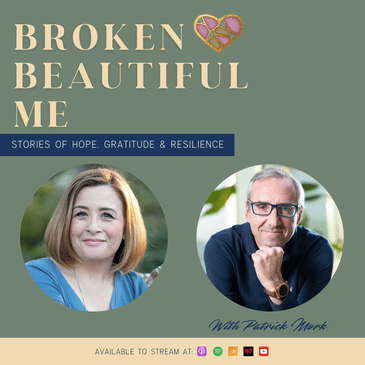
Finding Purpose and Momentum with Patrick Mork, Bestselling Author & Former Google CMO
We are joined by Patrick Mork, a bestselling author and former CMO of Google. With an impressive career as a 3X Silicon Valley CMO, Patrick has led marketing strategies for top tech companies and now dedicates his life to helping others discover their true potential and purpose.
In this episode, Patrick shares his journey from Silicon Valley executive to purpose-driven author and speaker. He reveals how embracing your inner potential can drive success, fulfillment, and momentum, both personally and professionally. We dive into:
- Patrick's transition from Google CMO to author and speaker focused on purpose.
- How to align your career with personal meaning and values.
- Practical steps for finding purpose, building confidence, and unlocking your potential.
- Insights on leadership, resilience, and making bold career moves.
If you're looking for actionable advice on living with purpose and achieving meaningful success, this episode is a must-listen!
Connect with Patrick Mork:- Website: PatrickMork.com
- LinkedIn: Patrick Mork on LinkedIn
- How to align your passion and profession for greater fulfillment.
- Leadership strategies to drive personal and professional momentum.
- Purpose-driven tips from a seasoned Silicon Valley leader.
------------------
Follow the Host, Kelly Buckley:
Stay connected with Kelly Buckley and join her journey of healing, resilience, and gratitude. Follow her on social media for more inspiring content, updates on future episodes, and insights on living a life full of hope and purpose.
- Website: kellybuckley.com
- Facebook: Kelly Buckley on Facebook
- Instagram: @KellyBuckleyOfficial
- LinkedIn: Kelly Buckley on LinkedIn
- Twitter: @KellyBuckley
- YouTube: Kelly Buckley on YouTube
If you enjoyed this episode, don't forget to subscribe to the podcast, share it with your friends and family, and leave a review. Your support helps spread the message of hope, resilience, and gratitude to more listeners around the world.
00:00:02
Hello everybody and welcome
00:00:03
to another episode of Broken Beautiful Me,
00:00:06
Stories of Hope,
00:00:08
Gratitude and Resilience.
00:00:11
I am so fortunate today.
00:00:12
Today's guest is Patrick Mork.
00:00:15
He's a distinguished author,
00:00:17
entrepreneur and executive coach.
00:00:19
Before becoming an executive
00:00:21
coach and mentor,
00:00:22
he was a two-time founder
00:00:23
and three-time
00:00:24
award-winning chief
00:00:25
marketing officer at Google and
00:00:28
and several VC-backed
00:00:29
startups in Silicon Valley and Europe.
00:00:32
With a robust career
00:00:34
spanning in tech and startup sectors,
00:00:36
Patrick has consistently
00:00:37
demonstrated an exceptional
00:00:39
ability to lead and inspire.
00:00:42
He is the author of the
00:00:43
thought-provoking book Step Back and Leap,
00:00:46
which delves into the
00:00:47
transformative power of
00:00:48
introspection and
00:00:49
courageous decision-making.
00:00:52
Patrick's insights into
00:00:53
overcoming adversity, building resilience,
00:00:56
and fostering growth have
00:00:57
resonated with audiences worldwide.
00:01:01
His work is grounded in life stories,
00:01:03
frameworks,
00:01:03
and exercises from his best-selling book,
00:01:06
Step Back and Leap,
00:01:08
his training as a certified
00:01:09
co-active coach,
00:01:11
and twenty-plus years
00:01:12
working at tech startups.
00:01:14
His purpose is to be the
00:01:15
transformative energy that
00:01:17
inspires people to lead
00:01:19
careers of meaning and purpose.
00:01:21
I love that so much.
00:01:23
Originally Belgian,
00:01:24
he's lived in eleven countries,
00:01:26
speaks four languages and holds an MBA.
00:01:28
He currently lives in Miami, Florida,
00:01:31
and is the father to two
00:01:32
amazing children.
00:01:34
Welcome, Patrick, to the show.
00:01:36
I am so thankful you're here.
00:01:38
Thank you so much for having me, Kelly.
00:01:39
It's an honor to be here.
00:01:42
So just to start, you know,
00:01:44
I gave you a brief bio,
00:01:46
but if you can just share
00:01:46
with our audience just a
00:01:48
bit about your journey and
00:01:50
what inspired you to write
00:01:52
Step Back and Leap.
00:01:55
Yeah, so, you know,
00:01:56
my journey is long and complicated.
00:02:01
That is definitely not a straight line.
00:02:03
You know, my father was an expat.
00:02:06
He was an expatriate working
00:02:07
for large US multinationals.
00:02:09
And so, you know,
00:02:11
we moved around the world
00:02:11
all over the place.
00:02:12
You know, we lived in Southeast Asia.
00:02:14
We lived in Mexico, Brazil, Europe,
00:02:17
the States.
00:02:18
And so I grew up in a family that was,
00:02:22
you know,
00:02:22
we were always traveling and moving.
00:02:24
And there was always a lot of uncertainty.
00:02:26
Every two years as a kid,
00:02:27
you're switching schools,
00:02:29
you're making new friends,
00:02:30
you're changing countries and cultures.
00:02:33
That has a profound impact on you,
00:02:35
both positively and negatively.
00:02:37
I would not say it's all positive.
00:02:38
I would not say it's all negative.
00:02:41
So I think my DNA has always
00:02:44
been around change and reinventing.
00:02:48
And I think that is...
00:02:50
for better or for worse,
00:02:52
going to become more the
00:02:53
norm for most of us now in
00:02:55
the age that we live in.
00:02:56
If you look at the speed of
00:02:59
not just technological change,
00:03:01
but change in society, change in economy,
00:03:05
change in social norms,
00:03:07
and the way we spend our
00:03:09
free time and everything,
00:03:10
we're going through an
00:03:11
immense time of change, right?
00:03:13
And so I think
00:03:15
You know, what I,
00:03:16
what I wanted to try and do is, you know,
00:03:18
in, in, in, in after a career in tech,
00:03:21
which, you know,
00:03:21
by some people would be
00:03:22
considered successful.
00:03:23
I think I always tell people
00:03:25
that success is relative.
00:03:27
Um, you know,
00:03:28
I think too many of us define
00:03:29
success just on the basis
00:03:31
of money status and wealth.
00:03:34
Um, you know, in, in,
00:03:36
I went through a very tough time where,
00:03:39
you know, I lost my job, uh, again, not,
00:03:41
not the first guy or gal to lose his job,
00:03:43
you know, it happens.
00:03:45
But I think, you know,
00:03:47
I woke up one morning and I
00:03:49
was just broken.
00:03:52
You know, I was just lost.
00:03:55
I didn't know where to take my life.
00:03:58
And I just woke up one
00:03:59
morning and I realized that
00:04:00
the path that I was on was
00:04:01
not working anymore.
00:04:02
You know,
00:04:03
I'd been a serial chief marketing
00:04:05
officer for many years
00:04:07
running and building teams,
00:04:09
both at Google and in a
00:04:10
number of technology startups.
00:04:13
And one day I woke up after
00:04:14
I got pushed out of this
00:04:15
company and I was like, you know,
00:04:18
our first gut feeling when
00:04:22
we lose our jobs is to,
00:04:24
you mourn a little bit, you get angry,
00:04:26
people have a range of emotions.
00:04:28
And then you think to yourself, okay,
00:04:30
I'm just going to get back on the horse.
00:04:31
I'm going to clean up the resume.
00:04:32
I'm going to start sending out resumes.
00:04:33
I'm going to call people.
00:04:34
I'm going to network.
00:04:35
Right.
00:04:35
This is what most of us do.
00:04:38
I did that too.
00:04:38
Right.
00:04:39
But one day when I woke up
00:04:41
that next day after being
00:04:42
pushed out of this company,
00:04:44
my wife had left me.
00:04:47
My career was in tatters.
00:04:49
I was not in a good place financially,
00:04:52
and I was no longer excited
00:04:54
about marketing.
00:04:56
And so, you know,
00:04:58
you wake up and you look at the ceiling.
00:04:59
You're like, what am I doing with my life?
00:05:01
Like I like I can't keep
00:05:02
going in this direction.
00:05:03
I know this is not the
00:05:04
direction that I need to go,
00:05:06
but I don't know what the direction is.
00:05:09
And so I entered a profound period of.
00:05:13
reflection, contemplation,
00:05:16
asking myself a lot of questions.
00:05:19
I read a lot of books.
00:05:20
I went to landmark forum.
00:05:23
I talked to a lot of people.
00:05:24
And I was really kind of
00:05:25
like searching inside
00:05:26
myself and trying to figure
00:05:29
out the answers.
00:05:31
And the challenge is that
00:05:34
when you lose your job or
00:05:36
when you realize that the
00:05:37
current direction that
00:05:38
you're going down is not the right one,
00:05:42
Most of us are so wrapped
00:05:43
into our jobs that that's
00:05:44
our sense of self-identity.
00:05:47
Our job and our career is a
00:05:50
big part of who we are,
00:05:51
particularly in the United States.
00:05:52
For better or for worse, in the US,
00:05:54
it's worse because people
00:05:56
are more focused on their career.
00:05:57
They're more focused on their job.
00:05:59
They're more focused on
00:06:01
on success and status, right?
00:06:02
And so I woke up and one day I was like,
00:06:05
okay, well, if I'm no longer,
00:06:07
if LinkedIn says I'm no
00:06:09
longer the chief marketing officer of X,
00:06:12
right?
00:06:12
X being whatever company I'm working at,
00:06:14
then who am I?
00:06:16
And I was stumped.
00:06:18
I was like, I don't know who I am.
00:06:19
I've completely lost myself,
00:06:21
my sense of identity.
00:06:23
And I think this is what
00:06:23
happens to a lot of people
00:06:24
when they lose their jobs.
00:06:25
And I think this is why so
00:06:26
people are devastated by job loss.
00:06:29
and why I get so personally
00:06:31
upset and angry when I see
00:06:34
the way corporate America
00:06:35
treats its employees.
00:06:37
By and large,
00:06:38
companies and CEOs don't care.
00:06:39
You're just another number.
00:06:41
They don't realize the
00:06:42
damage that they do by
00:06:44
stripping people's sense of
00:06:45
self-indemnity away from
00:06:46
them when they lay them off, right?
00:06:49
And so I went through this period.
00:06:51
I did all this reading.
00:06:51
I met a lot of people.
00:06:52
And finally,
00:06:53
I came to the conclusion that
00:06:54
I couldn't figure it out on my own.
00:06:56
And this is something that I think is,
00:06:58
you know, without sounding sexist,
00:07:00
I think men and I was
00:07:02
certainly one of them.
00:07:03
We have a harder time asking for help.
00:07:05
We have a harder time
00:07:06
raising our hand and saying, hey,
00:07:08
you know what, man,
00:07:08
I'm just absolutely freaking lost.
00:07:10
I don't know how to get out
00:07:11
of this hole that I'm in.
00:07:13
And I was really messed up.
00:07:17
And I really felt broken.
00:07:19
And I hired a coach.
00:07:22
And I had been told for years,
00:07:24
you should get a coach,
00:07:25
you should get a coach,
00:07:25
you should get a coach.
00:07:26
And I was like, why should I get a coach?
00:07:27
There's nothing wrong with me.
00:07:30
I'm not broken.
00:07:31
I'm fine.
00:07:33
I can figure this stuff out on my own.
00:07:34
I have an MBA.
00:07:35
I went to Google.
00:07:36
I'm a smart guy.
00:07:37
And this is what many of us think.
00:07:39
Until you hit a wall and you
00:07:40
realize either you cannot
00:07:42
figure things out on your
00:07:43
own or you are so broken
00:07:44
that you need somebody to
00:07:45
put the pieces back together.
00:07:46
And this gentleman did both.
00:07:48
He helped me become a better
00:07:50
version of myself.
00:07:51
And he helped me slowly
00:07:52
start to put the pieces back together.
00:07:55
But to put the pieces back
00:07:56
together as a new self, as a new person.
00:08:00
This was a reinvention.
00:08:02
It was not, this is Patrick, you know,
00:08:04
two point five, you know,
00:08:05
who's going to be CMO at
00:08:07
another startup or guess what?
00:08:08
I'm going to go from
00:08:09
marketing to sales and
00:08:10
still stay in tech.
00:08:11
Right.
00:08:11
That's that's not the solution either.
00:08:15
And so after nine months
00:08:17
with this coach and all of
00:08:19
a sudden having this
00:08:20
epiphany that I wanted to
00:08:21
give back and I wanted to
00:08:23
help and that potentially
00:08:25
my days of executing as an
00:08:28
employee were behind me.
00:08:30
And now my new days were of
00:08:32
mentoring and coaching and helping.
00:08:34
And that was a huge insight for me.
00:08:36
Yeah.
00:08:38
It was a huge insight I'd
00:08:39
never really thought about.
00:08:40
I was like, all of a sudden, I was like,
00:08:41
I could become a coach.
00:08:43
I could help all the people
00:08:44
that are going through the
00:08:45
same thing I'm going through,
00:08:47
or whether career change on the one hand,
00:08:50
or struggling running a
00:08:52
fast-growing organization
00:08:53
on the other hand.
00:08:54
I can help those people.
00:08:55
I can share my stories.
00:08:58
I can deeply empathize with them.
00:08:59
I can be that person that
00:09:01
they need who understands
00:09:03
what they're going through,
00:09:04
and I can provide the tools
00:09:06
for them to get through it.
00:09:08
And that's where the initial
00:09:11
idea for Step Back and Leap came from.
00:09:13
But the funny thing was I
00:09:15
wouldn't actually start to
00:09:16
write the book until two
00:09:17
and a half years later.
00:09:20
when I moved to Santiago, Chile,
00:09:21
to the other end of the
00:09:23
world to follow my ex-wife
00:09:25
and be close to my kids
00:09:26
because my ex-wife is Chilean.
00:09:29
And a year after I found
00:09:31
myself and I was starting
00:09:32
my new coaching business,
00:09:33
she all of a sudden drops the bombshell,
00:09:35
which is like, hey, guess what?
00:09:36
I'm sick of Silicon Valley
00:09:37
in the United States.
00:09:38
I don't want to live here anymore.
00:09:40
I want to move back to Chile.
00:09:41
And I was like, oh, my God.
00:09:45
Wow.
00:09:46
What do I do now?
00:09:48
Holy cow.
00:09:50
Yeah, exactly, right?
00:09:51
And so the book actually was
00:09:55
born a few years later when
00:09:56
I was in Chile.
00:09:59
And Chile, you know,
00:10:00
has always been this modern
00:10:02
of this model of democracy.
00:10:04
You know,
00:10:05
this this beacon of hope in a
00:10:08
pretty dysfunctional continent.
00:10:09
Let's be honest.
00:10:10
Right.
00:10:10
I lived in Latin America ten years.
00:10:12
I speak all the languages.
00:10:13
They have a lot of issues down there.
00:10:15
And Chile's been one of the
00:10:16
bright spots where people
00:10:17
always look to Chile and they say,
00:10:19
here's an example of, you know,
00:10:21
how modern, you know,
00:10:22
Western style capitalist
00:10:24
country can work in Latin America.
00:10:25
And everybody always thought
00:10:26
that Chile was great until it wasn't.
00:10:28
A year after I moved to Chile,
00:10:31
on the back of some price
00:10:33
rises of bus tickets,
00:10:37
a student demonstration
00:10:38
started in Santiago and it
00:10:41
very quickly cascaded into
00:10:43
an all out massive social
00:10:46
upheaval with people looting supermarkets,
00:10:49
burning train stations,
00:10:50
the police and the
00:10:52
The national guard were
00:10:53
called out into the street
00:10:54
and it was like, it was all over CNN.
00:10:56
Right.
00:10:56
And it was like, oh my God,
00:10:57
I just moved to a country
00:10:58
that I thought was stable
00:10:59
and now it's going down the toilet.
00:11:01
Um, and sorry, what year was this?
00:11:07
This was.
00:11:07
Okay.
00:11:10
So in two thousand nineteen, you know,
00:11:13
people took to the streets
00:11:14
and massive demonstrations
00:11:15
and they were protesting, you know,
00:11:18
the severe levels of
00:11:19
inequality that exists not just in Chile,
00:11:21
but across most of Latin America.
00:11:23
And to be honest,
00:11:24
when you look at the US these days,
00:11:26
the level of disparity
00:11:27
between folks like Elon Musk and,
00:11:29
you know,
00:11:30
the homeless people a couple of
00:11:32
blocks from where I live is pretty vast.
00:11:34
Right.
00:11:35
Yep.
00:11:36
And so there were these
00:11:37
massive demonstrations and
00:11:39
my business was effectively shut down.
00:11:41
I'd started a new company in Chile.
00:11:43
We were starting to gain
00:11:44
traction doing leadership development.
00:11:46
And when this happened,
00:11:47
the whole country shut down.
00:11:50
So all my clients were like, we're sorry,
00:11:52
we're putting everything on pause.
00:11:54
The budgets are on freeze.
00:11:55
There is no work.
00:11:58
And I was working with my
00:11:59
coach and I'm like, oh my God,
00:12:01
what do I do?
00:12:04
And in a coaching session,
00:12:06
We were talking about the
00:12:07
fact that I journal every day.
00:12:09
So I have this practice,
00:12:11
which you are probably
00:12:13
familiar with this.
00:12:15
I have a gratitude practice.
00:12:18
Every day I wake up and one
00:12:19
of the first things I do is
00:12:20
I write down five things
00:12:21
that I'm thankful for the day before,
00:12:24
right?
00:12:26
um and your story deeply
00:12:27
resonated with me because I
00:12:29
have kids and you know I
00:12:32
I'm deeply grateful for
00:12:33
their presence in my life
00:12:34
every day you know it's
00:12:35
it's it's absolutely my
00:12:37
life and you know I I so I
00:12:40
journal every single day
00:12:42
and I've been I have
00:12:43
thousands of pages of notes
00:12:45
and my coach looked at me
00:12:46
and she said well
00:12:48
You've been through this
00:12:49
massive transformation.
00:12:50
You changed your career.
00:12:51
You left the country.
00:12:52
You completely reinvented yourself.
00:12:53
You started a company.
00:12:55
She's like,
00:12:56
what might be possible if you
00:12:59
decided to put all this in a book?
00:13:01
And I looked at her and I was like,
00:13:02
I just grabbed my face.
00:13:04
You have got to be kidding me.
00:13:05
It's like as if my life
00:13:06
wasn't hard enough.
00:13:07
You want me to write a book?
00:13:10
And she's like, well,
00:13:11
the whole country is
00:13:11
falling apart and you have no business.
00:13:13
So like, what else are you going to do?
00:13:14
Right.
00:13:14
So I was like, OK, guess what?
00:13:17
I'll write.
00:13:18
So I started to write, you know,
00:13:22
step back and leave.
00:13:23
And and I spent, I think,
00:13:25
a year and I wrote like
00:13:26
seven hundred and fifty
00:13:28
pages of tight notes.
00:13:30
And I finally took it to an editor.
00:13:33
And the editor was like, OK,
00:13:36
I'm going to need a couple
00:13:37
of weeks to read this.
00:13:38
And then he comes back after
00:13:39
a couple of weeks and he's like, OK,
00:13:40
Mr. Mork,
00:13:40
I have good news and I have bad news.
00:13:41
And I was like, OK, well,
00:13:44
what's the good news and bad news?
00:13:45
And he's like,
00:13:46
the good news is I love your stories.
00:13:48
They're brilliant.
00:13:49
It's refreshing.
00:13:49
It's authentic.
00:13:50
It's super powerful.
00:13:51
It's very human.
00:13:52
The bad news is you need to
00:13:53
completely rewrite the book.
00:13:57
So anyway, long story short,
00:13:58
that's kind of that's where
00:14:00
the book came from.
00:14:03
and it's been an amazing
00:14:05
journey I'm incredibly
00:14:07
fortunate for everything
00:14:09
that I've been through the
00:14:09
good and the bad because I
00:14:11
think that's ultimately
00:14:11
what transforms us into the
00:14:13
human beings that we are
00:14:15
and I always said if I
00:14:17
write this book and it
00:14:18
helps even one person then
00:14:20
it was worth doing and I've had
00:14:25
many much more than one
00:14:26
person be helped with this
00:14:27
you know I I was in
00:14:28
venezuela last week and I I
00:14:30
had an email I had an
00:14:32
instagram message from a
00:14:33
gentleman who's been as
00:14:34
well and living in chile
00:14:36
and he sent me a really
00:14:37
amazing message on
00:14:39
instagram saying that my
00:14:40
book was life-changing for
00:14:42
him and I was very
00:14:44
flattered by that and I was
00:14:45
like just out of curiosity
00:14:46
where did you find it he's
00:14:47
like oh it's available for
00:14:48
free in the chilean digital
00:14:50
national archive
00:14:51
And I was like, well,
00:14:52
that's like whatever.
00:14:55
As long as people are benefiting from it,
00:14:57
I guess it's good.
00:14:58
But yeah, you know,
00:15:00
it's been an amazing journey.
00:15:02
And I'm very blessed for the
00:15:04
work that I'm able to do
00:15:05
and having written this
00:15:06
book and impacting people's lives.
00:15:08
And, you know, what can I say?
00:15:11
And being able to turn the
00:15:12
corner and then taking
00:15:14
those personal experiences
00:15:16
from growing up and moving around.
00:15:19
I mean,
00:15:20
you were a master change agent by
00:15:22
the time you probably
00:15:23
finished high school from those,
00:15:26
just those experiences, right?
00:15:28
And then you take that,
00:15:30
you navigate through your
00:15:31
personal challenges professionally, and
00:15:33
When you're talking about that,
00:15:36
I think that's just going
00:15:37
to resonate with so many
00:15:38
people because we've all been there.
00:15:40
If you've been in the business world,
00:15:43
we've all been there where
00:15:44
you're kind of like, well,
00:15:45
what do I do now?
00:15:47
Yeah.
00:15:48
And we've all been there as
00:15:50
well when maybe our
00:15:53
identity was maybe too much
00:15:56
focused on what we do and
00:15:59
not really becoming
00:16:01
introspective and saying,
00:16:02
who are we and who do we want to be?
00:16:05
You discuss in the book the
00:16:06
idea of stepping back
00:16:08
before making a leap, right?
00:16:10
Yeah, yeah.
00:16:12
Explain that concept and how
00:16:15
that plays a role in your
00:16:16
life and how it could play
00:16:17
a role in the life of our listeners.
00:16:21
Yeah, that's a great question.
00:16:22
You know, when you write a book,
00:16:24
the funny thing is one of
00:16:25
the simplest things that
00:16:27
you would think is the title.
00:16:29
And the title is actually
00:16:30
the hardest because you're
00:16:32
trying to take hundreds of
00:16:33
pages of material and
00:16:34
condense it into one title.
00:16:37
And I really agonized with
00:16:39
the title for a long time.
00:16:40
And...
00:16:42
And I came to step back and
00:16:43
leap because on the one hand, you know,
00:16:45
folks always talk about
00:16:47
wanting to make a big leap, right?
00:16:48
You know,
00:16:49
Tony Robbins and all the
00:16:50
motivational people, you know,
00:16:51
I'm actually,
00:16:52
I'm going to the Tony
00:16:53
Robbins Unleash the Power
00:16:54
Within event next month, actually.
00:16:58
And I've been a long time
00:16:59
admirer of Tony's work.
00:17:03
And I wanted to do something
00:17:05
that gave people this idea
00:17:07
of transformation, of leap, of change.
00:17:10
But my own journey
00:17:12
led me to the conclusion
00:17:14
that you really need to dig
00:17:16
deep to figure out what
00:17:17
your next step is.
00:17:20
Sadly,
00:17:20
we live in a world where everybody
00:17:23
wants instant gratification,
00:17:25
where it's like, oh, I want to do it.
00:17:27
I'm going to transform tomorrow.
00:17:30
No, that's just not the way it works.
00:17:32
You're not going to have a
00:17:33
six pack tomorrow just
00:17:35
because you decide you're
00:17:36
going to get in shape.
00:17:38
Well, I'm going to start a business.
00:17:40
OK,
00:17:40
you incorporate your business and you
00:17:43
get your name and starting
00:17:44
a business is hard.
00:17:46
So I think my experience was
00:17:49
that if you really want to
00:17:51
live a life of meaning and purpose,
00:17:53
you have to spend a lot of
00:17:55
time knowing yourself.
00:17:57
I always,
00:17:57
when I coach startup founders and
00:18:00
leaders,
00:18:01
I always tell them that one
00:18:02
of the most important
00:18:03
virtues of a good leader is
00:18:05
self-awareness.
00:18:07
If you look at the best leaders,
00:18:08
they are incredibly self-aware.
00:18:10
They know what they're good at.
00:18:11
They know what they're not good at.
00:18:13
You know,
00:18:13
they can feel when they're losing
00:18:15
their patience,
00:18:16
when they're getting angry.
00:18:17
You know,
00:18:18
they can sense the feeling of others.
00:18:20
They have a very high degree
00:18:22
of emotional intelligence, right,
00:18:25
as Daniel Holman talks about in his book.
00:18:29
And
00:18:30
And I felt that I needed to
00:18:32
spend a lot of time digging
00:18:33
deep and really getting to know myself.
00:18:35
And the more I did that,
00:18:36
both through my coach and
00:18:37
through Landmark and
00:18:38
through a lot of kind of
00:18:39
online questionnaires and, you know,
00:18:41
strength finders and
00:18:42
personality tests and all
00:18:44
this good stuff.
00:18:44
There were just things that
00:18:45
I discovered about myself
00:18:46
along the way that I didn't know.
00:18:49
You know, that some stuff was obvious.
00:18:51
You know, I was I mean, I'm impatient.
00:18:54
You know,
00:18:54
I've had anger management issues.
00:18:56
You know, I'm very hard driving.
00:18:57
I'm a perfectionist, you know.
00:19:00
et cetera, et cetera, et cetera.
00:19:01
But there were other things I didn't see,
00:19:03
right?
00:19:03
And so, you know, Eric Schmidt,
00:19:06
who is the former CEO of Google,
00:19:07
once said something which
00:19:08
really stayed with me, which was,
00:19:12
you know,
00:19:12
people are never as good as
00:19:14
seeing themselves as others see them.
00:19:17
You know, we don't see what we don't see.
00:19:20
And that's why, you know,
00:19:22
kind of spending time
00:19:23
getting to know yourself
00:19:24
and especially asking
00:19:25
feedback from others,
00:19:26
whether it's a coach or
00:19:27
coworkers or whatever,
00:19:30
helps us so much and so the
00:19:31
whole point of step back
00:19:32
and leap was I tell people
00:19:33
you need to take a couple
00:19:35
of steps back and you
00:19:36
really need to kind of like
00:19:37
dig down look at yourself
00:19:40
do a bunch of diagnostics
00:19:42
ask yourself a bunch of
00:19:43
hard questions get other
00:19:44
people to ask you hard
00:19:45
questions and then not be
00:19:46
afraid to go to people who
00:19:48
know you well who are not
00:19:49
necessarily friends and
00:19:50
family because
00:19:51
unfortunately friends and
00:19:52
family generally will care
00:19:54
about us so they won't tell
00:19:55
us what we need to know
00:19:56
yeah and you need to ask
00:19:57
people you know when you look at me
00:20:00
When you look at Kelly,
00:20:01
when you look at Patrick,
00:20:02
what do you see?
00:20:03
You know, what are my superpowers?
00:20:05
What are the things that I am amazing at?
00:20:07
And then people will tell you, you know,
00:20:09
you're actually an amazing
00:20:11
chef or you're such a good
00:20:12
lister or you have this
00:20:13
thing with animals, right?
00:20:15
And sometimes some of that
00:20:16
stuff you know and
00:20:18
sometimes some of the stuff
00:20:19
you don't and you're like, wait, wow,
00:20:21
I've never thought about that, right?
00:20:24
And for me, it was kind of,
00:20:27
people just would tell me,
00:20:29
you're incredibly authentic.
00:20:31
You're like, you just,
00:20:33
you can connect so easily with anybody.
00:20:36
Like I had a homeless person
00:20:38
on the street of Miami
00:20:39
Beach come up and hug me the other day.
00:20:43
And my kid was walking with
00:20:44
me and he was like,
00:20:44
what the heck is that?
00:20:46
And it's a homeless woman
00:20:48
that I knew from the other
00:20:49
side of the city that I'd
00:20:51
bought some food for occasionally.
00:20:52
And I knew her name.
00:20:53
And every time I would see her,
00:20:54
I would always just wave and say hello.
00:20:57
It's something harmless and
00:21:00
it doesn't take any effort, right?
00:21:02
But the reality is most
00:21:02
people never do that, right?
00:21:05
Most people ignore homeless
00:21:06
people and pretend like they don't exist.
00:21:08
When in fact they're human
00:21:10
beings just like you and I. They are,
00:21:13
exactly.
00:21:14
They are human beings just
00:21:15
like you and I. And I think, you know,
00:21:18
I have this thing about homeless people,
00:21:20
which is whenever I see a
00:21:21
homeless people person,
00:21:23
I always ask myself,
00:21:25
What's their story?
00:21:26
How did they get there?
00:21:28
Because for all we know,
00:21:30
they could have been a
00:21:30
person like you and me.
00:21:31
They could have had a career.
00:21:32
They have a family.
00:21:33
They have parents.
00:21:34
They have siblings.
00:21:35
Maybe they had a home at some point.
00:21:36
Maybe they had a job at some point.
00:21:38
But the point is the
00:21:39
feedback I got from people
00:21:40
is people just relate to you.
00:21:43
They can connect to you.
00:21:44
You transmit this energy
00:21:46
that brings people towards you.
00:21:48
And I had never really
00:21:49
thought about it from that perspective.
00:21:52
But when I thought about it
00:21:53
from that perspective,
00:21:54
all of a sudden it opened
00:21:55
up a whole bunch of doors
00:21:56
for me in terms of what I
00:21:57
could be doing with my life.
00:22:00
I could be coaching.
00:22:01
I could be teaching.
00:22:03
I could be running workshops.
00:22:05
I could be a motivational speaker.
00:22:08
And so when we get that
00:22:09
feedback from other people
00:22:10
and we start to look at
00:22:11
ourselves from the outside,
00:22:14
amazing things come up.
00:22:17
Doors and options open.
00:22:19
That is so interesting that
00:22:20
you bring up the feedback thing,
00:22:22
because I I can remember
00:22:24
early in my career when I
00:22:27
was moving into leadership
00:22:30
positions and I wasn't good
00:22:32
at feedback and it was it
00:22:34
was a huge weakness for me.
00:22:36
I had to learn to be comfortable with it.
00:22:38
I had and you do have to
00:22:39
work at being comfortable with it.
00:22:40
Like no one wants to be, you know,
00:22:43
ask a question and then
00:22:44
hear something they really
00:22:45
don't want to hear about themselves.
00:22:46
But that's how you grow.
00:22:49
So let's take that a little wider.
00:22:51
So now we're kind of in a world,
00:22:55
we're super connected,
00:22:57
but we're all in our silos.
00:23:00
We don't want to hear
00:23:02
feedback that is honest.
00:23:04
We just want to hear what we want to hear.
00:23:06
We want to have everything
00:23:08
mirrored back to us.
00:23:10
So on a global scale,
00:23:14
Where does that put us in
00:23:15
terms of moving forward if
00:23:16
we don't want to hear
00:23:17
anybody and we don't want
00:23:18
to hear any feedback about
00:23:19
what we're doing?
00:23:21
How do we get past that?
00:23:24
Fix the world, Patrick.
00:23:26
Answer my question.
00:23:29
It's a great question.
00:23:30
I wish I could fix the world.
00:23:31
Believe me.
00:23:32
My son tells me that all the time.
00:23:34
He's like, Dad,
00:23:34
you have the savior syndrome.
00:23:35
You're always trying to save everybody.
00:23:37
And he's like, some people can't be saved.
00:23:41
I think that's true.
00:23:45
On the one hand,
00:23:45
there are people who are
00:23:46
not ready to see themselves
00:23:50
the way they need to be seen.
00:23:51
And,
00:23:52
and I was one of those people for a
00:23:53
long time.
00:23:54
I, uh,
00:23:55
I remember when I was working at Google,
00:23:58
uh,
00:24:00
I remember once meeting a vendor at an
00:24:02
event and, uh,
00:24:06
she had an interesting product.
00:24:07
She was selling some sort of
00:24:08
advertising service.
00:24:10
I thought she was very attractive.
00:24:11
So I wanted to meet with her
00:24:12
regardless because I
00:24:13
thought she was pretty.
00:24:16
And lo and behold,
00:24:17
then one day she sends me
00:24:18
an email and she goes, hey,
00:24:20
I'm going to be up in Silicon Valley.
00:24:22
Would you like to meet for lunch?
00:24:24
And I was like, yeah, cool.
00:24:25
Fine.
00:24:25
Great.
00:24:27
And then I think two days
00:24:28
before the meeting,
00:24:29
I just sent her an email and I was like,
00:24:30
look, I can't meet.
00:24:30
I'm just I'm slammed with work.
00:24:32
I've just got too much stuff going on.
00:24:33
I'm going to have to pass.
00:24:36
And I didn't think twice.
00:24:38
And years later.
00:24:41
after I'd lost my job,
00:24:42
when I was rebuilding myself,
00:24:44
I reconnected with her on
00:24:45
LinkedIn or something.
00:24:46
And she told me something
00:24:47
that just blew my mind.
00:24:49
And she said,
00:24:51
the day that you canceled lunch with me,
00:24:53
I had bought the ticket
00:24:54
already from LA to San Francisco.
00:24:57
And the only reason I was
00:24:58
going up was to meet with you.
00:25:02
And I felt like a complete schmuck.
00:25:06
I felt just horrible.
00:25:08
I was like, man, what?
00:25:10
What was I thinking?
00:25:13
How could I do this to this woman?
00:25:14
On top of the fact that my
00:25:16
reasons were not genuine,
00:25:19
I just felt horrible, right?
00:25:20
And so it's kind of like,
00:25:23
but it was not until years
00:25:24
later when my wife left me
00:25:26
and I had all these
00:25:27
problems happen that all of
00:25:28
a sudden I realized I have
00:25:30
to make some changes.
00:25:31
And so I think most of us, unfortunately,
00:25:36
Don't make a change and take
00:25:38
a serious look at ourselves
00:25:40
until we're in a crisis.
00:25:42
Yes.
00:25:43
That's just the sad reality
00:25:44
of human nature.
00:25:46
We're not bad people.
00:25:48
We just can't get out of our own way.
00:25:50
I run into people all the
00:25:51
time who could benefit from my coaching.
00:25:53
I can see exactly what's
00:25:55
going on in their lives.
00:25:56
I can see exactly the story
00:25:57
that they're telling themselves.
00:25:59
I can see exactly why they're stuck.
00:26:01
And I know how to help them.
00:26:04
But you can't help people
00:26:05
who don't want to be helped.
00:26:06
It's like an alcoholic who
00:26:07
has decided that they're
00:26:08
going to continue drinking.
00:26:09
You know,
00:26:09
it's until the person comes to
00:26:12
the realization that they
00:26:13
have to make that change,
00:26:14
they will not change.
00:26:15
You know,
00:26:17
I had the same thing with my son.
00:26:19
You know,
00:26:20
he just moved to Miami Beach from
00:26:22
Santiago, Chile,
00:26:23
and has been through a very tough time.
00:26:26
It's been very challenging for him.
00:26:28
And I saw the school counselor,
00:26:30
and the school counselor was like,
00:26:32
is he seeing somebody?
00:26:33
Is he seeing a therapist?
00:26:34
And I was like, no.
00:26:35
And that guy's like, you know,
00:26:37
your son has a lot of anger issues.
00:26:38
He should really see a therapist.
00:26:40
And I was like, I know.
00:26:42
And my ex-wife and I have
00:26:43
talked to him about it,
00:26:44
and he refuses to do so.
00:26:45
And in my experience,
00:26:47
you cannot put a teenager
00:26:49
in front of a therapist who
00:26:50
does not want to be with a therapist.
00:26:53
I don't believe you can once
00:26:55
they reach a certain age,
00:26:55
maybe when they're younger, maybe.
00:26:58
But at seventeen, eighteen, you know,
00:26:59
they're they're nearly adults.
00:27:01
Right.
00:27:01
And so you can't do that.
00:27:03
So I think it's.
00:27:06
You know,
00:27:06
I don't know exactly how you change that.
00:27:08
I think what I learned in coaching,
00:27:11
which which was really amazing,
00:27:13
is that the nature of human
00:27:17
beings is that we don't
00:27:18
most of us don't want to be
00:27:19
told what to do.
00:27:20
Right.
00:27:22
most of us want to have this
00:27:24
like aha moment this like
00:27:25
omg whatever oh my god
00:27:27
moment where we have a
00:27:29
realization that we believe
00:27:31
is our own and then we take
00:27:33
action right and so the
00:27:35
coach's job is not to tell
00:27:37
people and I always tell my
00:27:38
clients and sometimes you
00:27:39
know I coach ceos I coach
00:27:41
some pretty senior people
00:27:42
and they get frustrated
00:27:43
with me it's like you're
00:27:44
you're the coach you're
00:27:45
supposed to tell me what to
00:27:46
do and I'm like I'm not
00:27:46
supposed to tell you what to do dude
00:27:48
Because if I tell you what to do,
00:27:50
it's my idea.
00:27:51
It's not yours.
00:27:52
Therefore, you have no ownership.
00:27:53
Therefore, you're less likely to do it.
00:27:55
Right.
00:27:56
So our job is to ask, you know,
00:27:59
what I call powerful questions,
00:28:02
open ended questions that
00:28:03
give people the chance to
00:28:05
think it through on their own,
00:28:06
find the insight on their own,
00:28:08
and then go out and make a change happen.
00:28:11
And that takes time.
00:28:13
It does.
00:28:15
We live in a society where
00:28:16
time is the most valuable
00:28:18
commodity that we have.
00:28:19
And most people don't want
00:28:20
to invest the time to do it.
00:28:24
People don't want to invest
00:28:25
the time in reading an article.
00:28:27
I mean,
00:28:29
I have sent articles to friends and
00:28:32
asked them questions about
00:28:33
things in the article that
00:28:34
I found fascinating.
00:28:36
And they're like, well,
00:28:36
I just kind of skimmed it.
00:28:38
I mean,
00:28:39
we've lost the ability to really
00:28:40
dig deep.
00:28:41
And I think sometimes I look
00:28:43
back at generations that
00:28:44
came before us and I'm like, oh God,
00:28:46
you guys were able to
00:28:47
accomplish so much because
00:28:49
you weren't distracted.
00:28:50
You knew you had a sense of purpose.
00:28:54
And I think that we've lost that somehow.
00:28:57
I think what we're saying,
00:28:59
and I know that we can't
00:29:00
fix the world on this one
00:29:02
podcast episode.
00:29:03
We're trying.
00:29:09
But I think what I'm hearing
00:29:11
from you is a little nugget
00:29:13
of wisdom about kind of
00:29:16
presenting people with
00:29:17
questions that allow them
00:29:19
to arrive at that place themselves.
00:29:22
But what that means is that
00:29:23
we as human beings,
00:29:26
when we meet people who are not there yet,
00:29:30
that we give them the space
00:29:33
to make that leap.
00:29:35
We give them those questions to ponder.
00:29:38
And maybe we'll never see that change.
00:29:40
Maybe that change will come
00:29:42
years later and we're long gone.
00:29:44
But that we should always
00:29:46
stay true to our voice and
00:29:48
ask those tough questions no matter what.
00:29:50
We have to stay true to
00:29:51
ourselves and stay on purpose.
00:29:59
So I think you've just given
00:30:01
us a map to fix the world.
00:30:03
So this is like already we
00:30:05
are successful in this podcast today,
00:30:07
Patrick.
00:30:09
You know, I think it's also,
00:30:13
I think there's a saying, which is,
00:30:15
you know, just be yourself.
00:30:17
Everybody else is already taken, right?
00:30:19
I think people are trying so
00:30:22
hard to be something that they're not.
00:30:25
Yeah.
00:30:26
You know,
00:30:27
and I think the other feedback I
00:30:29
get from people is rightly or wrongly,
00:30:31
you like me, you don't like me.
00:30:33
I am authentic.
00:30:33
I'm the way I am.
00:30:34
You know, you read my book.
00:30:35
It sounds like me.
00:30:36
You talk to me.
00:30:37
It sounds like the book.
00:30:39
You know,
00:30:40
I try and just kind of like
00:30:41
practice what I preach and
00:30:42
be true to who I want to be.
00:30:44
But but I think, you know,
00:30:45
that's the thing about social media,
00:30:47
which has made it so much harder is I,
00:30:49
you know,
00:30:50
I spend a lot of time on social media.
00:30:53
mostly creating content.
00:30:54
I don't consume that much, to be honest.
00:30:56
And when I look through what
00:30:58
I see on social, there's so much garbage.
00:31:01
And I feel like telling people, I'm like,
00:31:03
why are you posting this?
00:31:04
This is just a platitude.
00:31:05
This doesn't add any value.
00:31:08
This doesn't help anyone.
00:31:11
But then again,
00:31:13
they have their story of
00:31:14
why they're doing this.
00:31:14
So who am I to judge?
00:31:15
But
00:31:18
I think if people were just
00:31:20
kind of like more
00:31:21
comfortable in their own skin,
00:31:23
being who they are,
00:31:26
sharing their gifts with the world,
00:31:28
I think that would help enormously.
00:31:29
I think people would be far less stressed,
00:31:32
far less anxious.
00:31:34
And we would also build
00:31:35
better relationships.
00:31:36
Because I firmly believe
00:31:37
everybody is special.
00:31:38
I believe everybody has gifts.
00:31:40
We all have superpowers.
00:31:41
We all have our kryptonites.
00:31:43
To the extent that you can...
00:31:47
I always tell people there's
00:31:49
a book I think called The
00:31:50
Great Leap by Hendrix,
00:31:52
and he talks about the zones of genius.
00:31:56
And he says there's
00:31:57
basically four zones that
00:31:59
human beings operate in.
00:32:00
He's like,
00:32:00
there's the zone of incompetence,
00:32:02
which is you're doing stuff
00:32:03
that you just positively suck at,
00:32:04
you hate,
00:32:06
which in my case is like finance
00:32:07
and accounting.
00:32:08
It's like, oh, my God, please.
00:32:10
There's the zones of competence,
00:32:12
which is like, okay, yeah,
00:32:14
I can do the numbers.
00:32:16
I don't enjoy doing it, whatever.
00:32:17
There's the zone of excellence,
00:32:18
which for me is probably marketing.
00:32:20
Yeah.
00:32:21
Back in my day,
00:32:22
I was considered one of the
00:32:24
top marketers in Silicon Valley.
00:32:26
And then there's a zone of genius,
00:32:28
which for me is speaking
00:32:30
and connecting with human
00:32:31
beings and transmitting energy.
00:32:33
And so when you find your zone of genius,
00:32:37
and if you can find a way
00:32:38
to monetize that and do it
00:32:44
in such a way that your
00:32:45
zone of genius on top of it
00:32:47
is needed in the world and helps others,
00:32:51
That's how you live a life
00:32:52
of meaning and purpose.
00:32:53
It's the ikigai, right?
00:32:54
Yeah, and that's absolutely right.
00:32:58
And it's not work.
00:33:01
It's not work once you get into that zone.
00:33:04
So, I mean,
00:33:05
you come from this tech
00:33:07
background and we're
00:33:08
talking about kind of connections.
00:33:09
We're talking about anxiety.
00:33:12
There's a book called The
00:33:13
Anxious Generation.
00:33:14
I think the author's name is John Haidt.
00:33:17
And he talks about the
00:33:19
absolutely skyrocketing
00:33:21
rates of anxiety in teens
00:33:25
when we convert it from
00:33:27
flip phones to smartphones.
00:33:30
And so we're in a situation
00:33:33
now where everybody talks
00:33:36
about living an authentic life.
00:33:37
And we all want that for ourselves.
00:33:39
We want that for each other.
00:33:41
But then we have this kind
00:33:43
of false version of what is
00:33:45
real on social media.
00:33:47
Yeah.
00:33:48
And then we have young
00:33:49
people whose brains are not
00:33:50
fully developed and they're
00:33:51
trying to process all of
00:33:53
this information.
00:33:54
I mean, some days for me as an adult,
00:33:57
and I'm not a big consumer
00:33:59
of social media.
00:34:00
I'm more like you in that
00:34:01
regard in creating content
00:34:03
rather than consuming a bunch.
00:34:06
But there are some days on
00:34:07
social media that I feel
00:34:08
like I'm drinking through a fire hose.
00:34:10
Things are coming at you so quickly.
00:34:14
How do we, I mean, you're a parent,
00:34:16
I'm a parent.
00:34:19
How do we guide our children through this?
00:34:25
I think that's a million dollar question.
00:34:31
I think part of it is
00:34:33
starting the process
00:34:34
earlier of helping them
00:34:36
figure out who they want to
00:34:38
be and what they want out of life.
00:34:42
You know,
00:34:42
the thing is parents to realize for me,
00:34:46
it's been a fascinating
00:34:47
couple of months just
00:34:48
living with my son because
00:34:49
I've had to reinvent the way I parented.
00:34:51
You know,
00:34:51
I've been divorced since
00:34:53
officially since twenty twenty twenty,
00:34:55
I think,
00:34:56
and separated since twenty fifteen.
00:34:58
And I never lived with my kids.
00:34:59
They always live with my ex-wife.
00:35:01
And so I would see them all the time,
00:35:02
but I wouldn't live with them.
00:35:03
They would they would stay
00:35:04
with me during the weekend.
00:35:06
And.
00:35:08
And it was great.
00:35:09
I mean, it worked and, you know,
00:35:10
it was part of their life
00:35:11
and very engaged.
00:35:11
And then three months ago,
00:35:12
my son Raphael came to live with me.
00:35:14
And I was like,
00:35:15
all of a sudden I became a single dad.
00:35:17
And it was like
00:35:18
life-changing in good and bad ways.
00:35:20
Yeah.
00:35:21
And I think the first thing
00:35:22
that we have to realize as
00:35:23
parents is that the horizon
00:35:26
through which our kids see
00:35:28
time is completely different to ours.
00:35:32
You know, as parents,
00:35:32
we see time linearly.
00:35:35
We see it, you know, five years, ten years,
00:35:37
fifteen years.
00:35:38
Oh, my God, if you don't go to college,
00:35:39
you know,
00:35:40
in ten years you're going to be homeless.
00:35:42
Kids don't see it that way.
00:35:44
I mean,
00:35:44
I was reading this book from a
00:35:45
well-known psychologist the other day,
00:35:47
and he said it.
00:35:47
He said, you know, kids, teenagers,
00:35:49
they see time.
00:35:50
The next seventy two hours, the next week,
00:35:52
maybe the next two weeks, you know,
00:35:53
they don't have the same
00:35:54
notion of time that we do.
00:35:57
Um, and my son would tell me this,
00:35:58
he's like, you know,
00:35:59
don't talk to me about college.
00:36:00
It stresses me out.
00:36:01
I don't want to think about
00:36:02
that right now.
00:36:04
I'm still a senior.
00:36:05
And I'm like, dude, you're supposed to be,
00:36:06
you're senior.
00:36:07
You're supposed to be
00:36:07
figuring this stuff out now.
00:36:08
Right.
00:36:09
But I think that's one thing is,
00:36:11
is that we have to,
00:36:12
as parents realize that
00:36:13
they don't see time the way,
00:36:14
the same way we do first.
00:36:17
The second thing we have to
00:36:18
realize is the world has
00:36:19
completely changed.
00:36:21
I mean, when you and I grew up,
00:36:24
YouTube didn't exist, right?
00:36:26
Mobile phones didn't exist.
00:36:28
The internet didn't exist.
00:36:29
I mean, God, that's how old I am, right?
00:36:31
The internet didn't exist.
00:36:33
And these people have grown
00:36:34
up with all these different
00:36:35
tools and all this
00:36:36
different access to
00:36:37
information and a
00:36:39
completely different way of living.
00:36:41
And the devices are a way
00:36:43
for them to maintain social connection,
00:36:45
right?
00:36:45
So for me, on the one hand,
00:36:48
I abhor the fact that he's
00:36:49
on his phone all the time.
00:36:51
I have thought so many times
00:36:52
of taking it away or I've
00:36:54
thought so many times of like, okay,
00:36:55
he's only going to get it
00:36:55
two hours a day.
00:36:57
But how do you do that as a
00:36:59
parent when like your
00:37:00
child's entire social
00:37:01
fabric is on their phone?
00:37:02
Right.
00:37:05
They're like texting each
00:37:06
other and talking on the
00:37:07
phone all day long.
00:37:08
That's how they stay connected.
00:37:09
That's how they live.
00:37:11
So I think we have to come
00:37:12
to the realization that our
00:37:13
kids have grown up in
00:37:14
different circumstances
00:37:15
with different technology
00:37:17
and that their lives are very,
00:37:17
very different to ours.
00:37:19
I think that's the second realization.
00:37:21
The third realization that
00:37:23
we have to have as parents,
00:37:24
and I think AI, for better or for worse,
00:37:26
is going to massively
00:37:28
accelerate and change this,
00:37:29
is that education is going
00:37:31
to fundamentally completely change.
00:37:33
It has to change.
00:37:34
This idea of going to school
00:37:38
in a classroom and
00:37:39
memorizing the same content
00:37:41
as the other thirty kids in
00:37:43
the class makes no sense.
00:37:45
It is preposterous to even
00:37:47
assume that that works
00:37:48
because every child is completely unique.
00:37:51
Every child is totally different.
00:37:52
They have different, you know,
00:37:53
superpowers.
00:37:54
They have different kryptonites.
00:37:55
We're going to move to a
00:37:58
world where learning will
00:37:59
be completely personalized,
00:38:01
where kids will learn stuff
00:38:03
that they want to learn
00:38:04
that really fits with the
00:38:05
things that they're good at,
00:38:06
that avoids the things that
00:38:07
they're bad at.
00:38:09
And the thing that we need
00:38:10
to put them in school for is different.
00:38:12
The thing that we need to
00:38:13
put them in school for is
00:38:14
to learn to collaborate and
00:38:15
work in teams because
00:38:17
everything in business is done in teams.
00:38:20
It's done in groups.
00:38:23
Oh my, I just, I just, oh,
00:38:25
that was brilliant.
00:38:26
I mean, I just,
00:38:27
I'm having like a little
00:38:28
bit of a moment here
00:38:29
because that's so true.
00:38:32
personalized learning and
00:38:34
then school is for learning
00:38:35
how to collaborate and
00:38:37
cooperate um I'll tell you
00:38:40
a story my husband um has
00:38:42
add and so he grew up in
00:38:45
our generation where you
00:38:47
know no internet no you
00:38:48
know you needed information
00:38:49
you went to the library um
00:38:52
and nobody knew or talked
00:38:55
about anything like
00:38:56
attention deficit disorder
00:38:57
or anything in in during that time
00:39:00
And so he always felt like it was,
00:39:03
it was a shortcoming.
00:39:04
And I, I always tell him it's a strength.
00:39:08
I'm,
00:39:09
I'm a person who's very detail
00:39:10
oriented in things that I do.
00:39:12
It comes from my healthcare background.
00:39:14
My husband has an ability to
00:39:16
fly at the ten thousand
00:39:17
foot level and see the
00:39:18
landscape of a bit of our business.
00:39:21
Right.
00:39:21
So he can see the big pieces.
00:39:23
But you put him down on the
00:39:25
ground and he'll flounder
00:39:27
because he's supposed to be playing.
00:39:28
That's where he's supposed to be.
00:39:31
But I'm better down on the
00:39:32
ground because I focus on the details.
00:39:35
And I think that we have we
00:39:37
we've cornered some of our
00:39:39
kids and made them feel like, you know,
00:39:42
the way that I think is not
00:39:44
necessarily the way I'm
00:39:45
supposed to think.
00:39:47
But that's not the case.
00:39:48
We all we all think and learn differently.
00:39:51
There's a book called Faster
00:39:53
Than Normal by Peter Shankman.
00:39:56
And and he talks about that.
00:39:59
And he actually put out a kid's book, too,
00:40:00
which was great.
00:40:04
But I mean, how sad my husband is.
00:40:09
You know, it's our second marriage.
00:40:11
And so he was well into his
00:40:13
his middle age before
00:40:15
anybody told him that his
00:40:16
brain was a superpower.
00:40:18
I mean,
00:40:19
I think that's incredibly sad
00:40:22
because that's how we advance technology.
00:40:26
That's how we advance the world.
00:40:28
Right.
00:40:29
With with different thinkers.
00:40:31
Absolutely.
00:40:31
Absolutely.
00:40:32
It's you know,
00:40:33
it's recognizing that every
00:40:34
child has amazing gifts.
00:40:37
oh yes and our
00:40:39
responsibility as parents
00:40:41
and as teachers is to find
00:40:43
to help them to guide them
00:40:46
to a career or a or several
00:40:50
careers because the reality
00:40:52
is the notion of a career
00:40:53
is over right the notion of
00:40:55
career is that that that
00:40:56
that's dead right anybody
00:40:57
who doesn't see that is is
00:40:59
going to struggle right but
00:41:01
if we can find out what our
00:41:02
children's superpowers are
00:41:05
And we can help guide them
00:41:07
to their first career in a
00:41:08
way that they can really
00:41:10
tap into that and be in a state of flow,
00:41:12
right?
00:41:12
As per the book.
00:41:16
They're going to be so much
00:41:17
happier than we were, right?
00:41:18
I got into business and
00:41:19
marketing because my dad
00:41:20
was a business and marketing guy.
00:41:23
And I was relatively good at
00:41:24
marketing by all standards.
00:41:25
I did very well in that
00:41:26
career for a while.
00:41:27
Now, if I had known what I knew,
00:41:31
what I know now,
00:41:32
would I have gone in the same direction?
00:41:34
Probably not.
00:41:36
I would have become an
00:41:37
entrepreneur much sooner.
00:41:38
I would have gotten into
00:41:39
public speaking and
00:41:40
workshops and being on
00:41:41
stage and doing that kind
00:41:42
of stuff much sooner.
00:41:44
I might even become an actor.
00:41:45
I don't know because I love
00:41:46
to be on station in front of people,
00:41:47
right?
00:41:47
Which is why I love being on podcasts.
00:41:51
I probably would have gone
00:41:51
in a completely different direction, but,
00:41:53
but I was guided in this
00:41:54
direction because my father did.
00:41:56
And this is what most of us do.
00:41:57
Most of us look at, you know, a father,
00:41:59
an uncle, a grandfather, a friend,
00:42:01
whatever.
00:42:01
And it's like, Oh yeah.
00:42:02
Okay.
00:42:02
Law, you know, okay.
00:42:03
Dentistry.
00:42:04
Okay.
00:42:05
My mom was a shrink.
00:42:06
I'll be a shrink.
00:42:08
And that doesn't necessarily
00:42:09
always turn out great.
00:42:12
Right.
00:42:13
And I think as parents that
00:42:14
that's kind of what we need to do.
00:42:15
When I look at, you know, my son now,
00:42:19
I'm like, he's complete opposite of me.
00:42:20
He is introverted.
00:42:22
He likes to have his own space.
00:42:24
He's highly analytical.
00:42:25
He's very detail-oriented.
00:42:27
He's into process and
00:42:28
strategizing and numbers.
00:42:30
And he's learning day trading.
00:42:32
And I'm like, hey, you know,
00:42:34
I'm not interested in that stuff.
00:42:35
But if you love that stuff, like, hey,
00:42:37
here's a couple of links to
00:42:38
a couple of videos I found on YouTube.
00:42:40
Hey, here's a course on Coursera.
00:42:42
Go try this.
00:42:44
And so I think, you know,
00:42:45
I read a fantastic book that I think –
00:42:49
every parent should read.
00:42:50
And now I'm blanking on the name,
00:42:53
which is horrible.
00:42:54
But it's written by two
00:42:56
professors at Stanford.
00:42:58
And it's called Design Your Life.
00:43:04
And basically what these two
00:43:05
professors posit is that
00:43:07
they say that the way to
00:43:09
manage our career is to
00:43:11
apply design thinking
00:43:12
principles to our lives.
00:43:15
And what do I mean by that?
00:43:17
In Silicon Valley,
00:43:19
one of the things that we
00:43:20
do when we build products
00:43:22
is that we design and iterate, right?
00:43:24
We design, we put it out there.
00:43:26
It's not quite, that doesn't work.
00:43:27
It's kind of the ugly duckling,
00:43:28
but we put it out there.
00:43:29
We get a bunch of data, we test it,
00:43:31
and then we see what the data tells us.
00:43:35
And I think the question
00:43:36
that that book raises is,
00:43:37
can you apply the same
00:43:38
principles to your career
00:43:40
as a young person?
00:43:41
And the answer is yes,
00:43:43
because when you're a young person,
00:43:45
You don't have all the attachments.
00:43:47
You don't have the mortgage.
00:43:48
You don't have all the student.
00:43:50
Well, sometimes you have student loans,
00:43:51
but you don't have all the debt yet.
00:43:53
You don't have kids.
00:43:54
You don't have a partner.
00:43:56
So you can go out and you
00:43:57
can afford to test things.
00:44:00
You can say, OK, well, I want to know.
00:44:03
Maybe I want to own a restaurant.
00:44:04
Well, OK, to own a restaurant,
00:44:05
I'm going to go and I'm
00:44:06
going to work in a
00:44:06
restaurant for three months.
00:44:07
I'm going to see what it's like.
00:44:09
Right.
00:44:10
Or I want to work in marketing.
00:44:11
Well,
00:44:11
I'm going to get an internship at a
00:44:13
startup in marketing and
00:44:14
I'm going to see what that's like.
00:44:16
So you can go out and you
00:44:17
can test things and you can
00:44:19
see if it works for you.
00:44:20
And if you have enough
00:44:21
realization on your superpowers,
00:44:24
you'll get a better idea of
00:44:25
what you should try and
00:44:25
what you should avoid.
00:44:26
And that will help you find
00:44:28
the path that you need to be on.
00:44:31
And realize that as parents,
00:44:32
our job is not to tell our
00:44:33
kids what to do.
00:44:35
Yeah.
00:44:36
It's to ask the questions.
00:44:37
All right.
00:44:38
And then and then guide them.
00:44:40
I will tell you,
00:44:42
I came home from university
00:44:44
and I was really at a crossroads.
00:44:46
I was studying for my bachelor of science.
00:44:48
My mother looked at me and she said,
00:44:50
why don't you be a nurse
00:44:51
like your two sisters?
00:44:52
My two sisters are nurses.
00:44:53
And I was like, yeah, all right.
00:44:56
I thought more about what I
00:44:57
was doing that weekend than
00:44:59
what I was going to do for my career.
00:45:01
Literally, like what I was doing this,
00:45:04
that took more of a priority.
00:45:06
I was like, yeah, all right.
00:45:07
And I just applied and
00:45:09
went into nursing and that was it.
00:45:11
I didn't give it any thought.
00:45:13
My parents really didn't
00:45:14
talk to me about who I was.
00:45:16
I probably would have gone into music,
00:45:18
I think, because I was very musical.
00:45:21
So yeah, giving them the time.
00:45:23
I love that you are
00:45:24
presenting your son with
00:45:27
things that don't
00:45:28
necessarily resonate with you,
00:45:30
but you see that that's important to him.
00:45:32
And so you're giving him
00:45:33
opportunities to explore that path.
00:45:35
That's beautiful.
00:45:35
Yeah.
00:45:37
I want to talk a little bit
00:45:39
about grief and grief can
00:45:43
come in many forms.
00:45:45
And I would say that, you know,
00:45:48
you were so open and honest
00:45:49
in talking about your
00:45:50
struggles in twenty seventeen.
00:45:53
And in some ways you were grieving,
00:45:58
you know,
00:45:58
the loss of what you thought you were.
00:46:03
Um, what can you,
00:46:05
what advice would you give
00:46:06
someone who finds
00:46:08
themselves in a situation right now?
00:46:10
They're struggling.
00:46:11
They've lost a lot.
00:46:14
Um, and I, uh,
00:46:16
there's a quote from your book.
00:46:18
Um, it's the dead of night.
00:46:20
You're lying awake and
00:46:21
you're haunted by the
00:46:22
question where the heck is
00:46:25
my life headed?
00:46:26
And I, um,
00:46:28
I've asked that question.
00:46:30
Um,
00:46:30
there's many nights that I asked that
00:46:32
question.
00:46:33
So I'm,
00:46:34
I'm just wondering if you can give
00:46:35
our listeners a little bit of wisdom, um,
00:46:38
on a, on a personal note,
00:46:40
if they're struggling
00:46:41
personally with loss of some sort,
00:46:44
what can you say to them?
00:46:46
You know, it's a great question, right?
00:46:48
I think, um, twenty, you know,
00:46:53
twenty seventeen losing my job,
00:46:55
which was bad, uh,
00:46:58
but it was definitely not
00:47:00
where I hit rock bottom.
00:47:01
I think when my wife told me
00:47:03
she was leaving in,
00:47:06
and I remember sitting in
00:47:08
the living room at two
00:47:12
o'clock in the morning in
00:47:13
the dark by myself,
00:47:15
surrounded by all the boxes
00:47:17
because the movers were
00:47:18
coming the next day to take
00:47:19
part of the boxes to her
00:47:20
new home and part of the
00:47:21
boxes to my new apartment.
00:47:23
And that was one of the
00:47:24
worst days of my life.
00:47:26
Knowing that this family that I built up,
00:47:29
my kids were young, my daughter was four,
00:47:31
my son was seven.
00:47:33
Coming to the realization as
00:47:34
a father that your kids are
00:47:36
not gonna run into your
00:47:38
bedroom every Saturday and
00:47:38
Sunday morning and jump on your bed,
00:47:40
and you're gonna wake up
00:47:41
alone in an apartment.
00:47:43
That's probably one of the
00:47:45
worst things that can happen to a guy.
00:47:48
And that was pretty bad.
00:47:50
And so, yeah,
00:47:51
I think what I tell people is, you know,
00:47:53
first of all, grief is normal, right?
00:47:57
It's part of the human condition.
00:47:59
It's what makes us human.
00:48:01
And so I think you have to
00:48:02
be accepting that, you know,
00:48:05
grief is a process and that
00:48:06
you need to work through it.
00:48:09
I I you know I see too many
00:48:11
people soldier on and
00:48:13
pretend like nothing's
00:48:14
happening and be like oh
00:48:15
I'll just keep going to
00:48:16
work every day and I'll
00:48:17
just work harder and it's
00:48:18
like that that's not the
00:48:20
answer right the answer is
00:48:22
that we have to accept
00:48:24
those feelings we have to
00:48:26
find a way to share those
00:48:28
feelings with others I you
00:48:29
know I shared a lot you
00:48:30
know with my coach with my parents
00:48:33
You know,
00:48:33
I had a men's group that I was part of.
00:48:35
I'm still part of a men's group.
00:48:37
It's every Wednesday at twelve.
00:48:38
I still go to it.
00:48:39
And, you know,
00:48:40
it's an amazing safe space
00:48:43
where you can share what's going on.
00:48:45
And, you know,
00:48:45
we have guys on that group
00:48:46
who were successful entrepreneurs.
00:48:48
We have guys who made
00:48:49
millions who lost everything.
00:48:50
We had guys who are in depression,
00:48:52
who have been who have had cancer,
00:48:55
who have, you know,
00:48:56
lost part of their lung, you know,
00:48:58
due to cancer, who have lost loved ones.
00:49:01
Um, you know,
00:49:02
I think part of it is we live
00:49:03
in a society where it's
00:49:06
often stigmatized to admit
00:49:09
that you're hurting, you know,
00:49:12
and in reality,
00:49:13
kind of like what I always
00:49:15
tell people is that when you are willing,
00:49:18
especially as a leader,
00:49:21
when you are willing to
00:49:22
raise your hand and you're
00:49:25
willing to say that you're hurting,
00:49:26
you know, invite people in.
00:49:29
that vulnerability creates
00:49:30
an enormous amount of trust.
00:49:32
Yeah.
00:49:33
Right.
00:49:34
And we are living in a
00:49:35
society where trust is at
00:49:36
an all time low.
00:49:37
I mean, if you look at our trust in
00:49:40
you know, institutions, in our government,
00:49:42
in the Supreme Court,
00:49:43
in our corporate leaders, you know,
00:49:45
we have a trust issue, right?
00:49:48
And so I think kind of like
00:49:51
when you're willing to
00:49:51
accept that grief is part of that process,
00:49:53
when you're willing to open
00:49:54
yourself up and share with others,
00:49:56
when you're willing to
00:49:57
invite other people in to help you,
00:50:01
you know,
00:50:01
I think you improve your own condition,
00:50:04
but the other thing that
00:50:04
you do that you don't realize is
00:50:07
is that by inviting people
00:50:08
in to help you you actually
00:50:10
help them because most of
00:50:12
us even though we might not
00:50:14
admit it even though we
00:50:15
might be very hard on the
00:50:16
outside business people
00:50:17
especially guys are very
00:50:18
tough sometimes on the
00:50:19
outside most of us actually
00:50:21
feel really good about
00:50:22
helping others like I
00:50:23
cannot tell you that even
00:50:25
though I was making much
00:50:26
more money at google
00:50:29
selling apps or online advertising,
00:50:31
whatever crap I was selling.
00:50:35
I have never felt so good
00:50:36
about the work that I do now as a coach.
00:50:38
You know, when somebody comes to me,
00:50:40
I had a client the other
00:50:41
day after four months of
00:50:42
working with me saying, dude,
00:50:44
you transformed my life.
00:50:45
Like,
00:50:47
I came to you and I was a complete mess.
00:50:48
I have clarity.
00:50:50
I understand my values.
00:50:51
I know my purpose.
00:50:52
I know exactly what I'm
00:50:52
going to do with my business.
00:50:54
None of this would have been possible.
00:50:56
But none of it would have
00:50:57
been possible if he had not
00:50:58
had the vulnerability to ask for help.
00:51:03
Yeah, that's so true.
00:51:05
That's why I have an entire
00:51:06
chapter in the book,
00:51:07
which is Ask for Help, right?
00:51:09
Because the truth is that to
00:51:11
be successful in life,
00:51:14
no matter how you define success,
00:51:15
and I don't define success
00:51:17
as my bank account or my
00:51:19
Porsche or whatever.
00:51:21
No.
00:51:22
I don't even own a car, okay?
00:51:25
But I define success as...
00:51:28
looking at the eight spokes
00:51:29
of the wheel of life in my
00:51:30
life and saying that on average,
00:51:32
maybe I'm a six or seven on all of them,
00:51:35
right?
00:51:35
I have a balanced life.
00:51:38
Anybody who is successful,
00:51:39
that comes because they
00:51:40
have a team of people around them.
00:51:42
Yes.
00:51:44
Whether it's a business
00:51:44
person who's leading and
00:51:46
does something great at work,
00:51:47
or whether it's somebody
00:51:49
doing community service and
00:51:50
has a church group,
00:51:52
or whether it's somebody
00:51:54
leading a men's group and
00:51:55
you have these guys that
00:51:56
get together once a week,
00:51:58
we're all part of this group.
00:51:59
So when you open yourself
00:52:01
and are willing to be
00:52:02
vulnerable and you invite
00:52:04
people to help you,
00:52:06
not only are you going to heal faster,
00:52:08
you're going to get over
00:52:09
that grief more quickly,
00:52:11
but you're also going to do
00:52:12
an amazing amount of good
00:52:14
letting that other person
00:52:15
help you because they're
00:52:15
gonna feel good about the
00:52:17
help that they're giving.
00:52:17
So that's a couple of things
00:52:20
right there that I would
00:52:20
say is accept the grief,
00:52:23
accept that it's part of the process,
00:52:26
be vulnerable, open yourself up and share,
00:52:28
invite others to help you.
00:52:31
And then I think the other
00:52:32
way that I got over my grief, you know,
00:52:34
I'm an incredibly positive
00:52:35
and resilient person.
00:52:37
Right.
00:52:37
I mean,
00:52:37
when Angela Duckworth wrote the
00:52:38
book on grit,
00:52:39
I think she modeled the book after me.
00:52:42
Right.
00:52:42
I'm incredibly resilient.
00:52:44
And part of the resilience
00:52:46
and part of what has helped
00:52:47
me cope with my grief and
00:52:50
the challenges that I face
00:52:51
was my gratitude practice.
00:52:54
Right.
00:52:54
The simple fact of getting
00:52:57
up every morning,
00:52:58
writing down five things
00:52:59
that I'm grateful for, journaling,
00:53:01
thinking about the things
00:53:01
that are going well in my life.
00:53:07
And not focusing on the negative,
00:53:09
but focusing on the positive.
00:53:11
That helps enormously.
00:53:13
Right.
00:53:13
It's like every single day I
00:53:15
wake up and I'm like.
00:53:16
You know,
00:53:17
I'm fifty two years old and most
00:53:18
people that I meet think I'm forty.
00:53:21
Right.
00:53:21
I need to be grateful for that.
00:53:22
You know,
00:53:23
I being able to reinvent myself
00:53:25
and I do this career where
00:53:26
I help others and the
00:53:28
impact that I have on people is amazing.
00:53:30
I have to be grateful for that.
00:53:31
You know, my kids are healthy.
00:53:32
I have to be grateful.
00:53:33
My parents are still around
00:53:34
in their eighties.
00:53:34
I have to be grateful.
00:53:36
But, you know,
00:53:37
we're so fixated by focusing
00:53:40
on what we don't have and
00:53:41
focusing on the negative
00:53:43
and focusing on the things
00:53:45
that we want or the things
00:53:46
that we think we need to
00:53:47
impress people that we
00:53:48
don't know with money that we don't have.
00:53:50
I mean, that's just like.
00:53:51
Oh, yeah.
00:53:53
On and on it goes.
00:53:54
Right.
00:53:56
We get in that cycle.
00:53:58
We do.
00:53:58
And I think I think, too,
00:54:02
if I can just add to the
00:54:03
gratitude piece of it, because, I mean,
00:54:05
obviously,
00:54:05
you know that I'm a big fan of it.
00:54:08
Consistency is the key
00:54:10
because consistency with gratitude,
00:54:12
with a gratitude practice
00:54:13
is what shifts your perspective.
00:54:16
If you do it every now and again,
00:54:17
you're not going to get that same effect.
00:54:19
You have to make a
00:54:20
commitment to a consistent practice.
00:54:23
Um, and that's what changes the way,
00:54:27
you know, you look at things, um,
00:54:29
over time.
00:54:30
Um, gratitude for me with grief was, um,
00:54:35
I mean, gee,
00:54:36
it anchored me to the present moment and,
00:54:38
you know, in the present moment,
00:54:39
I was okay when I didn't feel okay,
00:54:42
when I was really not okay.
00:54:45
Um, I want to switch directions again now.
00:54:49
So, um,
00:54:50
What is one question that I
00:54:52
didn't ask you that you
00:54:54
wish I had asked you and
00:54:56
how would you have answered?
00:54:59
I'll go back to something
00:55:00
that you just said.
00:55:01
Okay.
00:55:02
And I think the question is,
00:55:05
is it about consistency or
00:55:06
is it about identity?
00:55:15
And how would you have answered that?
00:55:21
I think, you know,
00:55:22
you see all these reels on
00:55:24
Instagram and social media
00:55:26
about quote unquote, successful people.
00:55:29
And one of the things that
00:55:30
they say about very successful people,
00:55:31
which I don't dispute,
00:55:33
but I dispute the
00:55:34
perspective is that
00:55:36
successful people are
00:55:38
incredibly consistent, right?
00:55:40
They have this routine.
00:55:41
They're like, bam, bam, bam.
00:55:42
They're always doing the same thing.
00:55:43
People look at them and say, oh my God,
00:55:44
I can't believe you're able
00:55:45
to post every single day.
00:55:47
You're able to do your
00:55:48
newsletter every single week.
00:55:50
And one of the things that I
00:55:52
discovered in my journey, at least,
00:55:55
and which I insist that the
00:55:58
people who work with me
00:55:59
really reflect on is the
00:56:02
impact of who we want to be.
00:56:06
Right.
00:56:06
And so let's go back to
00:56:08
consistency and gratitude.
00:56:10
Yeah.
00:56:11
Part of the reason why I
00:56:13
have a gratitude practice
00:56:15
is that I have an identity
00:56:16
that I am a grateful and
00:56:18
optimistic person.
00:56:21
So if I want to be true to that identity,
00:56:24
how true can I be if I
00:56:25
don't have a gratitude
00:56:26
practice every day?
00:56:30
That's such a great point.
00:56:32
Right.
00:56:33
If I one of the reasons why
00:56:34
I'm in the shape that I'm
00:56:35
in is even though I had a
00:56:37
podcast with you and I woke up late,
00:56:39
I was behind today.
00:56:41
I was like, all right, turn on YouTube.
00:56:43
I'm going to do eight
00:56:44
minutes of high intensity
00:56:45
training for abs.
00:56:47
Why?
00:56:47
Because my identity is that
00:56:49
I'm a healthy person and I'm an athlete.
00:56:52
I can't not do any sports in the morning,
00:56:54
even if it's ten minutes.
00:56:56
So it's part of my identity.
00:56:58
And so what I always tell
00:57:00
people is kind of like
00:57:02
identity builds habits and
00:57:04
habits reinforce identity.
00:57:06
You decide what kind of
00:57:07
person you want to be.
00:57:08
You decide whether you want
00:57:09
to be grateful.
00:57:10
Do you want to be grateful
00:57:11
and optimistic or do you
00:57:13
want to be wanting and miserable?
00:57:15
That is your choice.
00:57:16
I mean, yeah.
00:57:18
That is your choice.
00:57:19
And this is where kind of
00:57:20
like it's the I say when I coach people,
00:57:23
I have a high flame mode
00:57:24
and I have a low flame mode.
00:57:25
That's when I'm in high
00:57:26
flame mode is I tell them
00:57:28
or I ask them questions
00:57:29
that reflect the ugly side
00:57:31
of what they don't want to see.
00:57:33
Right.
00:57:33
If you want to be a grateful
00:57:34
and optimistic person,
00:57:36
how do you do that?
00:57:37
Well, yeah.
00:57:39
I need to be more grateful.
00:57:40
I need to stop and smell the roses, right?
00:57:43
I need to stop and think of
00:57:44
what's going on well in my life.
00:57:46
We all have things in our
00:57:47
lives that are going on that are good.
00:57:51
I mean, if you can see,
00:57:54
if you have eyesight,
00:57:55
some people would do
00:57:56
anything to be able to see
00:57:57
because they're blind, right?
00:57:59
Right.
00:58:01
If you have a job,
00:58:02
if you have a roof over your head,
00:58:04
if you are healthy,
00:58:05
if you have some money,
00:58:09
if your family is healthy, whatever.
00:58:10
I mean,
00:58:11
we all have these things to be
00:58:12
healthy for.
00:58:12
So I always challenge people
00:58:14
on the consistency piece
00:58:15
and on the discipline piece
00:58:18
because in my experience,
00:58:19
it starts with who do I want to be?
00:58:23
That is a beautiful point to make.
00:58:32
What question would you like to ask me?
00:58:42
If you could change anything in the world,
00:58:43
what would you change?
00:58:48
I could change anything in the world.
00:58:57
I would like to change our
00:59:01
approach to how we raise
00:59:05
our children to be more
00:59:07
compassionate human beings.
00:59:10
I think that that's where
00:59:12
fundamentally global change
00:59:15
will come when a future
00:59:17
generation comes behind us.
00:59:19
And they say,
00:59:22
enough of this foolishness
00:59:23
that all you generations
00:59:25
before me were getting on with.
00:59:29
I would change.
00:59:31
I mean, and I can't remember.
00:59:34
I think it might have been
00:59:34
the Dalai Lama who said if
00:59:36
we had our kids meditating
00:59:38
for ten minutes in the
00:59:39
morning that we would change the world.
00:59:42
And so that's what I would change, yeah.
00:59:49
I think compassion is sorely needed.
00:59:54
Very much so.
00:59:55
So
00:59:59
I have a group called Just
01:00:00
One Little Thing.
01:00:01
And in that group,
01:00:03
I challenge people to look
01:00:04
for one little thing each
01:00:05
day that they are grateful for.
01:00:08
And I always say one little
01:00:10
thing because when I started it many,
01:00:12
many years ago,
01:00:14
some days I could only find
01:00:16
one little thing.
01:00:17
I was in such a dark space.
01:00:20
And we did this practice as a family.
01:00:25
So today I am thankful for
01:00:28
the tree in my front yard.
01:00:32
The leaves are fiery red and
01:00:35
it reminds me of the trees
01:00:39
in Newfoundland where I
01:00:40
grew up in the fall.
01:00:42
And so I'm looking at that
01:00:44
from my office window and I
01:00:45
see those trees and I'm
01:00:46
reminded of the beautiful
01:00:48
place I grew up.
01:00:50
What are you thankful for?
01:00:53
You know,
01:00:55
I laugh when you ask that
01:00:56
question because my son
01:00:57
gets so sick of hearing this.
01:01:03
Every single day that I step
01:01:04
out of my apartment in Miami Beach,
01:01:10
I live on the ocean and I
01:01:14
have a view of the ocean
01:01:15
and I step out and I have
01:01:16
this view of sailboats and
01:01:18
the sea and every single
01:01:20
day I step out and I go,
01:01:22
no matter how bad it gets,
01:01:24
I have this view and every
01:01:25
single day I get to just soak this in.
01:01:28
And every night I go for
01:01:28
walks and I soak it in and
01:01:31
I'm grateful for that every single day.
01:01:32
That's just an enormous
01:01:34
amount of good for me.
01:01:35
Yeah.
01:01:37
Um,
01:01:39
and Lindbergh Morrow wrote a book
01:01:41
called the gift of the sea.
01:01:43
Um, and I read it, uh,
01:01:45
shortly after my son passed
01:01:47
away and it talks about the
01:01:48
wisdom from the ocean.
01:01:49
I highly recommend it.
01:01:51
It's, um, I,
01:01:53
I walked the beach many a times during my,
01:01:56
the dark days of my grief and, uh,
01:01:59
something about the waves
01:02:01
and the ocean that there's
01:02:02
such wisdom there.
01:02:03
So I can,
01:02:04
I could see how you could be doing that.
01:02:06
The gift of the sea.
01:02:08
Yeah.
01:02:09
It's a, it's a beautiful book.
01:02:11
It's been out a long time.
01:02:12
Yeah.
01:02:15
I read too many business
01:02:17
books and leadership books.
01:02:18
So I'm actually starting to
01:02:20
divert away from that and
01:02:21
read other things.
01:02:22
I'm reading a shoe dog by
01:02:23
Phil Knight right now.
01:02:27
Ooh,
01:02:27
I bet you that one's very interesting.
01:02:29
I'll have to check that one out myself.
01:02:32
It's interesting.
01:02:33
You know, it's, I think, uh,
01:02:35
We always forget.
01:02:36
I think it's just very
01:02:37
interesting to read about
01:02:38
the people who build some
01:02:39
of these companies because
01:02:40
we forget they're human beings, too,
01:02:42
with their own fears and
01:02:43
insecurities and challenges.
01:02:44
Oh, my God.
01:02:49
Probably not as profound as
01:02:50
the gift of the sea,
01:02:51
but it's still entertaining.
01:02:55
Everybody has their stories,
01:02:57
and that's why I am
01:02:59
incredibly grateful that
01:03:00
you've joined us today,
01:03:01
because I think you've
01:03:02
shared so much wisdom.
01:03:04
Before we go,
01:03:05
can you tell our listeners
01:03:06
how they can find you and
01:03:08
your book and your work?
01:03:10
Sure.
01:03:12
The book is Step Back and Leap,
01:03:14
which is here.
01:03:16
So you can see that.
01:03:17
It's available on Amazon and
01:03:19
any major book retailers.
01:03:21
My website is PatrickMork.com,
01:03:24
all one word.
01:03:25
And I'm also on Instagram at
01:03:28
Patrick Mork Official and
01:03:30
LinkedIn Patrick Mork Official.
01:03:33
I'm very little on Facebook.
01:03:36
I'm not on TikTok and I'm
01:03:38
certainly not on X. I have
01:03:41
some personal misgivings
01:03:43
about the owner and his behavior lately.
01:03:46
So I've chosen to not be on that platform.
01:03:48
But I also have a lot of
01:03:50
videos and content on YouTube.
01:03:54
other podcasts that I've been on,
01:03:56
talks that I've given.
01:03:58
I have a channel on YouTube,
01:04:00
which is YouTube at leap.cl.
01:04:05
But all that content, unfortunately,
01:04:06
is in Spanish.
01:04:07
So unless you're a Spanish speaker,
01:04:08
that content is not going
01:04:09
to help you much.
01:04:10
But yeah, you can find stuff,
01:04:12
content of mine on YouTube.
01:04:15
There's a bunch of, yeah,
01:04:17
there's a bunch of
01:04:17
interviews that are actually,
01:04:19
I encourage our listeners
01:04:20
to go and check out on YouTube.
01:04:22
I've listened to a few of them.
01:04:24
And I love your Instagram page.
01:04:26
I think it's great.
01:04:29
Thank you.
01:04:30
So, yeah.
01:04:30
I'm trying to, you know, in sixty seconds.
01:04:33
Give people some value and
01:04:35
some actual practical tips that, you know,
01:04:37
that they can use to be
01:04:39
better leaders and be better people.
01:04:40
So that's helpful.
01:04:42
That's great.
01:04:43
Well,
01:04:44
and and you do it because I watched a
01:04:47
little short this morning
01:04:49
before we got on the
01:04:50
podcast about you missing your trains.
01:04:52
And it was just that little bit of it.
01:04:56
That day was so bad.
01:04:58
I couldn't believe it, Kelly.
01:05:01
I hardly ever miss buses, trains,
01:05:03
or planes, right?
01:05:04
And I missed three trains in a single day.
01:05:07
I was like, okay, that's got to be epic.
01:05:10
And I was just with the
01:05:11
people in the train station
01:05:12
laughing about that.
01:05:13
I was like,
01:05:14
how many people do you have who
01:05:15
miss trains three times?
01:05:16
I'm like, sir,
01:05:17
we get a couple who miss two trains,
01:05:19
but three trains, like, you know,
01:05:21
award time.
01:05:23
That's a record.
01:05:25
People were telling me that
01:05:26
I need to share more of my
01:05:29
personal side on Instagram.
01:05:31
So I'm starting to do that a
01:05:32
little bit more.
01:05:33
It's fun.
01:05:35
I've changed my perspective
01:05:36
on social media too.
01:05:38
I used to be very anti-social media.
01:05:40
And then I started realizing
01:05:41
that it's a great tool to
01:05:42
connect with people.
01:05:44
It's a great tool to help other people.
01:05:46
And it's a great tool just
01:05:47
for us to share our humanity.
01:05:51
Yeah.
01:05:52
And also I would encourage
01:05:53
people coming back to your
01:05:56
point around grief.
01:05:58
I remember seeing a video of
01:06:00
somebody that I follow on
01:06:01
Instagram a few months ago
01:06:03
who was having a very bad
01:06:04
day and she was in tears
01:06:06
and she just shared it on Instagram.
01:06:09
And that may be a stretch
01:06:11
too far for many people,
01:06:13
but I think going back to
01:06:15
this idea of being authentic, you know,
01:06:17
being authentic is sharing
01:06:18
the good and the bad.
01:06:20
and inviting people to help us,
01:06:22
why not do it on social?
01:06:24
I think to your point about compassion,
01:06:26
if we want to make the
01:06:28
world a more compassionate place,
01:06:30
we can start by sharing
01:06:31
more openly the bad times
01:06:34
that we're having,
01:06:35
invite people to comment or
01:06:37
share or help us.
01:06:39
Vulnerability is a strength,
01:06:41
it's not a weakness.
01:06:42
Yeah.
01:06:43
When I started this work,
01:06:46
I described it as I would
01:06:48
get emails from other
01:06:49
mothers who had lost
01:06:50
children and they would I
01:06:51
would describe it as they
01:06:53
wrote to me from their
01:06:54
darkness and I responded to
01:06:56
them from mine.
01:06:58
And that is how we heal together.
01:07:00
So it's amazing what you do.
01:07:03
I mean, honestly, it's like, you know,
01:07:04
when I heard of your podcast,
01:07:06
when Tara connected us and
01:07:07
I read a little bit about you.
01:07:11
Man, I was really moved.
01:07:14
One of my four kind of core
01:07:16
values as a human being is
01:07:17
the good father.
01:07:19
That was the reason that I
01:07:21
moved from California to
01:07:23
Chile and started all over
01:07:25
again at forty-seven in a
01:07:27
new country was to be close to my kids.
01:07:31
I think the service that you provide,
01:07:32
you know,
01:07:32
parents who have lost kids is amazing.
01:07:34
I mean, I cannot even,
01:07:36
I can't even imagine what
01:07:38
it must feel like and what
01:07:41
people must go through and
01:07:44
how hard that must be.
01:07:46
So I think it's amazing the
01:07:47
work that you do.
01:07:49
Well, well, thank you so much.
01:07:51
I, they helped me just as much.
01:07:54
So, you know, we lift each other up,
01:07:57
which is what community is all about.
01:08:01
Patrick, thank you so much.
01:08:04
I hope you'll come back
01:08:05
again and talk to us some
01:08:08
more because this has been amazing.
01:08:11
Thank you so much.
01:08:12
Thank you so much.
01:08:13
I'm deeply grateful, you know,
01:08:15
really enjoyed our conversation.
01:08:17
Love the work that you do.
01:08:19
Happy to be here and help in
01:08:20
any way I can.
01:08:21
And yeah, hopefully we'll talk again.
01:08:24
And at some point,
01:08:25
I know I need to release
01:08:26
the sequel to the first book.
01:08:28
Well, then you have to come back.
01:08:30
I want to hear more.
01:08:33
One thing at a time.
01:08:34
One thing at a time.
01:08:35
I have a TED Talk to do first.
01:08:36
Oh my goodness.
01:08:38
That's wonderful.
01:08:39
All right, Patrick.
01:08:40
And thank you everyone for tuning in.
01:08:42
We'll see you next time.