The Healing Power of Kindness
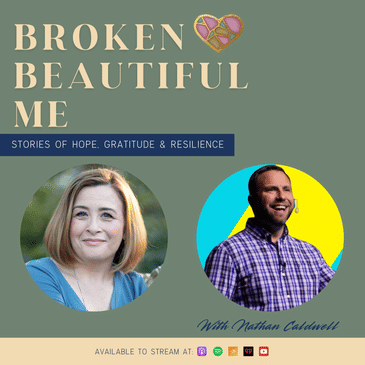
We are joined by Nathan Caldwell, bestselling author of Empowering Kindness. With over 20 years of experience as a cybersecurity expert and leader, Nathan has held roles such as Chief Information Security Officer (CISO) and Vice President of IT Security. Alongside his technical expertise, Nathan is a passionate advocate for kindness and well-being in the workplace, emphasizing empathy and compassion in leadership.
In this episode, Nathan shares his unique journey from cybersecurity leader to kindness advocate and author. He reveals how bringing empathy and compassion into professional environments can enhance team dynamics, productivity, and overall well-being. We dive into:
- Nathan's transition from a high-stakes cybersecurity career to becoming an advocate for kindness and compassion in the workplace.
- The role of empathy in leadership and its impact on team culture and performance.
- Practical strategies for fostering kindness, resilience, and well-being within any organization.
- Insights on building trust, promoting mental health, and creating supportive work environments.
If you're seeking actionable advice on integrating kindness into leadership and workplace culture, this episode is a must-listen!
Connect with Nathan Caldwell:
- Website: EmpoweringKindness.com
- LinkedIn: Nathan Caldwell on LinkedIn
Tune in to learn:
- How to lead with empathy and cultivate a kinder, more resilient workplace.
- Strategies for balancing technical expertise with compassionate leadership.
- Inspiration from a seasoned cybersecurity leader who champions kindness as a path to success.
------------------
Follow the Host, Kelly Buckley:
Stay connected with Kelly Buckley and join her journey of healing, resilience, and gratitude. Follow her on social media for more inspiring content, updates on future episodes, and insights on living a life full of hope and purpose.
- Website: kellybuckley.com
- Facebook: Kelly Buckley on Facebook
- Instagram: @KellyBuckleyOfficial
- LinkedIn: Kelly Buckley on LinkedIn
- Twitter: @KellyBuckley
- YouTube: Kelly Buckley on YouTube
If you enjoyed this episode, don't forget to subscribe to the podcast, share it with your friends and family, and leave a review. Your support helps spread the message of hope, resilience, and gratitude to more listeners around the world.
[00:00:02] Welcome to Broken Beautiful Me, Stories of Hope, Gratitude and Resilience. I'm your host, Kelly S. Buckley, and I am thrilled to have you join us on this inspiring journey. Each episode, we will provide a safe and supportive space for our guests to share their personal stories of overcoming adversity and finding gratitude amid struggle.
[00:00:26] We'll connect with global thought leaders to discuss the science behind positive thinking and growing resilience. Whether you are looking for inspiration, practical advice, or simply a reminder that you are not alone, Broken Beautiful Me is here to uplift and empower you. Thanks for tuning in. Let's embark on this journey together.
[00:00:46] Hi everyone, and welcome to another episode of Broken Beautiful Me, Stories of Hope, Gratitude and Resilience. I am so fortunate today to have as a guest, Nathan Caldwell. He is a dynamic force of positivity, utilizing the remarkable power of kindness to achieve unparalleled success. He has been a cultural change agent from multiple organizations. Known as the cultural evangelist of a one-year-old,
[00:01:21] 1.2 billion dollar software company, he revolutionized and orchestrated a unified culture amid multiple acquisitions. Leading with kindness was the key as an innovator, originating the idea for the first of its kind, automated cybersecurity and microlearning solution. A number one bestselling author of the Empowering Kindness book, Nathan is a thought leader,
[00:01:45] a storyteller, and he is ready to share his experiences, principles, and strategies with your organization. He's been an active speaker at leadership conferences and for nationally recognized companies, including Dollywood, Santa Cruz Beach Boardwalk, Lagoon Park, Answers in Genesis, and many more. He resides in the Tampa Bay area and is blessed with a wonderful wife and three kids. Welcome to the show, Nathan. It is so nice to have you here.
[00:02:14] Oh, it's great to be here. And I apologize to make an edit right off the bat, but we have four kids now. So I got an update. I don't know where that came from. So anyway, yeah, we have four kids. I think that's on your Amazon author profile. I think that's where I saw it. All right. So, um, but congratulations on the fourth kid. That's great.
[00:02:39] Yeah. Thanks. Well, we've had her for a little while now. Uh, she is turning four, uh, in just a couple of days. So, um, you know, and she's not letting us forget it. I love, I love little girls who know what their, know their voice. That's always wonderful. Yeah. Yeah. She's pretty spicy.
[00:03:03] The world needs a little more spice. I like that. Um, so Nathan, um, if you, just to start for our listeners who may not know a lot about your work, can you share a little bit about your personal journey and what kind of brought you where you are today? Yeah, absolutely. Um, so where I am right now is often speaking for, uh, leadership conferences and company kickoffs and sharing a
[00:03:31] message of what truly needs to happen to be an effective leader. And I focus on the idea of kindness and how important that is to be a characteristic in a leader because kindness is what compels us and gives us the ability to help others grow. And it's not just that I want to see more people grow.
[00:03:55] It's I want to see more people grow into effective leaders. Oftentimes people are put into leadership positions because they've been the best at the job, at the task or with the information, but they aren't necessarily equipped or they haven't been trained or given, um, instruction on how to treat people well and how to get the most out of people. And I'm not talking, get the most out of the people
[00:04:24] like, you know, ring them dry, get the most out of them. I'm talking about inspiring them. Yeah. Giving them a window into what they are designed to be. And so, and I truly, believe that at the core of it, kindness is what gets us there. And it's not this idea of, Oh, you want to be nice and don't cause any commotion or anything like that. To me, kindness,
[00:04:54] it takes strength. It takes bravery and it takes wisdom because it will be you using your power to help lift somebody up. And oftentimes the kindest thing you can do for another person will be a very difficult conversation or a very difficult situation where you're helping them
[00:05:21] along. And so it's not something where you just like, Oh, don't want to ruffle any feathers. Oh, just be nice. I'm Canadian. So I know what being nice is all about. And, and that idea of, Oh, you don't want to be a doormat. Uh, that's not what kindness is. Kindness is, uh, strength utilized to build people up. Um, I am also a Canadian, so we will get into that in a little bit.
[00:05:48] Um, super excited to talk to you about that. Um, I really, I, that resonates so much with me because I am in, in my professional practice, I started off as a registered nurse and then progressively moved into leadership roles. And, um, I had some very good mentors and then I had some, some others who maybe just didn't have the tools in their toolbox to kind of help me learn as a new leader.
[00:06:16] Um, but there's something to be said about a leader who is not afraid to show their team, their own personal power and give them agency to grow. Um, there's something so powerful about that. And I love that that is your message and you're right. Kindness is not for the weak. It is not. Um, because those difficult conversations, if you can do that with kindness, that makes all the
[00:06:44] difference in the world to how that message is received. Right. Yeah, absolutely. Absolutely. And I appreciate so much, um, you know, that we'll, we'll probably be discussing a little bit of in context in the healthcare world. Um, because there are certain scenarios, like I was speaking with a doctor recently, just a few weeks ago, and he was talking about his scenario that he came from a
[00:07:10] military background and now here he is a doctor and he's like the newest person on the floor and he's got all these nurses around him and he, he, they don't report to him. So he doesn't have that comfort that he had before, uh, um, you know, uh, uh, authority and who gives the command and who follows the command.
[00:07:32] Now he's like, they don't report to me. We're kind of equal here because they've been here at this hospital longer. They know how it all works. They know all the people they need to go to and talk to and get things done. And he's was sharing with me how he's trying to figure out how to navigate that. And there's no harm.
[00:07:56] There's actually great benefit in relying on others to say, Hey, look, you've been here longer. You know, this, I understand I'm the doctor. So like my name goes at the bottom of the paper. However, I trust you. I know what I, you know, what you're doing. Please give me your recommendations. You're spending more
[00:08:20] time with the patient than I am. You've just been with that patient through like multiple visits because you've kept going in and checking on them. You've had multiple conversations with them. Now I'm coming in and assessing the situation, but you have this wealth of knowledge and experience and also time with that patient. So help me. Yeah. Ride me. And so having that level of humility is also a big part of
[00:08:50] where, and in other scenarios to other contexts, you know, oftentimes the leader is not the frontline person. When you think of a business that relies heavily on customer service, often the leader isn't spending eight hours a day or 10 hours a day on their feet, serving the customer to identify, recognize, and assemble a full scope of where problems could exist.
[00:09:19] Or the possibility of a spark of imagination of where an opportunity could exist. Right. Has all that experience, but the frontline workers who are standing there all day long doing the work and recognizing that like, Hey, even something as simple as why are we placing all of the condiments over there? It makes us have to take 25 extra steps to go get them. Come back. We could serve our
[00:09:48] customers a lot faster if we just make the station over here, you know, something as simple as that, but then something as huge as, uh, their stories that I've shared, uh, before of, of frontline workers being so passionate about customer service that they go just above and beyond to make that person's day
[00:10:11] amazing. And it's not in their job description. It's not a specific thing that you commanded that worker to do, but because they have a bit of freedom. And I speak a lot about this idea of equipping your people to know how much freedom they have and what tools they have in their toolkit to be able to solve a problem without having to say,
[00:10:36] wait a second, let me go check with my manager or let me go check with the boss. And then I'll come back to you. If they have five, six, seven different things in their toolkit that they know without needing to get approval, they can say, yes, I can deliver this to you right now. Here you go. Let me fix this. You know, then you are freeing that person up to not only do an incredible job, but you're going to wow
[00:11:04] the customer and you're going to make them, the employee feels so good. Yes. They're fulfilling their job. I'm in customer service. I actually get to serve the customer or like with the nurses and speaking to the doctor. I do have a valuable opinion. I do have valuable information. And now the doctor wants to hear from me. Fantastic. Now we are actually working together as a team.
[00:11:31] That's such a good point. And you mentioned about, you know, identifying challenges, but also opportunities. And I have a story from when I was early in my management days as well. And we studied kind of the trends of medication errors. And we take all of that very seriously, of course, in health care. And we were noticing a trend with one particular medication in the reports. Month over month, we were seeing.
[00:12:01] And then we started to analyze. We broke it down even further because nurses were kind of bringing forward feedback about, you know, and they were, you know, very honest about documenting if there was an issue or an error that was made. What we found out was once we did all the research was that there was two medications with super super similar names, super similar looks to the tablet. And they were right next to each other in the
[00:12:30] medication room. And so those medication errors were always happening on the night shifts, the shift between 12 and 8 in the morning. And so we could say these, these nurses, they're tired, they're going in, and we don't have a setup that is optimal for them. Because we're setting them up because of the very location of that med, we're setting them up that if they are tired, or if they are super busy, because
[00:12:57] staffing levels are lower in at on night shifts than they would be on a day shift. And that was it was an easy fix for us and the medication error stopped. And we would not have known, but for the feedback of the staff. Yeah. Oh, absolutely. Yeah. And I appreciate that example so much because it showcases how powerful
[00:13:24] it can be. And yet how simple it is. Like when you look at that answer of like, oh, we just needed to listen. And therefore we move the medication, or we put, you know, distinguish it, uh, so that people can select it properly or take an extra beat to think, is this the one? Is it not the one?
[00:13:45] And yet, you know, as simple as it is, it's like held at such a distance in some people's minds, because they get the attitude. I'm about to speak at a conference in less than a month. And the topic I chose because, um, my wife is, was nonstop talking about Taylor Swift. So I chose to theme
[00:14:12] it after Taylor Swift. And so the topic is six communication eras, every leader must master. And I took some Taylor Swift lyrics to highlight these different eras that every leader needs to be watching out for. Sometimes it's an era that you have to fight against because you can so easily slip into it. And in this scenario, when you want to push back on people and not gain their input,
[00:14:42] like that eras, it's that song. It's all about me. He, he, like, that's it. You just think, oh, I have all the answers and that's it. None of us. No, not one human being on the planet has all the answers. And in every situation, there can be more than one right answer. Except for how you put a
[00:15:06] toilet paper roll on the spinner. How do you do it? Okay. Come on. Are you? All right. So here's the wall, right? Do you do toilet paper hanging over and out? Or do you do the toilet paper hanging toward the wall? Toward the wall. Toward the wall. What? You're wrong. Emily. I'm not. I'm sorry. Oh, no. Oh, the only way to do it is out and over. Come on. You hang it toward the wall and you grab
[00:15:35] it. That thing just keeps spinning. Oh, no, I, I feel like, I mean, I'm kind of, I'm kind of just derailed right now by your answer. Anyway, point proven. Even my analogy, you know, you found a way to break that and say there's no one right answer. Right. That's exactly right. And that's okay.
[00:16:02] Yeah. Well, and also to people who want to argue that and say, well, no, there are right. Like every, what I'm saying is everybody can bring different perspectives to the table and make a more complete answer. Yeah. And so I'll give you another simple example. Like you had that medication example. Here's another example. So, uh, at Dollywood, I'm friends with their chaplain and he
[00:16:30] has his office with the nurse up on top of a hill and it's kind of a separate hill from the rest of the theme park. And they went through and they did this big construction project to reroute all of the parking to make it flow better for all of their guests. But they didn't check with the nurse and the
[00:16:56] chaplain whose office is on top of the hill. And so the way they routed the parking was they could go to work, but they could never go home. It wasn't just like the way that it worked and it flowed and everything is they just be trapped at work all the time. They couldn't exit because of the one way. And so the idea is look great that you're coming up with new ideas. Fantastic. The flow pattern is exceptional for guests.
[00:17:25] It's such a drastic improvement, but who else is interacting with that problem? Have you discussed it with them? Did you give them a quick heads up or a seat at the table? Hey, this is what we're planning on doing. Does that work? Uh, and that's, that's a huge, huge, huge, huge part of brainstorming. I used to be a elementary school teacher and so many times
[00:17:52] we got handed down instructions from the superintendent's office and we would get these instructions. And immediately the first response was, I bet you could guess what the response was, Kelly. You want to take a guess when we get these instructions as teachers? That's never going to work. Right. But we would say it like this, has this person ever been inside a
[00:18:20] classroom? And why would we phrase it like that? Like we aren't trying to say like, no, we aren't going to change. Well, like teachers in Florida do not get paid enough to do it for the money. They are entirely doing it because they have a passion for it. They care about the kids. They want to do a good job. Right. So receiving instruction and saying that's never going to work. Sometimes it's an attitude
[00:18:49] problem. But when somebody says, have they ever been inside a classroom? It's not an attitude problem. No. Practicality. It's a, did they consult with anybody on this? Have you pulled any practical wisdom from the people who are doing this every single day in order to craft this?
[00:19:15] Well, and I, I feel like, um, you know, it takes, and this is where I think that your work is, is so important because it takes an emotional maturity as a leader to be able to look back at the people that you are leading and say, what's, what's going wrong here? And then accept without getting defensive, the truth. Cause that's all, that's the only way you get better.
[00:19:44] Yeah, absolutely. And then another key element of this is, you know what a thermometer is, right? What does a thermometer do, Kelly? It measures your temperature. Okay, great. What does a thermostat do? It regulates the heat in your house. Okay. It also measures the temperature though.
[00:20:08] And so it can tell, you know, you set it at 72 in your house. If it goes above 72, you know, it starts getting to 76. What happens? It kicks on the AC, cools things down. Right. So a challenge that sometimes leaders have is they may have a lot of thermometers on their team. People who can say, brr, it's cold in here, but not be able to take action because they've never been
[00:20:37] shown how, or it's way too hot in here and not be able to take action. The other challenge about the thermometer stage is that if you take it out of one room and you put it into another, what happens to it? It goes back down to a kind of neutral level before you test somebody else's temperature. Right. Well, it measures the temperature in the room, right? So if you took it outside and it's hot
[00:21:06] outside, the temperature goes up. If you put it in the freezer, it's going to drop. It takes the shape or it takes the temperature, the culture of whatever environment it's in. So unless you help your people build their maturity level and their resiliency to say, brr, it's too cold in here. I'm going to do something about it. And I know how to do something about it and kick on like a
[00:21:35] thermostat can. Then you're going to leave your people in a very, very unfortunate circumstance where if they fall in with a group of people who are negative, they're going to turn negative. But the benefit is to, you know, if they fall in with a group of people who are positive, they'll become positive, but they may not be able to stand on their own with that leadership maturity to be able
[00:21:59] to take action and to know how to implement that action. So it's upon leaders to understand how to help people along to enact change, to come up with ideas and implement them. And so one of the best ways, you know, is to start by teaching effective brainstorming to your people, how to come up with
[00:22:26] solution ideas. But that's not enough, because you also have to come to a consensus within the group of what solution are we going to attempt? And back to our previous point of there's no right answer. Like you don't have to get into a fight in the room and say, well, we're going with this idea, but I completely oppose it. And so I'm going to sabotage it. No, take one idea, understand we are testing
[00:22:52] this idea. We're going to try it. And if it doesn't work out, we know we're going to have to pivot along the way. And then Benjamin Franklin has this wonderful quote, and I'm just going to modernize it because, you know, in his language, it's like it sounds like a riddle anyway. But Benjamin Franklin said something along the lines of you build stronger relationships when you ask someone to help
[00:23:21] rather than show up and tell them what to do. That's so true. When you go to a team member and say, look, we're trying to solve this problem. You work on this every day. You have great insight to every angle of this problem. Mm hmm.
[00:23:47] We want you to have a seat at the table to help us brainstorm solutions to this problem. We want you to be on the execution team in order to solve this problem. Well, what happens to that person? Yeah. Yeah. They go through the process of problem solving. They start to learn how it works and then go through it, you know, try pivot.
[00:24:16] If it's something's not working, go back to the brainstorming session and say, hey, first idea wasn't working. Are there some other ideas on that brainstorming sheet that we did that we can pull in and now try to attempt and try to get this going? And then at the end of it, document it and celebrate it. How did we solve it? You know, you don't want to be solving the exact same problem over and over. Document it, communicate it out, give credit to the person who helped solve it, who was
[00:24:45] instrumental in it and make a big celebration over it so that it becomes a solution. It gets branded. As a solution. Yeah. What kind of give me some examples of some roadblocks that you have maybe encountered with leaders who are resistant to your message?
[00:25:11] So all of that description I gave you came from a roadblock where I heard it time and time again, where leaders wanted to say, if somebody, let's call it, you know, a community group, because oftentimes members of a community group, it could be a team within a company. It could be an organization.
[00:25:37] If they feel like they're in that thermometer position, I feel like something's off here, but I just don't know what and I don't know what to do about it. If the leader of that group says, well, the problem's with them because they just want to complain. No, the problem is with the leader because what if that person doesn't know how? Like trying to say like, hey, raising my hand, something's wrong here.
[00:26:07] Something's wrong here. But that's all I'm capable of doing because that's all I know so far because that's all I've been taught. It's the leader's responsibility to help that person mature into a member of the team or a member of that community who can understand how to enact change, how to participate in the process of improving a situation.
[00:26:34] I think that is a huge roadblock when leaders just look at the person and say they're the problem without saying how can I help that person grow? What can I do as their leader to mature them? Because in that situation, the problem is never like the little problem.
[00:26:55] The problem is that person hasn't been given the path forward of how to create ideas to solve a problem, how to implement those ideas. Have you ever worked with, I know in Stephen Covey, Seven Habits of Highly Effective People
[00:27:19] and a lot of the training that he created around leadership, one of the things is a win-win agreement. And I have used that in the past with employees of mine to great success because it just lays it all out there. And it's like a template that you can use leader to leader, leader to employee, husband to wife.
[00:27:46] I mean, you can use it in any situation where it's just about getting on the same page of, you know, we can both move forward with our careers in a way that is respectful to each other and supportive. I'm a big fan of win-win agreements. Have you ever used something similar or something like that?
[00:28:08] So I haven't used that specifically, but I have used, it's called Four Helpful Lists. It's by, I think it's called the Patterson Group. And they have a whole system called Stratop. And so Four Helpful Lists is like a key brainstorming method where you get the people in the room who are the stakeholders
[00:28:33] and you basically say, look, we aren't here to attack or defend anything. We're trying to get the entire encompassing picture of this scenario. And you pick a specific scenario. And so it could be something as simple as, I don't know, last quarter's marketing campaign or an in-person event we did.
[00:28:58] Or it could be something as complex and robust as company culture, which is what I specialized in for a long time. And you put these four questions up. What's right? What's wrong? What's missing? What's confused? And you allow people to just share. You start plotting it across that brainstorming sheet.
[00:29:22] And what you'll end up finding is that there are kind of themes that start to appear. Oh, this was missing. And it was also confused. And so now we have a, you kind of bubble them up, take a bit of a vote on the top three problems that surfaced.
[00:29:44] And then each of those problems gets assigned a task force and like a chairperson to lead the task force. And before you leave the room, that chairperson says, who's going to be on their task force? What the cadence is that they will report back to the group on their progress? And then what good looks like for solving this problem?
[00:30:11] And so then from there, they go off, they meet with their task force, they follow up with the reporting back. And then, you know, when that problem gets solved or a solution gets implemented, because, you know, in the working world, seldom is there a problem where you like, you know, put a cork in it and it's done. And it's like, this is now a new practice we will do to solve this problem moving forward. And it becomes just part of the system, right?
[00:30:39] And it's going to be a repeatable process. Well, then once you get that solved, you move to the next one on the list. And periodically, you go back to that first exercise of the four helpful lists on the topic when you decide we want to really revamp it again. So, OK, that sounds that sounds like such a comprehensive way to to approach issues. I'm going to have to check that out.
[00:31:09] And it really empowers the people sitting in the room. And that's I mean, that's really the essence of a successful team. I want to jump a little bit over to your book. I want you to talk to me about your book, Embracing Kindness, because I mean, the world needs more kindness. So tell me about why you wanted to write the book and what readers can expect, because I'm going to encourage them to go and get this book at the end of this podcast.
[00:31:37] So tell us tell us why you wrote it and and what's inside. Sure. Well, it really was kind of one of those existential moments where I was questioning, like, am I doing things the right way? Because I had some negative experiences.
[00:31:57] I also had some really great positive experience, but I was at the time having some very negative experiences and seeing other people who I'll use their quotes, played the game, seemingly get ahead. And yet there was instability with what I was doing.
[00:32:19] And so every night I'd be, you know, laying in bed while my kids fell asleep and just ruminating on this over and over and over. And like, do I have to be sneaky? Do I have to be double faced? You know, those types of questions.
[00:32:37] At the end of the day, I kept coming back to like thinking about my dad and my dad was a mailman and his whole being is about doing for others without expecting anything in return. Like, compulsive.
[00:32:57] Like, you cannot get a thing done with this man without him helping someone else getting sidetracked from what he was supposed to do to help another individual. That's beautiful. It was beautiful. And when I was a kid, he would come home from work. He'd do his, you know, 10 mile walking route. He didn't have a mail truck. He was walking.
[00:33:19] And as you know, our Canadian mail deliverers, they live up to that phrase, snow, sleet, hail. Like, you'll get your mail. No way do they ever. And so he would come home after walking his big route. And he'd get me and he'd get a toolbox. And we'd go back out and help some old ladies on his route that couldn't help themselves.
[00:33:47] And so I saw this firsthand. And that's why I'm so passionate, too, about that principle of people don't just get there. They need to be brought along. I wouldn't have understood it. I wouldn't have the ability to recognize a need and jump and know how to jump into action to help another person, except for the fact that my dad brought me side by side with him to do this.
[00:34:15] So it's essential that leaders do that side by side. Let me walk you through it. Let me invite you along. Yeah. And so laying at night, I said, no, this has got to be right. And also, I come from a background of faith.
[00:34:36] And there's a Bible verse that says that God created us and he created good works that we should walk in them. Yes. So I thought, you know, okay, that tells us we need to do it. But does it also tell us that, you know, if we do what we're designed to be, shouldn't we benefit from that?
[00:35:02] Like, shouldn't we just all of a sudden start glowing like when a cartoon character figures out their purpose in life and they like float above the ground? And they're like, oh. And so I thought, well, what's out there to prove that this is true?
[00:35:18] And so I started diving into a ton, a ton of health studies, psychological studies, organizational health studies, because I wanted to say this is right in the business world. This is right for the working environment.
[00:35:35] And I found so many amazing studies that prove that we are designed to be kind and that we perform at our optimal level when we're kind to others and when we're in an environment of kindness. I'll give you a quick study, okay?
[00:35:55] So there was a group of students split into two and they showed one group just a boring video of, I don't know, grass growing or paint drying or something like that. They showed the other group a video of Mother Teresa taking care of the sick and the dying. And what they found was the group that watched the boring video, nothing happened. Right.
[00:36:20] The group that watched the video of Mother Teresa, their immune system levels were boosted and remained elevated for a full hour afterwards. Just from watching a video. Yeah. And so we get this kind of feeling, this burning sensation within us whenever we even see someone else be kind to others.
[00:36:48] Well, now the question is, well, what about when we do it? And so there's studies that show that when people altruistically, that means you aren't doing it for the Instagram photo or things like that. And the cool thing is, too, there's studies that show you can't trick biology.
[00:37:08] They studied people who sit on their couch, people who volunteer or do good things for others just for the self-fame, self-credit versus those who do it altruistically. And the people who sit on the couch and the people who do it for the fame, no difference whatsoever. The ones who do it legitimately because they care and they want to do for others, it's like longer lifespan by a lot. Yeah.
[00:37:37] And so then they also studied, well, what is going on when people are kind to others, when they're doing for others without expecting anything in return? And in this one study, they found that 100% of people experience an immediate physiological change. And then they broke it down more specifically. 66% of those people had a distinct physical sensation.
[00:38:06] So that's that like burning, that feeling of something's going on here. What is it? That type of physical sensation. 50% of them felt a high feeling. 43% felt stronger and more energetic. 28% felt warmer. 22% felt calmer and less depressed. 21% felt a greater self-worth.
[00:38:35] And this is one is amazing. It blows me away that this could even be on the list. That 13% of people experience fewer aches and pains. Wow. Yeah. And so this idea of we are designed to be kind, we perform at our optimal level when we are in an environment of kindness.
[00:38:58] It just rings out that these are the environments we need to be creating in the workplace. Yeah. And I know I've read some concepts about positive psychology. And they talk about gratitude in that very same way, how it activates certain areas of your brain that are not necessarily active in other times during your day. Yeah.
[00:39:26] And how when you raise your vibration, that things like aches and pains, they do change just by raising your vibration of what you're thinking about, what you're focusing on, on what you're doing in your world. You have so many great examples of, you know, how that is proven out. That's beautiful. Um, let's talk a little bit about personal stuff and personal struggles.
[00:39:54] Um, you and I were talking before the podcast started, um, you know, that I work a lot with the bereaved and people who are really going through, um, struggles, um, of any kind, whether it be addiction or job loss or divorce can derail a person. Um, what would you say, what would you give people to put in their toolbox right now?
[00:40:22] Our audience, they're out there, they're struggling. What would you give them to put in the toolbox to go out and live their life in this world and, and still kind of comfort their own broken heart? Um, yeah, this, this is, that's a really tough one, but, um, I feel like kindness is the key for it.
[00:40:47] And it's not as though, um, it's not like an antibiotic, right? Where, uh, like a couple of weeks ago, I had a horrible, uh, ear infection. I got some medicine a week later. I'm totally fine moving on. And like, yeah, I had pain for a while, but there's no residual pain. That's not going to happen when we go through these, uh, emotionally traumatic, tumultuous, uh, scenarios that are life altering, life changing.
[00:41:17] Like we take it with us. Uh, you shared the example of job loss, you know, many times, uh, people will say, well, it's just a lot of work. No, it's not. You're affecting that person's life and not just in that moment. It's for the rest of their life.
[00:41:35] So you better be really sure that if you're letting someone go, that you have as the leader performed to the best of your ability to help coach that person to be better. Yeah. Now, sometimes it's that there's, you know, structurally within the business, it's fallen apart and we got to exit a lot of people. And I understand that happens. Right.
[00:42:01] But if you are firing somebody because they didn't do a good job, you have to, before you take that action, ask, did we set them up for success? Hmm. Hmm. Cause they're going to, they're living with that the rest of their life. And they do. I mean, I'm talking to you, I'm talking to you right now on this podcast about some things that were like 30 years ago.
[00:42:26] I remember all the, all these things from, you carry that with you because especially when you're young and you start your career, um, I think you've gained wisdom as you get a little older that you are not what you do. But when you first start your career, it's a big part of your identity. And so if you have a negative experience or you are let go for a reason that, you know, your boss set you up to not succeed. Yeah.
[00:42:56] Yeah. And you're going to carry that with you as you apply for future jobs. You know, I think, I mean, I think it just goes back to, you know, being a steward for our fellow humans. Right. Like, it's okay. Like, guys, life is hard enough as it is. Like, why not just be kind to each other? It just, it seems like a simple solution, but, um, but so many struggle with it. I mean, there's a lot of people out there right now who are not being so kind.
[00:43:26] And that's, that's tough, especially when, you know, you have people who, who have broken hearts and they're going out in a world that is less than kind. Yeah. Um, for me, I will tell you my, my lesson in kindness with grief. Um, I discovered that of course, gratitude was able to keep me in the present moment.
[00:43:50] But what my family and I discovered quite quickly was that when we, we called it giving the measure of Stephen's love. So we had all this love for Stephen, but Stephen wasn't here for us to give it to him.
[00:44:32] Um, so we get, we shared his measure of love with other people. Um, so we had to come home and like, that's, that's the use of kindness for grief, right? Sharing Stephen's measure of love. And so if I, I sometimes when people struggled to, oh, well, we, we don't have time for this. We don't have time for that.
[00:44:50] I'm always brought back to that moment where, well, God, we, you know, I could barely walk to the mailbox and I, we were able to channel kindness as a way to, to comfort ourselves and to comfort other people. Um, what, what's your thought on that? Yeah, that was the exact next place I would go, uh, is, uh, not just, uh, a warning of be cautious when this is executed.
[00:45:19] Like the, the idea of, um, job loss and, you know, leaders need to make sure they're doing what they can. Uh, but in the scenario that you're speaking of where it's, uh, um, a loss of life, um, um, when there are other, you gave the example of divorce as well and, and how that pulls apart families and, and can be so painful.
[00:45:41] Uh, there are many experiences that we go through life and, um, you know, I don't want to get too preachy, but I got to use another Bible verse here that says, consider it all joy when you fall into various trials. Mm-hmm. And that it is the perfecting of our patience. It's the perfecting of our hope.
[00:46:06] It's the perfecting of our character that then allows us to be of service to others that we couldn't have been otherwise. And so, yes, like it's so brutally painful and you never wish it upon anybody.
[00:46:20] And it's, it's this, um, kind of like dark romance of, of loss where in the loss, you find the ability to give more love to those who've gone on like inexperienced that. So you are in a very particular scenario where you can offer comfort in a way that no one else can to a grieving family.
[00:46:52] No matter how many like PhDs or, uh, fame somebody has behind them, you have the experience to provide comfort to somebody who's going through that. Mm-hmm. I think of a scenario where I was growing up and, uh, I knew of, uh, an older couple whose, um, whose child had passed away. And it flash forward a number of years.
[00:47:20] There was another family whose, um, little kids, they had left the sliding glass door open. Uh, the brothers opened it up and their little sister went out and fell in the pool. She began drowning and, you know, the paramedics came, they rescued her. Uh, but it was a very, very scary scenario that she was in there way too long. And there she, she turned out just fine with, uh, no brain damage or anything like that.
[00:47:49] They, they are baffled as to how she survived that. Uh, uh, but this young family who's experiencing that and the traumatic, what is happening? Is she going to be okay moment? Mm-hmm. And the couple came to their rescue to comfort them who had lost their child. Ugh. And so that's why I say kindness, it takes bravery.
[00:48:19] It takes wisdom. It takes strength because you are pulling on your painful experience to go and be a source of comfort to somebody who is now currently going through that. And like, I, I can't imagine the pain that that couple must have gone through, especially because you're seeing, and, and they would want this. They would want that little girl to be totally fine. Of course.
[00:48:48] But also to live through that excruciating emotional journey of knowing that their son wasn't fine. Right. And providing comfort to that family. And so in these situations, you know, as I was describing earlier, it's not as though you go through a traumatic experience and you find that one little pill that makes it all better. And the pain goes away.
[00:49:14] It's something that you will carry with you for your life, but it's also something that makes you resilient. It's something that makes you capable of being a source of comfort and a source of strength and a source of wisdom to others to help them along their journey. And there's so many times where people credit being able to get through a situation because people swarmed them and comforted them.
[00:49:44] Yeah. Yeah. That sense of community that, that letting people know that they are not alone. And I, you know, I appreciate you sharing that Bible verse because I, I feel like, um, there is a wisdom that comes from suffering that you can't, you can't get otherwise. Right.
[00:50:09] Um, there is a wisdom that comes from, you know, being brought to your knees and you're really not sure if you're going to be able to stand back up. And, uh, it allows you to kind of look around and see people in a different light. Once, once you experience that it grows, like I, I would not wish what happened to our family on anyone. Right.
[00:50:33] But I will tell you, I am incredibly, incredibly thankful that I am a more empathetic and compassionate person because of what happened. And, um, you know, but you do, you do have to rely on community. And I see, I think one of the things that concerns me is I see that so many people live in isolation, um, even though we're supposed to be more connected than ever.
[00:51:02] And, um, I, I, I always have a little bit of concern that people are going to keep themselves disconnected and not find a way through their struggles. Um, because without community, we wouldn't have found our way through. We needed all the help we could get. Um, okay. I want to switch it up a little bit. We've been having this, this has been a very deep and honest conversation and I so appreciate it. But now I have to move to the three C's.
[00:51:31] Canada. Canada. Okay. Comic books and Christmas. Yeah. I read about you. Oh yeah. I love it. Um, yeah. All right. Okay. How do you want me to navigate the three C's? How am I sailing through these three C's? Okay. First, we're going to start with Canada. You grew up where? I grew up near Niagara Falls, Ontario.
[00:51:57] So when I was actually a toddler, we lived in the city of Niagara Falls, Ontario. Um, and then kind of moved out to the country and started taking care of my great grandmother. She lived with us for a while when I was little. Um, and so, yeah. So it stayed there until I was a college age and then came down to Tampa, Florida for, uh, college for university.
[00:52:21] And, uh, but each summer I would go back to Canada and I worked, um, had a summer job at a vacation resort on Lake Erie called Shirkston Shores, where I was the entertainment manager and was performing on stage all day and all night, every day, all summer long. Oh my gosh. That sounds like so much fun. Um, I grew up in Newfoundland.
[00:52:46] So, um, yeah, I grew up in Newfoundland and I, then I went on to work in Western Canada for a number of years before moving here. But, um, I am very proud of my Canadian roots. I'm sure you are as well. It's, uh. Oh, absolutely. Yeah. I got like so into hockey down here in Tampa. I had season tickets to the lightning and everybody was like, Oh, what team do you support? And I was like, I'm a lightning fan. And they're like, but you're Canadian.
[00:53:13] And my answer was always like every NHL team can be a hometown team to a Canadian. You look at the roster and 75% of the lightning team plus front office organization was Canadian at the time I had season tickets. So, uh, there were, you know, players from Welland, Ontario, about 15 minutes from my house that I grew up in and all that.
[00:53:40] So it's, it's almost a hometown team anyway. Um, do you have a Canadian team that you are also a fan of? Uh, well, I love hockey in general. I I'm a big, uh, hockey history fan. So, uh, my bookshelf is just lined with hockey biographies and for a while they put out, um, our history or a people's history of hockey.
[00:54:09] Did you see that documentary series? It was like a 10 part series. I've watched that thing like 50 times. I love it. It's so good. I got to write that down. Um, because both my sons or hockey goalies, this is, I kind of, this is a big hockey house here. no, no particular Canadian preference for teams. No, but when it comes to the Olympics, boy, oh boy, I am cheering on team Canada all the way, all the way.
[00:54:37] So my, my husband, uh, was born in the U S. Um, of course I'm Canadian. So, uh, the world juniors, um, it's always really, uh, it's a stressful time in the house because no, in all honesty, he's, he's great about it. But, um, I am a Montreal Canadians fan as it were my boys. Yeah. Just the franchise, the history, the story, everything.
[00:55:06] Such a beautiful thing. So Canada hockey. Their, uh, museum in Montreal. It's awesome. It's so cool. It is. Yes. Yeah. I, and I love that city. Oh my God. That city is awesome. Um, okay. Second one, comic books. What were your faves? Okay. So growing up, I, uh, Batman has always been my hero. Uh, like he's my go-to love Batman because he doesn't have superpowers.
[00:55:36] So he has to rely on his skills. He has to rely on pushing himself through. Uh, he has to rely on his, uh, brilliance. Uh, and also it's not as though it comes naturally to him. You know, he's not just like some characters who walk in the room and like, oh, this is what, you know, like the Sherlock Holmes type character where it's like, he just has this
[00:56:00] gift, you know, you, you just, the story arc of Batman as a character is him constantly pushing himself. And so I just love that. And also kind of the isolation that he went through as a kid. Uh, and I'm talking about him like he's a real person, but you know, he lost his parents in crime alley, which by the way, why would you take a shortcut through crime alley? Don't do that. And when you're dressed in a tux, I don't know. Not a good idea. Silly, silly, silly.
[00:56:30] However, uh, you know, he had, there was this isolation to it. And, uh, as a kid, I could relate to that a lot. Uh, there were moments, you know, in a string of a few years when I was a kid where I was experiencing bullying and not fitting in.
[00:56:52] And so that idea of isolation where he could just find a purpose within himself and push himself forward, but still be in service to others, like trying to save as many people as he can. And I just felt that, you know, I, I had a connection to that of not wanting to just isolate myself and like, it's me time.
[00:57:18] And I'm only going to be here for me, but you know, withdrawn, but also, uh, looking to be a, uh, an, an impact for others. So that Batman's my thing. Um, but then of course, when I got to be a teenager, the X-Men were just huge. They had the awesome, like cartoon came out. And so I was watching that all the time and collecting all the comic books.
[00:57:42] And, uh, so anyway, so that's where I haven't been reading comic books lately because I have kids now and little rubby little hands, I'll smudge and bend the paper. We're not having that. So, um, it's funny cause Batman took his struggles just like we just finished talking about and he used them to help other people. So I could see why he would be your favorite.
[00:58:08] Um, I was a huge, uh, Archie comic person myself. I was, yeah, I was, I had this period of time where I was obsessed with Archie. Um, yeah, the whole thing. And then, um, was it Jojo and the Pussycats, I think. And there was a bunch of, like Josie, Josie and the Pussycats. That's right. So there was a whole bunch of them that like little spinoffs of, of Archie that I loved. Okay.
[00:58:35] So now let's move on to the important one, Christmas. Yeah. How obsessed are you? Oh, so. Okay. Today is Halloween. Yes. Right. As we record this. So over a week ago, uh, I was on a walk with my daughter in our neighborhood and she goes, dad, are you getting excited for Christmas? And I said, how would you know?
[00:59:01] I was listening to Christmas music all day long while I was getting my work done. Like, uh, so in our family, the Christmas season begins November 1st. Uh, so we put our tree up, we get our decorations out, we get ready. And we're listening to tons of Christmas music all the time. Uh, I already put together our playlist for this year that I know we're going to keep adding to it. Um, and then what else?
[00:59:31] We, um, yeah. So get our decorations up November 1st. Oh, Christmas movies. Love watching Christmas movies like crazy. Um, and just the, I don't know, it just, it's the time of year when I can be myself where like you walk by somebody and you say hello and they say hello back. Right. And there's all these festivities going on. There's all this family together time.
[01:00:00] There's all this focus on others. Yeah. And I know a lot of people are like, well, it's commercial and you're buying all this up. But it's also thinking of others. Like, what can I get for that person that they're just going to love? That's going to surprise them that they open up and it puts a smile on their face. Or what dish can I make that meant something to our family that I grew up making?
[01:00:26] Like for me, uh, we just did a Canadian Thanksgiving celebration and we'll do it. We'll do, you know, an American Thanksgiving celebration. We'll do a Canadian Thanksgiving celebration. And I have the, uh, stuffing recipe. So like the dressing, uh, as Canadians often call it. And I have the recipe from my father. So the recipe that I grew up eating that he would make in the kitchen with my mom. Now I'm making it in my house.
[01:00:55] And so going through that process of keeping the spirit alive and passing on traditions and just so wonderful. It's so great. Plus I have a whole ton of Christmas t-shirts that I love wearing, you know? I mean, there's, it opens up a whole new wardrobe options for you, doesn't it? It really does. Um, I have a number of Christmas, uh, shirts as well. What's your favorite Christmas movie?
[01:01:24] Ooh, that's a tough one because it depends on, uh, the mood at the time, you know? Um, definitely a big Christmas vacation fan. Oh my God. Um, it's great. Um, real big fan of, of course, you know, Home Alone and, uh, It's a Wonderful Life. You know, the classics. Yikes. I enjoy Christmas Story every now and then.
[01:01:52] Um, there's some lesser known ones that I'm a fan of. My wife and I, we like Four Christmases. I love that. With Ron and Reese Witherspoon. Yes, that's hilarious. Yeah, we, we quote that movie throughout the year. There's always scenarios we're in where we're like, mistletoe. Let's go after a code word to get out of there.
[01:02:16] Um, and then, I don't know, there's Surviving Christmas with Ben Affleck. Yes. I gotta tell you, uh, I was, I've never been a fan of Ben Affleck. I think he is hysterical. Like, he should be in way more comedy movies because he is, he is great in that movie. He is. I can go on and on and on. And, um, oh, the dad, what was the dad's name? Gandolfini.
[01:02:46] Yes. And, I mean, he is, he has gone much too soon in this world. He is such a great talent. But the, the back and forth between he and Ben Affleck and in that movie is hilarious. Can you touch my filami? Um, also, how about this? I know we're going off way on a tangent and this isn't the topic of the podcast, but hey. I got to you guys. Okay. Catherine O'Hare. Okay.
[01:03:14] She has got to be crowned. Like, I know Mariah Carey has been like crowned like something special with Christmas because the whole mean joke of her and her song. And like, great song. Love it. Not dogging that. Okay. However, look at Catherine O'Hare's contribution to the Christmas season. Okay. She's the mom in Home Alone. Yep. The voice of Sally in Nightmare Before Christmas. Yes. Mom in Surviving Christmas. Like, what else am I missing?
[01:03:44] Like, she's all over the place. Plus, she's Canadian. Like, you just needs to, somebody needs to come along and like crown her as like the queen actress of Christmas movies or something like that. Because she, she's all over the place when it comes to her. I don't think I really put it together. Just, just how, what an impact she makes on Christmas. You're right. She's a Canadian treasure. Yeah. Yeah. And that's just off the top of my head, remembering those few credits.
[01:04:13] But there's, I know there's more. So. There has to be. What about Elf? Did you forget? Oh, yes. I'm so glad you meant it. Of course, Elf. It's so good. So good. Yeah. There's just something about embracing the joy of the season. You're right. And, and that we are reminded of what matters. And I, I know that people say a lot of times about things being commercialized at Christmas.
[01:04:41] But my husband and I were entrepreneurs. So we have a couple of different businesses. And what I want to say to people is when you go out and shop and you're buying something, just don't, don't buy into the, the, the crap of, oh, it's commercialized and everybody poo-pooing it. Because like you said, you are looking for something special for someone you care about.
[01:05:04] But also a step further, you are supporting a small business in your community in, in most cases, unless you're, you know, always on Amazon. But if, but you're supporting a small business. Because I've, I've met so many small business people who put their heart and soul into keeping Main Street, Main Street. And I just think it's important for us to, to give support back to them, to show them that kindness. So I don't see that as, as being commercialized.
[01:05:33] I see it as supporting our neighbors. Absolutely. And then there's the whole avenue of Christmas celebrations. Yes. That like theme parks put on or towns put on different things like that. Um, I gotta say like, uh, back when my wife and I, we first got married, I said, Hey, I want to try, uh, kicking off the Christmas season by going to Dollywood. I was like, I've heard all about the Christmas lights.
[01:06:02] And, you know, I haven't been to Dollywood since I was like 12. And so I want to go and see what it's all about. So my wife and I, we went, it was just one year, year and a half after we were married. And, uh, we had our first born kid at that time. Um, and so we went and we were kind of like, you know, we were total newbies. We didn't know what all was going on for Dollywood at the Christmas season.
[01:06:31] So we walk in and I have a show time schedule and I'm like, Oh, okay, here's that theater and a show starting. Let's just go in and we'll watch it. We went in and we watched and they have the most talented performers. Uh, and they put on the most amazing shows, uh, and they're long. Like this 55 minute Christmas spectacular show in this one theater.
[01:06:58] And we sat down and by the end of it, we were crying. It was so beautiful. Oh, it was so amazing. It's like step back in time to the smoky mountain Christmas and talk about tradition and talk with like, you know, somebody who they didn't think would come home for Christmas made it home for Christmas. And it was just so heartwarming.
[01:07:18] And then by the end of the show, they were, uh, also, um, using some, uh, hymns within the show, speaking about the true meaning of Christmas and how at this time of year, many people center their minds around thinking of the birth of Jesus. And all of that is just such a beautiful, beautiful performance. And so we walk out there crying and we're like, okay, what's next? Well, there's another theater just down here and the show started. So let's go that we'll go that one.
[01:07:47] Another like 45 minute show. And we're crying in that one over and over and over. We're seeing all these things and we're like, this is amazing. And then to top it all off, they, I forget the stat. It was something like more lights at Dollywood than the rest of the state of Tennessee or something ridiculous like that. I heard it is amazing. Awesome.
[01:08:11] And so to experience those, I don't know how I described it other than like, it's such a beautiful way. To tap into emotions that you didn't know would be stirred up. Yeah. You know, sitting down and seeing a show like that. We didn't go in saying like, you know what? It's time to cry. It's time to be emotionally touched at a theme park at Christmas time.
[01:08:41] And we went in and we found it. And I think that's the beauty of a season like this where people become a little more open. They look for opportunities to share. They look for opportunities to connect. They make things a little bit special. You know, and we get stuck in the day to day so much. We don't realize that, you know, we're living in a time every day could be special.
[01:09:11] And so it's neat when a season like that comes along and helps remind us to like, hey, snap out of it. You got some great things going on. And I just want to give a shout out to another treasure, Dolly Parton. Oh, come on.
[01:09:30] What she has done for literacy in this country, the contributions she made during COVID in terms of vaccines, her musical talent, her generosity and kindness to people. I just, I mean, she's just a beautiful soul. I just want to, I just had to say it. Yeah. And I have, so I've been a big Dolly Parton fan for a very long time.
[01:09:59] And, you know, I love her music, but I love her more for her stance on knowing who she is. Like she has that phrase, find out who you are and do it on purpose. Like you cannot find a clip of her being rude to anyone. I mean, unless it's in jest and humor and she's making a good like Southern joke there.
[01:10:27] Or like even these, you know, old interviews surfaced of her with like Barbara Walters and Barbara Walters was being like so rude to her. But like, oh, what about your people? Like calling them hillbillies or like putting them down and stuff like that. And Dolly didn't fight. She said, you know, well, the people that you say are my people. Those are some of the most loving people that, you know, you could ever hope to know in your life.
[01:10:57] And they'll, poor as they may be, they'll give you the shirt off their back, literally. And so like her whole life has been that perspective. There's such a great story. Have you heard about, you know, the inspiration for I Will Always Love You? That she wrote it when she was leaving the Porter Wagner show. So she's got her a big start on TV being the kind of the co-person with Porter Wagner. But it was named after him.
[01:11:26] And then she was kind of like the co-host. And she wrote a lot of songs and performed on there. And then she realized like she wanted her career to kind of go in a different growth trajectory than just be the co-host on the show. And so she decided she'd be leaving. She wrote that song, I Will Always Love You, as a tribute to him to say like, look, you know, we need to part. But no hard feelings. Love you.
[01:11:55] And, you know, I want to leave on good terms. He turned around and sued her. Oh. And he sued her to the point that he pursued royalties off of all of her music. Or like, I don't know, the first few albums or something like that. I'm not remembering the specifics on it. And so she just said, I want peace. So I'm just going to pay him.
[01:12:25] And so she paid him. Move forward. Later on in life, he starts to fall into financial trouble because he runs out of money, different things like that. So he puts his song catalog up for sale. And to help him out, Dolly buys it. And then flash forward a little bit longer.
[01:12:51] And to help him out even more, she gifts it back to him so that he has a legacy to pass on to his family. And as he's passing away, she comes to his bedside and just lets him know that she still cares about him.
[01:13:13] Like, such beautiful forgiveness when you're, like, getting stabbed in the back and you want to just, like, cut the person off and be like, I'm done with them. And she could have gone to the media and, like, just slammed him and been like, oh, yeah, this is why I left the show. I know I should have left the show. I should have done it sooner. But no, she does it. She does such beautiful things. Yeah. And you know what?
[01:13:40] We have that same power, all of us. We all have that same power. And I, you know, I think, I think that that's what we keep reminding ourselves of because, you know, there's, there's some not nice things happening in our world. And we, but we have the ability to be just like Dolly. Maybe we need to make shirts. You like Dolly. I saw a shirt and I, I was so close to buying it.
[01:14:09] And I think it just says, y'all need some Dolly. Yeah. But I use Dolly and Dollywood as examples in my book from, you know, speaking to people at the parking gate. Saying like, you know, I stopped the one a couple of times and like, hey, have you ever met Dolly? Has she come through here? And they're like, yeah. And she will stop and she will ask about you.
[01:14:38] She'll remember your name. She'll ask about your kids, all that sort of stuff. And she, and then the employee said to the point where the people who are in charge of her schedule are like, come on, we got to go. And she will them. See, talking and caring about this person who works for her.
[01:15:01] And so, and I, I show that in the book through the examples of like, that's not her just trying to like maintain her nice persona. That is her saying, this is what I'm about. And I want you to do the same for every guest who comes through here. I'm going to show it to you personally.
[01:15:24] Personally, you're going to experience it so that you know what it feels like when somebody is kind to you. And we get that all the time. Like how many times have we gone out and some little thing happens to us in our day? And you're like, you'll never believe what I saw. I remember one time I was in a Walgreens. It's like a pharmacy up in Canada. It'd be a shopper's drug mart. Yep.
[01:15:49] And I go in, I'm waiting in line, and the person in front of me is buying something. And the checkout clerk goes, hey, did you get the coupon in the flyer? And the person's like, nope. He's like, I gotcha. And he pulls up the flyer and scans the coupon and sends the person on the way.
[01:16:09] Not an amazing thing, but so great that this person is going out of his way to be like, hey, here, let me just do something nice for you. Let me just do something kind for you. That's beautiful. One time I pulled into a smoothie king because it was a Friday. They have the $5 smoothies. I'm going to get my wife a smoothie. And I pull in, and right there in front of the store is a lady with her hood up, and her car battery's not going.
[01:16:38] And so I was like, I was thinking, oh, I don't have time, but I got to help this person. And so I pull up, and I help jump start her, and I say, okay, now what you're going to want to do is drive straight to AutoZone and have them test your battery. Don't shut off your engine, but leave it run and tell them the battery died, just got jumped. Get them to test it. They'll replace it.
[01:17:07] They'll do the work for free. Don't go to a mechanic because they'll charge you for the battery plus the work, blah, blah, blah. So go there. And so she's like, oh, thank you so much. I'm like, no problem. So then I go into Smoothie King to place my order. And I place the order, and then I go to reach for my wallet, and the worker goes, uh-uh. I saw what you did out there. This one's on us.
[01:17:31] And so the idea is, like, that employee was empowered to be able to make that choice. He didn't have to pull his manager out and say, hey, can I give this guy a free smoothie? Or anything like that? Like, that is the beautiful scenario that I want to see built for employees.
[01:17:56] Where we feel like we can do, where we can be ourselves in an environment of kindness. Where we can fulfill what we hope to do in our work. Yeah. We feel that. And so that's why I titled the book Empowering Kindness. It's got a double meaning. Meaning that we should be empowering people to be kind. But on the flip side, when we're kind, it's empowering. We get a lot out of it. It feels great.
[01:18:25] We have more confidence. We feel as though we are owners of our work and our output and outcome. And so it just builds this beautiful environment where we can have joy in what we do. Nathan, it has been such a pleasure to be able to chat with you this morning. Thank you for being so generous with your time. I can't thank you enough. Oh, it was nothing.
[01:18:53] I love speaking with you and I appreciate so much the invite. I just hope we can chat again sometime because this was, I want to learn more about what you're doing. And I want to learn about how you are finding great success with employing these types of principles. It's just awesome. Yeah. I think we all need to kind of unify around that.
[01:19:19] People who are sounding kind of, not the alarm, but we're starting to speak out and say, we need to be a little nicer to each other. We need to understand what people are going through and work together to lift each other up. Because we all are struggling from time to time. And no one gets out of this life without struggle. And so, you know, your work is very important. And I'm so glad you're here.
[01:19:48] Before we go, I need you to tell everybody how they can find you and how they can find your book. Okay, perfect. So, on LinkedIn, Nathan Caldwell. I should pop up. I'm wearing a plaid shirt. I'm always wearing a plaid shirt. Then also, my website is empoweringkindness.com. My book is on Amazon. And it's Empowering Kindness. And then, yeah, that's about it.
[01:20:18] Or if you want to shoot me an email, Nathan at empoweringkindness.com. So. Perfect. Well, if any of our listeners, if you are an employer and you want to learn more about empowering kindness in your company, you need to check out this book and Nathan's work. Nathan, thank you so much. Nathan, thank you so very much for being here. And we will talk again, I am sure. Thank you so much, Kelly. It was great visiting with you today.
[01:20:45] Thank you for joining us on Broken Beautiful Me. Stories of hope, gratitude, and resilience. We hope today's episode has reminded you of the strength and beauty within us all. As we wrap up another episode, I want to leave you with a thought to carry with you. How will you embrace the beauty in your own brokenness and use it as a foundation to build a life filled with purpose and strength?
[01:21:15] Remember, it's often in the midst of our most challenging moments that our true capacity for growth emerges. Please subscribe, leave a review, or share it with others who might benefit from the stories of inspirational guests. And also remember to visit my website, follow me on social media, and check out my books on Amazon. Until next time, keep looking for those flickers of light because goodness is still all around you, even on the darkest days. You are not alone.
[01:21:44] Together, we can rise and make the world a better place. I'm Kelly S. Buckley, and this has been Broken Beautiful Me. Take care. Take care.