Whole Person Care: Mental & Physical Wellbeing
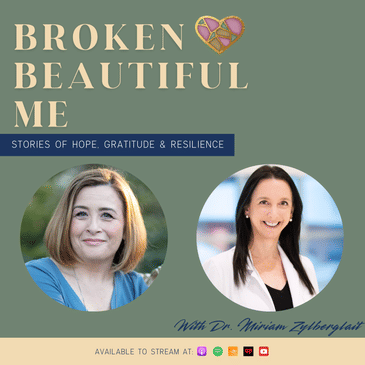
In this insightful episode of Broken Beautiful Me - Stories of Hope, Gratitude & Resilience, we sits down with Dr. Miriam Zylberglait, also known as "Dr. Z," a bestselling author, physician specializing in internal medicine, and an advocate for holistic, comprehensive care. Dr. Z believes in the concept of whole person care, focusing on both mental and physical wellbeing to help patients overcome adversities and turn them into valuable life lessons.
With her extensive background in medicine and dedication to improving her patients' lives through personalized care, Dr. Z brings a wealth of knowledge to the conversation. In this episode, she discusses the importance of treating the whole person—mind, body, and spirit—while offering practical strategies for maintaining mental and physical health in today's demanding world. Dr. Z emphasizes that through resilience and self-compassion, anyone can transform their challenges into opportunities for growth.
This episode is a must-listen for anyone interested in holistic healthcare, personal development, or simply seeking to achieve a more balanced and healthy life.
To connect with Dr. Miriam Zylberglait, visit her website virtualwellbeingmd.com or reach out via LinkedIn at Dr. Z LinkedIn.
-----------------------
Follow the Host, Kelly Buckley:
Stay connected with Kelly Buckley and join her journey of healing, resilience, and gratitude. Follow her on social media for more inspiring content, updates on future episodes, and insights on living a life full of hope and purpose.
- Website: kellybuckley.com
- Facebook: Kelly Buckley on Facebook
- Instagram: @KellyBuckleyOfficial
- LinkedIn: Kelly Buckley on LinkedIn
- Twitter: @KellyBuckley
- YouTube: Kelly Buckley on YouTube
If you enjoyed this episode, don't forget to subscribe to the podcast, share it with your friends and family, and leave a review. Your support helps spread the message of hope, resilience, and gratitude to more listeners around the world.
⭐ ⭐ ⭐ ⭐ ⭐
If you enjoyed this episode, don't forget to subscribe to the podcast, share it with your friends and family, and leave a review. Your support helps spread the message of hope, resilience, and gratitude to more listeners around the world.
00:00:01
Hello, everybody,
00:00:02
and welcome to another
00:00:03
episode of Broken Beautiful Me.
00:00:06
I am so lucky today because
00:00:08
I have a very special guest.
00:00:09
Dr. Miriam Zilbergleit, Dr. Z,
00:00:13
is a triple board certified
00:00:15
physician in internal medicine,
00:00:17
geriatrics, obesity medicine,
00:00:19
with more than twenty years
00:00:21
of clinical and academic experience.
00:00:24
Dr. Z is interested in the
00:00:25
areas of well-being, burnout,
00:00:28
mental health and leadership development.
00:00:31
She completed a fellowship
00:00:32
in leadership education and
00:00:33
development certification
00:00:35
as a mental health ally and
00:00:37
training as a physician
00:00:39
wellness advocate.
00:00:40
Dr. Z has been recognized
00:00:42
for multiple achievements,
00:00:43
including mentor of the year,
00:00:45
at the AMWA in two thousand twenty one,
00:00:49
the American College of
00:00:50
Physicians Young Achiever
00:00:51
in two thousand seventeen.
00:00:53
She is also the author of
00:00:54
the number one best seller book,
00:00:57
The Three G Cycle of Life,
00:00:58
The Secrets for Achieving Joy,
00:01:01
Meaning and Wellbeing.
00:01:04
in February of twenty twenty three.
00:01:06
So originally she's from Peru.
00:01:08
She has two awesome sons,
00:01:10
a caring husband and a very
00:01:12
supportive family.
00:01:13
Her dream is to help others
00:01:14
achieve lives full of joy,
00:01:16
meaning and well-being.
00:01:18
Welcome, welcome, welcome, Miriam.
00:01:20
I'm so happy to have you.
00:01:22
Thank you so much for having me here,
00:01:24
Kelly.
00:01:24
Hi, everyone.
00:01:27
So Miriam,
00:01:28
I just wanted to jump in and
00:01:31
just kind of for the
00:01:34
listeners who haven't
00:01:36
really come across your
00:01:38
work and don't really know much about you,
00:01:40
if you can kind of give us
00:01:40
a little bit about your
00:01:41
background and how you came
00:01:43
to be doing this wonderful
00:01:44
work for mental health and
00:01:46
well-being for people.
00:01:48
So as you mentioned,
00:01:50
I am originally from Peru.
00:01:52
I went to medical school
00:01:53
there and I practiced
00:01:54
medicine for ten years with the Navy.
00:01:57
And since even before medical school,
00:02:02
I was very
00:02:04
into helping people.
00:02:05
And I didn't know that I
00:02:07
will be a physician.
00:02:08
Actually,
00:02:09
my goal was to be a psychologist
00:02:11
and to work with the mental
00:02:13
health of people.
00:02:14
Medicine came like a surprise to me.
00:02:19
And that's a completely different story.
00:02:21
But in my mind,
00:02:25
I always thought that you
00:02:27
cannot be a liver or a kidney or a bone
00:02:32
you are actually a human and
00:02:34
that means that you come
00:02:36
with your feelings and with
00:02:37
your fears and your mental
00:02:40
health and also with your
00:02:41
culture and with your
00:02:43
family and your social status so
00:02:48
This comprehensive,
00:02:49
holistic approach that they
00:02:51
have for medicine today is
00:02:53
exactly the same that they
00:02:54
had from day one when I was
00:02:57
almost an adolescent, right,
00:02:58
going to medical school and
00:03:01
learning about all the
00:03:03
science behind the human being.
00:03:07
the sciences is brother.
00:03:09
That's what I thought.
00:03:11
And,
00:03:12
and really is not only how we function,
00:03:15
but also how we feel and
00:03:17
how we live our lives and our values.
00:03:20
And,
00:03:20
What do we believe is important for us?
00:03:24
What are our priorities?
00:03:25
And that's how I started in medicine.
00:03:28
So who I am today is in so
00:03:30
many ways exactly the same
00:03:32
person that I was when I
00:03:34
was eighteen and when I was
00:03:36
ten years and I was
00:03:38
dreaming we'd save the
00:03:39
world and we'd help people.
00:03:41
It's just that we have more
00:03:43
technologies and I have more knowledge,
00:03:45
experience and extra wrinkles, right?
00:03:49
But otherwise,
00:03:52
that's me and that's how I
00:03:53
see the world and how I see people.
00:03:57
That is so, so your experience,
00:03:59
and I love that in,
00:04:01
in explaining like that, you see that,
00:04:04
you know,
00:04:04
there's a certain aspect to
00:04:05
science and of course, science is,
00:04:08
is crucial to our human development and,
00:04:11
and advancements,
00:04:12
but that in terms of overall wellbeing,
00:04:14
that there's kind of a
00:04:15
bigger picture and in how
00:04:18
our thoughts and our belief
00:04:20
system and all of that play a role in,
00:04:23
And are into our mental health.
00:04:25
So talk a little bit about
00:04:28
how that prompted you to
00:04:30
start this virtual well-being MD.
00:04:33
So what were you seeing in
00:04:35
your own practice that led
00:04:36
you to kind of jump into that?
00:04:38
Because I'm so intrigued and
00:04:39
I just love the idea.
00:04:42
So, around twelve years ago,
00:04:46
after being successful in
00:04:48
my career in Peru as a
00:04:50
physician and as an educator,
00:04:53
I was absolutely lonely, at least single.
00:04:59
And I was lucky enough to meet my husband,
00:05:02
but he was living in the US.
00:05:05
So at some point I had to
00:05:06
decide kind of my career, my life in Peru,
00:05:11
my language, my culture, or my husband.
00:05:15
And that's exactly what I did.
00:05:17
I came to the US to start
00:05:18
from zero and I married him
00:05:22
and I started my career as
00:05:24
a physician here again,
00:05:26
literally almost from zero.
00:05:30
And I love many aspects of
00:05:32
it and I love many
00:05:35
opportunities that came with
00:05:38
the country right and to
00:05:40
with the technology and and
00:05:42
the advances that we have
00:05:43
here in the us but at the
00:05:45
same time I was very uh
00:05:47
disappointed with this big
00:05:50
separation this great gap
00:05:52
that was in front of me uh
00:05:55
where I was able to use
00:05:57
this amazing technology um
00:06:00
and and you know resources
00:06:02
but at the same time I had only
00:06:08
This was more about productivity and chin,
00:06:11
chin, chin, chin.
00:06:12
And the chin chin was not
00:06:14
going to my pockets, let's clarify,
00:06:16
that was going to the
00:06:17
pockets of the CEO of the company,
00:06:19
the manager that was receiving a bonus,
00:06:21
the pharmaceuticals.
00:06:23
This doesn't go to the
00:06:25
doctor or the nurses,
00:06:26
just to clarify to people, right?
00:06:28
Because the majority of
00:06:30
people in the community,
00:06:31
they have no clue how the system works.
00:06:34
I was in those shoes before, now I know.
00:06:38
uh and that broke my heart
00:06:40
at many levels a big part
00:06:44
of and I know that you come
00:06:45
from a family with
00:06:48
knowledge and we you know
00:06:49
your shoes has been in the
00:06:50
medical field like mine
00:06:52
right um we go to medical
00:06:55
school nursing schools to
00:06:57
the healthcare system with
00:06:58
the idea of helping people
00:07:00
and if they're interacting
00:07:02
with people and big part of
00:07:05
what we feel is our reward
00:07:08
goes beyond the money.
00:07:09
In many places, like, for example, Peru,
00:07:11
where I went to medical school,
00:07:13
money is not the reason to
00:07:15
go to medical school.
00:07:16
You will not make a lot of
00:07:17
money as a doctor, right?
00:07:19
That's clear.
00:07:20
You go because you want to
00:07:21
help and because you have this,
00:07:24
I don't know,
00:07:25
feeling inside of you that
00:07:27
you bring value to others
00:07:30
because of that.
00:07:33
Maybe some altruism is
00:07:34
involved in all this, right?
00:07:37
And imagine that someone
00:07:40
removed that opportunity from you.
00:07:42
You still receive the paychecks.
00:07:43
In some cases, it's fair.
00:07:45
In so many cases,
00:07:46
it's not even close to fair
00:07:48
in the healthcare system of
00:07:49
today in the US.
00:07:51
But imagine that that is set,
00:07:53
that that is okay.
00:07:55
But at the same time,
00:07:56
you are not able to create
00:07:58
relationship with your patients.
00:07:59
You don't feel that you are really doing,
00:08:02
what you were supposed to do
00:08:03
that is to help you are
00:08:05
just placing band-aids all
00:08:07
over you don't even create
00:08:10
relationship with your
00:08:11
colleagues because
00:08:12
everybody is so stressed
00:08:14
out and everybody's trying
00:08:16
to just fulfill the
00:08:17
requirements of the system
00:08:19
meaning producing money and
00:08:21
being fast and furious in
00:08:23
how you do things so how
00:08:24
many patients you can see per day
00:08:27
That you go home that day
00:08:29
and you ask yourself,
00:08:30
how many errors maybe I made?
00:08:33
How many people I dismissed
00:08:36
and I forgot to ask the right questions?
00:08:39
How many people asking for help?
00:08:42
in between lines right and
00:08:44
we have those patients that
00:08:46
come and they give you
00:08:47
these random symptoms and
00:08:49
it's just a question of uh
00:08:51
are you safe is someone
00:08:52
hurting you is anything
00:08:54
else going on and you have
00:08:55
the chance to ask those
00:08:57
questions and you at that
00:08:59
point in the middle of the
00:09:00
night you feel like you are
00:09:01
not proud of yourself that
00:09:03
you are not true to
00:09:04
yourself and that you're
00:09:06
values are being just
00:09:07
diluted in a system that
00:09:09
doesn't care about your
00:09:11
patients and doesn't care
00:09:13
about the healthcare
00:09:14
workers that are trying to help.
00:09:18
And that's how we escape.
00:09:21
And so that was the prompt
00:09:23
for you that you said,
00:09:24
I need to try something
00:09:26
different because I want to
00:09:27
give something to my
00:09:29
patients that is just,
00:09:32
it encompasses all areas of
00:09:34
their life and not only
00:09:35
their physical health,
00:09:36
but their mental health as well.
00:09:39
And the respect that they deserve, right?
00:09:42
And the respect that I
00:09:43
deserve also and my colleagues deserve.
00:09:47
We...
00:09:49
We are all the time in a
00:09:51
very high stressful environment,
00:09:54
hospitals, outpatient clinic,
00:09:55
whatever it is.
00:09:57
uh trying to do our best but
00:09:59
when you try to do our best
00:10:02
or your best without the
00:10:04
appropriate resources and
00:10:05
time is probably the best
00:10:07
and most important resource
00:10:09
that you need uh without
00:10:11
respect without autonomy
00:10:13
without the ability to take
00:10:16
the right decisions uh without having uh
00:10:21
healthcare system,
00:10:22
and that means insurance,
00:10:23
pharmaceutical CEOs telling
00:10:26
that are not in medicine, right,
00:10:29
and have no idea about medicine,
00:10:31
telling you what
00:10:32
medications you should be prescribing,
00:10:35
and you need to do the x-ray first,
00:10:38
and then the CT, and then the MRI,
00:10:40
but you don't need the CT or the x-ray,
00:10:42
but that's a protocol, so...
00:10:44
Do that.
00:10:45
Spend three, four,
00:10:46
five more extra months
00:10:49
doing what you don't need
00:10:50
to do so now you can do the
00:10:53
test that you need to do.
00:10:54
How much money and time and
00:10:56
pain that patient spent
00:10:59
till he deserved to be able
00:11:03
to get the test that he or she needs.
00:11:06
And that generates frustration.
00:11:08
We didn't go to medical
00:11:09
school to have people that
00:11:12
are not versed on the
00:11:14
topic to define what tests
00:11:18
or what medication is best
00:11:19
for our patients or how
00:11:22
much time I should have
00:11:23
spent with someone that is
00:11:24
in front of me crying
00:11:26
because they just realized
00:11:27
that they have a terminal
00:11:29
cancer or a very advanced disease.
00:11:32
That's my, my, my, only my choice.
00:11:39
on the patient's choice.
00:11:40
And, and it's,
00:11:40
and truly it's based on the oath that you,
00:11:43
you made when you became a physician,
00:11:46
right?
00:11:46
So, so you like the, through the,
00:11:49
the kind of business aspect of healthcare,
00:11:53
um, and those protocols, it kind of,
00:11:55
it doesn't align with the oath.
00:11:58
And then on the receiving
00:11:59
end for the patient,
00:12:00
because of the protocols, oh, x-ray MRI,
00:12:03
um,
00:12:04
your x-ray CT MRI is that
00:12:07
the patient on the
00:12:08
receiving end of that is
00:12:09
then getting the letter
00:12:10
from the insurance company saying,
00:12:12
cover that second procedure
00:12:14
because we don't think that's necessary.
00:12:16
And so at the end,
00:12:19
who's really listening to the patient?
00:12:22
So I applaud you on seeing
00:12:25
that there's a different way.
00:12:27
There's a different way to
00:12:27
care for people.
00:12:30
And the different way
00:12:32
it's not something new and
00:12:34
it's not something very
00:12:35
sophisticated and you don't
00:12:37
need a PhD or even an MD
00:12:40
next to your name to
00:12:41
realize that the only way
00:12:44
to practice appropriate medicine
00:12:48
which I believe applies to
00:12:49
appropriate education and
00:12:51
appropriate many other things, right,
00:12:54
is to hear the client needs.
00:12:57
We are in some way,
00:12:59
and I hope this is not a
00:13:04
way to remove their power
00:13:07
or anything from any career,
00:13:10
In some way, we are servant leaders.
00:13:12
We are here to serve others, right?
00:13:15
We are exactly the same that
00:13:18
the person that is working
00:13:20
in a restaurant,
00:13:22
giving you the menu and
00:13:24
bringing you the food or
00:13:26
cooking the food for you.
00:13:29
if you go to a restaurant
00:13:31
and you don't like the
00:13:33
server because it's rude
00:13:35
and then you ask for the
00:13:38
food and it's very
00:13:39
expensive and when you
00:13:40
receive the plate it's not
00:13:42
clean and it's cold or it's not yummy
00:13:47
Not only that you will not come back,
00:13:49
you will probably send back that plate,
00:13:52
you will not pay anything, right?
00:13:54
And you will go to Yelp and say,
00:13:57
this restaurant is awful, do not come.
00:14:01
Why patients don't feel that
00:14:03
they have the same right to
00:14:04
do exactly the same with
00:14:06
clinics or hospitals?
00:14:08
They do, right?
00:14:11
We...
00:14:13
decided as patients that we
00:14:16
need to suffer and be
00:14:18
victimized by the
00:14:19
healthcare system when we
00:14:21
should be able to say you
00:14:23
know what no I came here I
00:14:26
paid my full price in the
00:14:29
in my insurance or if I saw
00:14:32
the pocket out of pocket
00:14:34
and I came to solve a
00:14:35
problem and I will stay
00:14:37
here till the doctor sees
00:14:39
me appropriately and
00:14:43
I have an answer, an appropriate,
00:14:45
reasonable answer to my concerns.
00:14:48
And they should not complain
00:14:49
with the doctor and they
00:14:51
should not complain with the nurse.
00:14:52
They should complain with
00:14:53
the manager of that clinic
00:14:55
and send a beautiful
00:14:56
message to the CEO of that
00:14:58
corporation and say, no, I am not moving.
00:15:02
Until I have a solution and
00:15:05
I am not treated with
00:15:06
respect because I am not
00:15:07
paying ten percent of my
00:15:10
price or my quote.
00:15:13
I am paying the one hundred percent.
00:15:15
So I deserve that one hundred percent.
00:15:17
So it starts with patience.
00:15:20
It does, and realizing their worth.
00:15:22
So do you feel like people's perception,
00:15:26
what has been your
00:15:26
experience with people's
00:15:28
perception of access and
00:15:30
their own personal
00:15:31
controlled healthcare since COVID?
00:15:34
Have you seen a big shift?
00:15:36
I believe that's...
00:15:39
probably telehealth has been
00:15:42
a very good improvement
00:15:44
that was not approved or
00:15:47
not accepted in many practices,
00:15:50
corporate practices,
00:15:51
especially before COVID
00:15:54
because some type of
00:15:56
business-related regulations.
00:16:00
It was supposedly giving less money,
00:16:02
so it was not very convenient, right?
00:16:05
So it's better to bring the
00:16:06
patient ten times just for
00:16:08
them to come and see the
00:16:10
result with you instead of
00:16:11
you actually calling them
00:16:14
or things like that.
00:16:14
You can bill for one,
00:16:15
you cannot bill for the other.
00:16:16
So there is a trick behind
00:16:18
why you go and you visit
00:16:20
your doctor again and again, right?
00:16:22
And you ask for PTOs again and again.
00:16:25
That was a change during
00:16:28
COVID and after COVID,
00:16:29
certain things that were
00:16:31
attached to telehealth are
00:16:35
still something that we can apply today.
00:16:39
With moderation, with using the insurance,
00:16:42
as in some cases,
00:16:44
the insurance is slowly
00:16:45
disappearing for telehealth.
00:16:47
And again,
00:16:48
we will go back to this modality
00:16:50
that produces more money and, you know,
00:16:54
as sadly is coming.
00:16:58
what happened on the other
00:16:59
side is that doctors we
00:17:01
were able to open our eyes
00:17:03
to the reality and to the
00:17:05
fact that there were other
00:17:06
ways to practice and you
00:17:08
will see that more and more
00:17:10
physicians and I will say
00:17:11
nurse practitioners too are
00:17:13
leaving the healthcare
00:17:14
system and opening their own practices
00:17:18
And in two different levels,
00:17:20
one that is the direct pay
00:17:23
service where they have
00:17:25
some kind of relationship
00:17:27
with a practice where they
00:17:28
pay directly to the
00:17:30
practice and that allows
00:17:31
them to have the right to get tests.
00:17:35
continuous conversations
00:17:37
with the doctor and visits and et cetera,
00:17:40
like kind of a club situation.
00:17:44
And at the other extreme,
00:17:46
you have concierge practices,
00:17:48
like in my case,
00:17:49
where this is a little more
00:17:51
expensive in some way,
00:17:53
but you have really almost
00:17:56
twenty four seven access to
00:17:58
the physician.
00:18:00
It's a relationship more one to one.
00:18:03
And what the patient
00:18:05
received from the practice
00:18:07
is more sophisticated, more complete,
00:18:10
tests that are not even
00:18:11
covered by insurance and
00:18:13
that you will not have
00:18:14
access to are being offered
00:18:16
in those cases.
00:18:18
But in any of those cases,
00:18:21
relationship what you have
00:18:22
really is more close to
00:18:25
what we see as appropriate
00:18:27
medicine you are not seen
00:18:29
in fifteen minutes and you
00:18:31
are not obligated to only
00:18:34
do what the insurance tells
00:18:36
you to do you can sadly out
00:18:38
of pocket because that is
00:18:40
actually the condition out
00:18:42
of pocket you can be able
00:18:44
to explore what are
00:18:47
what is available and what
00:18:48
other opportunities you have for care.
00:18:51
And for many individuals that are very
00:18:55
into the financial aspect of this,
00:18:58
they will tell you that
00:18:59
when people do the maths,
00:19:01
and this doesn't apply to
00:19:02
all the type of patients
00:19:04
because you have the very
00:19:05
unhealthy patient that will
00:19:08
use the system tremendously.
00:19:09
So that's probably something
00:19:12
that we need to separate.
00:19:13
But for relatively healthy individuals,
00:19:17
this format is very
00:19:19
appropriate because what
00:19:20
you pay for the insurance
00:19:22
for an insurance that you
00:19:23
almost not use versus what
00:19:25
you pay for your concierge
00:19:28
doctor that will allow you to have this
00:19:32
you know, very personalized treatment,
00:19:35
very one-to-one with full
00:19:37
access and et cetera,
00:19:39
and more into the preventive area,
00:19:42
the anti-aging,
00:19:43
the improving your performance,
00:19:45
improving your mental
00:19:46
health and et cetera.
00:19:48
So for some group of individuals,
00:19:50
it's absolutely valuable,
00:19:53
even financially when they
00:19:55
do the comparations.
00:19:57
Absolutely.
00:19:59
So I want to jump in now to your book,
00:20:02
and I love the name of it,
00:20:04
The Three G Cycle of Life,
00:20:05
the three G's being goal, grit,
00:20:08
and growth.
00:20:09
So share a little bit about
00:20:11
this philosophy,
00:20:12
because I think it proposes
00:20:13
that life is not linear,
00:20:15
and it's all interconnected,
00:20:17
which I totally believe.
00:20:19
So tell me more.
00:20:21
So imagine life instead of being linear,
00:20:25
right?
00:20:25
That's what you mentioned,
00:20:27
where you cannot go back in time.
00:20:29
So you cannot fix anything
00:20:31
that you mess up.
00:20:34
And what makes you feel
00:20:36
always afraid of any
00:20:37
decision for the future,
00:20:39
because if you mess up,
00:20:40
you cannot come back and fix it.
00:20:42
So you will feel guilty and
00:20:43
you will have this backpack
00:20:45
with you all the time, right?
00:20:47
Of like, oh my God, why did I do?
00:20:49
Or now I cannot make things better.
00:20:51
Imagine that life is
00:20:53
actually a cycle connected
00:20:55
to another cycle, to another cycle.
00:20:59
And you start each of the
00:21:01
cycles with the first G that is goal.
00:21:05
What do you want to do?
00:21:06
Or what are you supposed to do?
00:21:08
And when you are a kid,
00:21:09
maybe this initial goal could be,
00:21:12
you know, to start learning how to walk,
00:21:15
right?
00:21:16
And you are trying to get there, right?
00:21:21
and you fell down many times
00:21:23
and you grab things and you
00:21:25
throw things on the floor
00:21:26
while you are trying to get
00:21:27
up and people laugh and
00:21:30
some applaud you when you
00:21:32
do it better and you have
00:21:34
this great inside of you
00:21:36
which is your second year right
00:21:38
that says, I can do it.
00:21:40
And you have your leaders,
00:21:42
mom and dad saying, yes, you can do it.
00:21:45
And then you keep going.
00:21:46
But again, you fall down again.
00:21:48
And now you have a boo-boo.
00:21:49
And instead of crying for the boo-boo,
00:21:52
you cry for a few seconds.
00:21:53
And then you realize, but yes,
00:21:55
that kid is doing it.
00:21:56
So I can do it.
00:21:57
And finally, you walk your first steps,
00:22:02
right?
00:22:02
Not very fancy, not very stable,
00:22:04
but you do.
00:22:06
So imagine that in life all the time.
00:22:09
Imagine your first goal
00:22:10
being your first car and
00:22:12
how you will collect that
00:22:14
money to get there.
00:22:17
Sometimes you will get your goals, right?
00:22:20
And therefore you will be
00:22:22
celebrating your achievement.
00:22:24
But sometimes you will not
00:22:26
be able to get those goals.
00:22:29
And even if you have a lot of greed,
00:22:31
that goal today will not be so important.
00:22:34
I wanted my red Ferrari,
00:22:36
but now I am a mom.
00:22:37
What do I do with a red Ferrari?
00:22:39
Now I have to be a mom.
00:22:41
You have a van, right,
00:22:42
and put the bicycles.
00:22:44
Does that mean that I fail
00:22:46
or just I change my
00:22:48
priorities because my life changes?
00:22:51
or I applied to medical
00:22:53
school and I tried the
00:22:54
first time and I didn't get
00:22:56
the position but I studied
00:22:59
again and this time I got a
00:23:01
better score and now I am
00:23:02
in I failed or just I
00:23:05
didn't do it the first time
00:23:07
and I was able to do it at
00:23:09
the second and what
00:23:11
happened during these
00:23:12
challenging times right
00:23:13
because when you get the
00:23:15
goal at the beginning it's
00:23:16
like yay did you learn something maybe
00:23:20
But when you were trying again and again,
00:23:22
when you were forced to pivot in life,
00:23:25
to be creative, to innovate,
00:23:28
to find solutions, to ask for help,
00:23:31
what happens is no matter
00:23:32
if you achieve or not your dream,
00:23:35
your goal, right?
00:23:37
Doesn't matter.
00:23:38
But what you are achieving
00:23:39
for sure is growth.
00:23:41
And that's the third G.
00:23:44
So you can see life in a way
00:23:46
where you think about
00:23:48
failure as one of the options,
00:23:51
or you can see life as
00:23:54
achieving your goal, your dream,
00:23:56
or achieving growth.
00:23:59
And not considering failure as an option,
00:24:03
because failure is only in our mind.
00:24:06
We can transform failure in opportunities.
00:24:08
We can transform failure in new skills.
00:24:11
We can transform failure in
00:24:14
a way to help others and to
00:24:16
grow and to transform
00:24:17
ourselves in a better
00:24:18
version of ourselves.
00:24:21
I mean, I feel, you know, in my own work,
00:24:25
I meet a lot of people who
00:24:27
are stuck in the woulda, shoulda,
00:24:29
coulda game.
00:24:31
And so something has
00:24:32
happened and they ruminate
00:24:34
on it over and over and over.
00:24:38
And it becomes a true
00:24:40
roadblock for them that
00:24:42
they are unable to see, okay, well,
00:24:45
this really didn't work out
00:24:46
as I had planned for my life,
00:24:49
but what is the lesson I
00:24:50
can take from it to make my
00:24:53
life and maybe others more beautiful?
00:24:57
What do you say to people
00:24:58
like that who kind of are
00:25:00
confronted with those
00:25:01
roadblocks and don't know
00:25:02
how to move forward?
00:25:04
that I have been there many
00:25:06
times and I am still there
00:25:08
many times and I will
00:25:09
continue being there many times.
00:25:12
That's normal, right?
00:25:13
And we need to stop
00:25:16
believing that there is a
00:25:17
magical form to fix ourselves and to
00:25:21
you know,
00:25:21
transform ourselves in the
00:25:23
perfect version.
00:25:24
We will never be perfect.
00:25:25
Let's assume that and move on, right?
00:25:28
Because we are humans.
00:25:29
We are not robots.
00:25:32
So I will start with that concept,
00:25:34
the concept of this is
00:25:35
normal when we go through a
00:25:37
difficult time in our life.
00:25:39
And sometimes difficult has
00:25:41
different colors and
00:25:43
flavors for different people, right?
00:25:44
What could be difficult for
00:25:46
me may be nothing for you and vice versa.
00:25:49
But
00:25:51
Let's embrace the fact that
00:25:53
we will have challenges in life.
00:25:55
That is reality.
00:25:57
If it didn't happen yet, it will happen.
00:26:00
And if it happened already,
00:26:03
it will happen again.
00:26:04
It will be a different challenge,
00:26:07
but it will come.
00:26:08
The question is for how long
00:26:10
are we interested on
00:26:14
continue with the grief instead of
00:26:19
trying to transform that
00:26:21
grief in something different.
00:26:23
We will always remember those days.
00:26:26
We will always be crying about those days.
00:26:32
And that is okay.
00:26:34
But it's a crying as a moment of, okay,
00:26:39
I remember this.
00:26:41
This was painful.
00:26:42
I went through this.
00:26:43
This was part of my life.
00:26:45
This is one scar that I have with me.
00:26:48
that makes me the person
00:26:50
that I am right now.
00:26:52
This is part of the decoration in my skin,
00:26:55
in my soul,
00:26:56
something that I use with
00:26:58
pride because help me to
00:27:01
achieve what I have today.
00:27:05
Or this is something that is
00:27:06
embarrassing for me,
00:27:08
that's something that scares me,
00:27:09
something that I want to
00:27:12
erase from me no matter what.
00:27:15
And the point of view, the mindset, right,
00:27:19
the way that we approach
00:27:21
those things that are part
00:27:22
of our life really will set
00:27:25
the tone for our future.
00:27:28
Absolutely.
00:27:30
Absolutely.
00:27:31
And you made a point there
00:27:37
and I just want to circle
00:27:38
back about it because you
00:27:40
see people in a difficult
00:27:43
situation and sometimes
00:27:46
they feel like if they take the path of
00:27:49
looking at that difficulty
00:27:51
with a growth mindset,
00:27:53
that sometimes you receive
00:27:54
feedback from people that say, well,
00:27:58
you're not dealing with
00:27:59
what's happening to you.
00:27:59
You're in denial because
00:28:01
you're deciding to approach
00:28:03
it with a growth mindset
00:28:04
instead of a failure mindset.
00:28:08
So it is really kind of
00:28:10
re-educating ourselves
00:28:13
about how we heal and that
00:28:16
it definitely does not mean
00:28:18
that we're not going to have tough days.
00:28:19
It doesn't mean we're not
00:28:21
going to cry over those past failures,
00:28:25
mistakes,
00:28:25
tragedies that so many people
00:28:27
have experienced,
00:28:29
but it does mean that we
00:28:30
can take that and turn it
00:28:31
into something that is beautiful.
00:28:34
And I hope we continue crying.
00:28:37
And I know that this sounds very,
00:28:38
very weird, but I hope,
00:28:42
I really hope that we
00:28:43
continue having some type
00:28:44
of pain and remorse and
00:28:47
embarrassment and that we
00:28:49
can still see the scar.
00:28:50
Because if not, that means that two years,
00:28:55
ten years,
00:28:56
twenty years of our life went
00:28:58
through and we didn't learn
00:29:00
anything and we didn't
00:29:01
improve and we didn't
00:29:04
Actually, we were not present.
00:29:06
We cannot go through life without feeling.
00:29:09
We cannot go through life
00:29:11
without having happy
00:29:14
moments and difficult moments.
00:29:18
Life comes with all the flavors.
00:29:20
Life is like, you know,
00:29:22
the sprinkles that I put in
00:29:23
the ice cream.
00:29:24
Sometimes I see my kids
00:29:28
trying to select the colors.
00:29:31
You cannot.
00:29:32
You have to eat them all, right?
00:29:34
You don't have the purple
00:29:36
that you like and the green
00:29:37
that you hate.
00:29:39
That's life, you know.
00:29:41
It is life.
00:29:43
And learn how to get the
00:29:47
green and find a way to
00:29:50
navigate the green color
00:29:52
when you have to go through
00:29:54
the green and when the purple comes,
00:29:56
enjoy it.
00:30:00
But remember that you don't
00:30:02
have to do this alone.
00:30:04
And I believe that that's
00:30:06
something that I learned
00:30:08
recently in life and I am in my fifties.
00:30:12
So it took me around forty years,
00:30:16
if not more,
00:30:17
to understand that I was not
00:30:20
supposed to be the superhero.
00:30:22
I was not supposed to be
00:30:24
you know, the fixer of everything.
00:30:29
I am human.
00:30:32
I am not perfect.
00:30:34
I have bad days.
00:30:36
I have good days too.
00:30:38
I have moments where I am clueless.
00:30:42
I have moments where I feel
00:30:43
very embarrassed and I have
00:30:46
long list of regrets.
00:30:48
But also I have people that I trust
00:30:52
that I can call or ask for
00:30:55
help and I can recognize when I am
00:30:59
clueless and lost and I
00:31:02
don't need to stay there by
00:31:04
myself I can go and ask for
00:31:07
help and that's not wrong
00:31:10
wrong is to stay in the
00:31:12
darkness because you feel
00:31:14
so ashamed or so you know
00:31:17
your ego is so big that you
00:31:19
will not go and ask for
00:31:21
someone to kind of take you
00:31:23
out to the light
00:31:26
And help is the best
00:31:28
demonstration of inner power.
00:31:31
It is.
00:31:33
And recognizing that, you know,
00:31:36
pain and suffering is part
00:31:39
of the human experience.
00:31:40
It is.
00:31:42
But we don't have to be afraid of it.
00:31:44
And like you said, we're never alone.
00:31:47
And especially in today's world where,
00:31:49
and I know like the Gallup
00:31:51
poll recently came out
00:31:52
about a poll about
00:31:53
loneliness and said that
00:31:54
there's an epidemic of loneliness,
00:31:56
even though we're more
00:31:57
connected than ever in this world, right?
00:31:59
Yeah.
00:32:01
Because the connection is
00:32:02
not a deep connection.
00:32:03
This one networking has been a mess.
00:32:07
For me,
00:32:08
it's friend working instead of
00:32:10
networking because
00:32:12
networking is like extend
00:32:14
your numbers in Facebook or
00:32:16
whatever network do you have and feel,
00:32:19
you know, proud of it.
00:32:21
We need friends.
00:32:23
You know,
00:32:23
sometimes it's just with one hand.
00:32:26
Want to bring good friends
00:32:28
or family members to be
00:32:30
with you when you need.
00:32:33
It's not to have one million
00:32:36
in Facebook that when you are crying,
00:32:38
they have no even memory of crying.
00:32:42
So you are the same person with that name,
00:32:46
but oh,
00:32:46
I cannot put it in your face
00:32:48
because I have one million friends.
00:32:50
So how do I remember each of them, right?
00:32:53
So you don't exist.
00:32:54
You're an honor.
00:32:56
And you need to have that
00:33:00
authentic connection with somebody.
00:33:02
You need to have... My best
00:33:04
friend just recently was
00:33:05
here for a visit.
00:33:07
And we've known each other
00:33:09
since kindergarten.
00:33:10
And I'm in my fifties as well,
00:33:12
even though we say we're twenty-nine.
00:33:15
So...
00:33:20
But that relationship that I
00:33:23
have with her is worth more
00:33:26
to me than anything that I
00:33:29
could have online because she knows me.
00:33:34
I know her.
00:33:35
We're on a soul level.
00:33:37
And we're not afraid to show
00:33:39
our brokenness.
00:33:41
We're not afraid to share
00:33:42
that with each other.
00:33:43
And that's what makes us
00:33:44
strong is because we share it.
00:33:47
We share the load.
00:33:48
We don't carry it alone.
00:33:51
I do not do that with...
00:33:53
people in the internet, right?
00:33:56
And I, the same like you,
00:33:59
I have friends that I still,
00:34:02
I am in touch with from
00:34:03
medical school or even from
00:34:04
when I was three or four years old.
00:34:06
So I have a strong relationship with them.
00:34:09
But I also created these
00:34:11
amazing friendships for me, like sisters,
00:34:14
really, in the Internet.
00:34:16
I never saw them in my life, real life.
00:34:19
But I mean, I can't,
00:34:20
I have them in a speed dial all the time.
00:34:22
It's like, hey, I'm having a bad day,
00:34:25
right?
00:34:25
And vice versa.
00:34:28
So it's not a question of
00:34:29
where they are
00:34:30
geographically or when do
00:34:32
we meet them in person.
00:34:33
in our life, right?
00:34:35
But it is how deep are you
00:34:37
going in that connection?
00:34:39
And that takes time and effort, right?
00:34:42
We cannot expect to these
00:34:43
friendships that just exist.
00:34:46
It's like a plant.
00:34:47
We need to put a little of water and,
00:34:49
you know,
00:34:49
the sun and stuff like that to love.
00:34:53
time and uh but it's the
00:34:55
best investment I believe
00:34:57
or one of the best
00:34:58
investments uh as as part
00:35:01
of our self-care investment
00:35:03
right and you mentioned it
00:35:05
so it is so important to
00:35:07
recognize loneliness is not
00:35:09
only uh part of our pandemic but actually
00:35:14
beyond having people that
00:35:16
feel alone or that is alone,
00:35:19
we are having people that
00:35:21
is more sick because of that.
00:35:25
Loneliness is associated
00:35:27
with mental illness and
00:35:31
also with illnesses of our bodies.
00:35:34
And because again, they are connected,
00:35:36
we cannot separate them.
00:35:38
And that's why I think that
00:35:42
investing in friendship,
00:35:44
in appropriate relationship
00:35:45
with the community is as
00:35:48
important as exercising or
00:35:51
eating healthy or going to
00:35:53
your doctor to do your
00:35:56
preventive measures, right?
00:35:59
Or sleeping well.
00:36:02
we cannot separate one from the other.
00:36:05
We need to invest a little
00:36:06
in each of these aspects.
00:36:08
So we are really practicing self-care.
00:36:11
If we want our mind to be healthy
00:36:14
I know that we talk a lot
00:36:15
about mental health,
00:36:17
but what is true from one
00:36:20
side to the other is vice versa,
00:36:22
also truth, right?
00:36:24
If we want a healthy body,
00:36:27
we need a healthy mind.
00:36:29
And if we want a healthy mind,
00:36:30
we need a healthy body
00:36:31
because many conditions
00:36:35
that affect our body will,
00:36:37
as a consequence, affect our mind.
00:36:39
So we cannot neglect one or the other.
00:36:42
We need to
00:36:43
see ourselves as the holistic,
00:36:46
comprehensive, complex human that we are.
00:36:54
Well, and exactly because,
00:36:56
and especially when you
00:36:57
think about like mental
00:36:58
health and how it affects physical health,
00:37:00
but also in terms of people
00:37:04
with chronic illness.
00:37:06
So if you have someone who
00:37:07
has a chronic illness, if they, you know,
00:37:10
they have kidney failure or
00:37:13
they are going through
00:37:13
something that is a
00:37:14
day-to-day thing that they manage and
00:37:17
that one of the things that
00:37:19
I think we need to have
00:37:21
bigger conversations about
00:37:23
in larger forums is chronic
00:37:26
disease needs to be
00:37:27
supported with mental health support.
00:37:31
You need to help people with
00:37:32
their mindset about how you
00:37:35
walk with that day to day.
00:37:37
And so that takes a holistic approach.
00:37:39
You just can't look at, okay, say, oh,
00:37:41
you're going to be on
00:37:42
dialysis and that's my job done.
00:37:45
Box checked.
00:37:46
We're all finished.
00:37:48
No,
00:37:49
you have people who are walking through
00:37:51
life with these challenges.
00:37:54
And so we need to make sure
00:37:55
they have strong minds and
00:37:56
they have strong
00:37:57
communities backing them.
00:37:59
Absolutely, chronic conditions.
00:38:01
And chronic conditions, yes,
00:38:02
they could be something as
00:38:04
cancer or dialysis because of any reason.
00:38:10
Something even more simple today, right?
00:38:13
Diabetes.
00:38:13
Diabetes was a very severe condition.
00:38:16
Today,
00:38:16
something that we can manage better
00:38:19
and we have more technology,
00:38:20
we have better resources.
00:38:22
But this is still a
00:38:25
challenging situation where
00:38:27
you have to... Celiac disease, right?
00:38:30
That's...
00:38:32
That means that you cannot
00:38:34
go to the supermarket or a
00:38:35
restaurant and eat whatever you want.
00:38:37
And now we have at least
00:38:39
some options in the gluten-free section.
00:38:43
But for those that are not
00:38:45
suffering these conditions,
00:38:47
this may be very simple.
00:38:50
But it is not.
00:38:51
I can testify.
00:38:54
During my pregnancy,
00:38:55
I developed gestational diabetes.
00:38:58
So I have been checking my sugars, right,
00:39:01
four, five,
00:39:01
six times per day while being pregnant,
00:39:04
while rounding in the hospital,
00:39:06
sometimes for safety hours.
00:39:08
cold and trying to go to the
00:39:10
cafeteria of the hospital
00:39:12
and find something that
00:39:13
will not raise my sugar and
00:39:16
trying to don't faint if my
00:39:18
sugar goes down with the medication,
00:39:21
you know?
00:39:23
sounds simple when you say
00:39:25
please do your diet
00:39:27
exercise it well right and
00:39:30
control your sugars put
00:39:32
yourself in those shoes I
00:39:33
had the opportunity and was
00:39:36
a total social experiment
00:39:38
for me to understand how
00:39:40
the society was not
00:39:42
friendly with my situation
00:39:44
how the hospital
00:39:46
right a highly educated
00:39:48
environment was absolutely
00:39:51
not friendly with a
00:39:52
pregnant diabetic doctor
00:39:58
and then you realize that
00:40:01
what could look like a
00:40:03
simple diagnosis for others
00:40:06
it's a nightmare for the
00:40:07
one that is receiving this and
00:40:10
we need to be empathetic and
00:40:12
we need to be more than empathetic.
00:40:14
We need to be compassionate.
00:40:15
We need to add action to our empathy,
00:40:18
right?
00:40:18
We need to just not feel sorry for someone,
00:40:22
but it's like, sorry,
00:40:23
and how can I help you?
00:40:25
How can I make this better
00:40:27
or easier for you?
00:40:29
And we are talking again about diabetes.
00:40:32
I am using it as an example.
00:40:34
I have been on those shoes.
00:40:36
But there are conditions
00:40:37
that are as challenging and even more.
00:40:40
And then you have the other
00:40:41
ones that are less obvious, right?
00:40:43
That individual that suffers
00:40:45
with chronic pain or
00:40:48
fibromyalgia or chronic COVID today.
00:40:52
or even things that are not
00:40:54
necessarily fully medical, you will say,
00:40:57
but really are, right?
00:40:59
Depression, anxiety, you can say, well,
00:41:02
but there is not a boo-boo
00:41:04
in any part and not a test
00:41:06
that will say you have, well,
00:41:09
they are still chemical
00:41:11
abnormalities in our brains.
00:41:13
And those individuals
00:41:15
suffering through depression or anxiety,
00:41:18
they are not faking,
00:41:19
they are not using this as an
00:41:23
a way to manipulate the
00:41:25
system or manipulate their
00:41:27
bosses or their family they
00:41:29
are truly struggling and
00:41:31
they need help and the fact
00:41:32
that you cannot hear with
00:41:34
your stethoscope or finding
00:41:37
an x-ray or in a blood test
00:41:39
a diagnosis right or
00:41:42
assigned for of this
00:41:44
condition doesn't mean that
00:41:45
the condition doesn't exist
00:41:47
or it's not real and again
00:41:50
Until we do not understand
00:41:52
and we do not embrace the
00:41:54
fact that conditions
00:41:56
medical conditions are
00:41:58
complex and have multiple
00:42:00
ways to Manifest a and that
00:42:03
will not be exactly the
00:42:04
same in my body and in your
00:42:06
body We could have the same
00:42:08
diagnosis doesn't mean that
00:42:09
you will look like I look
00:42:11
with the same diagnosis
00:42:12
having the same gender the same age,
00:42:14
right we
00:42:16
are unique individuals with
00:42:18
unique ways to suffer,
00:42:20
with unique ways to
00:42:21
manifest our conditions.
00:42:24
And if we continue
00:42:25
practicing medicine or
00:42:27
healthcare in general, right,
00:42:29
because this involves the
00:42:30
nutritionists and the
00:42:31
physical therapists and this,
00:42:34
speech therapist and the
00:42:35
psychologist and the
00:42:36
counselor and etc if we
00:42:38
don't move from what is the
00:42:40
protocol right by protocol
00:42:42
we will do this but what
00:42:44
happened is that person in
00:42:46
front of you is not a chip
00:42:49
in a computer and it's a
00:42:51
human in real life and
00:42:53
doesn't fit the protocol
00:42:57
And needs to be seen as that
00:43:00
person with heart, with mind, with soul,
00:43:03
with family,
00:43:04
with real days that are good
00:43:07
and real days that are bad.
00:43:09
And needs you as the person
00:43:11
that is really focused on helping,
00:43:14
not just solving protocols.
00:43:17
This is not, you know, we are puzzles,
00:43:20
right?
00:43:21
That's what we are.
00:43:22
And we need to consider each
00:43:25
of the pieces of the puzzle
00:43:27
is important because it
00:43:28
doesn't matter if you have
00:43:30
ninety nine of the one
00:43:32
hundred pieces of the puzzle.
00:43:34
If you don't find the little
00:43:36
tiny one that is number one hundred,
00:43:39
you don't have the complete puzzle done.
00:43:41
Yeah.
00:43:44
I just need to say that I'm
00:43:46
going to be quoting you now
00:43:47
because you made a
00:43:48
statement early in this conversation.
00:43:51
I just want to say it back
00:43:52
to you because it's like
00:43:54
you said you have to add
00:43:58
action to your empathy.
00:44:01
And I love that so much.
00:44:03
And I am going to quote you
00:44:05
for times to come when I'm
00:44:07
talking to other people
00:44:08
because that is so true.
00:44:11
To add action, we can feel that empathy.
00:44:13
But until we add that action piece of it,
00:44:16
we're not being true community members.
00:44:18
We're not lifting each other up.
00:44:21
That is powerful, Dr. Z. Oh,
00:44:23
I need to say that I
00:44:27
learned that not exactly the phrase,
00:44:30
but that comes up from a
00:44:32
good friend of mine, Dr. Quinn Farrell.
00:44:35
She's an expert on empathy.
00:44:39
And she explained to me.
00:44:42
before the difference
00:44:44
between being empathetic
00:44:45
and being compassionate.
00:44:47
And I believe that maybe
00:44:48
it's a great opportunity to
00:44:50
share this because this is
00:44:52
a big difference, right?
00:44:53
Being empathetic is what
00:44:55
you're saying is like feeling, right?
00:44:57
I feel for you.
00:44:58
I kind of,
00:44:59
I can put myself in your shoes
00:45:01
and I kind of even
00:45:02
understand what you are going through,
00:45:05
but that's the end.
00:45:08
uh being compassionate is
00:45:10
being empathetic and then
00:45:12
adding this action is like
00:45:15
I feel for you I feel what
00:45:17
you are going through I
00:45:19
kind of understand and now
00:45:21
I am here to help you in some way
00:45:24
And for that,
00:45:25
you need to start acting also.
00:45:28
It's not enough to feel.
00:45:29
You need to start acting.
00:45:31
And we are right now
00:45:33
suffering not only from
00:45:34
loneliness and burnout all over, right?
00:45:39
This is a pandemic of loneliness.
00:45:41
This is a pandemic of burnout.
00:45:43
But I believe that we are
00:45:45
even in a worse situation.
00:45:47
We are in a pandemic of
00:45:48
compassion fatigue.
00:45:50
And we are surviving life, all of us,
00:45:55
I include myself, trying to do our best,
00:45:59
the best that we can.
00:46:02
At the point that many times,
00:46:05
because we are just surviving,
00:46:08
we cannot even be empathetic.
00:46:10
Or if we are empathetic,
00:46:11
we don't have this next
00:46:12
level of energy to be
00:46:14
compassionate and doing
00:46:15
something about it.
00:46:17
And we are seeing the movie
00:46:19
of the life going through our eyes.
00:46:22
And we know that things are not right,
00:46:25
but we cannot find the time
00:46:27
or the energy to go for it.
00:46:31
Sadly,
00:46:32
the only way to be able to transform
00:46:35
this lack of
00:46:37
compassion, right, into action again,
00:46:41
is to start healing ourself.
00:46:43
And if we don't take care of ourself,
00:46:46
and if we don't start
00:46:48
taking care of our bodies,
00:46:50
and I know that, again,
00:46:51
I go back to the body,
00:46:53
but the body is the one
00:46:54
that will give you the energy.
00:46:56
If your gut flora is not good,
00:46:58
if your levels of vitamins are not good,
00:47:00
if you are not eating well,
00:47:01
if you are not exercising,
00:47:03
if you are not sleeping well,
00:47:05
How do you expect having, number one,
00:47:08
energy, number two,
00:47:09
the ability to concentrate,
00:47:12
the ability to feel motivated,
00:47:16
to perform.
00:47:17
So that's kind of the
00:47:20
definition of burnout, right?
00:47:21
We already kind of involved
00:47:25
like what is the first step
00:47:27
to start reducing our own burnout.
00:47:30
There is a system that is
00:47:32
corrupted and there is a
00:47:34
world that is out of our
00:47:37
mind and it's a mess.
00:47:39
I understand all that and I
00:47:41
don't think that being burnout or being
00:47:44
compassionate fatigue or in
00:47:45
survival mode is our fault
00:47:48
I want to clarify that
00:47:49
there is too much abuse
00:47:52
around us uh that you know
00:47:57
that we cannot change or
00:47:58
manage by ourselves but
00:48:01
there is still a percentage
00:48:03
of responsibility and
00:48:05
accountability that we need to admit
00:48:09
and that we need to embrace
00:48:10
because that tiny
00:48:12
percentage that this is our
00:48:14
hands could be the
00:48:15
difference of being happy or unhappy,
00:48:19
sick or unhealthy,
00:48:21
alive or dying by suicide.
00:48:24
And we need to get in our hands, right,
00:48:28
and in our hearts that tiny
00:48:31
percentage that belongs to
00:48:33
us and that we can control.
00:48:34
Because the rest, we cannot control it.
00:48:37
And we cannot control it even now.
00:48:40
like less now when we don't
00:48:42
have that energy and this
00:48:44
ability but if we don't
00:48:46
start healing ourselves we
00:48:48
will never be able to
00:48:49
control the rest so we need
00:48:51
to start from somewhere and
00:48:53
somewhere is here inside of
00:48:55
us and it's easier to say
00:48:58
than to do and I am a witness of this
00:49:02
Me too.
00:49:04
Not every day you will go to
00:49:05
their elliptical,
00:49:06
which I have here in front of me.
00:49:09
And some days I say hello to it.
00:49:12
And sometimes I do more than
00:49:14
hello and I use it, right?
00:49:15
And some days you will eat
00:49:19
something that you are not supposed.
00:49:20
And that is okay.
00:49:22
Don't use that as an excuse
00:49:24
to stop your attempt to get better.
00:49:28
Right.
00:49:30
It goes back to those three Gs, right?
00:49:32
Well, today I mess up.
00:49:34
I'll leave you.
00:49:35
Tomorrow will be a better day.
00:49:37
I know,
00:49:38
I started a meditation practice and
00:49:40
I think more often than not
00:49:43
in the first three months,
00:49:45
I was making my to-do list,
00:49:47
my grocery list.
00:49:48
I was thinking about all
00:49:50
these other things and I was like, stop,
00:49:52
you should be meditating.
00:49:53
Stop, you should be meditating.
00:49:55
So, I mean, it's always,
00:49:57
we're always gonna be
00:49:57
learning and we're always
00:49:58
gonna be tripped up
00:50:00
sometimes and we'll have to
00:50:01
dust ourselves off and get back up,
00:50:03
but we can.
00:50:06
and we have community to support.
00:50:10
I have a global gratitude
00:50:12
group on Facebook called
00:50:14
Just One Little Thing.
00:50:16
And so this is how I want to
00:50:18
finish off with our chat
00:50:20
today by asking you about gratitude.
00:50:23
So in that group,
00:50:25
I started asking what their
00:50:28
one little thing was each
00:50:29
day to be grateful for
00:50:31
based on how I survived
00:50:33
after my son passed in
00:50:38
at the dinner table or in
00:50:40
the living room before we watched a movie,
00:50:42
we would say,
00:50:43
what's your one little thing today?
00:50:45
Because I had a younger son
00:50:46
who was twelve at the time
00:50:48
and he deserved a happy life.
00:50:50
And we had to find our way through.
00:50:52
So we sought counseling.
00:50:54
We did all those things.
00:50:55
We realized we needed a
00:50:56
community to kind of help
00:50:57
us through this.
00:50:58
But this one little thing
00:50:59
was a piece that we use
00:51:01
daily that we could control.
00:51:05
And each day we would say,
00:51:06
like some days for me, it would be...
00:51:09
a good cup of coffee.
00:51:11
Some days it would be that I
00:51:13
had these huge sunglasses
00:51:14
that covered up my tears
00:51:15
when I was at an
00:51:16
intersection because I was
00:51:17
crying in the car.
00:51:19
I mean, it goes to that,
00:51:21
but each day we tied those
00:51:23
things together and those
00:51:25
things led us back to the light.
00:51:28
That tether led us back to
00:51:29
the light that we needed to get to.
00:51:31
So today I'm going to tell
00:51:33
you what I'm thankful for.
00:51:35
I'm thankful for cooler
00:51:37
temperatures here in the south.
00:51:38
I'm really thankful for that.
00:51:40
I'm thankful for the lower
00:51:41
humidity so my hair doesn't
00:51:43
look like we're in nineteen eighty four.
00:51:46
I'm thankful that my two labs,
00:51:48
Annie and Sam,
00:51:50
have behaved during this podcast.
00:51:52
That's a big thing.
00:51:54
So those are all,
00:51:55
and I'm so thankful that I
00:51:57
got to talk to you because
00:51:58
I have learned so much
00:51:59
today and we have to talk again.
00:52:01
So I'm just giving you notice now.
00:52:04
We have to get back together.
00:52:05
Yes, of course.
00:52:07
I would love that.
00:52:08
So those are all my little things.
00:52:11
I want to know your little things.
00:52:14
Yes, let me tell you why I am thankful.
00:52:17
And I will tell you what I
00:52:19
am thankful right now.
00:52:22
I am thankful for you and
00:52:24
for the story that you
00:52:25
share about your son.
00:52:27
Because being a mom of two
00:52:30
very active kids and
00:52:33
knowing how difficult it is
00:52:35
for me and for many parents,
00:52:37
especially after a long weekend.
00:52:43
You reminded me the love
00:52:45
that I have for my kids and
00:52:47
the biggest space that not
00:52:49
having one of them could
00:52:51
create in my life and how
00:52:53
painful that will be.
00:52:58
And how grateful I am for
00:53:00
having my boys with me.
00:53:03
Beautiful.
00:53:04
Thank you so much.
00:53:05
That is so beautiful.
00:53:07
And it is a gift that we we
00:53:10
need to celebrate every day
00:53:11
and get back to like those simple,
00:53:14
the simple gifts that, you know,
00:53:18
early in my gratitude
00:53:19
journey before I lost Stephen.
00:53:22
Um,
00:53:23
when I look back at those gratitude
00:53:24
journals, cause I had journals then,
00:53:26
and they were just very shallow, you know,
00:53:28
in, I can be honest about that,
00:53:30
that it was just like, oh yeah,
00:53:32
I'm grateful for this.
00:53:33
I'm grateful for that.
00:53:34
But there was no deep,
00:53:36
there's no deepness to it.
00:53:38
The depth of my observations.
00:53:41
And I think what I'm,
00:53:43
what I love talking about
00:53:45
and why I've loved our conversation is
00:53:48
is that we can get back to
00:53:50
that place of authenticity
00:53:53
and look for those
00:53:54
opportunities for gratitude
00:53:57
and growth through gratitude.
00:53:59
So with your three Gs and
00:54:01
adding my little grateful piece,
00:54:03
we've got a winning combination.
00:54:06
Absolutely.
00:54:06
And actually I have a
00:54:07
gratitude chapter in my
00:54:12
book and I have something
00:54:13
very special here.
00:54:15
I will show you, you will appreciate this.
00:54:20
This was actually created by
00:54:22
hand by one of my medical students.
00:54:26
And it's a jar where we can
00:54:31
put gratitude notes.
00:54:35
And I used to have it in my
00:54:36
office in the clinic before,
00:54:38
and I have it now in this
00:54:39
new office that I have in my new clinic.
00:54:42
So people can go and
00:54:45
add these notes of gratitude
00:54:49
because life is challenging, right?
00:54:52
And we go through it so fast
00:54:54
and furious that we don't
00:54:56
stop to smell the roses.
00:54:58
And these little things that
00:55:00
are in front of us that we
00:55:03
do not appreciate can be actually,
00:55:05
they could be actually the
00:55:06
difference between having a
00:55:08
good day or a bad day.
00:55:10
And in the case of a physician,
00:55:12
like in my case,
00:55:14
the way that I will treat my next patient,
00:55:16
right?
00:55:17
The way that I will treat my
00:55:19
colleagues and the way that
00:55:21
I will treat my kids when I
00:55:23
go back home or my husband.
00:55:26
So finding this special
00:55:28
moment that could take just
00:55:30
one second is the smile of
00:55:32
someone that is now feeling
00:55:34
better than the day before.
00:55:36
The thank you of someone, right?
00:55:38
A hug.
00:55:40
It's just a second.
00:55:41
It's a second that could
00:55:42
change completely your life
00:55:44
and could change completely
00:55:46
the life of that person
00:55:47
that is receiving it.
00:55:48
And we should be grateful
00:55:50
for those things.
00:55:52
In order to be grateful,
00:55:53
we need to start being
00:55:54
present so we can recognize
00:55:56
them and we can appreciate them.
00:55:59
Exactly.
00:56:01
Thank you so much.
00:56:02
Before we close out and finish this,
00:56:06
I kind of don't want to finish talking,
00:56:08
but I know you probably
00:56:09
have other things to do.
00:56:11
But before we finish,
00:56:13
I just want you to tell our
00:56:14
listeners where they can
00:56:16
find you and your work and
00:56:20
where they can find your beautiful book,
00:56:22
because I want to make sure
00:56:23
that everybody connects with you.
00:56:24
Thank you so much.
00:56:25
So my website is
00:56:28
www.virtualwellbeingmd.com.
00:56:33
And in the website,
00:56:34
they can find information about the book,
00:56:36
but also about the clinic
00:56:40
the services that I provide for patients.
00:56:44
They can find me also at LinkedIn.
00:56:46
And so they will see posts
00:56:48
and more information about my work.
00:56:51
And if you're interested,
00:56:54
because you're in Florida or Texas,
00:56:56
where I offer services for patients.
00:56:58
You can also schedule an
00:56:59
appointment directly at
00:57:01
LinkedIn or in my website with me,
00:57:04
and I would love to chat
00:57:05
with you and help you to
00:57:06
find the better version,
00:57:08
the healthier version of yourself,
00:57:12
all through virtual care
00:57:14
and very comprehensive, holistic,
00:57:16
and personalized care.
00:57:18
Awesome.
00:57:19
And I will make sure that
00:57:20
when this episode is posted,
00:57:22
that we share all those
00:57:23
links as well so that
00:57:24
people will have easy access to them.
00:57:27
Thank you so much for being here with me.
00:57:29
I really appreciate your time.
00:57:31
Thank you.
00:57:32
And I hope that we will
00:57:34
continue our conversation
00:57:35
online or without.
00:57:38
Absolutely.
00:57:40
To continue.
00:57:41
Me too.
00:57:42
Okay.
00:57:42
Thank you so much.
00:57:43
Thank you.
00:57:43
Take care.