Rising from Tragedy: Life After Loss
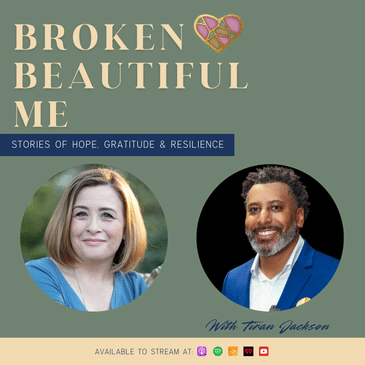
In this deeply moving episode, we have the honor of speaking with Tiran Jackson, a renowned keynote speaker and author whose life took a sudden and tragic turn. While on vacation in the Bahamas, Tiran was involved in a catastrophic accident that claimed the life of his wife and led to the loss of his leg. Faced with immense grief and physical trauma, Tiran chose not to succumb to despair but instead found the strength to rise from the ashes and transform his pain into purpose.
Today, Tiran is a leading voice on resilience and overcoming adversity, using his personal experience to motivate individuals and organizations around the world. He teaches others how to navigate life's hardest moments with grace, grit, and determination. With his story of perseverance, he inspires his audiences to push beyond their perceived limitations and rebuild their lives with intention and purpose.
As the founder of Reborn Resilient, Tiran shares his expertise not only through speaking engagements but also through leadership development and resilience training programs. His work has had a profound impact on leaders, teams, and individuals alike, helping them cultivate inner strength, face adversity head-on, and ultimately transform their challenges into opportunities for growth.
Join us in this episode as we delve into Tiran's journey—how he faced unimaginable loss and turned it into a mission to inspire others. Learn practical tools for developing resilience and how you, too, can rise from your toughest trials.
For more on Tiran's story, visit RebornResilient.com to explore his resilience training programs and keynote speaking topics.
Contact Information: For speaking inquiries or to connect with Tiran Jackson, visit RebornResilient.com/contact or reach out via email at info@rebornresilient.com.
---------------
Follow the Host, Kelly Buckley:
Stay connected with Kelly Buckley and join her journey of healing, resilience, and gratitude. Follow her on social media for more inspiring content, updates on future episodes, and insights on living a life full of hope and purpose.
- Website: kellybuckley.com
- Facebook: Kelly Buckley on Facebook
- Instagram: @KellyBuckleyOfficial
- LinkedIn: Kelly Buckley on LinkedIn
- Twitter: @KellyBuckley
- YouTube: Kelly Buckley on YouTube
If you enjoyed this episode, don't forget to subscribe to the podcast, share it with your friends and family, and leave a review. Your support helps spread the message of hope, resilience, and gratitude to more listeners around the world.
00:00:01
Well, thank you, everyone,
00:00:02
and welcome to the show,
00:00:03
Broken Beautiful Me.
00:00:06
I am so excited today
00:00:07
because we have a great guest,
00:00:08
Tyran Jackson.
00:00:11
And I just want to tell you
00:00:11
a little bit about him and
00:00:13
his work before we jump
00:00:15
right into a great conversation.
00:00:17
So he is a dynamic speaker, author,
00:00:20
and visionary entrepreneur.
00:00:22
um isn't just a survivor
00:00:24
he's a thriver which I love
00:00:26
his own profound journey
00:00:28
marked by personal tragedy
00:00:30
loss and triumphant
00:00:31
resilience is a testament
00:00:33
to the human spirit's
00:00:34
indomitable will to
00:00:35
overcome starting his
00:00:37
career as an engineer tyran
00:00:39
was on a path to success
00:00:41
but life had other plans
00:00:44
Through transformational experiences,
00:00:47
he discovered his true purpose,
00:00:48
inspiring others to find their own path.
00:00:51
Tyran's authenticity and
00:00:53
vulnerability now serve as
00:00:55
guiding lights for those
00:00:56
seeking resilience, courage,
00:00:58
and strength.
00:00:59
Today, he doesn't just inspire,
00:01:01
he empowers.
00:01:03
His mission is to help you
00:01:04
rediscover your authentic self,
00:01:06
embrace your vulnerabilities,
00:01:07
and set forth boldly towards your dreams.
00:01:12
And you can connect with him
00:01:15
on his website at rebornresilient.com,
00:01:18
which I love.
00:01:19
Welcome, Tyran, to the show.
00:01:20
Thank you for being here.
00:01:22
Thank you, Kelly,
00:01:23
for letting me be a part of it.
00:01:24
I'm honored to be here this morning.
00:01:26
So just to begin for our
00:01:29
listeners who may not have
00:01:32
encountered your work yet
00:01:34
and want to learn more,
00:01:36
if you could share just a
00:01:37
little bit about your
00:01:37
background and how you came
00:01:40
to be involved in this
00:01:42
inspirational work.
00:01:44
Ooh, well, that's a heavy question.
00:01:46
First off, I was not intended to be here.
00:01:49
It was never my plan to be
00:01:50
someone that not only is a
00:01:52
professional speaker that
00:01:54
inspires and motivates others,
00:01:55
but actually coaches and
00:01:56
helping those going through trauma,
00:01:58
tragedies, or transitions in life,
00:02:00
and help them make the
00:02:01
transformation so they can be triumphant.
00:02:03
I started out as a nerd,
00:02:05
as a math and science geek,
00:02:07
and I actually started my
00:02:09
career as an engineer.
00:02:11
I was very good in math and science,
00:02:14
enjoyed it in school,
00:02:16
got a degree in mechanical engineering.
00:02:19
I started my career actually
00:02:21
as an engineer for Rolls-Royce,
00:02:23
believe it or not, and was enjoying...
00:02:26
developing my career along those lines.
00:02:29
I'm very analytical.
00:02:31
I think about things
00:02:32
probably sometimes too methodically,
00:02:36
or at least I used to.
00:02:37
And that was part of who my
00:02:39
personality was and where I began.
00:02:42
Now,
00:02:42
I know we'll get into this a little
00:02:44
bit later,
00:02:44
but sometimes we go through a
00:02:46
transition in life where
00:02:47
something happens and it
00:02:49
changes the way that we
00:02:50
view life and that we
00:02:51
operate and that we function completely.
00:02:53
And after going through that,
00:02:55
I found this and discovered,
00:02:56
or I like to say I
00:02:57
discovered a new side of myself,
00:03:00
a side that was more empathetic,
00:03:02
that was more understanding,
00:03:03
but it was a result in
00:03:04
having to overcome the
00:03:05
obstacles that I had to
00:03:06
face in dealing with the
00:03:07
loss of a close loved one.
00:03:10
And I know that that can
00:03:11
trigger changes in so many of us,
00:03:13
but it's what triggered the
00:03:15
change in who I am today.
00:03:19
And you talked about this,
00:03:22
your incredible story of tragedy,
00:03:26
but also for many people
00:03:29
who read about your story,
00:03:32
hope for how they
00:03:35
themselves can overcome.
00:03:36
So
00:03:38
Your book is called Choosing Resilience.
00:03:40
All things work together for good.
00:03:44
What a powerful title.
00:03:45
And I just the word choice
00:03:48
for me really speaks to me
00:03:50
because it definitely is.
00:03:51
You do find yourself at
00:03:53
these forks in the road of
00:03:54
your life where you can
00:03:56
choose one way or another.
00:03:57
And and it's an important fork.
00:04:01
But I want you to really
00:04:04
tell us about what your
00:04:07
book is about and what your story,
00:04:09
what impacted you to start this work?
00:04:13
Yeah, so first off,
00:04:15
everyone who's on here
00:04:16
understands that life can
00:04:17
throw us curveballs,
00:04:18
sometimes when we least expect it.
00:04:22
I'll take you guys back six years ago.
00:04:25
My wife, Malika, and I,
00:04:26
we were getting ready to
00:04:27
celebrate a momentous occasion.
00:04:29
We were celebrating our
00:04:30
fifteenth wedding anniversary.
00:04:31
And like a lot of people,
00:04:33
we decided we were going to
00:04:34
go on a vacation to
00:04:35
celebrate this time together.
00:04:38
During that time,
00:04:39
I was working for as an
00:04:40
engineering manager for a
00:04:42
small company in Atlanta.
00:04:44
And my wife, Malika,
00:04:45
she had just gotten
00:04:46
promoted to a director
00:04:47
level at Fortune five
00:04:49
hundred company as an H.R.
00:04:51
director.
00:04:52
And what was going on during
00:04:54
that time leading up to it
00:04:55
is that we were both
00:04:56
constantly on the go.
00:04:58
One week she would have to
00:04:59
travel to Chicago and I
00:05:01
would be here with our son, Cameron,
00:05:02
who was twelve at the time.
00:05:04
And it would just be the two of us.
00:05:07
And then she would come back.
00:05:08
And then I would have to
00:05:08
travel for the next week for my career.
00:05:11
And so it was one of these
00:05:12
times where it was just really busy,
00:05:14
really hectic.
00:05:15
But we were truly looking
00:05:16
forward to this time to
00:05:17
reconnect and be together
00:05:19
for five days in paradise.
00:05:21
We decided we were going to
00:05:22
take a trip to the Bahamas.
00:05:23
And the day before going to the Bahamas,
00:05:25
I dropped our son off with his uncle.
00:05:28
And I told him, son, don't worry,
00:05:30
I'll be back in one week to pick you up.
00:05:31
And he was excited because
00:05:33
he was going to get to
00:05:33
spend some time getting
00:05:35
spoiled by his uncle,
00:05:36
getting to terrorize his
00:05:38
cousins and getting their dog,
00:05:41
eat ice cream late at night.
00:05:42
All of these things that
00:05:43
kids do when their parents
00:05:44
are not around.
00:05:45
Yeah.
00:05:47
But he was he was.
00:05:48
he said dad you and mom go
00:05:50
have a great time you guys
00:05:51
need this and so I left him
00:05:53
thinking that this is going
00:05:55
to be a great trip for us
00:05:56
and this is going to be a
00:05:57
great reprieve or break for
00:05:59
him to be able to to enjoy
00:06:01
himself too so uh the next
00:06:03
day malika and I we we flew
00:06:05
to the bahamas where we
00:06:06
were going to spend five
00:06:08
days at this all-inclusive resort
00:06:10
And the first two days were great.
00:06:11
They were wonderful.
00:06:12
We spent time at the pool,
00:06:14
had some fruity drinks,
00:06:15
had some time at the beach,
00:06:16
took some phenomenal pictures.
00:06:18
Everything was great.
00:06:19
We were enjoying each
00:06:20
other's company and we were
00:06:21
really starting to put the
00:06:22
plan together on how we
00:06:24
were going to move forward
00:06:25
in the next fifteen years
00:06:27
and the fifteen years after
00:06:28
that and so on and so forth.
00:06:30
But on the third day,
00:06:32
we decided we were going to
00:06:33
do something adventurous.
00:06:34
On the third day,
00:06:35
we decided that we would
00:06:36
actually leave from the
00:06:37
resort and do an excursion,
00:06:39
a tour of the island.
00:06:40
Now,
00:06:40
people do this all the time when
00:06:42
they're on vacation,
00:06:43
don't think anything about it.
00:06:45
We got up that morning and
00:06:47
we took a bus that stopped
00:06:50
at a couple of different
00:06:51
resorts to a marina.
00:06:52
And as we got to the marina,
00:06:54
we started thinking about
00:06:55
what the options were for this adventure.
00:06:57
They had two trips.
00:06:59
One of them was to do a half
00:07:00
day tour where you spend
00:07:02
four hours on the boat.
00:07:03
You get to go a little bit
00:07:04
around the island,
00:07:06
but you get to come back.
00:07:07
And then the other one was a four day tour,
00:07:09
an eight hour trip where
00:07:10
you get to go further along
00:07:12
the island in the Bahamas
00:07:13
and get to have a couple other stops,
00:07:16
eat at a restaurant, do multiple things.
00:07:19
As Malika and I were talking
00:07:20
about our day and what we
00:07:22
still wanted to do,
00:07:24
I wanted to go back golfing
00:07:25
that afternoon.
00:07:27
And she said, OK, well, that's fine.
00:07:28
I can go to the spa.
00:07:30
So we made the decision to
00:07:31
do the half day tour.
00:07:33
So as we bought our tickets
00:07:34
and started walking down the pier,
00:07:36
we had a decision to make.
00:07:38
The half day tour was in the
00:07:39
boat on the left.
00:07:40
The full day tour was the
00:07:41
boat on the right.
00:07:42
We got on the boat on the left.
00:07:44
Nine o'clock in the morning,
00:07:46
the boat takes off,
00:07:46
and everything seems fine.
00:07:48
I remember sitting there with Malika.
00:07:50
I had my arm over her shoulder,
00:07:52
and I was thinking to myself,
00:07:53
we're in paradise.
00:07:54
The weather's great.
00:07:56
You can smell the sea.
00:07:57
You can smell all the
00:07:59
experiences related to this.
00:08:01
And I'm thinking,
00:08:01
this is going to be the
00:08:02
most adventurous part of this trip,
00:08:04
and it's going to be the most memorable.
00:08:07
But five minutes into the ride,
00:08:11
it became memorable for a reason.
00:08:14
that I could have wished to avoid.
00:08:18
Unbeknownst to us, on this boat,
00:08:20
there was a fuel leak.
00:08:21
And this fuel leak was
00:08:22
emanating from the fuel tank.
00:08:24
And we were sitting right
00:08:24
above the fuel tank.
00:08:27
And there was a small spark,
00:08:30
and that spark led to an explosion.
00:08:31
Oh, my goodness.
00:08:33
At nine o'clock,
00:08:34
I found myself waking up
00:08:36
face down on the surface of
00:08:37
a burning boat.
00:08:39
At nine oh five,
00:08:40
I woke up from being
00:08:41
unconscious because my
00:08:42
right leg was literally on fire.
00:08:44
Oh my goodness.
00:08:48
At this point in time,
00:08:50
I don't know what happened.
00:08:53
I don't see Malika.
00:08:54
The only thing that I see
00:08:55
are passengers from the
00:08:56
second boat that wasn't too
00:08:57
far away from me.
00:08:59
And I can see those
00:09:00
passengers yelling to me,
00:09:01
get off the boat, get off the boat.
00:09:04
And as I'm laying there,
00:09:06
I try to push myself up, but I crumble.
00:09:09
I try to push myself up
00:09:10
again and I crumble again.
00:09:12
Now, I didn't know it at the time,
00:09:14
but my left collarbone was
00:09:15
broken in four places.
00:09:17
I had bruised ribs, fractured vertebrae,
00:09:20
fractured pelvis,
00:09:22
third degree burns on my right leg,
00:09:23
a broken right foot.
00:09:25
And my left foot was
00:09:26
actually severed to the
00:09:27
point where I could see my ankle bone,
00:09:29
blood rushing out.
00:09:30
Oh.
00:09:32
The only thing that I could
00:09:33
do in that moment was take my right hand,
00:09:36
put my fingertips in the
00:09:38
ridges on the surface of
00:09:39
that boat and just try to
00:09:40
drag myself away from the flames.
00:09:42
I dragged myself about three
00:09:44
feet until I pass out again.
00:09:47
And then.
00:09:48
By the grace of God,
00:09:49
the second boat came a little bit closer.
00:09:51
Some of the passengers on
00:09:53
that boat actually swam over,
00:09:55
pulled me off the boat and
00:09:57
carried me to their boat.
00:09:59
And I'm grateful that they
00:10:00
did because three minutes
00:10:01
after they got me off,
00:10:02
the second fuel tank
00:10:03
exploded on the boat.
00:10:06
As I was going through this,
00:10:09
I was I didn't know what happened.
00:10:11
I was in shock and I didn't
00:10:12
know where Malika was.
00:10:14
Well,
00:10:15
the passengers on that boat told me
00:10:16
that her and one other
00:10:17
passenger got thrown into a
00:10:18
different direction into the ocean.
00:10:20
And the third boat came and
00:10:21
picked them up and took
00:10:22
them away and that I would
00:10:24
get to see her eventually
00:10:26
once we got to shore.
00:10:28
When my boat got to shore,
00:10:30
they had already gotten to shore,
00:10:33
Malika and the other passenger,
00:10:34
and they already had an
00:10:35
ambulance and they were
00:10:35
headed to a clinic.
00:10:37
I waited until actually a
00:10:39
Good Samaritan who had a pickup truck.
00:10:41
They put me on a piece of
00:10:42
plywood on the back of a
00:10:43
pickup truck to take me to this clinic.
00:10:45
And as I'm getting there,
00:10:48
I'm thinking to myself and I'm praying,
00:10:49
I hope my wife is okay.
00:10:51
They get me to the clinic,
00:10:52
put me on a stretcher and wheel me in.
00:10:54
And as they wheel me in,
00:10:55
that's the first time I hear Malika.
00:10:57
And as I'm being wheeled into this clinic,
00:10:59
I can hear her moans.
00:11:00
I can hear her agony.
00:11:03
I can hear her suffering.
00:11:04
And as a man,
00:11:05
I can't do anything about it.
00:11:08
So there are three bays.
00:11:10
Malika's in the first bay.
00:11:11
There's one other passengers
00:11:12
in the second bay and they
00:11:13
put me in the third bay.
00:11:14
And as I'm laying there,
00:11:15
there's one doctor at this
00:11:16
clinic and I'm trying to
00:11:17
make myself as still as possible,
00:11:19
as quiet as possible so I
00:11:21
can hear what's going on.
00:11:22
But as you can imagine,
00:11:23
there's chaos in the background.
00:11:26
What seemed like an eternity,
00:11:27
that one doctor finally
00:11:28
came to me and I asked him,
00:11:30
how is my wife?
00:11:31
How is Malika?
00:11:33
The doctor doesn't answer my question.
00:11:36
What he tells me is that
00:11:38
We're sending you and this
00:11:39
one other passenger to the
00:11:41
good hospital and your wife
00:11:44
will be coming later.
00:11:46
Now,
00:11:46
I'm still trying to listen and trying
00:11:48
to process what's going on,
00:11:49
but I have this sense of
00:11:50
optimism thinking that if
00:11:52
they're sending me and this
00:11:53
other passenger,
00:11:54
then Malika must not be
00:11:55
hurt as bad as I am and
00:11:57
that I will be blessed to
00:11:59
see her later on that afternoon.
00:12:00
So they
00:12:02
Wrap my foot up.
00:12:03
They put me back on a stretcher.
00:12:05
They get me on an airplane,
00:12:06
fly me to Nassau where the
00:12:07
good hospital is, get me there.
00:12:09
I go into emergency surgery
00:12:11
and I wake up six hours later.
00:12:14
And when I wake up and I see you,
00:12:16
I'm starting to think that, OK,
00:12:18
I should be able to see Malika by now.
00:12:20
She should surely be here.
00:12:22
Now,
00:12:22
what they tried to do was pin what was
00:12:23
left of my foot back to my
00:12:25
leg at that moment.
00:12:26
And that's what they what
00:12:27
the surgery was at that point in time,
00:12:29
because that was the most
00:12:30
severe injury that I had.
00:12:32
As I wake up in ICU,
00:12:34
the nurse that's in my room,
00:12:35
when she sees me starting
00:12:37
to move a little bit,
00:12:39
she goes out the room and
00:12:40
she gets the two doctors.
00:12:42
And two doctors come in.
00:12:44
And as soon as they come in,
00:12:45
I ask them the most obvious question.
00:12:47
Where is my wife?
00:12:49
Is Malika here yet?
00:12:51
The two doctors,
00:12:52
they look at each other in
00:12:52
confusion and they step
00:12:55
back out of the room.
00:12:56
And I'm thinking to myself,
00:12:58
I don't understand.
00:13:00
This can't be good.
00:13:02
After about five minutes,
00:13:04
they come back in and they tell me,
00:13:05
Mr. Jackson, we hate to inform you,
00:13:09
but your wife didn't make it.
00:13:11
Your wife died at that clinic.
00:13:14
They didn't want to tell you
00:13:15
that before they were going
00:13:16
to fly you here and go through surgery.
00:13:21
When I think back about this,
00:13:23
I was heartbroken.
00:13:24
I was crying.
00:13:25
I was hurt.
00:13:26
It was supposed to be one of
00:13:27
the most celebratory times
00:13:29
in our lives together.
00:13:31
Exactly.
00:13:33
One of the most tragic
00:13:34
moments you could ever imagine.
00:13:36
And so that was the moment
00:13:39
that I had to process the
00:13:40
fact that the woman who I love,
00:13:43
my best friend, my rock,
00:13:44
the mother of my child,
00:13:46
the woman who I was
00:13:46
building empires with.
00:13:49
It's taken away from me.
00:13:51
I am so sorry.
00:13:52
Oh.
00:13:52
Thank you, Kelly.
00:13:57
So, and from there, I mean, you know,
00:14:01
such a tremendous loss,
00:14:04
but then you are also,
00:14:06
you are facing this unimaginable grief,
00:14:09
but you also have a long
00:14:12
road ahead of you for your recovery.
00:14:15
And you're a dad,
00:14:16
you have your son to think about.
00:14:19
Talk to us about that journey.
00:14:22
Well, just continue on with that story.
00:14:25
That next morning I had to
00:14:26
do something I didn't want to have to do,
00:14:28
but I knew I had to do.
00:14:30
My son, who was unaware of what happened,
00:14:33
I had to pick up the phone
00:14:34
from a hospital bed in the
00:14:35
Bahamas and call him and
00:14:37
tell him over the phone, son,
00:14:38
mom and dad have been in an
00:14:40
accident and mom's never
00:14:41
coming home again.
00:14:43
To have to hear his voice on
00:14:45
the other side of that phone and, and
00:14:49
It's one thing to have to
00:14:51
give bad news to someone.
00:14:54
But just imagine having to
00:14:57
break your child's heart by
00:15:00
telling him that the only
00:15:01
woman that he's ever been close to,
00:15:03
he's never going to get to see again.
00:15:06
And to understand that, yes,
00:15:09
we have a long road together.
00:15:11
And at this point in time,
00:15:12
I didn't even know if I was
00:15:14
going to survive.
00:15:15
Later that same afternoon,
00:15:17
as I'm laying there in the hospital bed,
00:15:19
I can see the EKG monitor over my head.
00:15:22
Well, like I said before,
00:15:23
they tried to reattach what
00:15:24
was left of my foot back to my leg.
00:15:27
And that caused infection to
00:15:28
start going through my body.
00:15:30
And so my body was starting to break down.
00:15:32
So as I was laying there,
00:15:34
I saw all my vital signs go
00:15:36
from green to yellow to red
00:15:39
in a matter of a couple of hours.
00:15:41
And at that point,
00:15:42
my will was truly broken.
00:15:45
I was thinking that the next
00:15:46
time I close my eyes is
00:15:47
going to be the last time I
00:15:48
close my eyes.
00:15:50
And I was going to leave my
00:15:51
son without a mother and a father.
00:15:54
And so this was the truest
00:15:56
state of despair that you could imagine.
00:16:01
Because in my conversation with him,
00:16:04
he asked me if I was going to be OK.
00:16:06
He asked me if I was all right.
00:16:07
And I had to lie to him and tell him, son,
00:16:09
I'm going to be OK.
00:16:11
Now we're going to get through this.
00:16:13
But it's amazing how the universe works,
00:16:17
how God was there with me.
00:16:19
And even though I was angry
00:16:21
about what happened,
00:16:22
that there was a means of
00:16:24
getting through this.
00:16:25
And there were things that
00:16:26
were completely out of my control,
00:16:27
out of my .. They were
00:16:28
happening in the background
00:16:30
to allow me to be here today.
00:16:34
I survived.
00:16:34
I woke up that next morning and I was,
00:16:36
next thing I knew,
00:16:37
I was basically getting
00:16:38
confiscated from this
00:16:39
hospital and flown to a
00:16:41
level one trauma center in
00:16:42
Florida where they were
00:16:44
going to do whatever they
00:16:45
could to try to save my life.
00:16:46
Yeah.
00:16:47
That trauma center,
00:16:48
they tell my family who had
00:16:50
arrived from Tennessee at
00:16:51
that time that they had to
00:16:53
do whatever they could to
00:16:55
make sure I was still alive.
00:16:57
And I wake up after surgery,
00:16:59
my left leg below the knee is missing.
00:17:01
It's amputated.
00:17:04
I go through nine surgeries
00:17:05
in a matter of five days.
00:17:06
But after I went through two days later,
00:17:09
multiple surgeries,
00:17:11
that's when things started
00:17:12
to become clear to me.
00:17:13
And I was hearing a message
00:17:15
and I'm a spiritual individual.
00:17:16
God was finally was talking
00:17:17
to me and I was praying
00:17:19
throughout this point in time.
00:17:20
But he told me a couple of things.
00:17:22
He told me that it was
00:17:23
Malika's time to come home.
00:17:25
And the sooner I could accept that,
00:17:27
the better off I was going to be.
00:17:29
He told me also that the
00:17:31
normal that I knew before
00:17:33
was not going to be my new normal.
00:17:35
He told me that I wasn't
00:17:36
going to go back to being an engineer,
00:17:38
but there was going to be a
00:17:39
different path,
00:17:40
a different journey for me
00:17:41
to go down and that I
00:17:43
should be obedient and follow,
00:17:45
even though that path wasn't clear yet.
00:17:47
He told me if he wanted to,
00:17:48
he could have taken my life
00:17:49
three different times when
00:17:50
that boat exploded,
00:17:51
when my vital signs went
00:17:52
from green to yellow to red.
00:17:53
And even that next day after
00:17:55
I went through multiple
00:17:56
surgeries and my vitals
00:17:58
were still very unstable,
00:18:00
that that could have been it for me,
00:18:01
but he was pulling me through.
00:18:03
And also that he was keeping
00:18:04
me here for a reason.
00:18:05
And that reason will become
00:18:06
clear if I were obedient.
00:18:08
But one of the most
00:18:09
important things that came
00:18:11
out of this message was to be resilient,
00:18:14
be resilient.
00:18:16
And it came that I had a choice to make.
00:18:20
I had a conscious choice to make.
00:18:22
I could either feel sorry for myself,
00:18:24
live with the circumstances
00:18:26
and live in pity and survive,
00:18:28
or I could choose resilience.
00:18:31
And by following that path,
00:18:33
I could thrive.
00:18:34
And it was at this moment
00:18:36
that it became clear to me
00:18:37
that whatever my journey,
00:18:40
it was clear that the
00:18:41
obstacles that I'd overcome
00:18:42
just to still be alive at
00:18:43
that moment were nothing
00:18:45
compared to the obstacles I
00:18:46
was going to have to face moving forward.
00:18:48
And that I was going to have
00:18:49
to be able to overcome
00:18:51
those obstacles and use
00:18:53
that in order to be able to
00:18:55
reach the plan that he had for me.
00:19:00
And one other step that I
00:19:01
wanna think about
00:19:02
resilience that became clear to me,
00:19:03
and I had to come to grips
00:19:05
with this and it wasn't
00:19:05
something immediate,
00:19:06
but it came over time.
00:19:08
What my truest definition of
00:19:09
resilience was,
00:19:10
but resilience is not about
00:19:11
regaining what was lost,
00:19:13
but reshaping what still remains.
00:19:15
And it's what you do with
00:19:16
what still remains that
00:19:17
controls the narrative of
00:19:18
your life story.
00:19:19
So having that mindset,
00:19:21
having that understanding
00:19:22
that things are gonna happen to us
00:19:26
we're going to have to face
00:19:27
these challenges and
00:19:28
obstacles what's done is
00:19:30
done but what are you going
00:19:31
to do with what's left and
00:19:32
make the most out of that
00:19:34
in order to create positive
00:19:35
growth and propel you
00:19:37
forward in life so you know
00:19:40
going back I did have
00:19:41
challenges to make as I
00:19:42
started my physical
00:19:43
recovery my emotional
00:19:44
recovery to do what was
00:19:46
necessary to be there for my son
00:19:49
because he was dealing with
00:19:50
a different type of grief.
00:19:52
He lost his mom.
00:19:53
Yes.
00:19:54
I lost my wife.
00:19:55
We both had to adjust and adapt.
00:19:58
But going along the journey
00:20:00
afterwards led to some transformations,
00:20:04
not only in myself, but in him,
00:20:07
that allowed us to grow closer together,
00:20:10
to be able to grieve properly,
00:20:12
or at least grieve.
00:20:13
I won't say completely properly,
00:20:14
because outside influences
00:20:16
want you to grieve
00:20:17
the way they think you
00:20:18
should grieve at times.
00:20:20
Oh, yeah.
00:20:23
But yeah,
00:20:24
but these were the lessons I had
00:20:25
to learn along the way.
00:20:26
And I had to learn how to
00:20:28
not only be a father,
00:20:30
but be a better nurturer,
00:20:32
be a more of an emotional
00:20:34
supporter to him,
00:20:36
to be able to understand
00:20:37
that what we were going
00:20:38
through was unique in our journey,
00:20:41
but it required us to be
00:20:42
together and to communicate
00:20:45
and to actually put in the
00:20:46
effort to get past such a
00:20:48
traumatic situation.
00:20:51
You know,
00:20:52
it's amazing how children provide
00:20:56
that clarity for us about
00:20:59
and give us that motivation
00:21:03
to dig a little deeper.
00:21:04
And I recognize that in my
00:21:07
own story as well with my younger son.
00:21:10
And because it's just so
00:21:12
important because they
00:21:14
deserve a happy life, right?
00:21:16
No matter what has happened,
00:21:17
they deserve a happy life.
00:21:19
And so as parents,
00:21:21
you dig that little bit
00:21:22
deeper and try to find that
00:21:24
courage to provide that.
00:21:28
That little whisper in your
00:21:30
ear that told you that you
00:21:33
had your path and you would follow it,
00:21:35
and you did.
00:21:36
You listened to that.
00:21:38
This book is proof of that,
00:21:41
that you listened to that
00:21:42
whisper from God and followed that path.
00:21:46
And that didn't make it easier.
00:21:49
But it gave you clarity of purpose,
00:21:51
I suppose, for what you had to do.
00:21:57
So where did that take you?
00:22:01
Well,
00:22:01
it took me down a completely
00:22:03
different path that I never
00:22:04
would have imagined.
00:22:05
Like we talked about, Kelly,
00:22:06
I was an engineer.
00:22:08
I was used to designing
00:22:09
components for aircraft
00:22:10
engines and carburetors for
00:22:12
different vehicles and all
00:22:14
kinds of things that I
00:22:17
never thought that was
00:22:20
going to be my path in life.
00:22:21
I thought my purpose was to
00:22:23
excel in my career and
00:22:25
provide for my son and my wife.
00:22:27
And that this was what I was
00:22:29
going to be doing and going
00:22:31
through such tremendous loss.
00:22:33
And in the weeks that followed,
00:22:35
I was in the hospital for
00:22:36
two weeks and then I had to
00:22:37
actually go live with my
00:22:38
sister for about eight
00:22:39
weeks to physically start
00:22:40
the recovery before I could
00:22:42
even really dig deep into
00:22:45
the emotional pain.
00:22:46
But I was I was someone who
00:22:48
I'd never really done
00:22:49
therapy or counseling before.
00:22:52
But I realized that between the depression,
00:22:54
the anxiety, the survivor's remorse,
00:22:57
the severe grief,
00:22:59
and then just going through
00:23:00
the adaptation of what life
00:23:02
was going to be after,
00:23:04
that I needed help.
00:23:05
And so one of the most
00:23:07
important things that I did
00:23:08
when I was finally able to
00:23:10
regain somewhat control of
00:23:12
life again was to find me a
00:23:15
great grief counselor and
00:23:17
therapist to help me learn how to process
00:23:21
all that I lost, and also for my son too.
00:23:25
Because this is one of the
00:23:26
things where our mental and
00:23:28
emotional health,
00:23:30
it takes a severe shot when
00:23:33
we go through this type of loss.
00:23:35
And we are not the same
00:23:39
people as we were before.
00:23:41
We start to think we can't think clearly.
00:23:45
Simple tasks become
00:23:46
difficult to deal with.
00:23:49
And just the idea of just
00:23:51
how am I going to get
00:23:52
through this next day is
00:23:54
something that is real.
00:23:58
And so I went from someone
00:24:01
who was used to having
00:24:03
everything planned out to
00:24:04
someone who didn't know how
00:24:07
I was going to react
00:24:08
emotionally in any situation.
00:24:10
And so the therapy and the
00:24:14
counseling helped me understand that,
00:24:18
and we talk about it,
00:24:19
there is a grief journey.
00:24:20
There is this path that we
00:24:22
go down where we go through
00:24:24
the multiple stages.
00:24:25
And like I said earlier,
00:24:27
I had to get out of this
00:24:29
place of being in denial.
00:24:30
My son had to get out of
00:24:31
this place of being in denial.
00:24:33
Remember I told you earlier,
00:24:36
at that point in time,
00:24:39
We were used to Cameron and
00:24:41
I being at home while
00:24:43
Malika was gone on a work trip.
00:24:45
Well, initially in his mind,
00:24:47
he compartmentalized it as
00:24:49
mom was just gone on a long work trip.
00:24:53
Yes.
00:24:54
That was part of his way of
00:24:56
trying to look at it and treat it.
00:24:58
But in reality,
00:24:58
we ended up having to get
00:25:00
out of this state of denial
00:25:02
and get to the place of
00:25:03
acceptance that this is our life now.
00:25:05
And I say this,
00:25:06
denial is the enemy of acceptance.
00:25:08
And the longer that we're
00:25:09
holding on to some of the
00:25:10
things that are holding us back,
00:25:13
the less likely we are to
00:25:14
be able to move forward powerfully.
00:25:17
and going through the
00:25:18
counseling and the therapy
00:25:19
and really diving deep into
00:25:20
the grief and really
00:25:21
tapping into emotions that
00:25:22
I had never tapped into
00:25:23
before in my life.
00:25:24
Like I said, I was an engineer.
00:25:26
I was someone who did not
00:25:28
think emotionally beyond.
00:25:30
I dealt with the facts.
00:25:32
I dealt with what I could
00:25:34
scientifically come to a conclusion on.
00:25:37
But this was different.
00:25:39
And it caused me to really
00:25:42
have to break down
00:25:44
who I was.
00:25:45
And this is why it was so
00:25:48
important through my
00:25:49
process to learn how to be
00:25:52
authentic and vulnerable
00:25:54
and really share what I was feeling,
00:25:56
because it was going to be
00:25:57
the only way that I was
00:25:58
going to be able to be put
00:26:00
back together in the way
00:26:02
that I was intended to be.
00:26:04
And it really led to growth and discovery,
00:26:06
which when I talk about resilience,
00:26:09
we have our breakdowns,
00:26:10
we have our challenges,
00:26:11
we have our obstacles,
00:26:12
we have our setbacks.
00:26:14
But being able to not only
00:26:15
just cope with those and
00:26:16
come to terms with it,
00:26:17
but use that experience to
00:26:19
create positive growth.
00:26:22
That is so critical.
00:26:23
And I found ways in which I
00:26:26
became really a new version of myself,
00:26:30
which was far, like I said,
00:26:31
far more empathetic,
00:26:33
far more understanding,
00:26:34
far more emotionally aware.
00:26:37
of not only what I was
00:26:38
facing and dealing with,
00:26:39
but it also unlocked the
00:26:41
doors for me to learn how
00:26:43
to be more emotionally
00:26:43
aware of what others are
00:26:44
facing as they're going
00:26:46
through that process.
00:26:49
I recently talked to
00:26:50
somebody about that type of
00:26:52
journey when you have tragedy.
00:26:54
And he used the phrase,
00:26:58
the gifts of desperation,
00:26:59
which I thought was just
00:27:02
really impactful.
00:27:04
Um,
00:27:05
I love that you are talking about the
00:27:08
benefits for counseling and therapy.
00:27:11
Um, because I think, you know, and,
00:27:14
and for men in particular,
00:27:16
and I'm not going to pick on you,
00:27:17
but it's, it's difficult, um,
00:27:20
to accept that you have to
00:27:23
work through emotions like that.
00:27:24
It's
00:27:29
You really have to expose
00:27:31
that underbelly of what is
00:27:34
at the heart of your grief.
00:27:37
in order to move forward.
00:27:39
And you can't find purpose
00:27:41
and resilience until you
00:27:42
face what has happened.
00:27:46
So I'm so thankful that, you know,
00:27:48
you're talking about that
00:27:49
because I'm a big advocate
00:27:51
for that as well.
00:27:53
And, you know,
00:27:54
if you are someone who has
00:27:57
experienced long,
00:27:58
you're a parent of a younger child,
00:28:02
you quickly realize as well
00:28:04
that you don't have the
00:28:05
toolbox for this because
00:28:07
they are at a different
00:28:08
developmental stage in
00:28:10
their growth and development.
00:28:12
Their brain is not fully
00:28:14
developed as an adult would be.
00:28:16
And so for me, I remember thinking,
00:28:20
this is not in my wheelhouse.
00:28:22
I have to figure this out.
00:28:23
How am I going to help my son in it?
00:28:26
And did you did you feel that as well,
00:28:29
like that, you know,
00:28:31
for his age and development
00:28:35
that he needed to be able
00:28:36
to speak freely to somebody
00:28:39
who who wasn't you?
00:28:40
Because that's that was my experience.
00:28:43
Yes, definitely.
00:28:45
Definitely.
00:28:46
You know, there is.
00:28:48
there's definitely value in
00:28:51
someone who understands how
00:28:54
to communicate to a child at that age.
00:28:57
And just in period, because one,
00:29:00
the parent-child
00:29:01
relationship is different
00:29:04
because sometimes our kid,
00:29:05
and keep this in mind, my son was twelve,
00:29:08
thirteen at that time.
00:29:10
At that age,
00:29:12
that's sort of when kids start
00:29:13
pulling away from their
00:29:14
parents and start wanting
00:29:15
to talk to their friends
00:29:16
more and keeping things, you know,
00:29:19
as they're starting to grow
00:29:20
up and find themselves or
00:29:22
at least develop started
00:29:23
their personality and
00:29:24
getting influence from different places.
00:29:27
And so we had our relationship,
00:29:30
but it's also good to have
00:29:32
some independent person who
00:29:34
understands sort of what
00:29:35
they're feeling that they
00:29:36
can talk to comfortably.
00:29:38
Now,
00:29:39
my son was was pretty introverted and
00:29:41
didn't really.
00:29:43
want to talk about it initially.
00:29:45
But after forming that
00:29:46
relationship and really
00:29:48
being able to learn how to
00:29:50
express sort of what he was
00:29:52
thinking and what he was feeling,
00:29:54
you could see that he was
00:29:56
starting to get closer to
00:29:58
that level of acceptance that, hey,
00:30:00
his dad and I now and we have to move on.
00:30:03
We still honor his mom,
00:30:05
but that we it was it was
00:30:07
going to be different.
00:30:09
and the sooner that he could
00:30:11
adapt to the reality of
00:30:13
that situation the better
00:30:15
chance we had of getting
00:30:16
through it uh in a positive
00:30:19
manner and so so this and
00:30:21
this isn't like a one-time
00:30:22
thing I mean we were doing
00:30:23
this on a weekly basis and
00:30:25
then we also between he and
00:30:28
I we would talk about
00:30:30
certain things before a
00:30:30
long time he didn't want to
00:30:32
know details about what
00:30:34
And I completely had
00:30:35
understood that and respect that.
00:30:38
And so because, you know,
00:30:39
we have to understand that
00:30:40
we're not always ready for that reality,
00:30:45
especially when they're young like that.
00:30:47
But at the same time,
00:30:49
there were times when I was
00:30:50
truly weak and I didn't
00:30:51
know how I was going to go on.
00:30:56
And he exemplified a level
00:30:57
of resilience that showed strength to me,
00:30:59
that helped me be able to
00:31:01
regain strength and focus
00:31:03
on what was important.
00:31:04
And so, yeah,
00:31:06
so the relationship with my
00:31:08
son was critical in being able to, one,
00:31:12
for me to move forward,
00:31:13
but also making sure that I
00:31:14
took the right steps in
00:31:15
order to try to best enable
00:31:17
him to move forward through
00:31:18
his loss without it having
00:31:20
a negative effect on his development, so.
00:31:24
So so from there, I mean,
00:31:28
it sounds like that, you know,
00:31:30
you you both have put that work in.
00:31:32
And I actually it's it's
00:31:33
funny what you you were mentioning about,
00:31:38
you know,
00:31:38
not being ready to face certain things.
00:31:40
And I recall in in.
00:31:44
from the therapist that we
00:31:46
had experienced with,
00:31:49
I remember ruminating about
00:31:50
this one particular thing.
00:31:51
And I don't know if you've
00:31:52
ever experienced this,
00:31:53
that all of a sudden
00:31:55
there's one particular part
00:31:57
of this very big tragedy in
00:32:01
your life that you start to
00:32:02
fixate on a little bit.
00:32:04
And I was worried that I was
00:32:05
really backpedaling in my progress,
00:32:08
because I was really
00:32:10
sitting with my grief and doing the work.
00:32:13
And her comment to me was, you know,
00:32:16
maybe you're fixating on it
00:32:18
because your brain is
00:32:20
letting you know that
00:32:20
you're finally ready to
00:32:21
look at this piece of it.
00:32:25
And I thought, hmm.
00:32:27
She said,
00:32:28
so don't look at this as a
00:32:29
backpedaling thing.
00:32:30
Don't look at it as a weakness.
00:32:32
This means you are ready.
00:32:34
And I thought that that was
00:32:35
so valuable and generous of
00:32:38
her to say that
00:32:41
Because a lot of times when
00:32:42
we're going through this,
00:32:43
people don't realize that
00:32:45
sometimes the darker days
00:32:48
doesn't mean setback.
00:32:50
The darker days means, okay,
00:32:53
this is the point in the
00:32:54
journey where I have to
00:32:55
look at this piece of it.
00:32:57
And that's okay.
00:32:58
I'm still okay.
00:33:00
Right.
00:33:02
I agree with that, Kelly.
00:33:04
I definitely think that you're spot on,
00:33:07
that there were certain
00:33:09
elements that I didn't want to face,
00:33:11
that my son didn't want to
00:33:13
really talk about or face.
00:33:14
But it's funny,
00:33:16
it's not a linear process
00:33:19
going through the grief and all.
00:33:20
But for us to heal,
00:33:22
we have to be we have to break down.
00:33:25
And I think what you're
00:33:26
talking about here is some
00:33:28
of the things that the stop signs,
00:33:30
the things that we know, OK,
00:33:31
they're going to break us down.
00:33:33
But as we dive deeper into
00:33:36
it and feel that pain,
00:33:37
feel that burden of it,
00:33:39
but face it and and process that,
00:33:43
that it actually does help
00:33:45
us move little by little
00:33:48
forward on that journey.
00:33:50
of becoming whole again.
00:33:52
And I talk to people about
00:33:54
how one of the things,
00:33:56
and I know we're getting
00:33:57
into grief a little bit more in detail,
00:34:00
Kelly, and I hope it's not an issue,
00:34:02
but when you see it in
00:34:04
other people after you've been through it,
00:34:07
you start to see where
00:34:08
people are ignoring or
00:34:10
compartmentalizing certain
00:34:11
elements that they need to address.
00:34:14
And the time is...
00:34:16
It's a different timeline for everyone,
00:34:18
I understand.
00:34:20
But I also can sense when
00:34:23
somebody is conveniently
00:34:25
not going after what they
00:34:28
need to in order to reach
00:34:29
that next step of healing.
00:34:32
And so I think you have two people.
00:34:33
You have those who
00:34:35
understand that this is going to hurt.
00:34:37
And I've got to be
00:34:38
courageous to go ahead and
00:34:40
deal with this grief and
00:34:42
this pain and this situation.
00:34:45
or those who just are
00:34:47
letting life happen to them
00:34:48
and hoping that they are
00:34:50
going to heal naturally, organically,
00:34:54
but don't want to put in
00:34:55
that grief work to actually
00:34:57
face that situation, that reality,
00:34:59
that pain that's there.
00:35:01
I know that doesn't apply to everybody,
00:35:05
but that is part of what
00:35:07
I've seen and learned and
00:35:08
experienced myself.
00:35:10
Yes.
00:35:11
So let's so what would you say?
00:35:16
You know,
00:35:16
I'm I'm often asked when I chat
00:35:19
with people like,
00:35:20
where do I start with this?
00:35:22
And I know that you you are
00:35:23
doing some remarkable work.
00:35:25
So I want to pivot a little
00:35:26
bit and talk about the work
00:35:27
that you're doing now.
00:35:29
based on the lessons that
00:35:31
you have learned from your experiences.
00:35:34
So what would you say to
00:35:35
someone who's in their own
00:35:36
dark night right now?
00:35:37
Like if they come up to you and they say,
00:35:40
where do I start?
00:35:41
How do I get through this?
00:35:43
What would you say?
00:35:44
So one of the most important
00:35:46
elements of me finally
00:35:48
actually establishing a
00:35:50
baseline and starting to
00:35:52
understand my emotions with this,
00:35:55
and just to give a little context,
00:35:58
for about, like I said,
00:36:00
six to eight weeks after the accident.
00:36:02
I was limited in physical mobility.
00:36:05
I was laying in a bed and I
00:36:08
would get pushed in a
00:36:08
wheelchair to a recliner
00:36:11
and sit there for ten hours
00:36:13
only to go back to bed.
00:36:14
So I had a lot of time where
00:36:15
I couldn't really do a lot
00:36:16
of different things.
00:36:18
One of the most important
00:36:18
things that I did during that time,
00:36:20
as I mentioned,
00:36:21
my right arm was perfectly
00:36:23
fine after everything.
00:36:25
I started writing and journaling.
00:36:28
and going through that.
00:36:30
And it hurt, too,
00:36:31
because I started
00:36:32
reflecting back on some of
00:36:34
the moments that Malika and
00:36:35
I had that were happy,
00:36:37
some of the times that were
00:36:39
just things that we experienced together.
00:36:42
And it would lead me to tears.
00:36:44
I would be crying.
00:36:45
I would be writing and
00:36:46
crying at the same time
00:36:48
because I felt like this
00:36:49
loss was so great, so heavy,
00:36:51
and I'd never get to experience it again.
00:36:55
But what that did was it
00:36:58
started to crack open the
00:36:59
door of me being aware of
00:37:01
my emotions and starting
00:37:02
the grief process.
00:37:03
And so this allowed me to reflect.
00:37:09
And I think that level of reflection
00:37:11
on the good times that we
00:37:13
had with somebody is one of
00:37:15
the most important things.
00:37:16
But when we take that pencil
00:37:17
and we actually put it on paper,
00:37:18
it becomes real.
00:37:20
And so when we start to see that,
00:37:22
that would be one of the
00:37:23
first steps I would say for anybody,
00:37:25
once you really want to
00:37:27
fully grasp how you're
00:37:30
going to move forward, first,
00:37:32
you got to get some of that
00:37:33
pain out there on paper.
00:37:37
And it is, it's funny,
00:37:40
if people haven't used
00:37:42
journaling before as a tool
00:37:43
to work through things,
00:37:44
you don't really realize
00:37:47
that at the end of a writing session,
00:37:49
when you just let things spill out, and
00:37:52
you know, journals,
00:37:53
you never have to show
00:37:54
another person journals.
00:37:56
You can turn a journal into
00:37:57
a book or you can,
00:37:58
or you can just turn it
00:38:00
into your own personal way
00:38:01
of working through emotions.
00:38:03
And then if you want to toss it afterwards,
00:38:05
you're more than welcome to,
00:38:06
but I don't think people
00:38:07
realize once you finish
00:38:09
writing it down that you
00:38:11
have actually emotionally
00:38:14
worked through that, that,
00:38:18
event as you're writing it down.
00:38:21
And it's proven in science, right?
00:38:24
As it changes your neural pathways,
00:38:26
as you're working through
00:38:27
this type of loss.
00:38:33
So what are some of the most
00:38:34
common roadblocks that you
00:38:36
see people erect?
00:38:37
So when you go and you're
00:38:39
working with people,
00:38:42
what are the things that you have to...
00:38:45
help them see from a new perspective,
00:38:48
some of those roadblocks.
00:38:49
Well, I'd love to do that, do it this way,
00:38:52
Duran, but, you know,
00:38:53
but I'd love to help, but, but I can't,
00:38:57
I want to move forward.
00:38:58
But I mean, we all, and we've all done it.
00:39:01
I'm not,
00:39:01
I'm not just saying that certain
00:39:03
people do that.
00:39:04
I've done that in my own life and,
00:39:06
and progress.
00:39:07
So,
00:39:07
so how do you approach that in your work?
00:39:11
So one of the things in my
00:39:12
coaching that I like to do
00:39:14
is that I will some of the
00:39:15
common roadblocks to come up.
00:39:17
One is that, you know,
00:39:19
I think a lot of people
00:39:21
think that they are further
00:39:23
along their grief process
00:39:24
than they really are.
00:39:26
and they start to try to get
00:39:28
back to life sooner than
00:39:30
what they should.
00:39:31
Go back to work,
00:39:33
start to do certain things
00:39:34
that they were used to doing before.
00:39:37
But the reality is you're
00:39:38
not going to be the same
00:39:40
person as you were before.
00:39:42
And so what I realize
00:39:44
happens is it starts to
00:39:45
stunt their progress
00:39:47
through the grieving cycle.
00:39:49
And then they start to have
00:39:54
repeated patterns that pull
00:39:55
them back when certain triggers pop up.
00:39:59
And I think that part of
00:40:00
this is because they have
00:40:02
convinced themselves that
00:40:04
they have started healing
00:40:05
further along than what they have.
00:40:07
But then the other part of it, too,
00:40:09
that I think complements
00:40:10
that is that I think that
00:40:16
they get and I want to they
00:40:18
get bad advice.
00:40:19
And what I mean by bad
00:40:21
advice is some of the
00:40:23
people who are closest to
00:40:25
us don't understand what
00:40:27
we're going through.
00:40:28
And they want to project
00:40:31
their approach towards what
00:40:33
you're the grief that
00:40:34
you're feeling on on you
00:40:38
the way that they would handle it.
00:40:39
but they don't understand
00:40:40
all the emotions.
00:40:41
The times that you wake up
00:40:43
in the middle of the night
00:40:43
and you realize that person
00:40:45
that you've been sleeping
00:40:46
with is no longer there.
00:40:47
The times that you realize where,
00:40:49
you know,
00:40:51
You go into your son's room
00:40:52
and then you realize that
00:40:53
he's not coming.
00:40:55
These are things that are
00:40:56
unique to what we have to
00:40:59
experience and we have to
00:41:01
go through that process.
00:41:03
I'm not saying that all
00:41:04
advice from others is bad
00:41:05
because that is not what
00:41:06
I'm trying to say.
00:41:06
But when somebody is telling
00:41:08
you to do something that
00:41:10
goes against your healing,
00:41:12
they don't know any better.
00:41:13
But it's one of those things
00:41:15
that once people start following that,
00:41:17
I see them starting to...
00:41:19
after making some progress,
00:41:21
definitely having setbacks
00:41:23
because of the relationship
00:41:25
that they have with some of
00:41:26
these other influences,
00:41:28
other people in their lives,
00:41:29
and just being able to
00:41:30
parse through what makes
00:41:32
sense versus versus what is
00:41:36
just advice and what
00:41:38
somebody else would do,
00:41:39
I think is one of the
00:41:39
biggest obstacles and challenges.
00:41:42
And then, you know, sometimes, you know,
00:41:44
people start falling off
00:41:45
the consistency of doing that journaling,
00:41:48
doing that deep shadow work
00:41:49
of what they need to in
00:41:51
order to fully get past that pain.
00:41:53
And when that happens, then it's, you know,
00:41:56
you got to get back into
00:41:57
the routine and habit of it
00:41:59
if you're going to move forward.
00:42:02
You definitely do.
00:42:03
And I think, too,
00:42:04
this is why I think your
00:42:06
work is so important, because, you know,
00:42:10
some of that advice that
00:42:12
you talk about and people
00:42:13
are very well meaning.
00:42:15
But you're right.
00:42:16
Our grief,
00:42:18
everybody's grief is as
00:42:19
individual as a fingerprint.
00:42:20
It's based on their
00:42:22
relationship with the loved
00:42:23
one they have lost.
00:42:25
And grief, you mentioned earlier,
00:42:28
grief is not in this linear line.
00:42:30
I always kind of look at
00:42:32
grief like that set of
00:42:34
Christmas lights that you
00:42:35
find at the bottom of the
00:42:36
bin that's been there for a
00:42:38
couple of years and it's
00:42:39
all knotted and tied.
00:42:40
Like that's what it kind of
00:42:41
feels like sometimes.
00:42:46
But we've also as a society,
00:42:50
you look at the corporate
00:42:52
employers and you get three
00:42:53
days of bereavement leave.
00:42:55
You look at how we have as
00:42:59
corporations handled post COVID world.
00:43:04
So many people have lost
00:43:06
very important people in their lives.
00:43:09
And it's unresolved grief
00:43:11
because as a world,
00:43:14
we were all locked away and
00:43:15
separate from each other.
00:43:16
And one of the things that
00:43:17
we know that is good for us
00:43:20
following a loss is not
00:43:22
disconnecting from community.
00:43:25
And so this is why this work
00:43:27
is so important is because
00:43:29
it's not only talking to
00:43:31
the people who have lost individuals,
00:43:33
but also talking to the
00:43:34
people who are leading
00:43:36
individuals who have lost
00:43:37
people or who are leaders
00:43:39
who have lost people
00:43:40
themselves and giving them permission
00:43:45
to really sit with their
00:43:46
grief so that they can find
00:43:48
that resilience.
00:43:49
That's, that's your,
00:43:51
it seems to me that that's
00:43:53
the work that you are doing right now.
00:43:55
And it's so important.
00:43:56
Yeah.
00:43:57
I think it's something that, that may not,
00:44:02
it may not be the, the, the,
00:44:06
the buzzword or the,
00:44:08
or maybe the way I see it
00:44:09
is one of those things that
00:44:10
people don't realize is
00:44:12
important until they need it.
00:44:14
Yes.
00:44:14
Until they experience something.
00:44:16
And there are definitely
00:44:19
ways to build awareness and
00:44:21
build that resilience.
00:44:23
So when something happens,
00:44:25
and I haven't met a person
00:44:27
who has not experienced
00:44:29
something that's rocked
00:44:30
them in their lives.
00:44:31
So we're all going to have
00:44:32
to deal with it.
00:44:34
Some of us may start off
00:44:35
better equipped than others.
00:44:37
And really,
00:44:38
some of the challenges that we
00:44:39
face in our experiences
00:44:40
through our life can
00:44:42
prepare us if we utilize
00:44:44
those lessons properly.
00:44:45
But when we have no grasp or
00:44:49
no understanding of it,
00:44:51
then when something does happen,
00:44:53
it can really cause people
00:44:54
to go through mental and
00:44:55
emotional breakdowns and
00:44:57
not be able to bounce back from it.
00:45:01
And those are sad stories to hear,
00:45:03
but that's part of the reality.
00:45:05
So in going through
00:45:07
resilience training and preparation,
00:45:11
what we're doing is
00:45:11
preparing people to one,
00:45:13
understand how to communicate
00:45:16
with those who are going
00:45:18
through that bereavement or
00:45:19
that loss or dealing with
00:45:20
that emotional pain that
00:45:23
they're struggling with.
00:45:24
But also how to properly
00:45:28
address some of the issues
00:45:30
that teams are facing,
00:45:32
give perspectives from
00:45:33
leadership on how important
00:45:36
it is to deal with emotions with life.
00:45:39
And you got to keep in mind, Kelly,
00:45:41
I come from a background where it was
00:45:44
essentially a bunch of
00:45:45
robots with no emotions.
00:45:49
To be on the other side of
00:45:50
this now and what I do in my work now,
00:45:54
it definitely highlights the fact that,
00:45:58
like you said,
00:45:59
people expect for you to
00:46:00
deal with the traumatic
00:46:01
loss and then be back in
00:46:03
the office three days later.
00:46:06
If this is a key critical
00:46:08
part of your life,
00:46:09
how are you supposed to
00:46:11
bounce back from that so fast?
00:46:14
So understanding that we
00:46:16
have to have a certain
00:46:19
degree of empathy and a
00:46:23
certain soft spot for what
00:46:26
people are going through
00:46:27
because we are all going
00:46:29
through something.
00:46:30
It's something that I think
00:46:31
is so important for us to
00:46:32
really have to grasp and
00:46:34
understand in this world.
00:46:36
So I hope to be a beacon of
00:46:38
light and show people that yes,
00:46:41
with the right
00:46:43
strategy the right
00:46:44
approaches you can bounce
00:46:46
back and be greater than
00:46:47
where you started as a
00:46:48
result of some of the pain
00:46:50
that you've gone through
00:46:51
and use it to leverage and
00:46:52
find your purpose but we
00:46:54
also have to be
00:46:55
compassionate and
00:46:56
understand that when we see
00:46:57
others going through that
00:46:58
that we that we don't stunt
00:47:01
their recovery and growth
00:47:02
from it yes yes um okay so
00:47:08
what is the most surprising
00:47:10
thing that you've learned about yourself
00:47:16
The most surprising thing
00:47:17
that I've learned about myself.
00:47:24
I've learned that it is okay
00:47:27
to be emotionally open and
00:47:30
available to show people
00:47:33
how they can do the same
00:47:35
and how doing so leads to
00:47:37
creating a life of even
00:47:39
greater fulfillment.
00:47:42
I find joy and pleasure in
00:47:44
realizing that I can help
00:47:45
other people who are going through a pain,
00:47:48
not identical,
00:47:49
but similar to some of what
00:47:50
I've experienced,
00:47:52
help them make that
00:47:53
progression to where they
00:47:55
can manage their grief and
00:47:57
their emotions.
00:47:59
I never would have thought that was me.
00:48:01
I never would have thought
00:48:02
that that would be
00:48:02
something that I would be doing.
00:48:05
So that is one of the most
00:48:06
surprising aspects.
00:48:09
So, and there is plenty more.
00:48:11
I can go deeper if we need to, but yeah.
00:48:15
No, I mean, it's just, I find it so,
00:48:17
it's so beautiful that, you know,
00:48:20
when we go through these things,
00:48:21
we end up kind of doing a
00:48:22
bit of self-reflection
00:48:23
after and we're like, whew,
00:48:25
I didn't expect to be here.
00:48:27
I feel quite the same way.
00:48:29
I come from a science background too, as,
00:48:32
as a registered nurse.
00:48:33
And yeah,
00:48:36
you know, I always say, Oh,
00:48:37
talking about this woo woo stuff,
00:48:39
but it's, I found through my, you know,
00:48:42
that this saved me all this stuff,
00:48:44
all this stuff about
00:48:45
gratitude and using
00:48:47
gratitude for growth and resilience.
00:48:51
So building on that gratitude theme.
00:48:54
So, you know, as,
00:48:55
as we've discussed I have a
00:48:57
global gratitude group
00:48:59
called just one little thing.
00:49:00
And it's,
00:49:03
we have people from all over
00:49:05
the world in there and they
00:49:06
show up and they just say
00:49:07
what they're thankful for.
00:49:08
So I might say, for example, this morning,
00:49:11
I'm thankful for the
00:49:12
changing leaves in the South,
00:49:14
which is awesome for me
00:49:16
because I grew up North.
00:49:19
A good cup of tea always makes me happy.
00:49:24
And I've said this before on the podcast,
00:49:26
but I have two Labrador
00:49:27
retrievers and they've
00:49:28
behaved so far in this
00:49:30
podcast and have not...
00:49:33
have not decided to add some feedback.
00:49:37
So those are all one little
00:49:38
things that I am very thankful for today.
00:49:41
What are you thankful for today?
00:49:44
Good question.
00:49:45
So I got up and I worked out this morning.
00:49:48
And one of the things I'm thankful for,
00:49:51
as I mentioned before, I'm an amputee.
00:49:55
I went through a period of
00:49:56
time where the doctors
00:49:57
didn't know if I'd be able to.
00:49:59
They said I'd be able to walk again,
00:50:01
but it would probably take
00:50:03
ten months after the
00:50:04
accident for me to be able to do that.
00:50:07
I was walking three months
00:50:09
later after the accident,
00:50:11
and I was able to do things
00:50:13
where you would not know
00:50:15
that I'm an amputee if I had pants on.
00:50:17
so I say that I'm grateful
00:50:19
to be able to to to not
00:50:22
just walk but to be able to
00:50:24
function like a normal
00:50:27
person and be able to do
00:50:29
that without pain without
00:50:30
discomfort without
00:50:31
awkwardness and and I'm
00:50:33
blessed in that regard um
00:50:36
and so so that's one of the
00:50:37
things that I am very grateful for
00:50:41
I continue to be.
00:50:44
I'm also grateful for people
00:50:49
who pour into me,
00:50:52
people who give hope and
00:50:54
create smiles in my life,
00:50:56
such as yourself, Kelly,
00:50:58
to be able to have
00:51:00
opportunities to talk with
00:51:03
people and feel like that
00:51:07
what we are doing as a
00:51:08
whole is something positive
00:51:10
in this universe.
00:51:12
and to be encouraged that
00:51:14
we're making a difference
00:51:15
is something that I'm grateful for.
00:51:17
So, and I believe in gratitude.
00:51:21
I have a gratitude journal
00:51:22
and we could go on for a
00:51:24
day because there's so,
00:51:25
so much for us to be
00:51:27
grateful for in spite of
00:51:29
what may have happened to us.
00:51:51
Kelly.
00:52:26
Hello.
00:52:27
I'm not sure what happened there.
00:52:29
I think, I don't know.
00:52:30
We had some sort of internet issue.
00:52:34
So we can just fix that with the edit.
00:52:37
So you just finished saying
00:52:39
what you were thankful for.
00:52:41
You were just finishing that up.
00:52:44
So I'll just get that little
00:52:46
piece edited out.
00:52:47
I apologize.
00:52:48
No worries.
00:52:48
No worries.
00:52:50
So before we close out this
00:52:53
fantastic conversation,
00:52:54
I don't want it to end,
00:52:55
to be honest with you.
00:52:58
I just want you to tell our
00:53:00
listeners how they can find
00:53:01
you and your work and your book,
00:53:05
because it's so important
00:53:07
that people get your book.
00:53:09
Yes.
00:53:10
So for anybody wanting to get my book,
00:53:14
please go to choosingresilience.net.
00:53:19
You'll be able to get a
00:53:20
personally signed
00:53:20
autographed copy from me of
00:53:22
my book and learn a little
00:53:24
bit more about just how
00:53:26
important it is to make
00:53:27
that conscious choice to be
00:53:29
resilient in order to move forward.
00:53:31
So that's where you can find the book.
00:53:33
My business,
00:53:34
my platform is called Reborn Resilient
00:53:37
And you can go to
00:53:38
rebornresilient.com and find me.
00:53:41
And you can find me over all
00:53:43
the social medias under Tyran Jackson,
00:53:45
Tyran Jackson Official,
00:53:47
or just look up Reborn Resilient.
00:53:50
I actually love your Instagram.
00:53:53
You have great content on your Instagram,
00:53:55
your little short videos and stuff.
00:53:57
It's really inspiring.
00:53:58
And I love...
00:53:59
So at the end of the day, you guys,
00:54:01
you need to you need to
00:54:02
subscribe to his Instagram
00:54:04
because you can scroll
00:54:05
through and just get so
00:54:06
inspired with these little clips.
00:54:08
It's perfect.
00:54:09
Thank you.
00:54:10
Thank you.
00:54:10
I appreciate that, Kelly.
00:54:11
Yeah,
00:54:11
I definitely keep the realize that
00:54:14
that we need.
00:54:15
Sometimes we need push and
00:54:17
motivation in order to keep going.
00:54:19
And I help.
00:54:21
people who are really
00:54:23
struggling with that in
00:54:24
order to I don't know if
00:54:25
you see my core values up
00:54:26
here but these are some of
00:54:27
the things that I real and
00:54:29
this was part of my journey
00:54:30
to building that
00:54:31
consistency having that
00:54:32
right attitude understand
00:54:33
the importance of executing
00:54:36
these are our steps in
00:54:37
order to change the habits
00:54:39
that go from who we once
00:54:41
were to who we are supposed
00:54:42
to be and so part of that
00:54:44
is definitely reflected in
00:54:45
what I share uh throughout
00:54:47
so yeah please follow my instagram and
00:54:50
you'll be able to see more
00:54:51
and get more from there.
00:54:53
Thank you so much, Tyrant.
00:54:54
It's been such a pleasure.
00:54:56
And I hope that you will
00:54:58
come back again and speak with us more.
00:55:03
Kelly, anytime.
00:55:04
Just let me know when.
00:55:06
Okay.
00:55:07
Thank you so much for being on the show.
00:55:11
Thank you.
00:55:11
Thank you.