Choosing Gratitude: Daily Practices
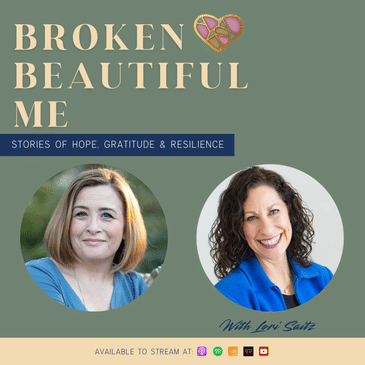
In this episode of Broken Beautiful Me - Stories of Hope, Gratitude, and Resilience, we are thrilled to welcome Lori Saitz, founder of Zen Rabbit, corporate consultant, and podcast host. Lori shares her profound insights on the transformative power of gratitude and how it has reshaped not only her life but also the lives of countless high-performing professionals. Her wisdom has deeply influenced my own journey and continues to inspire me long after our recording.
Lori's unique approach to gratitude goes beyond the ordinary. She empowers executives and teams to integrate gratitude into their daily routines, building stronger, more resilient workplace cultures. With proven strategies that enhance personal fulfillment, reduce stress, and increase productivity, Lori helps listeners embrace gratitude as a tool for professional growth and mental well-being.
This episode is packed with actionable steps and mindset shifts you can implement immediately to transform your life. Whether you're seeking more gratitude, hope, or resilience, this conversation is designed to provide inspiration and practical guidance for your journey.
Tune in to discover:
- How gratitude can be a daily choice that shapes your mindset and outcomes.
- Practical gratitude practices to incorporate into your busy life.
- The science-backed benefits of gratitude on mental health and professional success.
- Real-life examples of how gratitude can help you find joy in the everyday, no matter the challenges you face.
Whether you're seeking more peace, purpose, or personal growth, this conversation will equip you with the tools to transform your mindset and elevate your life through gratitude.
Connect with Lori Saitz: Website: zenrabbit.com LinkedIn: Lori Saitz
---------------
Follow the Host, Kelly Buckley:
Stay connected with Kelly Buckley and join her journey of healing, resilience, and gratitude. Follow her on social media for more inspiring content, updates on future episodes, and insights on living a life full of hope and purpose.
- Website: kellybuckley.com
- Facebook: Kelly Buckley on Facebook
- Instagram: @KellyBuckleyOfficial
- LinkedIn: Kelly Buckley on LinkedIn
- Twitter: @KellyBuckley
- YouTube: Kelly Buckley on YouTube
If you enjoyed this episode, don't forget to subscribe to the podcast, share it with your friends and family, and leave a review. Your support helps spread the message of hope, resilience, and gratitude to more listeners around the world.
⭐ ⭐ ⭐ ⭐ ⭐
If you enjoyed this episode, don't forget to subscribe to the podcast, share it with your friends and family, and leave a review. Your support helps spread the message of hope, resilience, and gratitude to more listeners around the world.
00:00:00
Hello everyone and welcome
00:00:01
to another episode of Broken Beautiful Me,
00:00:04
Stories of Hope,
00:00:05
Gratitude and Resilience.
00:00:07
I am so lucky today because
00:00:09
I have an exceptional guest.
00:00:11
Lori Seitz is the leading
00:00:14
authority on improving
00:00:16
productivity and engagement
00:00:17
through workplace well-being.
00:00:19
She is the founder of Zen
00:00:21
Leadership Program for
00:00:22
Results-Focused Professionals.
00:00:24
With a comprehensive
00:00:25
background in wellness and
00:00:27
communication strategies,
00:00:28
Lori helps executives create focused,
00:00:31
resilient,
00:00:31
and collaborative teams that
00:00:33
can move projects forward
00:00:35
with less stress and drama.
00:00:37
Listen to Lori on our own podcast, too,
00:00:40
called Fine is a Four-Letter Word,
00:00:42
which I love,
00:00:43
where she engages guests in
00:00:45
conversations about how
00:00:46
they've grown from a time
00:00:48
in their lives where things
00:00:49
were decidedly not fine.
00:00:52
Lori is currently living a
00:00:53
nomad life while Kat's
00:00:55
sitting in states across
00:00:56
the Southeast U.S.
00:00:58
You can often find her in
00:01:00
the weight room at the gym.
00:01:01
She also loves cupcakes, Thai food,
00:01:04
and classic rock music.
00:01:06
Well, hello to my soul sister, cupcakes.
00:01:08
All right, we're here.
00:01:10
That's right.
00:01:13
I'm glad you balanced it out with the gym,
00:01:15
too,
00:01:15
because that kind of has to be my
00:01:17
delicate dance.
00:01:18
That's what it's all about, balance.
00:01:19
That's right.
00:01:22
So Lori, first to just begin with,
00:01:26
if you could give us a
00:01:27
little bit of background
00:01:28
for the listeners who
00:01:30
really don't know much about your work.
00:01:31
So I want them to get to
00:01:33
know you a little bit better.
00:01:34
Yeah, as you mentioned,
00:01:36
I am an employee well-being
00:01:38
consultant and I'm really
00:01:40
on a mission to teach the
00:01:41
world to be calm and
00:01:42
grounded no matter what's
00:01:43
going on around them.
00:01:45
I have a background in
00:01:49
marketing and broadcasting,
00:01:51
and I started my first
00:01:52
business in two thousand three.
00:01:54
I was making a product
00:01:56
called the Gratitude Cookie
00:01:58
for businesses to say thank
00:01:59
you to their clients and
00:02:01
people who supported their success.
00:02:03
And ran that business for eleven years.
00:02:05
Couldn't quite scale it the
00:02:06
way I wanted to.
00:02:07
Shut it down.
00:02:08
Started teaching networking
00:02:09
strategies and then pandemic.
00:02:12
And then came back to
00:02:13
talking about gratitude and
00:02:15
incorporating some other
00:02:17
tools and techniques into
00:02:19
that in order to be able to
00:02:21
teach people how to, like I said,
00:02:24
stay calm and grounded no
00:02:25
matter what the circumstances are.
00:02:27
That is wonderful.
00:02:29
And I looked at that,
00:02:30
the gratitude cookies,
00:02:33
I was reading a little bit
00:02:34
about them and how people just,
00:02:37
one person described them
00:02:38
as a little bit of love in a box, right?
00:02:42
And so your message for
00:02:44
gratitude is really,
00:02:45
it's been through your entire career,
00:02:47
even though you are
00:02:48
certainly looking at from a
00:02:51
different perspective now.
00:02:52
So that is, so I want to jump into that.
00:02:57
Fine is a four letter word.
00:03:02
So transform from chaos to peace,
00:03:04
no matter what is happening around you.
00:03:06
And this is one of the
00:03:07
things that I love to talk about,
00:03:09
because I believe this too,
00:03:10
that we can find that
00:03:12
stillness and peace no
00:03:13
matter what's happening.
00:03:15
So tell me a little bit
00:03:15
about this concept and the
00:03:18
people you've connected
00:03:19
with because of this message.
00:03:21
Oh my gosh, so many people.
00:03:23
But we'll start with,
00:03:26
my mom took my brother and
00:03:27
me to a meditation course
00:03:28
when I was ten years old.
00:03:30
That is now known as the Silva Method.
00:03:33
And so I had this foundation,
00:03:35
but a ten-year-old soon
00:03:37
becomes a teenager,
00:03:38
and I had no need for that.
00:03:41
So...
00:03:44
I had it as a foundation,
00:03:45
but I didn't practice it for many,
00:03:47
many years.
00:03:48
And I would go in and I
00:03:49
would pick up a meditation
00:03:50
practice for a few days and
00:03:52
then skip a few years.
00:03:53
And then finally, about ten years ago,
00:03:58
I came back to it consistently.
00:04:02
And it was around the time
00:04:04
that my mom passed away.
00:04:06
And I think that's what,
00:04:08
interestingly enough,
00:04:09
what drew me back into it
00:04:11
was a meditation called the
00:04:12
Six Phase Method by Vishen Lakhiani.
00:04:17
And Vishen is the founder of
00:04:18
a company called Mindvalley.
00:04:19
It's a personal development company.
00:04:22
Mindvalley actually now owns,
00:04:24
I don't know if it's like
00:04:25
owns the rights to the Silva Method,
00:04:28
which is, so it comes full circle.
00:04:30
Yeah.
00:04:31
Wow.
00:04:31
And the silver mind method
00:04:32
has been around for a long time.
00:04:35
So that's, it's nice to hear that it's,
00:04:37
it continues on.
00:04:38
Cause I remember reading
00:04:39
that book years ago.
00:04:40
Yeah.
00:04:41
Yeah.
00:04:41
Well it's effective.
00:04:42
So yeah, that's why.
00:04:45
But yeah, I don't know.
00:04:48
You, you asked where,
00:04:49
how I got into the teaching people,
00:04:51
the calm and grounded part.
00:04:53
Yeah.
00:04:54
So, so you, you really, and it's funny,
00:04:56
you know,
00:04:57
cause you talked about that you
00:04:58
became a teenager and you
00:04:59
didn't want to have
00:04:59
anything to do with it.
00:05:00
Isn't it funny in our life
00:05:02
that we find moments where
00:05:04
we are led to the truth,
00:05:05
like from your mom or from
00:05:07
my mom when we're that younger age,
00:05:09
and then we move away from that truth,
00:05:11
trying to kind of seek out
00:05:12
our own understanding.
00:05:14
And then slowly we find our way back.
00:05:17
Yeah.
00:05:17
Well,
00:05:17
it was somebody else pointed it out
00:05:19
to me a couple years later was like,
00:05:22
I still get choked up about this.
00:05:24
That wasn't it interesting
00:05:26
that I came back to it after she passed.
00:05:30
Like she left me this legacy.
00:05:32
She did.
00:05:35
Ten years later, I'm still like.
00:05:37
No, listen, tears are good.
00:05:39
Tears are good.
00:05:41
Yeah.
00:05:41
they're cleansing and they
00:05:43
are a way of celebrating
00:05:46
the people who impacted our
00:05:47
hearts and lives.
00:05:48
Right.
00:05:49
We're like not even five
00:05:50
minutes into this.
00:05:52
My husband says you always
00:05:53
make people cry.
00:05:54
I'm sorry.
00:05:56
No, no, no, no, no need to be sorry.
00:05:58
It's a, yeah, it's, it is.
00:06:00
It's really powerful concept.
00:06:03
It is.
00:06:03
And I'm sure that your
00:06:05
mother is just smiling,
00:06:07
beaming down at you for,
00:06:09
for taking that lesson and just,
00:06:11
using it to help so many other people.
00:06:14
Yeah.
00:06:15
Well,
00:06:15
I guess what you were talking about
00:06:16
was getting quiet enough to
00:06:18
hear your own inner voice.
00:06:20
Right.
00:06:21
Yeah.
00:06:21
Because it whispers, right?
00:06:23
It doesn't show.
00:06:24
Right.
00:06:24
Exactly.
00:06:25
And we are,
00:06:26
we live in a society that has
00:06:27
so many distractions and
00:06:29
things are designed to distract us.
00:06:32
Yes.
00:06:33
So it's really easy to not hear it,
00:06:36
to not get quiet enough and to miss it.
00:06:41
Do you find that like for
00:06:43
people that you work with
00:06:45
that in some cases that
00:06:48
stillness and silence is scary?
00:06:51
Yes,
00:06:51
a lot of people it's scary because again,
00:06:54
they're so used to
00:06:55
listening to everybody
00:06:57
around them and that starts very young.
00:06:58
You're listening to your
00:07:00
parents when you're less
00:07:02
than seven years old,
00:07:03
that other than conscious
00:07:05
mind is wide open and open
00:07:06
to all the ideas and
00:07:07
beliefs that you're being
00:07:10
exposed to.
00:07:12
And so you just take in all
00:07:13
of that information,
00:07:14
not even consciously.
00:07:16
And so, especially again,
00:07:18
now with all the
00:07:20
distractions that we have coming at us,
00:07:23
it's very easy to not pay
00:07:25
attention to that voice.
00:07:26
And it's scary to hear it
00:07:28
because sometimes, a lot of times,
00:07:32
It's going to say things
00:07:33
that don't make sense or
00:07:35
that sound crazy to you or
00:07:37
that sound crazy,
00:07:39
even more sound crazy to
00:07:40
the people around you.
00:07:41
They might make sense to you,
00:07:43
but you're like, oh, I can't do that.
00:07:45
Everybody, what are people going to think?
00:07:47
Or, you know,
00:07:49
how is so-and-so going to
00:07:50
respond to that?
00:07:52
I can't, I can't do that.
00:07:54
Well,
00:07:54
and because so many people are not
00:07:56
listening to their voice these days,
00:07:58
they're listening to the
00:07:59
Squawk boxes and podcasts.
00:08:01
We've got a news cycle that
00:08:04
is going all the time,
00:08:06
spewing a lot about a very
00:08:08
complicated world that we live in.
00:08:11
So, I mean,
00:08:11
it's it's difficult to really find it.
00:08:13
And I think when you come to
00:08:15
a crossroads in your own
00:08:16
life and you start to hear that voice,
00:08:20
you're looking around at
00:08:21
all these other people who don't.
00:08:22
Mm hmm.
00:08:23
So you have to kind of step
00:08:26
into yourself and really
00:08:27
make peace with that so that, you know,
00:08:31
that you can take that next
00:08:33
step towards this new path.
00:08:36
Yeah.
00:08:37
Yeah.
00:08:37
And it really is baby steps.
00:08:40
It is.
00:08:41
And it's OK that if you take
00:08:43
baby steps that sometimes
00:08:44
you're going to go in
00:08:46
reverse on other days.
00:08:47
That's OK, too.
00:08:48
Right.
00:08:49
Mm hmm.
00:08:50
That's part of it.
00:08:51
It is part of it.
00:08:52
And that's a lot of times I
00:08:54
hear people saying that
00:08:56
they're not good at meditation.
00:08:59
So that's why I typically
00:09:01
introduce the whole concept
00:09:02
as like a calming exercise
00:09:04
or a grounding exercise and
00:09:06
maybe step away from the
00:09:08
term meditation just at
00:09:09
first because people have
00:09:11
so many misconceptions
00:09:13
about what meditation is
00:09:14
and how they are not good at it.
00:09:17
yeah and I think you know I
00:09:20
wish that um I wish that I
00:09:22
had known you when I first
00:09:23
started meditation because
00:09:25
I went through that whole
00:09:26
process myself where I
00:09:28
would I had my little
00:09:29
singing bowl and I'd go
00:09:30
ding and I did the circle
00:09:32
around and get the sound
00:09:34
and then I'd sit there and
00:09:35
I'd make my grocery list
00:09:36
like it was ridiculous and
00:09:38
I said oh why can't I get
00:09:39
this right but I it it
00:09:41
takes practice just like
00:09:42
any other other thing that
00:09:44
you are learning it takes
00:09:46
practice to really
00:09:47
tune into that stillness and quiet within.
00:09:51
It does take practice.
00:09:52
And what you mentioned is
00:09:54
sitting in silence.
00:09:55
And I think that's really hard,
00:09:57
especially for people who
00:09:58
are just starting out.
00:10:00
And so I recommend finding a
00:10:02
guided meditation to help
00:10:06
keep your mind focused,
00:10:07
to give your mind something
00:10:08
to come back to,
00:10:09
because the thoughts are going to come in,
00:10:11
the grocery list is going
00:10:12
to start writing itself,
00:10:13
and you need to bring
00:10:15
yourself back to something.
00:10:18
whether it's back to your
00:10:19
breathing and focusing on
00:10:20
your breathing or back to
00:10:21
the sound of the meditation
00:10:23
teacher's voice in a guided meditation.
00:10:26
I think it's just easier to
00:10:27
follow a guided,
00:10:29
especially in the beginning,
00:10:31
so that you can come back
00:10:32
where your brain has
00:10:33
something to focus on.
00:10:36
I totally agree with that.
00:10:37
And now, actually,
00:10:40
I use binaural beats when I
00:10:42
meditate sometimes.
00:10:43
I just turn on those binaural beats so the
00:10:46
the alpha, beta and theta waves,
00:10:49
depending on which area of
00:10:50
focus you want to kind of tune into.
00:10:52
And I just put that on ten short minutes.
00:10:55
But that's enough for me not
00:10:57
to get caught up in my own
00:10:58
little storytelling between my two ears.
00:11:02
Right.
00:11:02
Because energetically,
00:11:03
that's keeping your brain focused.
00:11:05
Yeah.
00:11:07
So what would you say to
00:11:09
someone who comes to you right now?
00:11:12
And I know you do a lot of
00:11:13
work in workplaces.
00:11:15
But kind of apply it for
00:11:18
both because I want to kind
00:11:19
of have a conversation in
00:11:20
personal and professional.
00:11:22
So someone shows up to you
00:11:25
professionally and they are
00:11:27
struggling or maybe they're
00:11:28
a leader and they're struggling.
00:11:30
Let's start professionally.
00:11:33
What are the first steps
00:11:34
that you take with someone
00:11:35
to kind of guide them
00:11:36
through this difficulty?
00:11:39
I don't really see a
00:11:40
difference between the
00:11:40
personal and the
00:11:41
professional because
00:11:42
whatever's happening in
00:11:43
your personal life is
00:11:44
coming into your
00:11:44
professional and vice versa.
00:11:46
So it's going to be the same both ways.
00:11:49
But starting with.
00:11:52
teaching them some tools and techniques,
00:11:55
teaching them,
00:11:57
let's get into the guided meditations.
00:11:58
Let's find something that works for you.
00:12:02
Because this whole calming
00:12:03
grounding exercise thing is
00:12:07
a matter of finding what works for you.
00:12:09
So
00:12:11
Sitting quietly for fifteen
00:12:14
minutes might be might not
00:12:15
fit for somebody.
00:12:17
So can you do a walking meditation then,
00:12:20
you know,
00:12:20
going out in nature or walking
00:12:23
in the grass with no shoes
00:12:24
on is a very grounding exercise.
00:12:28
It's connecting you to the earth.
00:12:30
And there is a lot of
00:12:32
science and research behind
00:12:33
how all of this works.
00:12:35
What we're talking about,
00:12:36
I want to be sure to say
00:12:38
that this is not just like woo woo.
00:12:40
Oh, that's very nice.
00:12:41
It helps keep you calm.
00:12:42
But there's a ton of science
00:12:44
and research behind how all
00:12:46
of this works and the fact
00:12:48
that it does work.
00:12:50
And so, uh,
00:12:51
maybe it's running for somebody,
00:12:53
maybe it's gardening, maybe it's, um,
00:12:57
baking.
00:12:58
That's a big thing for me.
00:12:59
Like I love doing stuff with
00:13:01
my hands and I get into
00:13:03
kind of a meditative state
00:13:04
when I'm really into my baking process.
00:13:07
So, so it's a matter of figuring it out.
00:13:10
And I guess the first thing
00:13:12
I would say to somebody is
00:13:13
just if the first thing you try,
00:13:15
or I am not a big fan of the word try,
00:13:17
it's the first thing you, you, uh,
00:13:20
work on or step into doesn't
00:13:24
feel right for you.
00:13:26
And you do it for at least
00:13:27
seven to fourteen days consistently.
00:13:30
Okay.
00:13:30
So that's the first thing.
00:13:31
It's got to be consistent.
00:13:33
You can't do it one time and go,
00:13:34
this doesn't work.
00:13:38
But it's a matter of
00:13:39
figuring out and I can help
00:13:40
them figure out what will work for them.
00:13:43
For example, if you can't sit still,
00:13:46
try putting on your favorite song.
00:13:49
And if my favorite upbeat song and dancing,
00:13:53
like no one's watching, right.
00:13:54
But that saying, you know, dancing,
00:13:56
like no one's watching,
00:13:58
but get that excess energy
00:14:00
out of your body and then
00:14:02
sit for five minutes and
00:14:04
see how that works.
00:14:06
Well, because sometimes,
00:14:08
and I find this myself when
00:14:09
I'm working on a project.
00:14:10
And so, you know,
00:14:11
you're just engrossed in something,
00:14:12
you're sitting at the computer,
00:14:14
then you kind of hit a wall and.
00:14:18
you feel unsettled and it's
00:14:21
just all this pent-up
00:14:22
energy we're meant to move
00:14:24
um so sometimes even the
00:14:25
simple act of like you said
00:14:27
getting up and doing a
00:14:28
little dance like no one's
00:14:30
watching you is is the very
00:14:32
thing you need to reset you
00:14:34
know kind of that that
00:14:35
positive mindset right
00:14:37
Yeah.
00:14:37
Every time I recommend that,
00:14:39
it brings me back to a
00:14:40
memory of when I was in college,
00:14:42
one of my college roommates
00:14:43
and I were studying half
00:14:45
the night and we would take
00:14:46
breaks and turn on our
00:14:49
dance music and dance
00:14:50
around the room for however
00:14:51
long the song was.
00:14:52
And then we would go back to studying.
00:14:55
We didn't know what we were doing.
00:14:57
We just felt like, yeah,
00:14:57
we need to move now.
00:14:58
Well, you know, that's great because you
00:15:03
you knew it worked.
00:15:04
So even if it wasn't a thing
00:15:06
to do back then, right?
00:15:09
Yeah.
00:15:15
So, and, and so for someone, you know,
00:15:19
and I, as we, we chatted before,
00:15:22
I work a lot with the bereaved.
00:15:24
And so what would you say to
00:15:25
someone who comes to you and
00:15:28
And again, like you said,
00:15:29
there's no real separation
00:15:30
between the personal and professional.
00:15:32
So someone has gone through, you know,
00:15:35
truly a trauma in their life.
00:15:37
They've lost someone near
00:15:39
and dear to them.
00:15:41
They are, you know, I mean,
00:15:44
obviously we all have to
00:15:46
pay the bills and do our thing.
00:15:49
So we have to step back into life.
00:15:52
But we are not fine.
00:15:54
We are far from fine.
00:15:56
What would you say to
00:15:57
someone who came to you and said,
00:15:59
please help me?
00:16:03
Yeah,
00:16:03
we would start with the grounding
00:16:07
exercises.
00:16:09
And then also I talk a lot
00:16:11
about the concept of
00:16:12
gratitude and finding
00:16:14
gratitude throughout your day,
00:16:16
finding gratitude in any
00:16:18
situation that doesn't even
00:16:20
seem like there would be
00:16:22
gratitude for it.
00:16:24
where can you find a shred of gratitude?
00:16:27
And it doesn't even have to
00:16:28
be related to whatever the
00:16:32
situation is that looks untenable.
00:16:37
Tapping into...
00:16:41
the gratitude can help refocus your brain.
00:16:45
And then when your brain is
00:16:46
starting to get refocused,
00:16:47
then maybe you can sit for five minutes.
00:16:50
And even if you're sitting
00:16:52
for those five minutes in
00:16:53
remembrance of the person
00:16:57
and getting and connecting
00:16:58
to their spirit,
00:17:01
because I believe they're still around.
00:17:05
And I,
00:17:09
When you can get quiet
00:17:10
enough to tap into that inner voice,
00:17:15
that truth within you,
00:17:17
it opens a door to the
00:17:22
other dimension and they
00:17:23
can come in and talk to you
00:17:25
or you can talk to them.
00:17:27
And it just gives you a
00:17:31
pathway to staying connected.
00:17:38
And do you find also for
00:17:40
people who maybe may have
00:17:45
like a slight discomfort with that,
00:17:47
do you find that writing is
00:17:48
a good exercise for that as
00:17:50
well to bring that person in?
00:17:54
you know, that journal writing.
00:17:56
Yeah.
00:17:56
Well,
00:17:56
that comes down to finding what works
00:17:58
for you.
00:17:59
And journaling is a great
00:18:01
way to tap in again,
00:18:03
to tap into that inner
00:18:04
voice and to find calm and stillness.
00:18:08
And I'm laughing because
00:18:10
three or four people in the
00:18:12
past week or two have
00:18:14
recommended that I journal
00:18:15
and I have so much resistance against,
00:18:18
I get it against it.
00:18:21
I don't know what it is.
00:18:22
It probably means I need to do it.
00:18:24
But I think it's a matter of, again,
00:18:28
it's finding what works for you.
00:18:29
So for a lot of people,
00:18:31
getting those thoughts out
00:18:32
of their head and onto paper helps.
00:18:36
And journaling is different
00:18:39
than typing it out on a
00:18:44
is a different process for the brain.
00:18:47
And so, yes,
00:18:48
journaling is a fantastic exercise.
00:18:50
I don't always recommend
00:18:53
keeping a gratitude journal
00:18:55
if it's going to feel like another chore.
00:18:59
Like if it's going to be
00:19:00
like another thing on your to-do list,
00:19:01
like I got to write down my
00:19:03
gratitudes from today,
00:19:04
like then don't do it.
00:19:05
Like you're not,
00:19:06
we're not creating chores for ourselves.
00:19:08
What it should be joyous.
00:19:09
It should, after you start getting into it,
00:19:12
it should feel like
00:19:13
something that you would
00:19:14
look forward to doing that
00:19:15
helps you feel better.
00:19:17
Not another chore.
00:19:21
Yes.
00:19:23
So it's something that kind of,
00:19:25
and what I use in my
00:19:27
gratitude practice is
00:19:29
I usually do it in the
00:19:31
morning and the evening.
00:19:32
So they're kind of touch
00:19:34
points at the beginning and
00:19:36
end of each day.
00:19:40
Just the little things,
00:19:41
not material things.
00:19:44
It's never, oh,
00:19:45
I'm so thankful for that
00:19:47
new outfit I got.
00:19:48
It's never anything like that.
00:19:50
It's always,
00:19:51
I'm thankful for the sunshine
00:19:53
and the changing leaves and, you know,
00:19:56
my pups and, you know, the garden and
00:20:00
Um, so it is for me,
00:20:03
that's grounding me to what is real,
00:20:06
what's reality around me.
00:20:08
Um, and, and that then, um, you know, in,
00:20:12
in terms of grief, uh,
00:20:15
that then really tethers
00:20:16
you to that present moment.
00:20:17
Right.
00:20:17
And in the present moment, you're okay.
00:20:20
right and I think people
00:20:22
have a tendency to state
00:20:24
the same things over and
00:20:25
over when they are doing
00:20:26
gratitudes and that's okay
00:20:28
and one of the techniques
00:20:30
or things that you can do
00:20:32
to not get stuck in oh I'm
00:20:35
grateful for you know my
00:20:37
family I'm grateful for my
00:20:38
house the same things every
00:20:40
single day what are you
00:20:41
grateful for what happened
00:20:43
today that you can be grateful for
00:20:46
And that can change things.
00:20:48
Like, did someone open a door for you?
00:20:52
Did someone,
00:20:53
was someone kind to you at the
00:20:55
grocery store?
00:20:56
Remembering those things and tracking or,
00:21:00
you know,
00:21:01
writing them down and kind of
00:21:03
like mini celebrating is really powerful.
00:21:07
Yes.
00:21:09
And it does.
00:21:10
And, you know,
00:21:11
if we want to jump back into
00:21:12
the science piece of that, then, you know,
00:21:14
in terms of positive psychology,
00:21:16
things like a regular gratitude practice,
00:21:21
they actually change your
00:21:22
neural pathways in your brain.
00:21:24
And so you start to,
00:21:27
you start to see the world differently.
00:21:29
So when you change the way
00:21:30
you look at the world,
00:21:31
the world you're looking at changes,
00:21:33
right?
00:21:33
Like Wayne Dyer.
00:21:35
I was just going to say
00:21:36
Wayne Dyer said that.
00:21:37
Yes.
00:21:38
Yes.
00:21:39
Right.
00:21:39
We celebrate him.
00:21:40
I celebrate him every day.
00:21:41
Such a wise voice for humanity.
00:21:45
But, you know,
00:21:46
it's it does truly change
00:21:49
the makeup that the
00:21:51
physical makeup of your brain.
00:21:53
So what your eyes are seeing,
00:21:54
you're reflecting on it differently.
00:21:56
And I started my gratitude
00:21:58
practice at the lowest point in my life.
00:22:01
Absolutely.
00:22:02
I had a very shallow
00:22:03
gratitude practice prior to that.
00:22:06
But when I experienced a
00:22:07
deep loss in my life,
00:22:09
that's when my gratitude
00:22:11
practice became meaningful
00:22:12
because I was looking
00:22:13
desperately for something
00:22:15
to hold on to so that I could survive.
00:22:19
And I don't think people, you know,
00:22:23
one of the things I love to
00:22:24
talk to people about,
00:22:25
and I would love for you to
00:22:26
speak more about, is in difficult times.
00:22:30
A lot of times we think
00:22:30
gratitude is just about, oh,
00:22:32
life is good.
00:22:33
It's great.
00:22:34
I'm thankful for my husband.
00:22:35
I'm thankful for my pet.
00:22:37
I'm thankful for this, thankful for that.
00:22:39
But when it is dark,
00:22:42
finding the flickers of light,
00:22:44
that's the challenge.
00:22:45
And it's not easy.
00:22:47
Can you speak to that?
00:22:48
Like when people are in a
00:22:49
dark place and looking for it,
00:22:52
what can they do?
00:22:52
That is, it becomes an anchor for you.
00:22:58
And I mean that in a good way,
00:23:01
not like a heavy anchor
00:23:01
that's holding you down,
00:23:04
but like a grounding anchor
00:23:06
for you to find even the
00:23:09
smallest shred of gratitude.
00:23:10
I'm thankful I got out of
00:23:11
bed this morning.
00:23:13
I'm thankful I have hot water for a shower,
00:23:17
things like that.
00:23:18
It keeps you, again,
00:23:20
it keeps you tethered to
00:23:23
the present moment.
00:23:25
And it gives you something
00:23:27
to hold on to when it feels
00:23:29
like everything around you has shattered.
00:23:32
Yes.
00:23:33
Yeah.
00:23:35
So on this path for you,
00:23:39
and we talk about our life
00:23:42
journeys and they certainly,
00:23:44
they go like my life journey.
00:23:47
Actually, I just recently spoke to someone,
00:23:49
we were talking about kind
00:23:50
of how things don't move in
00:23:51
a linear fashion.
00:23:52
And I described kind of my
00:23:53
life journey as that,
00:23:55
set of Christmas lights at
00:23:56
the bottom of the bin that you pick up.
00:24:03
And I'm thankful for that
00:24:04
because I've learned a lot
00:24:05
from having to untie some
00:24:07
of those knots as I've
00:24:09
gotten further into my life.
00:24:11
But what has been the most
00:24:13
surprising thing that
00:24:14
you've learned about
00:24:15
yourself through all this work?
00:24:19
That's an interesting question.
00:24:21
What is the most surprising
00:24:22
thing I have learned about myself?
00:24:26
That I knew a lot of this
00:24:28
when I was younger and
00:24:30
didn't pay attention to it.
00:24:32
Yeah.
00:24:35
Yeah.
00:24:36
And now as I've gotten older,
00:24:38
I've kind of grown into it
00:24:41
in a way and understand it
00:24:45
on a different level.
00:24:48
And that I am strong.
00:24:51
I can, I mean, I've been practicing this,
00:24:54
these concepts for a while.
00:24:56
And when you were talking
00:24:57
earlier about using
00:24:58
gratitude in times of terrible tragedy or,
00:25:03
you know,
00:25:03
circumstances are not what you
00:25:08
would have expected or
00:25:09
wanted them to be around you.
00:25:11
When you start practicing these things,
00:25:14
even before that happens, right?
00:25:16
you are stronger and better
00:25:18
able to deal with them when
00:25:20
they do come along.
00:25:21
And really, no one is immune to this.
00:25:24
It's part of our human experience.
00:25:27
Everybody has different
00:25:29
situations in their life.
00:25:32
And I don't think that we can really say,
00:25:34
well, your trauma is harder than mine.
00:25:37
Everybody has different
00:25:39
has it and it's not a competition, right?
00:25:42
So, uh, but every,
00:25:43
and everybody's going to
00:25:44
have to learn how to manage
00:25:45
themselves through it.
00:25:47
So these practices are
00:25:50
something that you can
00:25:51
always rely on and come back to.
00:25:52
They are always there for
00:25:54
you when it feels like
00:25:55
everything else has been taken away.
00:25:58
These are there for you.
00:26:00
And they are unchanging.
00:26:02
And I love that, um,
00:26:06
For me,
00:26:08
I'm not sure if you're familiar or
00:26:10
if you've read any of her work,
00:26:11
Pema Chodron.
00:26:12
She's a Buddhist nun.
00:26:14
And she talks a lot about
00:26:16
the unchangeable peace that
00:26:18
sits within us, that bodhicitta heart.
00:26:21
And it just sits gently within us,
00:26:23
unchangeable,
00:26:24
no matter what has happened to us.
00:26:26
And I think that in some
00:26:28
ways she's talking about that same thing,
00:26:30
right?
00:26:31
So it's that unchangeable,
00:26:32
beautiful piece of us that
00:26:34
no matter what life
00:26:36
dishes out to us that it's always there,
00:26:39
but we also have those
00:26:40
tools that are available to
00:26:42
us to keep us grounded as
00:26:45
we work through it when
00:26:46
things are not fine.
00:26:48
And it's okay to be fine.
00:26:50
You can still be great and be not fine,
00:26:53
right?
00:26:54
Absolutely.
00:26:55
Absolutely.
00:26:56
And that's the thing.
00:26:57
I think the whole thing
00:26:58
about fine is a four-letter word.
00:27:00
The reason I use that phrase
00:27:02
is because we have been
00:27:04
conditioned to simply say
00:27:06
everything is fine when it's not.
00:27:10
It's not that you have to be
00:27:12
better than fine.
00:27:14
It's a matter of admitting
00:27:16
when you're not fine and
00:27:18
letting people help you.
00:27:21
that is powerful because a
00:27:23
lot of times we have been
00:27:25
conditioned and I don't, uh, you know,
00:27:27
I'm hoping that we are
00:27:29
moving as humanity.
00:27:30
We're moving to a different
00:27:31
place there where we can,
00:27:33
we can just be honest about
00:27:36
our struggles and,
00:27:37
and be more of a community
00:27:39
about that and realize that
00:27:41
everybody has their stuff.
00:27:43
Um, but you know, I,
00:27:46
I grew up in a time where we
00:27:49
probably didn't share that too much.
00:27:51
We probably kept those
00:27:52
things to ourselves.
00:27:53
We probably walked that path
00:27:54
alone because we didn't
00:27:57
want to seem like we were
00:27:58
falling apart because when
00:28:01
we walked into work, people relied on us.
00:28:05
And we had people to lead.
00:28:09
We had projects to finish.
00:28:10
And so we just had to kind
00:28:12
of push it all down.
00:28:13
It's funny about stuff like that.
00:28:15
Right.
00:28:15
It always bubbles back up.
00:28:17
Yeah.
00:28:18
So so by being honest with it, you know,
00:28:23
in terms of leadership,
00:28:24
by being honest that I'm not OK,
00:28:27
that then gives your team
00:28:29
permission to tell you when
00:28:30
they are not OK,
00:28:31
which makes you a more effective leader.
00:28:34
Absolutely.
00:28:35
Absolutely.
00:28:35
There was a study done
00:28:37
recently or I saw about it
00:28:39
recently in terms of vulnerability.
00:28:42
And it was the majority of
00:28:45
people surveyed said that
00:28:47
they respected and honored
00:28:49
and liked vulnerability.
00:28:52
somebody who was vulnerable
00:28:54
more than people who
00:28:56
weren't vulnerable however
00:28:58
they themselves felt that
00:29:00
if they were to be
00:29:01
vulnerable that would be
00:29:03
seen as a weakness doesn't
00:29:06
even make any sense really
00:29:08
yes oh my gosh we have work
00:29:12
to do lori we have work to
00:29:13
do it's okay for us to be
00:29:16
to be not fine.
00:29:18
And as my,
00:29:18
my podcast is called broken
00:29:21
beautiful me for that very reason.
00:29:22
I mean, you and I were, we're speaking,
00:29:24
I said at the beginning,
00:29:25
we're speaking the same language.
00:29:27
Yeah.
00:29:27
Broken beautiful me came from,
00:29:30
I felt shattered open.
00:29:32
Right.
00:29:32
And I've always looked at
00:29:33
the Japanese art of
00:29:35
Kintsugi where they
00:29:36
repaired the porcelain with
00:29:38
the gold fleck plaster and
00:29:40
it became more beautiful
00:29:41
and more valuable because of it.
00:29:44
And I see us as humans just like that.
00:29:49
We are more valuable.
00:29:50
We are more beautiful as a
00:29:53
result of what has happened to us.
00:29:55
And we shouldn't be afraid
00:29:57
to share it because that's
00:30:00
how we connect back in our very,
00:30:02
we're so connected,
00:30:03
but so disconnected in many other ways.
00:30:07
But I think that's the
00:30:08
bridge to how we come back
00:30:10
to the importance of community, right?
00:30:13
is by saying, we're not perfect.
00:30:16
We don't have this figured out.
00:30:18
Oh my Lord, I'm figuring this out as I go.
00:30:21
You know, and it's okay.
00:30:23
It's very freeing to realize
00:30:26
that you don't have to be
00:30:27
perfect and that you are
00:30:30
still valuable and perfect
00:30:35
by not being perfect.
00:30:38
Perfectly imperfect, right?
00:30:39
Yeah.
00:30:40
Yeah.
00:30:41
Yeah.
00:30:43
That is so if for our listeners,
00:30:47
if you could give them and
00:30:49
I know that we've talked
00:30:50
about a number of them
00:30:51
throughout the chat.
00:30:53
If you could give them like
00:30:54
three things that they could start today,
00:30:57
today,
00:30:58
as soon as they finish listening to
00:31:01
our podcast, do not leave early.
00:31:04
Stay here till the end.
00:31:05
But three things they can start today.
00:31:08
One is breathing.
00:31:10
Okay.
00:31:10
I'm sure they are breathing
00:31:11
because they're listening, right?
00:31:14
They are breathing at some level.
00:31:17
But breathing more
00:31:19
intentionally and breathing deeper.
00:31:22
And this is an exercise.
00:31:24
Again, it's calming and grounding.
00:31:25
So simple.
00:31:26
You can do it in ninety seconds,
00:31:28
three minutes and nobody even can notice.
00:31:31
You could be in a meeting.
00:31:32
You could be walking down the street.
00:31:33
You could do it right now.
00:31:34
You don't even have to wait
00:31:35
until the show is over right now.
00:31:38
Taking a really deep breath in.
00:31:40
I put your hand on your
00:31:41
abdomen and feel breathing
00:31:44
in all the way down to your
00:31:46
abdomen because most people
00:31:47
don't breathe that deeply
00:31:48
on a regular basis.
00:31:50
We breathe shallowly from our chest.
00:31:52
So breathe in all the way
00:31:53
down to your abdomen and then hold it for,
00:31:57
I don't know, two,
00:31:58
three seconds and then let it go.
00:32:01
And as you let it go,
00:32:03
relax your shoulders away from your ears,
00:32:06
relax your neck, relax your arms,
00:32:10
your hands,
00:32:13
and then breathe in again all
00:32:15
the way down to your abdomen,
00:32:16
breathing in deeply, deeply,
00:32:17
deeply as strong as much
00:32:19
air as you can take in.
00:32:21
Hold it.
00:32:23
And then let it go.
00:32:26
You can do this with your eyes open,
00:32:27
your eyes closed, as long as you want,
00:32:29
for as many breaths as you want.
00:32:31
And that is going to oxygenate your brain.
00:32:36
It's going to increase the
00:32:37
blood flow to your brain
00:32:40
and the rest of your body
00:32:42
in a way that we don't
00:32:43
normally do throughout the day.
00:32:44
But it's very calming to the
00:32:46
nervous system.
00:32:49
And so that's one thing that you can do.
00:32:51
And that's not even,
00:32:52
we don't have to go to meditation, right?
00:32:54
You don't have to say,
00:32:55
nobody's going to say I'm
00:32:56
not good at breathing.
00:32:57
So that's one thing.
00:33:01
Secondly, I have this,
00:33:04
but I'm grateful for
00:33:05
exercise that I love to share.
00:33:08
When you find yourself
00:33:10
caught in complaining or criticizing,
00:33:12
and you will because you're human,
00:33:14
we all do it.
00:33:16
can't believe it's raining today.
00:33:18
I can't believe I spilled
00:33:19
milk all over the floor, whatever it is,
00:33:23
but catch yourself, but I'm grateful for,
00:33:28
what are you grateful for?
00:33:30
And it doesn't have to be related to,
00:33:33
you know,
00:33:33
I spilled milk all over the place and,
00:33:35
but I'm grateful I even could buy milk.
00:33:37
It doesn't have to be related.
00:33:38
Oh, but I'm grateful that, um,
00:33:42
that I woke up this morning,
00:33:45
but I'm grateful that I
00:33:46
have a fuzzy cat to pet.
00:33:48
Whatever it is,
00:33:50
what you're doing is you're
00:33:51
retraining your brain.
00:33:53
Like we talked about earlier,
00:33:54
you're rewiring your brain
00:33:57
to see the gratitude
00:33:58
instead of the complaint.
00:33:59
That's why we're using the word,
00:34:00
but instead of,
00:34:03
have you ever been told that it's not,
00:34:07
but is kind of a,
00:34:09
not the best word to use
00:34:10
when you're talking to somebody?
00:34:13
I have, yes.
00:34:14
Yeah.
00:34:15
And why is that?
00:34:16
Because if I said, Kelly,
00:34:18
you did such a fantastic
00:34:19
job on this event.
00:34:20
I loved how you put all of this together,
00:34:23
but next time could you do,
00:34:26
you just forgot all the
00:34:27
good stuff I just said to you.
00:34:29
And you're focused on what
00:34:29
I'm about to criticize you
00:34:31
for what I'm about.
00:34:32
And that's why it's better
00:34:34
if in that situation to use the word and,
00:34:36
and next time here, we're using the word,
00:34:39
but deliberately to negate the first part,
00:34:42
which is the complaint.
00:34:44
And focus only on the part
00:34:46
we're grateful for.
00:34:48
And the more you do this,
00:34:50
this is a simple exercise.
00:34:52
The more you do it,
00:34:53
the more you will
00:34:55
automatically go to gratitude.
00:34:58
You will still see whatever's happening.
00:35:00
Like my car broke down in
00:35:02
the middle of six lanes of
00:35:03
traffic and I was stuck there.
00:35:08
but I'm grateful that I have
00:35:11
a towing company that's
00:35:12
coming out to get me.
00:35:13
I'm grateful that people
00:35:15
stopped to see if I needed any help.
00:35:17
I'm grateful that I'm only a
00:35:18
mile away from, from home,
00:35:20
whatever you will
00:35:21
automatically go there
00:35:23
instead of sitting in hair on fire rant.
00:35:28
I love that one.
00:35:30
I'm going to have to use
00:35:31
that myself because I do find
00:35:34
And I mean, I'm kind of a gratitude girl,
00:35:36
but I do find just like, you know,
00:35:39
being human,
00:35:40
I have my complaints and
00:35:41
that's such a great way to shift it.
00:35:43
Yeah.
00:35:43
So the breathing, and I just did that.
00:35:46
You're so right about people
00:35:48
being shallow breathers.
00:35:50
We all have forgotten how to
00:35:52
breathe deep and just renew
00:35:55
all that cellular energy within us.
00:35:58
Yeah.
00:36:00
then you asked for three so
00:36:03
uh what's the third one I
00:36:04
could come up with um when
00:36:07
thoughts when you are
00:36:08
sitting and and making an
00:36:10
attempt to have some calm
00:36:13
grounded time and thoughts
00:36:15
are coming into your head
00:36:16
you were talking about your
00:36:17
shopping list earlier yes
00:36:19
acknowledge them talk to them
00:36:23
they're what your brain is
00:36:25
attempting to do is to keep you safe.
00:36:27
Cause I don't want you to forget.
00:36:28
You got to get butter.
00:36:29
You got to get, you know, carrots.
00:36:35
Thank you.
00:36:36
Thank you for reminding me of that.
00:36:38
I,
00:36:38
how about you step away for five minutes
00:36:42
and you can come back in a few minutes.
00:36:44
And I talk to these thoughts
00:36:46
as if they are a third party and
00:36:49
Oh, I love that.
00:36:51
Say thank you.
00:36:52
Thank you for it.
00:36:53
Because like humans,
00:36:55
the thoughts are not necessarily human,
00:36:57
but they want acknowledgement.
00:37:00
Thank you.
00:37:02
I hear you.
00:37:04
And I'm going to do this meditation now.
00:37:06
I'm going to do this calming exercise now.
00:37:08
And you can come back in minutes.
00:37:14
Okay, Lori,
00:37:14
you've just given me three tips
00:37:16
that I will be carrying forward.
00:37:19
Excellent.
00:37:19
Awesome.
00:37:21
Um, have you heard, uh,
00:37:23
I just recently did a, um,
00:37:26
a session of
00:37:27
transformational breath work
00:37:29
and it was my first time
00:37:30
experiencing it and it was wild.
00:37:32
And I,
00:37:35
I left and I remember sitting in the
00:37:37
car in the parking lot
00:37:38
after I left and I was like, gee,
00:37:41
all this time I thought I
00:37:42
knew how to breathe.
00:37:44
And I thought that breathing
00:37:45
was just breathing.
00:37:46
It's not.
00:37:48
It's so not.
00:37:49
Yeah.
00:37:50
And transformational
00:37:52
breathwork takes it even a
00:37:53
step further where you are
00:37:58
through a guided breathwork session,
00:38:02
you're working through some
00:38:03
pretty tough stuff internally.
00:38:05
So I think that, you know,
00:38:08
for our listeners,
00:38:09
if there's one thing I would encourage,
00:38:11
especially after your tips,
00:38:13
is to research a little bit
00:38:14
more about the power of your breath.
00:38:18
Yes.
00:38:18
I don't teach
00:38:19
transformational breath work.
00:38:21
I have been in sessions.
00:38:24
I had a guest on my podcast,
00:38:25
Leland Holgate Jr., who does teach it.
00:38:33
And the way he got into it
00:38:34
was when he was years old,
00:38:36
he was in a boating
00:38:37
accident that left him as a quadriplegic.
00:38:41
And he was introduced by his
00:38:43
military physical therapist to yoga.
00:38:47
And yoga, as you may know,
00:38:50
is more about breath work.
00:38:51
Most people don't know this.
00:38:53
It's more about the breath
00:38:54
work than the actual poses.
00:38:56
And so he was introduced to
00:38:58
this breath work and then
00:38:59
he investigated more in the
00:39:02
transformational breath work.
00:39:03
If you met Leland today,
00:39:05
he is completely and fully functional.
00:39:10
Even though doctors told him
00:39:11
that would never happen.
00:39:12
Oh, my God.
00:39:13
That's the power of breathwork.
00:39:15
Yeah.
00:39:16
Yeah.
00:39:17
It's I really do encourage
00:39:20
our listeners and go over
00:39:22
to Lori's podcast and
00:39:24
listen to this episode.
00:39:25
I'm going to have to listen
00:39:26
to this when we finish
00:39:27
because I don't think that
00:39:30
we truly understand.
00:39:33
the power that we have
00:39:34
within ourselves to heal.
00:39:35
And it's not just those emotional wounds.
00:39:38
It's the physical ones as well.
00:39:41
But we have to make the
00:39:42
choice to step into that.
00:39:45
We can't just kind of sit on
00:39:46
the sidelines and expect it
00:39:47
to happen on its own
00:39:48
without our participation.
00:39:51
Yes.
00:39:52
Thank you for bringing up
00:39:53
that point because it is a
00:39:55
choice and it is definitely
00:39:57
something that you have to
00:39:58
take action on.
00:40:03
And it's difficult in this
00:40:06
instant message microwavable world,
00:40:08
right?
00:40:08
To say, you know,
00:40:10
if you want to get better,
00:40:11
you're going to have to
00:40:12
take action on this and
00:40:13
your action is going to
00:40:14
require focus and it's
00:40:15
going to require training
00:40:16
and time because we have
00:40:18
become so accustomed to prime delivery,
00:40:24
to quick meals too.
00:40:26
And so we've gotten away from
00:40:29
you know,
00:40:30
when we look back at the great
00:40:31
thinkers of time in humanity,
00:40:35
they didn't get there overnight.
00:40:37
You know,
00:40:37
they didn't send out a text
00:40:39
message and change the world.
00:40:41
They, you know,
00:40:42
many of them went through
00:40:43
great suffering to hone
00:40:46
their practice and pass it
00:40:47
along to others.
00:40:48
So we have to be willing to
00:40:50
put the time into it.
00:40:52
We do.
00:40:53
And at the same time,
00:40:55
those exercises that I just
00:40:56
shared can be done and you,
00:40:59
the breath work, the breath, the,
00:41:01
that deep breathing, you will feel and,
00:41:05
um, effects immediately.
00:41:08
Well, I felt it in,
00:41:09
in terms of like my shoulders relaxing,
00:41:11
just doing that breath with
00:41:13
you just now on the podcast,
00:41:15
I felt like I,
00:41:16
I was more relaxed at the
00:41:17
end of it in my neck and shoulders.
00:41:19
Yeah.
00:41:20
And that's just from allowing that breath.
00:41:22
Right.
00:41:22
So you can get immediate
00:41:23
results and then imagine
00:41:26
the results that you will
00:41:27
see over time when you are
00:41:29
consistently practicing that.
00:41:31
Exactly.
00:41:33
And for the listeners,
00:41:35
I hope I didn't sound like
00:41:36
I was heavy breathing into
00:41:37
the microphone.
00:41:37
I tried.
00:41:38
So I didn't want you to
00:41:43
think we had a different
00:41:44
topic on our podcast.
00:41:48
So in my global gratitude group,
00:41:51
it's called Just One Little Thing.
00:41:54
And I started it after we
00:41:58
lost our son in two
00:41:59
thousand and nine and it
00:42:00
was a sudden passing.
00:42:02
And so we didn't really know what to do.
00:42:04
We had nothing in the
00:42:05
toolbox that we could figure it out.
00:42:07
And so, of course,
00:42:08
counseling and reaching out for help,
00:42:10
like you had mentioned earlier,
00:42:11
was a big part.
00:42:13
But we started looking for
00:42:14
one little thing to be
00:42:15
thankful for every day.
00:42:17
So we would sit at the
00:42:18
dinner table at the end of
00:42:19
the day and my younger son,
00:42:21
and this is primarily why I
00:42:23
wanted to do this was
00:42:24
because he deserved to have a happy life.
00:42:26
He was only twelve and he
00:42:27
deserved to grow up and be
00:42:29
happy and have this wonderful existence.
00:42:32
And so we would look around
00:42:33
at each other and say,
00:42:34
what was our one little thing each day?
00:42:36
And we started with one
00:42:37
little thing because we
00:42:38
didn't know if we could
00:42:39
find more than one little
00:42:40
thing at that point in our life.
00:42:42
Right.
00:42:43
So I'm going to tell you
00:42:44
what I'm thankful for today.
00:42:46
I'm thankful for your three
00:42:48
tips that I will be using
00:42:49
in my daily life.
00:42:51
But I'm grateful for,
00:42:54
that's like a light bulb moment for me.
00:42:57
But I'm thankful for those three things.
00:42:59
I'm thankful that that son, he was twelve,
00:43:01
who's now twenty seven,
00:43:03
is arriving from the UK
00:43:04
today for a few days for a visit.
00:43:06
So yay me, happy mama.
00:43:10
And I'm thankful for talking to you.
00:43:13
This has been incredible
00:43:15
because you are spreading
00:43:19
such an important message
00:43:21
for both people personally
00:43:23
and professionally.
00:43:24
And I think that anybody who
00:43:29
is in an organization that
00:43:31
you've visited and spread
00:43:33
this message to is just
00:43:34
going to benefit so much.
00:43:36
So I'm thankful for you, Lori.
00:43:37
So what are you thankful for today?
00:43:39
What are your one little things?
00:43:41
I am thankful for being,
00:43:44
for meeting you and being
00:43:46
able to share this
00:43:47
information on your show.
00:43:50
I am thankful that, uh,
00:43:52
I have a friend coming today to, uh,
00:43:56
spend some time exploring.
00:43:58
I'm actually,
00:43:59
you mentioned I'm living nomad life.
00:44:01
I'm in Richmond, Virginia this week.
00:44:03
And so we're going to go take a,
00:44:06
a little exploration around the city.
00:44:08
Uh, and I am,
00:44:10
I am grateful that I am cat
00:44:13
sitting the most adorable
00:44:14
little gray cat.
00:44:16
And she's very effect affectionate.
00:44:19
I'm surprised she's not in
00:44:20
my lap yesterday.
00:44:21
I was shocked.
00:44:22
doing an interview for my
00:44:23
own show and she was right in,
00:44:24
she was on my shoulder.
00:44:26
I had to conduct an
00:44:27
interview with a cat on my
00:44:28
shoulder like she's a baby.
00:44:30
And she's super sweet.
00:44:34
What's her name?
00:44:35
Lily.
00:44:36
Lily.
00:44:37
Oh my goodness.
00:44:38
See, animals, they show us the way,
00:44:41
don't they?
00:44:43
I learned so much from animals.
00:44:46
I have two labs and they are my teachers.
00:44:50
Yes.
00:44:50
And when you are,
00:44:51
and I'm sure you know this,
00:44:52
but when you're in grief, they're very,
00:44:54
they know that and they can
00:44:56
give you so much comfort.
00:44:58
They do.
00:44:59
And I don't think that we
00:45:02
understand just how
00:45:04
sensitive they are to emotions.
00:45:06
So, you know, cats and dogs,
00:45:11
but horses as well.
00:45:13
Yeah.
00:45:14
I went to a retreat at an
00:45:16
equine therapy uh place and
00:45:19
it was just amazing how
00:45:20
perceptive the horses were
00:45:21
to people's pain and how
00:45:24
much comfort they gave you
00:45:25
know yeah um so lori I'm so
00:45:31
glad we got to get to chat
00:45:32
but I want our listeners to
00:45:35
to know where they can find
00:45:37
you so I need you to to tell them
00:45:39
how they can find you,
00:45:40
how they can find your podcast.
00:45:42
I know that you are also
00:45:44
part of a wonderful book, Love Warriors.
00:45:47
So if you could tell us a
00:45:49
little bit about how they
00:45:51
can connect with you and we
00:45:52
can stay in touch with you and your work.
00:45:55
Absolutely.
00:45:55
My website is zenrabbit.com.
00:45:58
That's the name of my company, Zen Rabbit.
00:46:01
So zenrabbit.com is the
00:46:02
easiest and best place to find me.
00:46:05
There are links there to my
00:46:07
socials and I spend most of
00:46:08
my time on LinkedIn.
00:46:10
So-
00:46:11
OK, that's the best place.
00:46:12
And you can find links to I
00:46:15
think there's a link to the
00:46:15
book in there as well.
00:46:17
I was I contributed a
00:46:18
chapter to that book about my road trip,
00:46:23
my month long road trip
00:46:24
sabbatical with my nineteen year old cat.
00:46:26
That's what the chapter is about.
00:46:29
I bet you that's amazing trip.
00:46:32
It was the trip of a
00:46:34
lifetime for both of us.
00:46:36
Isn't that beautiful?
00:46:37
Nineteen years old.
00:46:39
She was.
00:46:40
Yeah.
00:46:41
What a gift.
00:46:43
What a gift.
00:46:44
Well, Lori,
00:46:45
thank you so much to the listeners.
00:46:48
I encourage you to reach out
00:46:49
and learn more about Lori's
00:46:50
work and listen to some of those episodes,
00:46:53
especially that episode
00:46:55
with what was his name?
00:46:57
Leland Holgate.
00:46:58
And I'll send you the link
00:46:59
and you can put that in show notes.
00:47:01
Oh, perfect.
00:47:02
That would be excellent.
00:47:03
Lori,
00:47:04
thank you so much for taking the time
00:47:05
to talk to me today.
00:47:07
I really appreciate it.
00:47:08
My honor.
00:47:10
Thanks.